Mythfate
Novedades
Todo lo que ha cambiado en cada versión del juego. Despliega una versión para ver el detalle completo.
V 0.8.1 Versión actual El Taller se rehace entero: forjar y desencantar en la misma pantalla, cada carta en grande y una mesa para hacer muchas de golpe con un solo gesto. Además, Las Tres Puertas estrenan una insignia por Casa y llegan varios arreglos.
El Taller
- Nombres nuevos: el Taller de Crafting pasa a llamarse El Taller, y lo que se hace en él es forjar.
- Sin pestañas: forjar y desencantar ya no van por separado, porque es la misma carta, en un sentido o en el otro. Arriba tienes tu oro, tus diamantes y tu polvo, y filtras por «Todas», «Te faltan» o «Tuyas». Debajo de cada carta ves lo que cuesta en polvo y cuántas copias tienes.
- Cada carta, en grande: al tocar una carta la abres con su habilidad, tus copias y los mazos en los que está, y deslizando pasas a la siguiente. Si desencantarla deja corto un mazo, te avisa ahí mismo.
- Un toque o mantener: un toque en «Forjar» o «Desencantar» deja la carta en la mesa. Si mantienes pulsado, se forja o se desencanta al momento y sin diálogos, y si sueltas antes de tiempo no pasa nada.
- La mesa: aparece abajo en cuanto tiene algo y junta lo que vas a desencantar y lo que vas a forjar. Antes de hacerlo te enseña el polvo que tendrás después y qué mazos se quedarían incompletos, y puedes añadir o quitar copias.
- Todo de una vez: manteniendo pulsado «Hacerlo todo», la tanda entera se hace con un solo rito, en vez de un diálogo y una animación por carta. El polvo de lo que desencantas paga lo que forjas, y si algo falla no se hace nada.
- Diamantes: el precio en diamantes ya no está en cada carta de la lista. Comprar una rara, una épica o una legendaria concreta se hace al abrirla, no pasa por la mesa y sigue pidiendo confirmación.
- El tutorial del Taller y el Manual del Invocador ya cuentan cómo funciona.
Cambios
- Las Tres Puertas: el premio del nivel I es ahora «Llave propia», una insignia con un dibujo distinto para cada Casa, y la ventana del premio ya enseña su dibujo.
- Licencias y Créditos: nueva entrada en Ajustes con los créditos de los sonidos, las licencias de software y un contacto por si algún recurso del juego es tuyo y ves algo que no está bien.
- En español, Odisei vuelve a llamarse Odiseo: «Odisei» es la forma rusa del nombre.
Arreglos
- Clasificatoria: con menos de una hora por delante, la temporada decía «Termina en 0h». Ahora cuenta los minutos, tanto al terminar como al abrir.
- Paquetes: las cartas, el polvo y el oro de un paquete se entregan de forma más segura, sin quedarse a medias si algo falla. Y si no podemos confirmar que una apertura o un desencantado se haya completado, te lo decimos para que mires tu colección y tus monedas antes de volver a intentarlo.
- Idioma: la bandera del catalán no salía bien en el selector de idioma. Ahora se ve la senyera en todos los móviles.
V 0.8.0 Empiezas con 6 cartas, las especiales y las legendarias se cargan con bolitas de Fervor, llegan las trampas, diez cartas cambian de habilidad, el nivel sigue hasta el 100, los menús se mudan al pueblo de tu Casa y el tutorial se vuelve más tranquilo.
Cargar con Fervor
- Mano de 6: empiezas la partida con 6 cartas (antes, 5) y el mulligan cambia las 6. Con 5, un arranque fuerte del rival podía dejarte casi sin mano antes de jugar.
- Bolitas: todas las especiales y todas las legendarias se cargan ahora con Fervor. Cada carta lleva sus bolitas junto al ATK: una rara pide 1, una épica 2 y una legendaria su coste, y cada bolita cuesta 1 de Fervor. Sin cargar, su habilidad no se puede usar.
- Cargar es un toque: cada toque en «Cargar» llena una bolita, sin diálogo, y puedes cargar todas las que puedas pagar. Cargar no gasta la especial del turno.
- La carta que terminas de cargar se queda en preparación, con las bolitas doradas, y la usas desde tu siguiente turno. Llena y lista, sus bolitas se ven azules.
- Al usarla, las bolitas se vacían y la carta se queda bloqueada en tu mano: 1 turno tuyo una rara, 2 una épica y 2 una legendaria (antes, 3 la rara y 4 la épica; la legendaria ya era de 2). Pasado el bloqueo, una rara o una épica se puede volver a cargar.
- Ya no hay cargas por partida: lo que limita una especial es tu Fervor y su bloqueo. La especial de una legendaria es de un solo uso.
- Legendarias con pasiva: si la bajas cargada y lista, te pregunta «¿Usar su habilidad?»: con ella entra encendida y gasta lo cargado; sin ella entra solo con sus números y conserva la carga. Sin cargar, o recién cargada, te avisa de que entra sin su habilidad. Desaparecen los cuadraditos de Fervor junto a los PV: su coste son sus bolitas.
- Una carta que te roban le llega al rival sin cargar. El Silencio de Himiko y el Come-sueños de Baku también impiden cargar. Y el rival ve que cargas, pero no qué carta.
- Auspicios de un uso: cuando gastas su carga, la losa dice «Recargable» y por 3 de Fervor la recuperas. Tampoco gasta la especial del turno.
- La hoja del Fervor explica en qué se gasta ahora.
Trampas
- Llega una mecánica nueva: algunas especiales son trampas. Se cargan y se lanzan como las demás, pero se quedan armadas boca abajo y saltan solas cuando se cumple su condición.
- Solo puedes tener una armada: con una puesta, los botones de tus otras trampas salen bloqueados. Si no salta en 3 turnos del rival, caduca.
- La trampa armada se ve en la fila de efectos armados de cada jugador, junto a la Égida y compañía, con los turnos que le quedan. Tú ves su nombre; el rival solo ve «Trampa armada», sin saber qué trampa es ni qué carta de tu mano se ha bloqueado al armarla. Cuando salta, la carta se revela en grande.
- Las dos primeras son el «Canto de Sirena» de Parthenópē y el «Panzazo a Traición» de Tanuki.
Cartas con habilidad nueva
- Siete cartas cambian de habilidad para que en la mesa pasen más cosas que robar y descartar, y otras tres te dejan robar de tu propio mazo, porque con una mala mano no había forma de recuperarse.
- Yuki-onna → «Escarcha» (especial): la carta rival en la mesa pierde 2 PV mientras siga ahí. Tiene su propio efecto de hielo. Antes, «Congelar».
- Hangaku Gozen → «Flecha en la Garganta»: al atacar, no cuenta la habilidad del defensor, y si gana, la siguiente carta que baje el rival entra con −2 PV. Deja de ser especial; antes, «Lluvia de Flechas».
- Tanuki → «Panzazo a Traición» (trampa): si en tu turno no puedes bajar ninguna carta, Tanuki echa de un panzazo a la carta rival: va al cementerio, robas 1 y acabas el turno sin descartar. Tanuki queda bloqueada 3 turnos. Antes, «Engaño».
- Bakeneko → «Danza de los Muertos» (especial): la última carta que cayó al cementerio, sea de quien sea, vuelve a tu mano como ficha, con la mitad de sus números y sin habilidad. La ficha no cuenta como vida. Antes, «Maldición».
- Parthenópē → «Canto de Sirena» (trampa): si la próxima carta rival vence a la tuya por 3 o menos, cae con ella: tu carta y la del rival van al cementerio y la mesa queda vacía. Antes, «Deserción».
- Pḗgasos → «Corcel Indómito»: la carta que la derrota va al fondo del mazo de su dueño y la mesa queda vacía. Antes, «Muro Castigador».
- Dienekes → «A la Sombra»: conserva de su «Temple» el −1 de ATK a quien la ataque y, si el rival acaba de pasar contra tu carta, entra con +2 PV.
- Shuten-dōji → «Doble Filo» (especial): robas 1 carta y luego descartas 1 de tu mano; si no puedes superar la carta rival con ninguna carta, ni sola ni en Ataque en Equipo, robas 2 en vez de 1. Pasa de 6/4 a 6/5. Antes, «Contra los Grandes».
- Pitón → «Muda»: si la derrotan, robas 1 carta. Pasa de 4/5 a 4/6. Antes, «Mordisco».
- Skuld → «Hilo de Skuld» (especial): miras las 4 primeras cartas de tu mazo y te quedas 1, o 2 si no puedes superar la carta rival con ninguna carta, ni sola ni en Ataque en Equipo. El resto va al fondo de tu mazo. Antes, «Runas de Batalla».
- Grýla: su «Festín del Troll» ya no se come a otra Grýla: si la derrotada es otra Grýla, va al cementerio. Con los mazos vacíos, dos Grýlas comiéndose una a otra dejaban la partida sin final.
Auspicios
- Muralla (Olympus): ahora da +2 PV solo a la carta que se queda en la mesa tras ganar un combate; la que bajas con la mesa vacía o sobre tu propia carta no recibe ese +2. Sigue con −1 de ATK a todas tus cartas. Antes daba +1 PV a todas tus cartas en la mesa, y con ella quien abría la partida ganaba demasiado.
- Adaptabilidad (Takamagahara): tu bono elemental es siempre 1, a favor o en contra: +1 de ATK contra cualquier elemento, también el tuyo, y −1 contra el que vence al tuyo. Antes tenías siempre ventaja y nunca desventaja.
Equilibrio
- Thrud pasa de 7/3 a 6/4. Con 7 de ATK su «Trueno de Thrud» saltaba casi siempre; ahora hay que elegir mejor contra qué carta bajarla.
Para empezar
- Mazos iniciales nuevos para las tres Casas, hechos para las reglas nuevas y otra vez parejos entre ellos. El de Olympus estrena a Parthenópē, Dienekes y Pḗgasos. Es solo para cuentas nuevas: si ya juegas, tu mazo no cambia.
- Un tutorial más tranquilo: la última partida de Ravel trae muchos menos textos, una idea cada vez y sin tapar la mesa, y una mano te enseña cada gesto. Puedes arrastrar o tocar, como te salga. Ravel ya lleva su Auspicio puesto y la parte guiada acaba cuando el rival pasa por primera vez.
- Pistas en partida: lo que el tutorial ya no explica (cargar con Fervor, las trampas, la ventaja de elemento, quedarte con 2 cartas…) te lo cuenta una pista corta la primera vez que te pasa en una partida, sin pararla. Sale una vez por cuenta y se apaga en Ajustes → Partida → «Pistas en partida». Son para quien empieza: si ya jugabas, no te saldrán.
- Con tu primera legendaria, el Grimorio te enseña su Dominio: qué mejoras tiene y que se desbloquean con oro.
- Si vuelves tras medio año sin jugar, te proponemos rehacer el tutorial, y con él vuelven las pistas.
- Ya puedes saltarte el prólogo entero y jugarlo cuando quieras desde Modos de Juego → Modo historia.
- Cambian algunas líneas del diálogo de Ravel y Melina, con voces nuevas en español.
- El Manual del Invocador y las reglas de la web ya cuentan todo lo nuevo.
- Los mazos del bot de la clasificatoria, rehechos para las reglas nuevas.
Batalla
- Placa nueva al armar una trampa: «Arma una trampa». Cargar con Fervor no avisa al rival.
- Cuando salta el Panzazo a Traición, Tanuki echa a la carta rival de la mesa de un puñetazo que la saca volando, con su propio sonido.
- Doce cartas cambian el arma con la que atacan en el duelo, para que les pegue: Oda Nobunaga, Minamoto no Yoshitsune y Momotarō, con katana; Suiko y Bakeneko, con garras; Epione, Parthenópē, Médousa y Yuki-onna, con magia, y Jǫrmungandr, Pitón y Pḗgasos embisten a pelo.
- Sileno pasa a ser de la tribu Espíritu (antes, Bestia) y ataca con magia.
- Al ganar un combate con Hugin y Munin ves las 3 cartas que te ha enseñado el rival y cuál ha descartado.
- Al bajar una carta y al atacar, se enciende el emblema de su facción, que ahora va grabado detrás del texto de la carta. El fondo de la carta se tiñe menos del color de su facción.
- Las especiales ya no llevan el sello de tinta e hilo al revelarse ni al lanzarse.
- En el mulligan, una línea te dice qué buscar: si bajas tú primero, manda la vida de la carta; si respondes, su ataque.
- Al pasar cartas en los visores, las de los lados asoman ladeadas y se enderezan al llegar al centro.
Nivel de cuenta
- Hasta el 100: del 21 al 100 hay premio en todos los niveles: polvo, oro y diamantes, y paquetes Heraldo en el 30, el 70 y el 90 y Regente en el 50 y el 100. El 30, el 50 y el 100 traen además un título (Mano de la Casa, Pilar de la Casa y Memoria de la Casa), y el 50 y el 100, su insignia.
- Del nivel 20 al 100, cada nivel cuesta lo mismo: 1.000 de XP. Si ya ibas por encima del 20, los siguientes te cuestan menos.
- Madejas: pasado el 100, el contador vuelve a empezar y, cada cien niveles, empiezas una madeja nueva. Cada Madeja da polvo en cada nivel y un paquete Heraldo en el 50 y en el 100. Hay títulos para la primera, la segunda, la tercera, la quinta y la décima Madeja, y dos insignias por Madeja hasta la novena: una al empezarla y otra a la mitad.
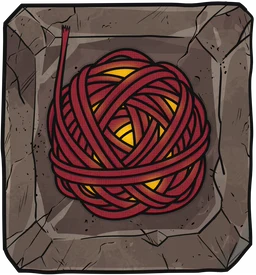
- El ovillo: tu nivel es ahora un ovillo con el número dentro, y su hilo da más vueltas y cambia de color en cada Madeja. Tu avatar lleva un marco con ese hilo, tu barra de experiencia es el hilo que se va enrollando y, al empezar una Madeja, el ovillo se reforja en la subida de nivel.
- Los premios son retroactivos: si ya pasaste de un nivel, lo tienes para reclamar en «Recompensas de nivel», ordenado por etapas (la primera subida y cada Madeja).
El pueblo de tu Casa
- Cada pestaña es ahora un sitio del pueblo de tu Casa: Batalla, su calle; la Taberna, la de tu Casa; Misiones, el despacho de tu maestre; el Grimorio, la biblioteca, y el Mercado, el puesto de Ketil.
- Los fondos van con la hora de tu móvil: de día de 7 a 20 h y de noche el resto, con sus luces encendidas. En el puesto de Ketil siempre es de noche.
- La ropa tendida, las telas y el humo se mueven con el aire. Si prefieres que se queden quietos, apágalo en Ajustes → Movimiento en pantalla → «Fondos que se mueven».
Paquetes
- El mostrador de Ketil: abrir un paquete ya no es un viaje entre meteoritos. Te acercas de noche al puesto de Ketil, su mano te trae el paquete atado, lo sella delante de ti y te lo acerca por la mesa.
- Las cartas salen una a una donde estaba el paquete, y una fila de dorsos pequeños te dice cuántas quedan: cada uno se pinta de su rareza al girarse. Al final, las cartas se reparten en abanico sobre el mostrador, con el polvo y el oro al lado.
- Mientras lo abres, suena el callejón del mercado de noche, con tus pasos al acercarte al puesto.
- Historial de paquetes: en tu historial hay una pestaña «Paquetes» con cada paquete que abres, las cartas que traía, lo que costó y el polvo de sus copias repetidas. Puede que no salgan los que abriste antes de la 0.8.0.
- En «Movimientos» ves ahora todo tu historial, sin límite, y puedes buscar por concepto, carta o paquete.
Clasificatoria
- Las ligas cambian de nombre: Invocador, Guardia, Maestre, Heraldo, Regente y Leyenda (antes, Bronce, Plata, Oro, Platino, Diamante y Leyenda). Cada una estrena emblema con su gema.
- Los nombres de liga y los títulos de temporada concuerdan con el género de tu invocador: «Invocadora», por ejemplo.
- La Ascensión: la escalera clasificatoria tiene nombre. En Clasificación, la pestaña «Tu Ascensión» enseña las seis ligas de abajo arriba, cada una con su gema, lo que se oye de ti en la grada a esa altura y el premio de temporada que da.
Perfil
- Tu perfil enseña el Rango y el Nivel lado a lado: la gema de tu liga y tu ovillo. Cada uno te lleva a su pantalla, la Clasificación y «Recompensas de nivel», y el del nivel avisa si tienes premios por reclamar.
- Tu Casa tiene su sitio en el perfil: su sello abre la Guía de Auspicios, y al lado está el Pacto de Hospitalidad; con uno activo, dice qué Casa te acoge.
Metas
- En Batalla, «Ver todas» abre el tablón de tus metas: fija hasta 2 y serán las que veas en Batalla. Sin ninguna fijada, verás la que tengas más cerca. Las misiones también se pueden soltar.
- En «Recompensas de nivel», «Seguir este premio» lo lleva a tus metas para que veas cuánto te falta.
- Marca una carta en el Grimorio o en el Taller y tus metas te dirán cuánto polvo te falta para fabricarla.
Modo Forja
- Votos de la Forja: antes de forjar haces tus votos, los que quieras: solo la mitología de tu carta, sin legendarias y un plan de juego (Asfixia, Asalto, Muro o Aguante). La Forja levanta el mazo en torno a tu carta respetándolos, y si no tienes 20 cartas que los cumplan, te avisa.
Comunidad
- Mientras esperas a que un aliado acepte tu reto, puedes seguir usando la app: el reto se queda esperando en segundo plano.
- Si el aliado está desconectado, el reto dura 2 minutos en vez de 1, para que le dé tiempo a ver el aviso y entrar. Y si os retáis los dos a la vez, la partida empieza directamente.
- Como mucho, 3 retos seguidos a la misma persona sin que acepte ninguno: después toca esperar un rato.
- En tu lista de aliados ves el nivel y el avatar de cada uno, con el marco de su ovillo, y su estado en su propia línea: «Haciendo tiempo», «En el campo de batalla» o «Fuera de línea».
Misiones
- Nueva semanal difícil: «Gana 3 partidas con 7 o más cartas en la mano». Sustituye a «Gana 3 partidas cuando nadie cuente contigo», que dependía del emparejamiento y no se podía buscar. Si ya llevabas alguna victoria en la vieja, la conservas.
- La diaria de ganar con la mano llena pide ahora 6 cartas (antes, 5), porque se empieza con 6.
- Armar una trampa cuenta como especial usada.
Cambios
- Diamantes: la moneda del Mercado se llama ahora diamantes (antes, gemas). Las gemas de la Clasificatoria, las que ganas y pierdes en cada partida, siguen siendo gemas.
- Tu último mazo ya no se puede borrar: siempre te queda uno con el que jugar.
- Los avatares, los reversos y el equipo de las cartas se descargan en la pantalla de carga, junto al arte de las cartas, y están listos desde el primer arranque.
- El aviso de bienvenida enlaza a «Juego justo», la página de la web con todo lo que prometemos sobre la economía.
- La app va más fina en móviles antiguos.
- Una legendaria vale 800 de polvo venga como venga: al desencantarla (antes, 400) y como copia repetida en regalos, encuestas y el Patio, como ya pasaba en los paquetes. Fabricarla sigue costando 1.600.
- Textos legales al día: si aceptas compartir los datos de tus partidas, ahora se guarda también cada jugada tuya (qué tenías en la mano y en la mesa y qué elegiste), sin tu nombre ni tu cuenta, para enseñar a los rivales que maneja el juego a jugar como las personas. Como cambia lo que se comparte, la app te lo vuelve a preguntar.
- Mejoras de seguridad importantes.
Arreglos
- La Ronda de Creta y Antídoto paraban una sola carta cuando un golpe te quitaba varias a la vez, como el Trueno de Thrud, y se quedaban con un uso colgado. Ahora paran una por cada uso que les quede.
- Si la «Marea Abismal» de Jǫrmungandr dejaba al rival sin cartas, la partida no acababa en el acto.
- La subida de nivel podía enseñar mal cuál era tu próximo premio.
- Las cartas que vuelan por la mesa ya no se adelantan a los avisos y a las cartas reveladas.
- Cuando una carta atacaba y la jugada vaciaba la mesa en el acto (la Hidra que se regenera, Miyamoto Musashi, Tomoe Gozen, Pḗgasos…), la atacante se iba al cementerio sin llegar a pelear. Ahora se ve el duelo y cada carta acaba en su sitio.
- Si la carta que cae tiene un efecto al caer, como Represalia o Último Aliento, ahora ves primero cómo cae y después su efecto. Antes se leía el efecto antes que la muerte que lo provocaba.
- Las cartas que vuelven del cementerio a la mano ya no desaparecen del montón antes de salir volando, y las que te llegan a la mano sin robarlas ya no aparecen de golpe.
- En online, la partida se quedaba esperando para siempre cuando una jugada te hacía elegir carta, como el descarte de la Sobrecarga tras un Ataque en Equipo.
- En el despertar y en la partida de Ravel, las burbujas de diálogo ya no se montan unas encima de otras y la música ya no tapa las voces.
V 0.7.6 Raras y épicas rehechas con habilidades propias, el Dominio solo en las legendarias (te devolvemos el oro), la última partida de Ravel para empezar, paquetes con elección y duelos cara a cara en una mesa nueva.
Primeros pasos
- La última partida de Ravel: si abres Mythfate por primera vez, empiezas jugando sin crear cuenta. Eres Ravel, en su última partida de la temporada contra Melina: primero el juego te guía paso a paso y luego te deja acabarla a tu manera. Se puede omitir, y si ya tienes cuenta, entras directamente.
- Al terminar llega el despertar: una figura a contraluz te pregunta tu nombre, y eliges tu aspecto y tu Casa.
- El prólogo de tu Casa acaba con una partida de práctica contra la IA, con el mazo que acabas de recibir. Y el tutorial de batalla se puede repetir cuando quieras desde Ajustes.
- Mazos iniciales equilibrados: cada Casa empieza con un mazo nuevo, hecho a mano y con parejas de comunes para el Ataque en Equipo. Antes el de Olympus ganaba bastante más que los otros dos; ahora los tres van parejos. Es solo para cuentas nuevas: si ya juegas, tu mazo no cambia.
Raras y épicas rehechas
- Cada rara con su habilidad: antes las 27 raras se repartían 12 habilidades; ahora ninguna se repite, y las épicas que se quedaban cortas cambian. Casi todas le quitan cartas de la mano al rival, le bloquean cartas o le cortan el robo, cada facción a su estilo.
- Las partidas son más cortas y ya casi nunca acaban con los dos mazos vacíos: antes casi todo el daño a la mano venía de pasar turno. Las legendarias no se tocan.
- Los mazos de los rivales de la Clasificatoria y los mazos iniciales de cada Casa se rehacen con las cartas nuevas, y la IA aprende a usar las especiales nuevas.
Raras
- Sileno → «Represalia»: si la derrotan, quien la venció descarta 1 carta.
- Epione → «Antídoto»: al jugarla, el siguiente descarte que te haga el rival falla. Se acumula.
- Pḗgasos → «Muro Castigador»: si el rival no puede superarla y pasa, su carta de más ATK queda bloqueada en su siguiente turno.
- Pitón → «Mordisco»: si la derrotan, eliges una carta de quien la venció y queda bloqueada en su siguiente turno.
- Dólōn → «Espía» (especial): miras la mano del rival y bloqueas la carta que elijas durante sus 2 siguientes turnos.
- Halio: su «Aliento de Vida» salta también al bajarla. Dárdano pasa a 3/6.
- Kappa → «Remolino»: si gana con ventaja elemental y por 2 o más, el rival descarta 1 carta.
- Yuki-onna → «Congelar»: si gana con ventaja elemental, eliges una carta del rival y queda bloqueada en su siguiente turno.
- Baku → «Come-sueños»: si gana, en su siguiente turno el rival no puede usar especiales, la carga de su Auspicio ni el Fervor.
- Tanuki → «Engaño»: al bajarlo con la mesa vacía, si el rival tiene más cartas que tú, descarta 1.
- Bakeneko → «Maldición»: si lo derrotan, quien lo venció no roba en su siguiente turno.
- Shuten-dōji → «Contra los Grandes»: si derrota a una épica o legendaria, eliges una carta del rival y queda bloqueada en su siguiente turno.
- Nogitsune → «Zorro Ladrón»: si gana con ventaja elemental, te llevas a la mano la primera carta del mazo rival.
- Ōishi Yoshio → «Asalto»: al bajarlo con la mesa vacía, las 2 primeras cartas del mazo rival van al cementerio.
- Snorri → «Mano Llena»: si gana y el rival tiene 5 cartas o más, descarta 1.
- Freydís → «Remontada»: si gana teniendo menos cartas que el rival, este descarta 1.
- Völundr → «Saqueo Menor»: si gana por 2 o más, la primera carta del mazo rival va al cementerio.
- Einarr → «Ofrenda de Sangre» (especial): descartas 1 carta y el rival descarta 1.
- Hugin y Munin → «Lo Ven Todo»: si ganan, el rival enseña 3 cartas al azar de su mano y descarta una de ellas, la que él elija.
- Irpa gana su +2 de ATK con 5 cartas o menos (antes, 4), y el «Rompe-escudos» de Vídar da +2 (antes, +1).
Épicas
- Kasha → «Rapto del Alma» (especial): el rival descarta 1 carta al azar. Ya no te la quedas.
- Suiko → «Retirada» (especial): la carta del rival en mesa vuelve al fondo de su mazo y la mesa queda vacía.
- Aonyōbō → «Contra los Grandes»: si derrota a una épica o legendaria, el rival descarta 1 carta.
- Ragnar Lodbrok → «Saqueo de Mazo»: si gana por 2 o más, te llevas a la mano la primera carta del mazo rival.
- Esfinge → «Enigma»: si el rival no puede superarla y pasa, eliges 2 cartas de su mano y quedan bloqueadas sus 2 siguientes turnos.
- Himiko → «Silencio» (especial): en su siguiente turno, el rival no puede usar especiales, la carga de su Auspicio ni el Fervor.
- Fenrir → «Devorar el Sol»: si gana, el rival no roba en su siguiente turno.
- Sigrún → «Juicio de la Valkiria»: si gana por 2 o más, miras la mano del rival y eliges la carta que descarta.
- Hangaku Gozen → «Lluvia de Flechas» (especial): las comunes del rival quedan bloqueadas en su siguiente turno, y si pasa en ese turno, descarta 1 carta más.
- Minamoto no Yoshitsune: conserva «Corte Relámpago» y, si gana con ventaja elemental, el rival descarta 1 carta.
- Helgi Hundingsbane → «Último Aliento»: si lo derrotan, quien lo venció descarta 1 carta (antes robabas tú).
- Skuld: mientras duran sus «Runas de Batalla», cada Ataque en Equipo que gana hace descartar 1 carta al rival.
- Talos → «La Ronda de Creta» (especial): deja de ser pasiva y protege tu mano. Las 2 siguientes cartas que el rival te haga descartar o te quite se quedan en tu mano. No se acumula, y el escudo se ve en tu mano.
- Pentesilea → «La Marca de Aquiles»: hereda la antigua pasiva de Talos y va más allá. Cuando la derrotan, la carta que la venció pierde 2 PV mientras siga en mesa, y quien la venció no roba en su siguiente turno. Pierde «Duelo de Honor», así que empatar ya no vence nunca.
- Leónidas pasa a 4/7.
Dominio
- Solo en las legendarias: las raras y las épicas dejan de tener Dominio y juegan siempre igual. Lo que hubieras desbloqueado en ellas sale de tus mazos y te devolvemos todo el oro que pagaste: lo ves en tu historial como «Devolución de Dominio».
- Sin experiencia de carta: las mejoras se pagan solo con oro, a precio fijo. En una legendaria, la primera habilidad cuesta 600 y la segunda 1.400; la primera mejora, 250, y la segunda, 550.
- Con la experiencia se van su barra, el resumen de experiencia al final de la partida, la meta de Dominio de Inicio, el filtro «Pueden subir» y el recorrido del Dominio en el Grimorio.
- La misión semanal de Dominio pasa a ser «Gana 12 choques con ventaja de elemento», con el mismo premio.
- Kasha a valor completo: como Kasha cambia, durante 14 días las copias que ya tenías se desencantan por 400 de polvo, lo que cuesta fabricarla.
Paquetes
- De sobres a paquetes: los sobres pasan a llamarse paquetes y estrenan nombres: el Básico es ahora el Invocador, el Premium el Heraldo y el Mítico el Regente. Los packs temáticos pasan a ser lotes temáticos. Los precios en oro no cambian.
- Un paquete ya no se rasga: llega como un mazo atado con cuerda y sello de cera. Mantén pulsado el sello para abrirlo.
- Heraldo y paquetes de facción: traen siempre al menos 1 épica o mejor, además de 2 raras o mejores.
- Paquete Regente: pasa de 5 a 9 cartas, con 5 épicas o mejores y 2 raras o mejores. En 3 de esas épicas eliges tú: ves 3 cartas de la misma rareza boca arriba y te quedas con una. Si cierras el juego a medias, lo terminas desde el Mercado.
- Repetidas: ya no hay protección contra duplicados, así que un paquete puede traer cartas que ya tienes. Cada copia que pase del máximo del mazo se convierte al momento en polvo: 10 una común, 25 una rara, 100 una épica y 800 una legendaria (el doble de lo que da desencantarla). La excepción es el último Paquete de Bienvenida: su legendaria siempre es una que no tienes.
- Sin contador de garantía: desaparecen la épica asegurada cada 5 paquetes y la legendaria cada 20. La red de seguridad es fabricar: ninguna carta cuesta más de 1.600 de polvo.
- La ficha de cada paquete te dice, junto a sus probabilidades, en qué porcentaje de paquetes sale al menos una legendaria.
Batalla
- Duelos: cuando una carta vence a otra, las dos se plantan cara a cara y pelean. Una marca de tinta roja enseña el golpe, la vencida se parte, y el golpe que cierra la partida se nota más.
- Armas de serie: en el duelo, cada tribu ataca con la suya: la Falange con lanza, la Infantería con espada corta, las Sombras lanzando kunai, las Bestias a zarpazos, los Bushi con katana, la Corte con abanico de guerra, las Valkirias con lanza alada y los Tiradores con flechas. Los Yokai, Espíritus y Oráculos atacan con fuego fatuo o con magia.
- Especiales: al lanzar una, tu carta se encara con la del rival y se dibuja un sello de tinta con el hilo del destino. Los números de la carta afectada cambian a la vista.
- Los avisos de la jugada (Ataque en Equipo, Sobrecarga…) salen dentro del duelo, y las cartas que cambian de mano, los descartes y los diálogos esperan a que termine en vez de pisarse con él.
- La carta en mesa muestra también su bono o penalización por elemento, y el rival la ve igual que tú.
- Mesa nueva: abajo, una repisa de madera con la placa de cada jugador; el Auspicio va en un sello y el Fervor, en una banda de 6 ladrillos. Pasar turno es ahora una losa con el tiempo que se consume como una brasa, y el menú de la partida, un engranaje a su lado.
- El sorteo de quién empieza presenta a los dos jugadores con sus retratos, y en la mano inicial las 5 cartas se ven en dos filas, de 3 y 2.
- Si ninguna carta de tu mano gana sola pero dos comunes juntas sí, brillan en violeta: es tu Ataque en Equipo.
- Cuando una habilidad te deja elegir qué carta del rival bloquear, ves su mano y eliges; la carta bloqueada lleva un candado con los turnos que le quedan.
- Junto a tu placa se ve si estás en silencio, si no robas este turno o si te ha caído la Lluvia de Flechas, y si tu mano está protegida.
- Al pasar turno, te avisa si la carta del rival te va a bloquear cartas o te va a costar una más.
- Las cartas de tu mano con la especial sin cargas brillan en amarillo cuando tienes Fervor para recargarla.
- Al acabar la partida, el retrato de quien pierde sale al centro, se agrieta y se rompe en pedazos.
Equilibrio
- La Defensa pasa a llamarse Vida (PV): es el número rojo de las cartas, y la regla no cambia: si el ATK, con su elemento, supera los PV del defensor, la carta cae. Tú sigues sin puntos de vida: tu mano es tu vida.
- Una carta que el rival te roba, o que le entregas, llega con su bloqueo y sus cargas gastadas: ya no se puede volver a lanzar su especial nada más llegar.
- No se puede volver a lanzar una especial mientras su efecto siga activo (Guardia, Égida, Escudo de Siete Pieles, los refuerzos para el siguiente ataque…). Antes se gastaba la carga sin hacer nada.
- Kawarimi y Paso de Sombra, al esquivar un Ataque en Equipo, devuelven la carta a lo alto o al fondo del mazo, igual que en un combate normal.
- Ataque en Equipo: ya pueden cargar juntas dos comunes cualesquiera, aunque no sean de la misma tribu.
- Bloqueo de las especiales según la rareza: tras lanzarla, una rara queda bloqueada 3 turnos tuyos y una épica 4 (antes, 2 las dos); la legendaria se queda en 2.
Misiones
- Más misiones: ahora tienes 3 diarias de 15 de oro cada una (antes, 1 de 35) y 5 semanales: 4 normales de 35 y 1 difícil de 55 (antes, 3 de 60 y la de subir de rango, de 90). Al día ganas algo más de oro, y a la semana, lo mismo que antes.
- Las diarias salen una de cada tipo: una de jugar, otra de cómo juegas (Auspicios, Ataques en Equipo, Fervor…) y otra de con qué juegas (mazos de una facción), así que nunca te tocan tres iguales. Si cambias una, te sale otra del mismo tipo.
- Las misiones de facción solo te salen si puedes montar un mazo de esa facción con tu colección, y la de retar a un aliado, solo si tienes aliados.
Nuevo aspecto
- Tonos cálidos: los fondos dejan el violeta por un neutro cálido con madera rojiza, y el violeta queda solo para lo que tiene que destacar. El botón JUGAR pasa a amarillo, un color que es solo suyo.
- Barra de navegación nueva: la pestaña abierta se ensancha y enseña su nombre, el botón de Batalla lleva la insignia de tu liga y los avisos tienen color: rojo para solicitudes, dorado para recompensas y verde para aliados conectados.
- La rueda de la cabecera abre un menú con Ajustes, Soporte y el Manual. «Configuración» pasa a llamarse «Ajustes».
- Inicio: el paquete diario sale en grande en el carrusel y se abre con un toque, «Primeros pasos» se ve como un camino de hitos, y las misiones por completar pasan al carrusel de metas.
- El perfil y el podio de la Clasificación muestran las gemas de tu división, o tu ELO si estás en Leyenda.
- Los dorsos de carta están redibujados.
Colección y mazos
- Buscador: en el Grimorio, el editor de mazos y el Taller, busca cartas por nombre, texto de habilidad, tribu o elemento.
- Editor de mazos nuevo: al tocar una carta se abre su taller, con pestañas para la carta, su Dominio y su variante. Ves los puntos de cada carta y los del mazo, y si sales sin guardar, te avisa.
- Si borras tu mazo activo, te avisa antes y otro pasa a ser el activo.
- Al desencantar, el Taller te dice qué mazos se quedarían incompletos.
- Descartar el mazo que te ha hecho la Forja pide confirmación.
Comunidad
- En la lista de aliados ves quién está «Haciendo tiempo» en los menús y quién está «En el campo de batalla».
- No puedes retar a quien está en plena partida, pero sí a un aliado desconectado: le llega un aviso para que acepte.
- Solo juegas contra quien tenga tu misma versión del juego, tanto en la cola como en los retos entre aliados, para que no empiece una partida que no funcionaría.
Cambios
- Temporada 0: la temporada de la beta pasa a llamarse Temporada 0 y termina el 31 de octubre. La Temporada 1 abre el 3 de noviembre a las 19:00 (hora peninsular española).
- Si tu rival abandona y la partida se cierra por inactividad, la ganas con todo: estrellas, XP, oro y misiones. Antes solo te llevabas la experiencia de carta.
- Los gestores de contraseñas (iCloud, Google, 1Password…) ya ofrecen rellenar y guardar tu contraseña al entrar o al registrarte.
- Polifemo: su mejora de Dominio «La Maldición a Poseidón» pasa a llamarse «La Maldición del Cíclope». Hace lo mismo.
Arreglos
- Si la sesión se renovaba en mitad de una partida online, el tablero se quedaba congelado.
- Rendirse sin conexión te dejaba atrapado en una partida muerta.
- Si los dos jugadores se quedaban sin cartas en la misma jugada, perdía siempre el mismo. Ahora gana quien ha hecho la jugada.
- En algunas partidas, rendirse no contaba como derrota, y en Clasificatoria te ahorraba la estrella.
- El editor decía «Mazo guardado» aunque el mazo se hubiera borrado desde otro móvil. Ahora te avisa de que ya no existe.
- Los errores al duplicar o borrar un mazo se perdían sin avisar, y la copia de un mazo con nombre largo no se podía guardar.
- La Forja y el ritual de fabricar podían quedarse colgados. Además, si el precio de fabricar cambia antes de cobrarte, ahora te lo vuelve a preguntar con el precio real.
- En el Grimorio, el detalle de carta saltaba a otra carta, la lista perdía su posición al refrescar y algunas variantes salían como «Nueva» sin haberlas conseguido.
- El fondo de la pantalla de inicio de sesión podía salir en negro.
- La notificación de la Temporada 0 llegaba sin texto, y se corrigen erratas en habilidades como «El Hilo Recompuesto» de Klōthō.
V 0.7.5 Mythfate llega en catalán, francés y alemán, con el Manual del Invocador para consultar todas las reglas, el Pacto de Hospitalidad para jugar con los Auspicios de otra Casa, temporadas de dos meses y un reajuste de las comunes y de Asgard.
Idiomas
- Catalán, francés y alemán: el juego entero en tres idiomas nuevos: menús, cartas, habilidades, historia, notificaciones y textos legales. Se eligen en Configuración, y si tu móvil está en uno de ellos, el juego arranca directamente en ese idioma.
- Las noticias, los avisos, las encuestas y los regalos te llegan también en tu idioma.
- Cuando algo falla, el mensaje te explica qué ha pasado, en tu idioma, en vez de enseñar un error genérico.
Manual del Invocador
- Manual del Invocador: todas las reglas del juego, por capítulos, a un toque desde la cabecera. Si acabas de llegar, empieza por el principio; si buscas algo concreto, tiene buscador: «Fervor», «carga», «pasar turno»…
Pacto de Hospitalidad
- Pacto de Hospitalidad: juega con los Auspicios de otra Casa hasta que cierre la temporada. Sigues siendo de la tuya; lo único que cambia es de dónde salen los Auspicios que te ofrecen antes de cada partida.
- Recibes un pacto de regalo cada temporada, y los que guardas no caducan. Si no te queda ninguno, puedes comprar uno con gemas en el Mercado.
- Romper el pacto es gratis, pero lo pierdes y esa Casa queda cerrada para ti hasta la temporada siguiente. Cambiar de Casa anfitriona gasta otro pacto.
- Tu rival lo sabe: en la partida verá, por ejemplo, «Olympus, huésped de Asgard».
- Lo tienes en tu perfil y en el Mercado.
Clasificatoria
- Temporadas de dos meses: cada temporada dura unas 8 semanas, y los premios de fin de temporada se doblan para que no ganes menos oro por ello.
- Entre una temporada y la siguiente, la Clasificatoria cierra unos 3 días. Mientras tanto, el botón de jugar te lleva a Casual y la home te dice cuánto falta para que abra.
- La temporada actual se alarga hasta el 31 de octubre, y la siguiente abre el 3 de noviembre.
Equilibrio
- Comunes más fuertes: se quedaban muy por detrás de las raras y no merecían su hueco en el mazo. Suben sus números, sobre todo las que casi nunca ganaban un choque: ninguna común de Olympus tiene ya 1 de ATK, ninguna de Asgard 1 de DEF, y en Takamagahara desaparecen las de 2 de DEF.
- Asgard pega más y aguanta menos: sus raras, épicas y legendarias bajan de DEF y varias suben de ATK. Tenía la defensa de las otras Casas y además más ataque, y sus mazos lo ganaban casi todo. Por ejemplo, Völundr pasa de 6/6 a 6/4, Brynhildr de 7/8 a 8/5 y Jǫrmungandr de 7/6 a 8/4.
- Polifemo → «Furia del Cíclope Cegado»: necesita 4 de Fervor en vez de 3.
- Recargar especiales cuesta más Fervor: 3 una rara y 4 una épica (antes, 2 y 3). Tan baratas, algunas especiales se usaban casi cada turno.
- Las descripciones de las habilidades son más cortas y fáciles de leer, sin cambiar ninguna regla. Las cartas que salen de la partida se llaman siempre «desterradas».
Batalla
- Destierro: cuando una carta se destierra (Ganryū-jima, Fauces del Cíclope…), se levanta de la mesa, flota un instante y se deshace en polvo, para que se vea que no va al cementerio.
- Pegaso despliega las alas y aletea mientras lo arrastras a la mesa.
- Las cartas que el rival te quita se quedan un momento en el centro, en grande, antes de irse, y ya no las tapa la habilidad que te las ha quitado.
- Al recargar una especial con Fervor, un cartel te dice cuál se ha recargado.
- La IA ya no malgasta «Embate Berserker» y otros refuerzos para su siguiente ataque (ni el Fervor de recargarlos) justo antes de tener que pasar turno.
Comunidad
- Denunciar y bloquear: desde el perfil de otro jugador puedes denunciarlo (nombre ofensivo, suplantación, trampas, acoso…). El equipo lo revisa y te responde en Soporte.
- Si bloqueas a alguien, dejáis de ser aliados y ninguno de los dos puede mandarle solicitudes ni retos al otro. Los tienes en Configuración, en «Jugadores bloqueados», y desde ahí los puedes desbloquear. Las partidas aleatorias no cambian.
- Los amigos pasan a llamarse aliados.
Cambios
- Textos legales nuevos: se actualizan los términos y la privacidad, y la edad mínima para jugar sube a 16 años. Al entrar te pedirá aceptarlos de nuevo.
- Los datos de partida que compartes sin vincularlos a tu cuenta son anónimos de verdad: ya no se guarda nada que permita saber que la partida es tuya, ni siquiera la hora.
- Legado: los títulos y los reversos tienen también el filtro «Obtenidos».
- Las ilustraciones alternativas de las cartas se llaman ahora variantes, y las rondas del Patio, series.
Arreglos
- Las denuncias enviadas desde Soporte fallaban y no llegaban.
- En el tutorial de Olympus, la explicación del Peaje decía al revés quién se quedaba la carta.
- La historia de Brynhildr en inglés traía pegado un montón de texto que no era suyo.
- Corregidas varias erratas en habilidades y títulos.
V 0.7.3 Ya se puede bajar de liga tras tres derrotas seguidas en la entrada, las cartas de la mano enseñan su ATK y DEF reales antes de jugarlas, el Dominio cuesta menos oro y el juego arranca en el idioma de tu móvil.
Clasificatoria
- Ahora se puede bajar de liga: desde Oro, en la entrada de una liga la derrota sigue sin restarte gema, pero 3 derrotas seguidas te bajan a la liga anterior. Caes a su último escalón, así que con una victoria vuelves. Cualquier victoria te devuelve los 3 intentos, y en Bronce y Plata no cambia nada.
- En Leyenda funciona igual: 3 derrotas seguidas en su entrada te devuelven a Diamante I.
- Por qué: hasta ahora, quien subía a una liga se quedaba en ella toda la temporada aunque dejase de jugar semanas. Así cada uno pelea contra rivales de su nivel real, y los 3 intentos evitan que una mala racha corta te tire nada más entrar.
- La home y la pantalla de Clasificación te avisan de cuántas derrotas seguidas te quedan antes de bajar, y el final de partida te lo recuerda (o te dice que has bajado y cuánto te falta para volver).
Batalla
- Las cartas de tu mano enseñan ya su ATK y su DEF reales antes de bajarlas, con todo lo que les afecta: «Guardia», «Égida» y el resto de refuerzos para tu siguiente carta, y los Auspicios Muralla y Adaptabilidad. Antes algunos solo se veían al llegar a la mesa.
- El indicador de ventaja o desventaja elemental cuenta ahora solo el elemento; el resto de bonificaciones va en las cifras de la carta.
- Las cartas bloqueadas en la mano también enseñan sus cifras: lo que ha crecido Tomoe Gozen se ve desde que vuelve a tu mano.
- Tomoe Gozen → «Espíritu Indómito»: el +1 de ATK que gana cada vez que vuelve se queda en un máximo de +6. En partidas largas acababa venciendo a todo.
Nuevo
- Idioma: si no has elegido uno en Ajustes, el juego arranca en el de tu móvil. Español si lo tienes en español, catalán, gallego, euskera, asturiano o aragonés, e inglés en cualquier otro caso.
- Aviso de versión nueva: cuando sale una actualización, el juego te lo dice con un aviso que te lleva a la tienda. Puedes cerrarlo y seguir jugando, y solo sale una vez cada vez que abres la app.
- Encuestas: cuando te preguntan por un Auspicio, ves debajo su ventaja y su desventaja, para no tener que recordar qué hacía cada uno.
Cambios
- Dominio más barato: las mejoras de Dominio cuestan un 40 % menos de oro, para que pesen lo mismo que antes del ajuste de oro de la 0.7.2. El descuento por jugar con la carta se mantiene.
- El aviso de cartas que pueden subir de Dominio, en «Te espera» y en el icono del Grimorio, se va al tocarlo y solo vuelve cuando otra carta se pone lista. Antes salía cada vez que abrías la app.
- Editor de mazos: el panel del mazo, con sus cartas y sus puntos, se queda fijo arriba mientras bajas por la colección.
- En la colección, el contador de copias aparece desde la primera.
- Las cartas que ahora no puedes usar (al tope de copias en el taller, con el mazo lleno en el editor) se ven en blanco y negro, con el dibujo a la vista, en vez de tapadas por un velo oscuro.
- Taller: una carta que ya tienes al tope se abre para leer su habilidad, y los diálogos de fabricar y de comprar la enseñan debajo.
- Misiones: un punto en cada pestaña avisa de que hay algo listo para reclamar.
Arreglos
- Las cartas salían cortadas por arriba en el editor de mazos y al ampliarlas.
- El nombre de un mazo largo salía cortado por abajo en el botón de la home.
- En móviles pequeños, los diálogos de fabricar y de comprar no cabían y se cortaba la descripción de la carta.
- Los packs temáticos hacían ir a tirones la tienda al desplazarte.
- La barra de carga del arranque enseñaba un trozo quieto a la izquierda que parecía colgado.
V 0.7.2 Llega el Fervor: tus legendarias necesitan que la grada se encienda antes de usar su habilidad, y con él recargas especiales. Los sobres dejan de venderse por gemas: se compran con oro, las gemas compran cartas concretas y packs sin azar, y las cuentas vuelven a empezar para estrenar la economía nueva.
Fervor
- Cada jugador tiene ahora una barra de Fervor, de 0 a 6, a la izquierda de la mesa. La tuya abajo y la del rival arriba: los dos veis siempre cuánto tiene el otro.
- Cómo se gana: +1 al empezar cada turno tuyo (el primero de la partida no cuenta) y +1 por cada carta que te quita el rival o que pierdes al pasar sin poder responder. Cuanto peor te va, antes llega: es la herramienta de la remontada.
- Legendarias: para usar su habilidad necesitan Fervor. Jǫrmungandr cuesta 4, Polifemo y Musashi 3, y Brynhildr, Tomoe y Odisei 2. Sin Fervor suficiente, o si decides ahorrarlo, la carta entra solo con sus números. Lo que decides al bajarla vale mientras siga en la mesa, así que el rival sabe siempre si está encendida antes de atacarla.
- Recargar especiales: cuando a una rara o a una épica se le acaban las cargas, puedes recuperar una pagando Fervor (2 la rara, 3 la épica), desde la carta abierta o tirándola hacia atrás. Recargar no gasta tu especial del turno.
- Las cartas legendarias llevan unos cuadraditos junto a la defensa: uno por punto de coste, que se encienden según el Fervor que tienes. Cuando llegas, la carta se enciende en amarillo.
- Las bolitas de carga de las especiales pasan a ser azules y ya no desaparecen al gastarse: se quedan vacías, para que se vea de un vistazo qué carta se puede recargar.
- La barra está viva: se enciende pieza a pieza, estalla cuando el rival te hace sufrir y arde entera cuando llegas al tope. Tócala para ver cómo funciona, y el duelo guiado del principio te la presenta.
Tienda
- Los sobres ya no se venden por gemas ni por dinero: solo se compran con oro, que se gana jugando. Las gemas nunca compran azar, y así consta ya en los términos de uso.
- Cartas concretas: en la pantalla de fabricar, cada rara, épica o legendaria enseña también su precio en gemas, con su equivalencia en euros. Fabricarla con polvo sigue siendo el camino gratis; comprarla es para quien no quiere esperar. Las comunes no se venden.
- Packs temáticos: nueva sección en la tienda con lotes de cartas concretas a precio fijo, sin azar. Ves todas las cartas antes de comprar, y si ya tienes alguna no te la cobran: pagas solo lo que te falta.
- Oro por polvo: tocando tu saldo de polvo en la pantalla de fabricar puedes cambiar oro por polvo, a 2 de oro por cada 1 de polvo. Solo en ese sentido: el polvo no vuelve a oro.
- Sobres de bienvenida: ahora son 5 y son un regalo. Abres uno al día, gratis, y el 5º trae una legendaria garantizada. Antes eran 10 y costaban oro.
- Precios de los sobres: el Básico pasa a 250 de oro, el Premium y los de facción a 650 y el Mítico a 2.000.
- Oro de las recompensas: el sobre diario da 30 de oro, las victorias 9 en clasificatoria y 3 en casual o en el Patio (con un tope de 54 al día), y la racha, las misiones y la recompensa de fin de temporada bajan en la misma proporción. Las recompensas de nivel no cambian. Es un ajuste de la beta para probar el ritmo de la economía nueva.
- La entrada al Patio se paga solo con oro.
- Gemas de la beta: vuelven a ser gratis, con un cupo de 1.200 al mes por jugador. La tienda te enseña cuántas te quedan este mes.
- Las cuentas vuelven a empezar: para que todos viváis el arranque con las reglas nuevas, la colección y los mazos se reinician y recibes otra vez el mazo inicial de tu Casa. Las monedas quedan como en una cuenta nueva, los sobres de bienvenida vuelven a estar disponibles, las recompensas de nivel se pueden reclamar de nuevo y el Dominio de tus cartas vuelve a cero. Se conservan tu nivel, tu perfil y tu Casa, la historia, los cosméticos, la clasificación, tus amigos y la racha del sobre diario.
Legendarias
- Odisei → «El Ardid de Nadie»: invoca a los dos Lanceros de Ítaca una sola vez y después la carta queda bloqueada 2 turnos para jugarse como cualquier otra, en vez de sacrificarse. Los Lanceros llegan siempre 5/5. Y el duelo con Polifemo cambia de sitio: al atacarlo, Odisei lo vence siempre y lo destierra de la partida, sin gastar Fervor.
- Miyamoto Musashi → «Ganryū-jima»: ahora vence siempre a las épicas y las legendarias, en lugar de a las cartas de ATK 6 o más. Antes dependía de contra qué facción jugaras; ahora es el cazador de grandes nombres contra cualquier mazo.
- Tomoe Gozen → «Espíritu Indómito»: sigue volviendo a tu mano al caer, y ahora cada vuelta le da +1 de ATK para el resto de la partida. El remate cuando al rival le quedaba una carta desaparece. Solo vuelve si entró con su habilidad encendida.
- Nuevas mejoras de Dominio para las tres: «El Caballo de Madera» (Odisei invoca un solo Lancero de 10/10), «Los Cinco Anillos» (Musashi vence también a las cartas de DEF 6 o más, a 4 de Fervor) y «Destino Incierto» (Tomoe vuelve bloqueada 1 turno en vez de 2, a 3 de Fervor).
- En español, Odiseo pasa a llamarse Odisei.
Encuestas
- De vez en cuando el equipo te pedirá tu opinión con una encuesta corta. Te la propone en la home, con cuántas preguntas tiene y qué regalo te llevas al terminarla.
- Son anónimas: tus respuestas se guardan sin tu nombre ni tu cuenta, así que nadie puede saber qué ha contestado cada uno. El regalo es por completarla y nunca depende de lo que respondas.
- Si ahora no te apetece, «Más tarde» la deja esperándote en «Te espera», en la home.
- La política de privacidad se ha actualizado para explicar cómo se guardan las encuestas, y el juego te pedirá aceptarla otra vez.
Cambios
- Ley del más fuerte (Auspicio): tu carta de más ATK sigue a salvo de los descartes que te impone el rival, pero ahora la puedes soltar tú si quieres: al pasar turno, con «Segunda intención», «Movilización Total», «Doble Filo» o tu propia «Ofrenda de Sangre». Si el descarte lo hace el juego por ti (se te acaba el tiempo), sigue sin tocarla mientras tengas otra.
- Práctica contra la IA: el rival juega bastante mejor. Valora mejor qué carta bajar, guarda sus legendarias hasta tener Fervor y ya no regala partidas: para entrenar hace falta alguien que te plante cara.
- Tutorial de batalla: ahora puedes repasar el duelo guiado cuando quieras desde Ajustes. Si ya lo habías jugado, «Te espera», en la home, te avisa de que trae novedades (el Fervor). Repasarlo, omitirlo o perderlo no cambia nada de tu cuenta, y al terminar vuelves a donde estabas.
- Probabilidades de los sobres: ahora explican con detalle cómo funcionan las garantías: Premium y facción comparten contador, la legendaria solo avanza con Sobres Míticos y los dos vuelven a cero en cuanto te sale esa rareza, venga del sobre que venga.
- El historial de movimientos muestra también las cartas y los packs comprados y los cambios de oro por polvo.
Arreglos
- El duelo guiado del principio podía quedarse atascado si tocabas una carta mientras el rival atacaba. Ahora, mientras juega el rival, la mesa espera a que termine.
- El podio de la clasificación mostraba solo iniciales: ahora enseña el avatar de cada jugador.
V 0.7.0 Llega el Modo historia con el prólogo de tu Casa, cada partida empieza eligiendo un Auspicio de tus dioses y tus cartas se hacen tuyas con el Dominio: habilidades alternativas y mejoras que se ganan jugando con ellas. Las especiales ya no se gastan, el juego entero estrena aspecto y todas las cuentas empiezan de cero.
El Modo historia ya se juega
- Tres capítulos escritos, uno por Casa, y el de la tuya es por donde empieza el juego: «Historia de Thrud» en los últimos días del invierno de Asgard, «Historia de Pentesilea» en el décimo año del asedio de Olympus e «Historia de Oda Nobunaga» en la noche del segundo año de Tenshō, en Takamagahara.
- Se lee como una novela visual: fondo a sangre, los que hablan en escena y una burbuja de diálogo que pasas tocando en cualquier sitio. Cada capítulo trae su música y su cama de sonido, y se puede omitir si ya lo has visto.
- En el capítulo capturas al mito, y no mirando: llega un instante en el que hay que tocar. Si se te escapa tienes más intentos, y si aun así falla, tu maestre lo resuelve por ti — de la historia no se sale con las manos vacías.
- Y en cuanto el toque acierta, se te enseña lo que acabas de sellar: la carta nace diminuta en el centro, crece hasta tu mano y se queda ahí el rato que te apetezca mirarla. No se cierra sola.
- Los capítulos de las otras dos Casas también se juegan, contados por un invocador novato de allí: es la misma historia, vista desde donde la vivió otro.
- Al terminar se abre lo que te llevas: las cartas en rejilla, que se tocan para verlas en grande, más el título y la variante que conceda el capítulo. Van por condiciones distintas: el título es por ser de esa Casa y solo cae en tu prólogo; la variante es por haber estado allí y cae siempre, juegues el que juegues. Si el capítulo no era el tuyo, la variante se anuncia en su propio aviso — antes aparecía en el Grimorio sin que nadie hubiera dicho nada.
- Un capítulo terminado se puede volver a jugar las veces que quieras, avisando antes de que lo que ya te llevaste no se vuelve a dar. En la crónica, el prólogo va marcado como tal, los terminados llevan su marca y los que quedan por escribir van apagados y sin nombre: inventarles uno sería prometer una historia que aún no está decidida.
- Cada Casa trae además su propia música narrativa —Asgard, Olympus y Takamagahara—, y las camas de sonido se cruzan entre escena y escena en vez de cortarse.
- Y las crónicas son cuatro: la de Mythfate —el sitio, quién mira desde arriba y qué pintas tú ahí— y una por Casa. Se retiran La Odisea, la Edda y el Nihon Shoki que se anunciaron en la versión pasada: eran obras enteras con un recuento que cumplir (24 cantos, 29 poemas, 30 rollos) y ataban la campaña a la estructura del libro. Ahora son capítulos sueltos, cada uno con su nombre y su partida, y añadir uno es escribirlo.
- Las semanas que no se cuentan se pasan en un montaje. Recoger los otros diecinueve mitos llevaría diez minutos de diálogo, así que se resuelve en cinco frases sobre la sala de tu Casa, desvaída al fondo. Se avanza a toques, como el resto: cada frase espera a que la hayas leído.
- Los capítulos se juegan en orden: uno escrito pero bloqueado enseña su portada apagada, con un candado y «Termina el anterior».
- «Reiniciar la historia», al pie de la portada del Modo historia, deja todos los capítulos sin jugar para empezar de nuevo. Lo que ganaste —títulos, variantes y cartas— se queda, y los premios de cada capítulo solo se dan una vez.
- Los tres prólogos se reescriben en parte. Ahora estás de verdad en el pasado: los mitos te ven, te oyen y pueden matarte. Despiertas en la residencia de tu Casa con tu maestre esperando y un arma que te da para todo menos para matar, porque cambiar la historia tiene un precio.
Auspicios
- Cada partida empieza con un favor de tus dioses. Antes de ver tu mano, tu Casa te ofrece tres Auspicios y te quedas con uno: una ayuda pequeña, con su ventaja y su pega, que no decide la partida pero sí cambia tus decisiones. Dependen de tu Casa, no de tu mazo.
- Cada Casa juega a lo suyo, con cinco Auspicios. Asgard, exceso y castigo: «Sobrecarga», «Furia acumulada», «Ley del más fuerte», «Carga» y «Botín». Olympus, aguante y desgaste: «Peaje», «Muralla», «Inventario», «Relevo» y «Rescate». Takamagahara, tempo e información: «Adaptabilidad», «Susurro», «Ojo Avizor», «Sombra» y «Segunda intención».
- Unos están siempre activos y otros tienen una sola carga que gastas cuando quieras, en tu turno, con su propio botón. No cuenta como tu habilidad especial del turno ni cuesta ninguna carta.
- En la ronda 8, los dioses vuelven a ofrecer los dos que rechazaste: puedes cambiar —y pierdes la carga que no hayas gastado— o quedarte con el tuyo. La partida se detiene mientras los dos jugadores decidís.
- El tuyo y el del rival cuelgan bajo cada jugador, a la vista de los dos, y se leen tocándolos. Todos los Auspicios se consultan en la Guía de Auspicios del perfil, y también al elegir Casa.
- Se juegan en clasificatoria, en casual, en los desafíos y contra la IA, y el duelo guiado te enseña a usar el tuyo.
El Dominio: tus cartas, a tu manera
- Las raras, las épicas y seis legendarias tienen ahora opciones. Cada rara puede cambiar su habilidad por una alternativa o por un reparto de stats sin habilidad: «Muro» en Olympus (+2 DEF, −1 ATK), «Sed» en Asgard (+2 ATK, −1 DEF) y «Filo» en Takamagahara (+1 de bono elemental, −1 DEF).
- Las treinta épicas estrenan mejora propia, que se suma a su habilidad: el Talos vencido sigue restando DEF, la Médousa que cae se lleva por delante a quien la venció, y algunas pasivas se vuelven especiales que usas cuando quieres. Y tienen su reparto de stats: «Ariete» en Olympus (+3 ATK, −3 DEF) y «Reducto» en Asgard y Takamagahara (+2 DEF, −2 ATK).
- Jǫrmungandr, Brynhildr, Odisei, Polifemo, Musashi y Tomoe Gozen tienen una habilidad y una mejora alternativas a las de siempre.
- Se desbloquean con oro, nunca con gemas: cómo juegan tus cartas no se compra. Lo desbloqueado es tuyo para siempre, sirve en todos tus mazos y cambiarlo es gratis. En la beta, cada carta admite dos desbloqueos.
- Tus cartas ganan experiencia jugando en clasificatoria y casual: +2 al ganar y +1 al perder por cada carta del mazo que tenga opciones. Esa XP no desbloquea nada sola: lo abarata, hasta la mitad de precio con la barra llena. Gastarla es una casilla que marcas tú.
- En el editor de mazos eliges qué lleva cada copia: dos copias de la misma carta pueden ir distintas.
- La ficha del Grimorio se ordena en pestañas —Dominio, Historia y Variantes—, las cartas listas para subir llevan una marca dorada, hay filtro «Pueden subir» y la home te avisa en «Te espera». También puedes marcar una carta como tu meta de Dominio.
- La primera vez que entras al Grimorio, un recorrido te enseña el Dominio y te regala la barra llena de una de tus raras para que lo pruebes.
Las especiales ya no se gastan
- Usar una habilidad especial ya no te cuesta la carta: se queda en tu mano, bloqueada durante 2 de tus turnos, con un candado y su cuenta atrás. Sigue contando como vida, sigue ocupando su hueco y te la pueden descartar.
- Y tienen cargas: una rara usa su especial 2 veces por partida, y una épica o una legendaria, 1. Las que quedan se ven como puntos verdes junto al ataque, y sin cargas la carta juega como una unidad más.
- Cloto, Brynhildr y Odisei se siguen sacrificando, porque lo dice su habilidad.
- Como la carta bloqueada sigue en tu mano, con la mano llena no puedes usar una especial que te haga robar, como «Pillaje del Alma».
- Una carta bloqueada se ve igual la haya bloqueado el rival o se esté recargando: cadenas, candado y la carta en gris.
Así empieza el juego
- Crear invocador: el nombre con el que vas a responder, el personaje —cómo se dirige a ti el juego, y es opcional— y el rostro, entre dieciocho retratos nuevos.
- También el mes de nacimiento, que sirve para hacerte un regalo ese mes. Solo el mes: ni el día ni el año, así que el juego no puede deducir tu edad ni lo usa para comprobar nada.
- Y eliges Casa, que ya no es elegir mazo: es de quién aprendes. Cada una tiene su página a pantalla completa, que se pasa deslizando, con su maestre —Ingvar en Asgard, Teodora en Olympus, Kaede en Takamagahara— y tres pestañas: su historia, las veinte cartas con las que vas a salir (con su ataque y defensa medios) y sus Auspicios. La pantalla te avisa antes de confirmar: la Casa no se cambia, así que por ahora no hay vuelta atrás.
- Tu nombre se desdobla. El nombre de invocador es el que ve todo el mundo: admite tildes, espacios y emojis, y lo cambias cuando quieras. El nombre de usuario es único, el que das a un amigo para que te encuentre, y se cambia una vez cada 30 días. En el buscador de amigos salen los dos, para que sepas que es la persona que buscas.
- Tu primera captura entra en tu mazo inicial. El mito que capturas en el prólogo es una de las tres épicas con las que empiezas. Antes solo cuadraba en Asgard, y de casualidad: dos de cada tres jugadores capturaban a alguien en la historia y luego no lo encontraban en su mazo.
- El duelo guiado lo da tu maestre, en el Coliseo sin Tiempo y con las veinte cartas exactas de tu mazo, no con otras. Son tres duelos distintos porque las tres Casas pelean distinto: Olympus aguanta, Asgard revienta y Takamagahara esquiva. El recorrido por la interfaz pasa al final, cuando ya has jugado.
La grada
- El coliseo tiene público. Una banda de luces alrededor del tablero, cerca, con su rumor de fondo. No se les ve la cara y no dicen una palabra: son sitios ocupados.
- Escala con tu liga, y no en distancia. En Bronce los tienes igual de cerca, pero casi vacío y en silencio, que es peor. De ahí a Leyenda sube cuánta banda está ocupada, cuánto brilla y cuánto se oye. En Leyenda hay una luz grande y quieta que no reacciona a nada, y el rumor se corta de golpe al empezar la partida.
- Reaccionan a lo que pasa en la mesa —una legendaria, un combate que arranca media mano, un destierro— igual para los dos jugadores, y se apagan si la partida se adormece.
- Ahora te rodean de verdad. Las luces dan la vuelta a la pantalla entera, esquinas incluidas, en vez de amontonarse en la franja de arriba —justo encima de las cartas del rival—, y cada una lleva el color de una de las tres Casas, repartidas a partes iguales: quien mira son los dioses de las tres mitologías, y ninguna tiene más sitio que otra.
- En la partida guiada no hay nadie: el Coliseo sin Tiempo está vacío a propósito.
El favor de los dioses
- Antes de empezar, a veces sale un cartel: «Tienes el favor de los dioses» o «Nadie cuenta contigo». Es lo único que la grada te dice a la cara, y se va solo.
- Debajo va lo que te llevas si ganas: oro y XP de más, y bastante más cuando nadie te daba por ganador. Solo suma. No se pierde nada por salir favorito, no hay nada que aceptar ni que rechazar, no se elige y no cambia una sola carta de la partida.
- Sale en clasificatoria y en casual, de Oro para arriba y como mucho tres veces al día. En Bronce y Plata la grada sigue ahí y en silencio: lo que se gana subiendo es que empiecen a decir tu nombre.
Cuando termina la partida
- El resultado se cobra en el sitio. Al acabar se abre el recuento de lo que te llevas: el oro, la experiencia y la barra llenándose delante de ti —con la cifra bajando mientras la barra sube— hasta el nivel en el que te quedas. Antes el oro y la XP se sumaban por su cuenta y el nivel te lo contaba otro aviso más tarde.
- Si subes de nivel, se celebra ahí mismo, sin sacarte a otro diálogo. Y si subes dos de golpe, la barra se llena dos veces.
- El favor de los dioses se paga en su propia línea, aparte del oro y la XP de la partida: el cartel de antes de empezar te prometió algo y aquí se ve cobrado.
- Y si quieres mirar cómo quedó todo, «Ver el tablero» cierra el resumen sin sacarte de la partida. El botón de menú pasa a devolverte al resultado cuando termines de mirar.
- «XP de N cartas»: una fila nueva del resumen que abre el desglose carta a carta, con cada barra llenándose y un aviso dorado en las que ya pueden subir de Dominio.
- En Leyenda se ve el ELO que ganas o pierdes, en grande, y cómo queda tu total. Allí las gemas ya están al tope, así que antes ganar y perder se veían igual.
Ataque en Equipo
- La compañera muere, pero su fuerza se queda. Al ganar una carga en equipo, la líder ya no aterriza con su defensa impresa: se queda en mesa como unidad combinada, con el ATK y la DEF de las dos. Antes era casi siempre un mal negocio —dos cartas de tu vida por una amenaza floja—; ahora dejas un muro que el rival tiene que responder.
- Los números son la suma limpia de lo impreso: no arrastran el bono elemental ni las Runas de Batalla con los que ganó la carga. Miras las dos cartas y sabes lo que queda.
- Y como la suma es la misma se lidere con la que se lidere, quién va delante solo decide si ganas el combate —el elemento y la habilidad son de la líder—, nunca el muro que queda.
- Juramento Espartano se queda con lo suyo: sumar la defensa de la compañera lo hace ya todo el mundo, así que lo que aporta es cargar con cualquier carta de Olympus de falange o infantería, sin que tenga que ser una unidad básica de su misma tribu.
Cartas y habilidades
- Polifemo → «Furia del Cíclope Cegado»: la condición se da la vuelta. Antes castigaba a quien lo derrotaba; ahora castiga a quien no puede con él. Si el rival tiene que pasar turno con el cíclope enfrente, descarta 2 cartas más — y si lleva a Odisei en la mano, es una de ellas y se va de la partida. Es lo que pasa en la cueva: el que puede con Polifemo se le escapa, y el que se queda encerrado pierde a dos de los suyos.
- Las comunes dejan de ser la misma carta con distinto retrato. Se habían quedado en diez combinaciones de ataque y defensa para las cincuenta y una, así que media colección eran clones. Ahora hay veintiséis, repartidas dentro del carácter de cada Casa —Olympus aguanta, Asgard pega, Takamagahara va al medio— y sin repetir nunca entre cartas del mismo oficio, que es justo donde las comparas al montar un Ataque en Equipo. La fuerza total de cada una no cambia: la que más pega lo paga en defensa o en bono elemental.
- Ocho raras cambian de habilidad para que encaje con su mito: Dienekes y Pḗgasos pasan a «Temple» (quien les ataca pierde 1 de ATK), Dárdano a «Guardia» (tu siguiente carta entra con +2 de DEF), Freydís e Irpa a «Desesperación» (+2 de ATK al atacar con 4 cartas o menos en la mano), Vídar a «Rompe-escudos», Snorri a «Presagio Funesto» y el Basilisco a «Ojo del Oráculo».
- El Basilisco pasa a ser Pitón, la serpiente que guardaba el oráculo de Delfos antes de que Apolo se lo quedara. Nombre e historia nuevos; el resto de la carta, igual.
- Momotarō → «Marcha del Durazno»: cuando lo vencen, Inu (4/2), Saru (3/2) y Kiji (2/3) acuden a tu mano. No salen de tu mazo, no cuentan como vida y no ocupan sitio. Antes robaba 2 cartas al ganar.
- Bjorn Ragnarsson → «Saqueo»: si gana el combate, descarta la carta de arriba del mazo rival, sin preguntar. Antes la mirabas y decidías.
- Musashi → «Ganryū-jima»: vence siempre a las cartas con 6 o más de ATK, y contra el resto combate normal, en vez de comparar su ATK con el del rival. Lo que vence se sigue desterrando, con todas sus copias.
- Tomoe Gozen → «Espíritu Indómito»: vuelve a tu mano cada vez que la vencen, no solo una, y se queda bloqueada 2 turnos. Y su remate cuenta ya las cartas del rival al entrar Tomoe, así que no falla si luego cambian.
- Jǫrmungandr → «Marea Abismal»: al caer se destierra de la partida. Cloto y compañía la resucitaban una y otra vez, y cada vuelta costaba dos cartas de la mano rival: cerraba partidas en dos turnos.
Las cartas, rediseñadas
- Se va la caja de texto de abajo y la carta cambia de forma. Ahora es más alta y la ilustración manda: la habilidad ya no viene impresa en la propia carta porque a tamaño de mano salía a cinco píxeles y eso no era información, era textura.
- La habilidad se lee al abrir la carta, a tamaño de lectura, entera y sin competir con el arte. Vale en el visor de batalla, en la mano inicial, al ampliar una carta de la mano, en el Grimorio y en el editor de mazos — y ahí las comunes cuentan también su Ataque en Equipo, que es su única jugada y antes se quedaban mudas justo donde se aprende a usarlas.
- El nombre va escrito con la letra de su Casa, una por mitología. Se reconoce de dónde viene una carta antes de leer lo que pone.
- El tipo de habilidad se marca con un sello, del mismo estilo que los de tribu: un disco de color para las pasivas y otro para las especiales. Antes eran dos símbolos sueltos que dependían de la letra del móvil y a tamaño de carta no se distinguían.
- Y los cuatro elementos estrenan glifo dibujado, con su relieve y su color, en vez de la silueta plana de antes.
Ver las cartas en batalla
- Todas las cartas de la partida se miran igual. El cementerio, lo que revela una habilidad y las cartas que hay que elegir para lanzarla se abren ahora en el mismo visor: en carril, para ver de un vistazo qué hay, o de una en una y en grande, para leerlas.
- Se pasa de una vista a otra con un botón, y la habilidad se lee entera en las dos. Antes cada diálogo enseñaba la carta a su manera y en alguno el texto no cabía.
Modos de juego
- Deja de ser un modal y pasa a ser una pantalla, con la ilustración, el color y una línea de qué es cada modo.
- El Modo historia va arriba y aparte de las batallas: no te empareja con nadie y no toca la escalera.
- La Arena pasa a llamarse el Patio, y de paso dice lo que es: aquí nadie trae su colección, se elige carta a carta y se baja con un mazo que no era de nadie, y cuantas más victorias encadenes, más te llevas. Sigue en camino, junto a Casual.
- Y la Práctica contra la IA pregunta antes de empezar, dejando claro que ahí no se juega nada: ni gemas, ni oro, ni experiencia, ni misiones, ni puesto en la clasificación. Es para practicar.
- Cuando juegas contra la IA se sabe. Su avatar lleva la etiqueta «IA», tanto en la práctica como si la cola de clasificatoria te empareja con ella.
Variantes de carta
- Una variante es otra captura de la misma persona. Thrud en la nieve del prólogo y Thrud en su carta de siempre son la misma, tomada en dos instantes distintos: cambia el retrato, cambia el mito —contado desde ahí— y cambia la nota de captura, porque aquella fue otra.
- Y es una carta a todas luces. Ocupa su propia entrada en el Grimorio, pegada a la suya, y se lleva al mazo como se lleva cualquier otra. Lo que juegues es lo que ve tu rival.
- Las copias se cuentan por la carta, no por el arte. Una legendaria sigue siendo una y una épica sigue siendo dos, con el retrato que sea: puedes llevar una de cada arte, nunca cuatro. Y tener la variante no regala la carta — para llevar dos entradas de una épica hay que tener dos copias de esa épica.
- No cambia nada de la partida: ni el nombre, ni los números, ni el elemento, ni la tribu, ni el texto de la habilidad. Eso es información que tu rival necesita exacta.
El Mercado
- La Tienda pasa a llamarse el Mercado, y la de gemas, el Mercado negro. No es un cambio de nombre por gusto: es el sitio del que habla la historia del juego, ese en el que nadie pregunta de dónde ha salido lo que traes.
- Las gemas gratis de la beta se ponen en pausa. Queremos probar el juego tal y como lo vivirá cualquiera que no pague: el oro, el polvo y los sobres se ganan jugando. Los packs de gemas se siguen viendo con su precio, pero no se cobra nada.
- El sobre diario gratuito va el primero, con su cuenta atrás, y el Taller de crafteo sube por delante de los sobres. Las probabilidades se abren desde la «i» de cada sobre.
- La apertura de sobres se queda sin música: suenan solo el viaje, el desgarro y los destellos de cada rareza.
Sobres y colección
- Los sobres caros ahora valen lo que cuestan. El Premium y los de mitología garantizan 2 raras o mejores en vez de 1, y el Mítico pasa a 2 épicas o mejores y 1 rara+. El Mítico costaba doce veces el Básico y rendía tres: era el peor negocio del Mercado justo para quien quería completar la colección.
- Ya no hace falta completar una rareza para empezar a repetir. Antes no caía ninguna segunda copia de épica hasta tener las treinta distintas, así que se llegaba a media colección sin poder montar un mazo con dos copias de nada. Ahora las dos cosas avanzan a la vez: solo se te evita una carta de la que ya tengas todas las copias que puedes jugar, y lo que sobra sigue convirtiéndose en polvo.
- El Sobre Básico sube a 150 oro. Con 100 la colección se completaba en tres semanas jugando a diario y el juego se quedaba sin nada que perseguir demasiado pronto. El sobre diario y el oro de misiones y victorias no se tocan: se ha alargado el atajo, no lo que ganas jugando.
- El Sobre de Bienvenida se queda en 100 oro. Empezar no encarece.
- La racha del sobre diario vuelve a importar. Un fallo en el cálculo hacía que quien llegaba a 20 días conservara el bonus para siempre aunque no volviera a entrar — había cuentas con tres semanas fuera y la racha intacta. Ahora cada día sin entrar baja un escalón: 20 → 19 → 15 → 14 → 10… Faltar un solo día te cuesta exactamente un día de recuperación; desaparecer una semana, la racha entera. Nunca se pierde de golpe.
Juego justo
- Corregidas las probabilidades publicadas en la web, que llevaban desde julio sin actualizarse: la legendaria es del 1 % y no del 2 %, la rara del 21 % y no del 20 %, y la legendaria garantizada cae como máximo cada 20 Sobres Míticos, no cada 30. Dentro del juego los números siempre fueron los correctos: la que estaba mal era la página. Lo contamos aquí porque prometimos que, si rompíamos uno de los ocho puntos, lo leerías en este changelog.
- La hoja de probabilidades del juego dice ahora todo lo que garantiza un sobre. Ya no es una sola línea con la rareza mínima: se ve slot a slot lo que te asegura cada uno, que los slots garantizados pueden salir mejores, que el décimo Sobre de Bienvenida trae legendaria y que los de mitología juegan con las mismas probabilidades que el Premium.
- Y publica la protección de duplicados, que hasta ahora solo estaba escrita en nuestra documentación: mientras te quede alguna épica o legendaria por completar, no te va a caer otra copia de la que ya tengas al máximo. Lo que sobre se convierte en polvo solo.
Te espera
- La home reúne en una tarjeta todo lo que tienes por recoger: sobres sin abrir, misiones listas, recompensas de nivel y del pase, regalos, solicitudes de amistad, respuestas del equipo y avisos sin leer. Cada línea lleva a su sitio de un toque.
- Las recompensas de nivel dejan de tener banner propio: son una fila más de esa tarjeta, junto al resto de lo reclamable. Y cuando no te queda nada, te lo dice.
- Ahí va también cuánto oro te queda por ganar hoy, y desde ahí se abre el desglose de lo que paga cada modalidad. La pregunta se hace mirando lo que te falta por ganar, no al lado del botón de jugar, que es donde estaba escondida.
Tu próxima meta
- Cuando no tienes nada pendiente, la home no se queda en blanco: te dice a cuánto estás de lo siguiente —el próximo nivel, el próximo nivel del pase, completar el Grimorio o forjar la carta que te falta— con su barra de progreso y lo que queda para llegar. Si hay sitio, te enseña dos.
- Y la carta de esa meta la eliges tú. Desde la ficha de cualquier carta del Grimorio la marcas como meta, y la home te va diciendo cuánto polvo te falta hasta avisarte de que ya puedes forjarla. Antes la elegía el juego —la más barata que aún no podías pagar—, que servía de ejemplo pero no era la meta de nadie.
- La meta se guarda en tu cuenta, no en el móvil: 1.600 de polvo son semanas de juego, y algo a ese plazo no puede evaporarse al reinstalar o al cambiar de teléfono.
- Y se suma «Sigue la historia», que te dice cuántos capítulos te quedan por jugar. Cuenta solo los que están escritos, así que nunca te pide algo que todavía no se puede hacer.
Los enanos y el herrero
- La épica de Asgard estrena nombre: Fjalar y Galar, los dos enanos que asesinaron a Kvasir y con su sangre hicieron el hidromiel de la poesía. Una pareja, que es justo lo que pide una carta con el «Embate Berserker», y estrena arte y lore propios.
- Y Völundr vuelve a ser la rara. El intercambio de la versión pasada salió de un malentendido: el herrero se queda donde siempre estuvo, con su historia y su arte. Lo que hacía falta era un nombre para la épica huérfana, no mover a Völundr. Los elementos no se tocan.
El Grimorio
- Las notas de captura: además del mito, cada carta puede llevar lo que escribió su invocador sobre cómo la tomó, en primera persona y en letra de cuaderno. Luce sobre todo en las comunes, que no tienen mito que contar pero sí tienen captura.
- Lo que aún no has capturado se ve en silueta. Los números, el elemento y la habilidad siguen a la vista —hacen falta para decidir si la quieres—, pero el dibujo no: su historia se te revelará cuando la captures, y la nota de esa captura la escribirás tú.
- Filtros nuevos para moverte por él: qué se ve (todo, solo cartas o solo variantes), qué tienes (conseguidas o sin conseguir) y por habilidad (especial o pasiva).
- El buscador encuentra ya «Völundr» escribiendo volundr y «Þrymr» escribiendo thrymr. Los nombres del juego vienen de tres mitologías y están llenos de tildes, diéresis, macrones y runas que nadie va a teclear en un móvil.
- Al pasar de carta en carta, cada una se queda por donde la dejaste: si habías bajado a leer su historia y vuelves, sigue ahí abajo en vez de volver a empezar.
- Historias nuevas para Thrud, Böðvarr Bjarki, Irpa, Vídar, Cloto y Suiko.
- Las cartas ya no se cargan a trozos: mientras llega el dibujo se ve un brillo de espera, y la carta aparece entera de golpe. Vale también en batalla, al robar y al jugar.
Recompensas
- Reclamar un hito de nivel se celebra: se abre enseñando todo lo que has ganado —monedas, insignias, títulos y reversos incluidos— en vez de pasar en un aviso de esquina. Si cobras varios de golpe, es una sola celebración con todo.
- Y cada moneda se puede tocar para que te cuente para qué sirve: «300 de polvo» no significa nada hasta que alguien explica que el polvo fabrica cartas.
- Un regalo puede traer cartas y variantes sueltas, no solo monedas: entran solas en el Grimorio, sin nada que abrir. Y si de alguna ya tenías todas las copias que puedes jugar, se te abona en polvo arcano en vez de perderse.
El duelo empieza antes de la batalla
- Buscar rival es ahora un salto al hiperespacio. Las estrellas nacen del propio orbe de «VS» y salen disparadas hacia ti mientras esperas — y frenan en seco cuando aparece el rival. La espera tiene inercia y el hallazgo tiene freno.
- Mientras se busca, el orbe hace de ruleta: gira, respira y lanza pulsos, y se enciende en oro al emparejar. El cartel de «buscando» late con él.
- Cada contendiente se presenta en su ficha: el avatar, la placa con el nombre y el título, las insignias colgando de ella y el rango flotando debajo. La del rival va en espejo, para que las dos se miren.
- Si el rival no lleva título, su ranura dice «Sin título» en vez de quedarse en blanco — un hueco vacío ahí parecía un fallo de carga.
- Y la batalla continúa el viaje. El escenario llega de lejos: entra diminuto en el centro y crece hasta su sitio mientras el hiperespacio se le viene encima y frena, con un silbido que desacelera y un golpe seco al posarse. No es una aparición: es un aterrizaje.
El tablero se siente
- Las cartas dejan de deslizarse y pasan a lanzarse. Antes de salir toman impulso hacia atrás, y en el vuelo se estiran en la dirección en la que viajan y recuperan la forma al frenar. Es la diferencia entre un rectángulo que se mueve y un objeto con peso que alguien ha tirado.
- Cuando una carta se posa en la mesa, el tablero da un golpecito.
- El final de partida entra como un impacto: un destello a pantalla completa, la sacudida del tablero —el triple de fuerte que la de una carta— y el golpe en la mano, todo en el mismo instante. Era el momento más fuerte de la partida y entraba de puntillas.
- Y el cosmos del fondo se llena de rocas flotando, repartidas por la pantalla sin pisarse y moviéndose muy despacio, cada una con su resplandor. En línea, los dos jugadores veis las mismas rocas en los mismos sitios.
- Las gemas de la carta en mesa cuentan cómo va el combate. La de ataque lleva chispas dando vueltas: cuantas más y más deprisa giran, más ventaja tiene la carta ahí; con el elemento en contra queda una sola y lenta.
- Y la de defensa lleva un cerco de chapas: con la defensa reforzada casi se cierra el aro, y con la defensa castigada quedan dos chapas sueltas y se ven las brechas. Una defensa rota se ve rota, sin leer un número.
- Una carta abierta ya no se queda quieta: se mece muy despacio, y el dibujo se mueve con ella. Es la diferencia entre sostener una carta y mirar una foto de una carta.
- Y cuando se presenta una habilidad pasiva, la carta deja de posarse en la mesa: se cae acelerando y se planta de un golpe.
Batalla y sobres
- El escenario y la música van juntos: cada partida sortea una mitología y suena una de sus dos pistas de batalla.
- En la apertura de sobres puedes omitir la ceremonia y saltar directo al resumen.
Los menús respiran
- Cada ilustración de fondo tiene su foco de luz —una hoguera, un ventanal, una grieta luminosa— y ahora late, muy despacio y por detrás del velo. El arte no cambia; lo que cambia es que deja de estar muerto.
- Y los avatares del tablero llevan el mismo destello recorriendo el marco que en la pantalla de VS: son las dos personas de la partida y se reconocen igual en las dos pantallas.
- Cada pestaña de la barra suena distinta —Batalla, Grimorio, Taberna, Mercado y Misiones—, así que sabes dónde has entrado sin mirar. La del Mercado a propósito no suena a caja registradora: entrar a mirar no es gastar.
Notificaciones
- Tres interruptores nuevos, para apagar por separado lo que no te interese: sobres sin abrir, social (solicitudes, amistades e invitaciones a partida) y regalos.
- El aviso matutino cuenta ya lo que de verdad te espera —sobres, misiones, nivel, regalos, solicitudes— en vez de repetir siempre lo mismo, y llega aunque hayas cogido el sobre diario de madrugada.
- Y hay tope diario de avisos: si un día se juntan varios, no te suenan todos. Siguen todos en la bandeja —lo que se limita es la interrupción, no la información.
- La bandeja estrena «Marcar todo como leído», para vaciarla de una vez.
Un aspecto nuevo
- El juego entero cambia de materiales: los paneles son de madera con clavos en las esquinas, los botones de piedra, y todos los diálogos son un tablón con su título tallado que se abre de golpe.
- La barra de abajo es una tabla de madera: el icono de la sección en la que estás crece y asoma por encima, y las pestañas se deslizan de una a otra en vez de cambiar en seco.
- Las cabeceras son transparentes, con el título grabado, y los botones de arriba miden lo mismo en todas las pantallas. Ajustes pasa a la home y el Inventario, a tu perfil.
- Un solo emblema por Casa en todo el juego —perfil, historia, Auspicios, Grimorio— y botones con iconos dibujados a mano.
- En la home, el botón de JUGAR es más grande y respira, y las monedas cuentan hacia arriba cuando suben.
- Las pestañas son una barra con una pieza que se desliza bajo el dedo, los filtros son pastillas que se encienden con su color y las pantallas de carga, de error y vacías estrenan diseño.
- El perfil, la clasificación, la Guía de Auspicios y los arcos de la historia estrenan cabecera ilustrada; la del perfil, con el arte de tu Casa.
- Logo nuevo, tres ilustraciones que se turnan al abrir el juego y una sintonía de arranque.
En la mesa
- En pantallas altas, los dos jugadores se ven arriba, cara a cara, con la misma ficha que en la pantalla de VS: la vida en el avatar, el Auspicio colgando debajo y encendido quien tiene el turno.
- Todas las elecciones de la partida se presentan igual —la mano inicial, los Auspicios, elegir cartas para una habilidad—: un cartel que dice qué hacer, un reloj grande que se pone ámbar y luego rojo, y el botón de confirmar diciendo cuántas faltan.
- El visor abre las cartas en abanico y las reparte desde los lados.
- Las cartas del rival y su mazo se ven del revés, como desde el otro lado de la mesa.
- El sorteo de quién empieza acaba en un cartel —«¡Empiezas tú!» o «Empieza tu rival»— y el final de partida entra con su propio cartel, las recompensas una a una y chispas si ganas o subes.
- La música ya no se corta entre pistas: se funde de una a otra, y al terminar la partida baja en vez de pararse.
Clasificación
- La tabla estrena podio para los tres primeros, con su corona, y una cabecera con tu rango y tus números.
- La insignia de liga cambia de forma según la liga —redonda en Bronce, una cara más por liga hasta el octógono de Leyenda—, así que se distingue aunque los colores se parezcan.
Misiones y la Taberna
- La misión diaria se puede cambiar gratis una vez al día, avisando de que se pierde lo avanzado. Va aparte del cambio de la semanal.
- Comunidad pasa a llamarse la Taberna.
La app
- Todas las cuentas empiezan de cero. Con cambios de este tamaño, lo conseguido hasta ahora estaba pensado para otro juego, así que todo el mundo arranca igual. Seguimos en beta cerrada.
- Para registrarse hace falta tener 16 años.
- Si vuelves al juego tras un rato fuera, pasa un momento por la pantalla de carga para traerte el Mercado, las misiones y tus monedas al día. Nunca en mitad de una partida.
- El soporte suma un tipo de reporte nuevo, «Denuncia», para avisar de contenido que creas ilegal. Lo revisa una persona.
- Mejoras de seguridad importantes.
- Mythfate estrena icono, con Thrud más de cerca.
- Y estrena cinta: «EARLY ACCESS» cruzada en la esquina de arriba a la izquierda, en todas las pantallas, con el número de versión discreto abajo. Mythfate está en desarrollo y conviene que se vea sin tener que ir a buscarlo a los ajustes.
Arreglos
- Arreglados unos cuantos cierres inesperados en algunos móviles Android: al abrir el Grimorio con muchas cartas en gris —las que aún no tienes—, al mirar cartas durante la batalla y al cambiar de turno.
- Los botones calculan ahora su color para que el texto se lea siempre, en vez de tirar de un tono fijo que en algunos se quedaba corto.
- Los destacados de la home y del Mercado se pasan con un hueco entre uno y el siguiente, en vez de ir pegados de canto.
- El contador del Grimorio y la meta de completarlo ya cuentan lo mismo. Uno incluía las ilustraciones alternativas y el otro no, así que podías tener el Grimorio al 100 % en una pantalla y que la home te dijera que aún te faltaban cartas.
- Se acabó el bucle del prólogo: al omitirlo, la historia volvía a empezar desde el principio una y otra vez y no había forma de llegar al juego.
- Una carta que volaba al cementerio se veía dos veces —posada en el montón y aún cruzando el tablero— hasta que aterrizaba encima de su propia copia. Ahora el montón solo enseña lo que ya ha caído.
- En tablet, la creación de invocador y el modo historia ya no estiran el texto de lado a lado de la pantalla; los fondos siguen yendo a sangre.
- Menos cierres inesperados en los Pixel al abrir diálogos, al ganar o perder y con la partida en pausa por desconexión.
- Los títulos de sección ya no se cortan a medias cuando sobra sitio.
V 0.6.4 Estrena mano inicial: ves tus cinco cartas antes del primer turno y decides si te las quedas o las cambias enteras. Y los reportes se convierten en conversación — el equipo te responde y lo sigues todo desde el Centro de soporte.
Tu mano inicial
- Antes del primer turno decides sobre tu mano. Ves tus cinco cartas y eliges: te las quedas o las cambias todas. Las que devuelves van al fondo del mazo en su orden y robas las cinco siguientes — sin barajar.
- Es todo o nada: no se cambian cartas sueltas. La mano es un cuarto de tu mazo y no cuesta nada cambiarla, así que elegir cuáles tirar sería un buscador de legendarias y todas las partidas empezarían igual.
- Y decides sabiendo si abres o si respondes, porque el sorteo de turno va antes. Abriendo manda la defensa —tu carta tiene que aguantar—; respondiendo manda el ataque, porque tienes que superar la suya. Te lo dice en la propia pantalla.
- Cambiar no te cuesta cartas: aquí la mano es tu vida, así que robar de menos sería quitarte vida. La partida no arranca hasta que los dos habéis decidido.
Centro de soporte
- Los reportes pasan a ser una conversación. Antes escribías y ahí se acababa: ahora el equipo te responde en el mismo hilo y tú puedes seguir contestando.
- Pantalla nueva con todos tus reportes en dos pestañas —abiertos y cerrados— y su estado a la vista: nuevo, en curso, te hemos respondido, planeado, implementado, descartado…
- Cuando el equipo te contesta te llega un aviso, y desde la bandeja entras directo al hilo.
- Puedes adjuntar varias capturas, y se comprimen antes de subirse: se te dice cuánto han encogido.
- Puedes cerrar un reporte cuando lo des por zanjado. Si el problema vuelve, respondes en el hilo y se reabre solo.
Batalla
- Las elecciones llevan cuenta atrás. Toda elección se resuelve sola a los 10 segundos, y ahora se ve el reloj — en rojo los últimos tres. Sin el número, una elección que se cerraba sola parecía un fallo del juego. Mientras eliges, el reloj de turno está parado.
- Y al otro lado se avisa de que estás eligiendo, en vez de dejar al rival mirando una pantalla quieta.
- «Cabezas Regenerantes» aguanta también un Ataque en Equipo. Con 7 de defensa, el equipo era casi la única forma de tumbar a la Hidra, así que su habilidad no llegaba a saltar casi nunca; ahora se queda en la mesa y el equipo entero se va al cementerio.
- «Pacto con los Dioses» se lleva la carta rival sin que su habilidad llegue a saltar: ni la «Furia del Cíclope Cegado», ni el «Espíritu Indómito», ni las «Cabezas Regenerantes». El pacto no es un combate, y el texto de la carta ya lo dice.
Los dos herreros
- Völundr cambia de carta. El herrero se muda a la épica que era Kveldúlfr, y se lleva su historia con él: tres años forjando en silencio para el rey que lo lisió, y unas alas montadas pieza a pieza mientras todos creían que trabajaba. Eso es una épica, no una rara.
- Y con el herrero llega la fragua: su elemento pasa de Agua a Fuego. Ojo, que eso la mueve de sitio en el ciclo elemental.
- La rara que deja libre pasa a ser Reginn, el otro herrero del ciclo nórdico —padre adoptivo de Sigurðr y hermano de Fáfnir—, con su propio lore. El hueco no se llena con un nombre inventado.
Música nueva
- Mythfate estrena tema. Una sola pieza acompaña ahora toda la interfaz —el inicio de sesión, la home, la tienda, la colección, la Arena, los resultados—: es la identidad sonora del juego, y ya no cambia de canción según en qué pantalla estés.
- Y como es la misma en todas, moverse por los menús ya no reinicia la música: suena seguida mientras montas un mazo o miras la tienda.
- Seis pistas nuevas para las batallas, dos por mitología: Asgard, Olympus y Takamagahara. Cada partida saca una al azar, así que el duelo suena distinto cada vez.
Home y monedas
- Tu dinero se muda a su propia línea en la cabecera. Compartía fila con el avatar y los botones, y las tres cifras iban apretadas en una esquina.
- Cada moneda lleva a donde se gasta, que es justo la pregunta que uno se hace al mirar la cifra.
- El desglose del oro dice ya cuánto te queda hoy antes de llegar al tope diario, y avisa cuando lo has alcanzado.
Cambios
- El icono de la app estrena imagen: deja el emblema y ahora te recibe una de las guerreras del juego.
- La pantalla de inicio de sesión estrena ilustración propia para tablet, en vez de estirar la de móvil.
V 0.6.2 Cinco de las ocho legendarias se rehacen de arriba abajo —ahora sí son locuras—, Odisei invoca lanceros que no están en tu colección y el Kraken se despide: su carta pasa a ser Jǫrmungandr.
El Kraken se hunde en la niebla
- La carta del Kraken pasa a ser Jǫrmungandr, la Serpiente de Midgard: la que rodea el mundo entero mordiéndose la cola y a la que Thor tiene reservado el final de todo. Mismo sitio en Asgard, otro monstruo.
- Es cuestión de coherencia. Asgard se cuenta con lo que cuentan los mitos nórdicos, y en ellos no hay ningún Kraken: es una leyenda de marinos escandinavos muy posterior, un rumor que fue creciendo de puerto en puerto. En el fondo del mar de Midgard, en cambio, sí hay una serpiente — y llevaba demasiado tiempo esperando su carta.
- Pero no se hunde para siempre. El Kraken volverá cuando tenga un sitio donde no desentone. Guardadle un hueco en el mazo.
Las legendarias son locuras
- Cinco de las ocho se rehacen enteras, con una idea detrás: una legendaria tiene que romper algo. Si desequilibra un poco la partida, bien — es lo que se le pide a la carta más rara del juego, y el resto se equilibra alrededor de ellas.
- Odisei → «El Ardid de Nadie»: deja de robarte la carta que quiera y pasa a invocar a dos Lanceros de Ítaca. Y si Polifemo está en la mano del rival o plantado en la mesa, el cíclope es desterrado de la partida y los lanceros llegan agotados de la travesía (4/6); si no, desembarcan enteros (6/6).
- Polifemo → «Furia del Cíclope Cegado»: al caer, el rival sigue descartando 2 cartas, pero si Odisei está en su mano es una de ellas seguro — y se destierra. Además pega +3 contra las tropas comunes de Olympus. Los dos se buscan: el primero que llega se lleva al otro fuera de la partida.
- Brynhildr → «Pacto con los Dioses»: vence a la carta que haya en la mesa, tenga los números que tenga, y cae con ella; tu siguiente carta entra con +3 de defensa. La valquiria que elige quién muere por fin elige de verdad, y lo paga con su vida. Su ataque baja de 10 a 7: el pacto no falla nunca.
- Miyamoto Musashi → «Ganryū-jima»: sigue comparando ataque contra ataque, y ahora la carta que vence no va al cementerio — se destierra de la partida con todas sus copias, estén en la mano, en el mazo o ya enterradas. Musashi ganaba duelos que acababan con escuelas enteras.
- Tomoe Gozen → «Espíritu Indómito»: además de volver a tu mano la primera vez que la derrotan, remata al rival que solo tenga una carta cuando ella entra atacando. No da cuartel a un enemigo acorralado.
- Jǫrmungandr → «Marea Abismal»: sigue eligiendo 2 descartes de la mano rival si gana el combate, y ahora quien la derribe se queda con 0 de defensa mientras siga en el campo. Pasa de 8/8 a 7/6: ya no es un muro, es una trampa — matarla es fácil, sobrevivir a haberla matado no.
Lanceros de Ítaca
- Cartas que no están en tu colección. Los invoca «El Ardid de Nadie» y solo existen dentro de la partida: no salen en sobres, no se craftean, no se meten en un mazo y no dejan hueco en el Grimorio.
- Son ataques prestados, y se comportan como tales: no cuentan como vida, no ocupan sitio en la mano —puedes acabar con diez cartas—, no se pueden descartar, no van al cementerio y no pueden hacer Ataque en Equipo.
- Se distinguen a simple vista: donde las demás cartas llevan su tribu, los lanceros dicen «Invocada por Odisei». Que el rival sepa cuáles de tus cartas no son vida es información pública a propósito.
Volver del cementerio
- Las legendarias ya no las levanta cualquiera. «Aliento de Vida» —una rara— podía devolver a la mano lo más caro de la partida, y como el cementerio es compartido servía también para quedarse la del rival. A partir de ahora recupera todo menos legendarias.
- Cloto estrena «El Hilo Recompuesto», una especial: la sacrificas y eliges 1 legendaria del cementerio, sea de quien sea. Es la única forma de recuperar una, y cuesta una carta entera. Volver a hilar un hilo cortado es cosa de una Moira, no de una hidra.
- La Hidra deja de resucitar a otras y pasa a no morir ella: la primera vez que caería, aguanta en la mesa y la carta que la atacó se va al cementerio. Una vez por partida — es lo que hace una hidra.
- Lo desterrado sigue sin volver jamás: ni «Ganryū-jima», ni las fauces del cíclope, ni el duelo entre Odisei y Polifemo tienen vuelta atrás.
Leer las cartas
- Al abrir una carta a tamaño completo, su habilidad se repite debajo a tamaño de lectura. En la carta el texto compite con el arte y con el marco, y las habilidades largas acababan en una letra diminuta.
- Cuando una habilidad no se puede lanzar, el juego dice por qué en vez de no responder: que al rival no le quedan cartas para el «Canto», que no hay ninguna legendaria en el cementerio que recomponer, que el «Pacto» necesita una carta rival en la mesa…
Oro por partida
- Cuánto paga cada modalidad, escrito. Junto a «Modos de juego» hay ahora un desglose con el oro por victoria de cada una y el tope diario común: al llegar al tope las victorias siguen dando experiencia y rango, pero ya no oro hasta las 00:00 UTC.
- El sobre diario, las misiones y las recompensas de nivel van aparte y no gastan ese tope. Y las partidas contra la IA se avisan de lo que son: sin gemas ni oro, solo experiencia para probar mazos.
Privacidad
- El consentimiento de datos pasa a ser un paso del alta, con dos niveles separados que se aceptan por separado: las estadísticas de partida para equilibrar el juego, y vincularlas o no a tu cuenta.
- Los términos suben de versión, así que se vuelven a aceptar una vez.
Tutorial
- El tutorial enseña ya el nuevo Ardid de Nadie: mantienes pulsado a Odisei, lo arrastras hacia abajo y los dos lanceros se unen a tu mano.
V 0.6.1 Hotfix: el fin de partida cuenta ya cuántas gemas te has llevado y por qué —con racha valen el doble—, y las cartas de la Arena y del sobre diario dejan de darte copias que no puedes usar.
Clasificatoria
- El final de la partida cuenta ya lo que se ha movido la escalera: en qué rango quedas, cuántas gemas llevas y —lo importante— cuántas te acabas de llevar. Ganar con racha vale DOS gemas, y como no se decía en ninguna parte, el salto de escalón que provoca se leía como un rango perdido: las gemas parecían vaciarse.
- La línea explica el porqué cuando toca: que la racha te está dando gema doble, que en las ligas bajas la derrota no resta gemas y que el suelo de tu liga no te deja bajar de ella.
- La pantalla de Clasificación lleva ahora las reglas escritas: victoria +1 gema, o +2 con una racha de 3 o más; derrota −1 a partir de Oro, y de liga no se baja nunca.
- La celebración de subir de liga no llegaba a salir: se comparaba tu rango con uno que ya estaba actualizado, así que nunca veía el cambio. Ahora aparece cuando de verdad subes.
Cartas repetidas
- Las recompensas de la Arena y el sobre diario ya no te dan copias de más. Podían dejarte con tres copias de una carta —o dos de una legendaria—, que son copias que el editor de mazos no te deja usar. Ahora respetan el tope y lo que sobra se te abona en polvo, igual que en un sobre comprado.
- Las colecciones que ya habían pasado del tope quedan corregidas, con el polvo de esas copias abonado.
- El sobre diario aplica también el auto-desencantado, como cualquier sobre.
Arreglos
- Los banners de la home ya no se comen el texto: el título, el subtítulo y la nota se pintan enteros, y cuando el titular no cabe se le encoge la letra en vez de recortarle líneas — un titular a medias no se entiende.
V 0.6.0 El juego pasa a llamarse Mythfate y llega su entrega más gorda: títulos y reversos de carta, escenarios de batalla, el Grimorio con todas las cartas a la vista, y la tienda, los mazos y la búsqueda de rival rehechos.
El juego se llama Mythfate
- Mythos: Ascension pasa a llamarse Mythfate. Mismo juego, mismas cartas y la misma cuenta con todo tu progreso: lo único que cambia es el nombre.
- El nombre y el icono de la app se actualizan solos con la nueva versión. No hay que reinstalar nada ni volver a entrar.
- La marca de las pantallas de inicio y de carga estrena su forma definitiva: MYTHFATE en blanco, sin el subtítulo «Ascension» ni el degradado de antes.
- Los reversos de carta y los sobres llevan el nombre nuevo grabado.
- El icono estrena ilustración en móvil y en Mac, con su versión monocroma para los temas de Android.
- Detrás van el tutorial, los avisos, las notificaciones y los textos legales, que ya hablan de Mythfate.
Legado y títulos
- La pantalla de cosméticos pasa a llamarse Legado y se reparte en tres pestañas: insignias, títulos y reversos. Sigue siendo el único sitio donde se equipa.
- Títulos: un texto corto que acompaña a tu nombre. Se lleva uno solo a la vez — es una firma, no una vitrina.
- Tu título se ve en tu perfil, en el que ven los demás, en la pantalla de VS antes de empezar y en la lista de amigos.
- Se desbloquean solos al cumplir su condición: subir de nivel, llegar a una liga, ganar con mazos de una sola mitología, completar la colección… Algunos los reparte el equipo en eventos.
- El catálogo se ve entero desde el primer día: lo que todavía no tienes sale bloqueado y con la pista de cómo conseguirlo.
- Las insignias de temporada llevan ahora el sello de la liga que alcanzaste, con el número de temporada dentro: es el mismo trofeo que has tenido delante toda la temporada en Clasificación.
Reversos de carta
- Nuevo cosmético: el reverso, el dorso que se ve de toda carta boca abajo — tu mano vista por el rival, la suya vista por ti, los mazos, los huecos del Grimorio y los sobres sin abrir.
- Se elige por mazo, no por cuenta, en la nueva pestaña Reverso del editor: un mazo mono-Asgard con el estandarte de Asgard es parte de armarlo.
- Cinco reversos vienen con el juego y los tiene todo el mundo. Los de mitología se ganan subiendo de nivel, y cada legendaria trae el suyo: es tuyo en cuanto consigues la carta.
- Si la legendaria te sale en un sobre, su reverso se estrena ahí mismo, justo detrás de ella. Una legendaria repetida no vuelve a estrenarlo.
- En partida se ven los dos a la vez: cada carta boca abajo lleva el dorso de su dueño, el tuyo o el del rival.
- En el Grimorio, las cartas que aún no tienes se tapan con tu reverso en vez de con el de serie.
Batalla
- Los efectos armados ya se ven. Los que se quedan cargados esperando a tu siguiente carta o a tu siguiente ataque —«Despertar Divino», «Escudo del Titán», «Égida», «Embate Berserker», «Transmutación Elemental», «Fauces que Devoran» y «Danza de Cenizas»— llevan ahora su marca. Hasta ahora no había forma de saber que estaban ahí: la carta que los arma se va al cementerio y el efecto se quedaba flotando.
- Cada marca va pegada a su dueño: las tuyas justo encima de tus cartas, las del rival justo debajo de las suyas. De quién es el buff cambia por completo lo que significa, y en la columna de los avatares había que averiguar a qué nombre acompañaba cada una.
- Las marcas se pueden tocar: se abre la carta que armó el efecto para leer qué hace exactamente. Esa carta está ya en el cementerio —los buffs se lanzan sacrificándola—, así que era el único dato que no había forma de consultar.
- «Despertar Divino» ya no se malgasta. Se gastaba a ciegas con cualquier pasiva, incluidas las que no hacen nada al jugarse («Corte del Vacío», «Duelo de Honor»…), y se perdía sin llegar a duplicar nada.
- Si te vuelve el turno con tu carta en la mesa, tienes que bajar otra: pasar deja de ser una opción. La regla ya estaba escrita, pero el juego no la aplicaba y la partida se encallaba con los dos jugadores descartando por turnos.
- En la Arena ya no te cruzas con mazos imposibles —tres legendarias, dos copias de la misma, sin respetar el presupuesto de puntos—: los rivales arman el suyo con las mismas reglas que tú, y suben de calidad según avanza tu racha.
- Los bloqueos de mano se sortean solos. «Presagio Funesto», «Enigma de la Esfinge» e «Ira Divina» abrían un selector con las cartas del rival boca abajo, y elegir entre reversos idénticos no es decidir: es un sorteo con un toque de por medio que encima paraba la partida. Ahora se sortea al momento y se cuenta con una placa que ven los dos jugadores.
- «Enigma de la Esfinge» lo dice ya en su texto: bloquea 2 cartas al azar de la mano del rival, no «2 cartas boca abajo».
- Las pilas de los bordes se despejan: el cementerio pierde el contador —las cartas ya se ven apiladas— y las suyas quedan centradas en el hueco, y los contadores de los mazos de robo se van a su esquina superior derecha en vez de plantarse en medio, tapando el dorso.
Descartar
- Descartar deja de ser un menú: se arrastra la carta al cementerio. La mano se tiñe de rojo con las cartas que puedes tirar y el destino del arrastre pasa a ser la pila del cementerio. Si lo prefieres, tocas la carta y usas el botón Descartar de su ficha.
- Una banda arriba te dice de dónde viene el descarte —pasar turno, la «Cola Venenosa» de la Mantícora, la «Succión», el «Canto de las Profundidades», «Movilización Total»— y cuántas cartas quedan por soltar. Si el descarte es voluntario puedes echarte atrás; si te lo impone el rival, no hay vuelta.
- El tablero se queda entero por debajo, sin ventanas encima: lo que se te pide se hace con el tablero, así que no tiene sentido taparlo.
- La mano sigue viva en el turno del rival, que es justo cuando la «Succión» y el «Canto de las Profundidades» te hacen descartar.
El tablero
- La batalla estrena escenario. Sobre un cosmos de estrellas, cada partida saca al azar uno de los tres escenarios de mitología: Asgard, Olympus y Takamagahara. Es el estadio donde se juega, no la bandera de nadie, así que no depende del mazo que lleves — y en línea los dos jugadores ven el mismo.
- El escenario flota muy despacio, las estrellas centellean y unas manchas de luz dan profundidad. Todo contenido a propósito: una batalla son minutos con la vista clavada ahí.
- La carta vencida ya no se esfuma. Espera a que la nueva termine de posarse y se va asomando hacia el cementerio mientras encoge, así que se lee quién ha ganado el duelo. Antes desaparecía en el mismo instante en que soltabas la carta.
- Tu carta en la mesa deja de quedar tapada por el abanico de la mano, y la carta superada se ve dentro del altar en vez de asomar por debajo del marco.
- El escenario no aparece de golpe: se revela en espiral, desde el centro hacia fuera, con su sonido. La batalla empieza cuando termina de dibujarse.
- En tablet el tablero deja de ir encajonado y usa el ancho entero: la mano se despliega más y las pilas y la zona de vida se van a sus bordes.
Buscar rival
- Buscar partida y el «VS» pasan a ser una sola pantalla. Tú estás abajo desde el primer segundo y lo único que cambia es el hueco de arriba: mientras se busca, el contador y su ruleta; cuando aparece rival, entra desde la izquierda a ocupar ese sitio.
- Antes eran dos pantallas que se sustituían de golpe: aparecías y desaparecías, y el «VS» llegaba sin contexto.
- De fondo, el mismo cosmos de la batalla. Y el sonido acompaña: mientras se busca no suena nada, y el golpe de «VS» marca el momento exacto en el que ya tienes rival.
Grimorio
- Se acabaron los reversos: todas las cartas se ven de cara, con su arte. Las que aún no tienes salen en gris. Se ve QUÉ te falta, que es lo que engancha, y no solo cuántas.
- Las cartas que no tienes también se abren, con su historia y sus datos de colección. Donde iría el contador de copias hay un botón para craftearla, que te lleva al taller con esa carta ya puesta: avisar de que no la tienes sin dar forma de conseguirla era un callejón sin salida.
- Al pasar de carta en carta ya no se saltan las que te faltan, así que el recorrido es el mismo que estás viendo en la rejilla.
- El buscador y los filtros se mudan a la cabecera, y el título coge fondo al desplazarte para no mezclarse con el retrato.
Mis mazos
- Los mazos se ven por su reverso. Rejilla de dos por fila con el dorso de cada uno en grande —balanceándose, como los sobres— y el nombre debajo: se reconocen de un vistazo y se comparan sin leer.
- Duplicar un mazo. Te hace una copia y te la abre en el editor para experimentar. La copia no se activa sola: cambiarte el mazo de juego por un borrador sería lo contrario de lo que pides al duplicar.
- La Forja de los Dioses deja de ser un botón flotante y pasa a ser una pestaña al lado de tus mazos. Son las dos formas de tener un mazo —montarlo a mano o pedírselo a la fragua—, y ahora se presentan como lo que son: alternativas.
- En la home, el botón del mazo activo deja de ser un icono plano y pasa a ser una pila de cartas con el reverso que le hayas puesto.
Tienda y sobres
- Comprar un sobre es ahora una pantalla entera. El sobre en grande y flotando, qué trae, las probabilidades y lo que te falta: todo antes de gastar. La ficha de la tienda se queda con el sobre, su nombre y el precio.
- Ver las cartas que te faltan de esa mitología, ordenadas por número de colección. Es justo lo que hace útil un sobre de mitología: saber qué te puede tocar que no tengas ya.
- Se dice sin rodeos que los sobres de mitología tienen las mismas probabilidades y la misma garantía que el Premium: lo único que cambia es que solo salen cartas de esa mitología. Y las probabilidades se pueden consultar sin entrar a comprar.
- Los tres sobres de cada sección se reparten a lo ancho de la pantalla. Antes iban en un carril y el tercero se quedaba fuera, había que descubrirlo deslizando.
- El carrusel de destacados de la home se para mientras lo tocas, y pierde los puntos de debajo: le robaban alto al banner, que es lo único que se mira.
Recompensas de nivel
- La pantalla pasa a ser un camino. Arriba, el sello con tu nivel; en medio, la línea de hitos que puedes recorrer; abajo, la recompensa del que toques, ya a tamaño de verdad. Antes había que bajar leyendo veinte fichas iguales para ver qué venía después.
- Los hitos se leen por color: verde el reclamado, oro el que ya puedes cobrar y apagado el que falta por llegar.
- El camino se abre solo por donde te interesa: el primer hito por reclamar o, si no queda ninguno, el siguiente que te falta. Y sigue estando el botón para cobrar todo lo pendiente de una vez.
- Subir de nivel también da títulos y reversos, y se enseñan tal cual se verán: el título con su placa y el reverso como carta. No hay que reclamarlos, ya son tuyos.
- Si el nivel al que llegas no premia, se te dice qué te espera en el siguiente en vez de quedarse en blanco.
Tutorial
- Dos pasos nuevos explican la carta por partes, con ella abierta y el foco puesto en cada zona: primero los números —la defensa, el ataque y el elemento con su bono—, y después el nombre, los sellos de tribu y la habilidad, con el brillo del marco como pista de la rareza.
- Y un paso más para el descarte: pasar turno cuesta una carta, y se aprende haciéndolo — arrastrando a Licaón hasta el cementerio.
- El globo del tutorial ya no se sale de la pantalla. En pantallas cortas, o con la letra del sistema en grande, el botón de Siguiente quedaba fuera y te dejaba sin forma de avanzar; ahora el texto se desplaza y el botón se ve siempre.
- En el paso de descartar se ilumina también la carta que hay que arrastrar, no solo el cementerio: el gesto va de una al otro, y antes se quedaba a oscuras justo lo que había que coger.
- Arreglados dos atascos sin salida. El selector de compañero del Ataque en Equipo te dejaba elegir a Cerión, y dos turnos después el tutorial te pedía bajarla y ya no la tenías; ahora el compañero lo fija el guion. Y el dial de pasar turno respondía en todos los pasos: pasar fuera de guion descarta una carta al azar, a veces justo la que hacía falta después.
Perfil y home
- Tocar tu avatar abre tu perfil. Antes abría las opciones, y para verte el perfil había que pasar por la pantalla de ajustes; ahora los ajustes cuelgan del propio perfil.
- El perfil se reordena en columna: imagen, nombre, título e insignias. Tu experiencia va en el anillo del avatar y el nivel en su chapa, así que desaparece el rectángulo de nivel.
- Desde arriba del perfil se entra al Legado y a las recompensas de nivel, y tocar tu título o tus insignias te lleva directo a su pestaña.
- En la home, la tarjeta grande del mazo activo deja paso a un botón pegado al de jugar: el nombre del mazo con el que vas a jugar y el color de la mitología que manda en él.
- Tu nivel cambia de color al 5, al 10 y al 20 —justo los niveles que regalan un título—: púrpura, cian, oro y brasa. El hexágono del nivel, el anillo del avatar y el sello de las recompensas van siempre a juego, así que «de qué color eres» tiene una sola respuesta.
- Tocar tu avatar en el perfil es ahora la forma de cambiarlo, y sale del modal de editar perfil: había dos caminos para lo mismo.
- Solo hay avatares del juego. Se acabó la foto de tu cuenta de Google colándose como imagen de perfil.
- El selector de avatares estrena una pestaña «Todos», para buscar sin acordarte de qué mitología era, y casillas más grandes: tres por fila en móvil y más en tablet.
- Tu rango se enseña con el sello de la escalera y su división, con el nombre completo debajo, en vez de con una línea de texto más.
Pantalla de carga
- Antes de descargar las ilustraciones y los efectos se te dice cuánto ocupan y se te pide permiso. La descarga es de una sola vez.
- Si no estás en wifi, el aviso te recuerda que puede consumir tu tarifa — y te lo repite si te pasas a datos a mitad de la descarga.
Inicio de sesión
- Nueva ilustración en la pantalla de inicio de sesión, con los bordes oscurecidos para que la marca de arriba y los botones de abajo se lean sobre las zonas claras del arte.
- Vincular una cuenta de invitado con Google o Apple se quedaba a medias: el navegador terminaba en una página que no era la app y el enlace nunca llegaba a cerrarse. Ahora se vuelve solo al juego.
- Entrar con Google en Mac fallaba de salida.
- La comprobación anti-robots ya no se abre en negro ni pega un fogonazo blanco: mientras se prepara sale un indicador de carga, y el recuadro va enmarcado como el resto del juego.
Tu opinión
- Cuando llevas unas cuantas batallas se te pregunta una vez si te está gustando el juego. Si la respuesta es que sí, te llevamos a puntuarlo en tu tienda; si es que no, te preguntamos por qué y lo lee el equipo. Se pregunta una sola vez por cuenta, y «Ahora no» no cuenta como respuesta.
Arreglos
- Si la partida terminaba con algo abierto encima —el cementerio, el zoom de una carta, el menú, un diálogo de habilidad— te quedabas clavado ahí, con la partida ya acabada por debajo y sin ver el resultado. Ahora, en cuanto hay ganador, el tablero deja de responder a los toques y se cierra lo que hubiera abierto.
- El rival veía tu defensa base y no la real: con «Fauces que Devoran», la «Égida» o el «Muro de Bronce» de por medio jugaba una carta que parecía ganar y el tablero le rechazaba la jugada. Ahora los dos veis el mismo número.
- El tablero ya no se rellena con cartas bloqueadas: se caían al jugarse y dejaban el turno clavado.
V 0.5.4 La batalla cobra vida —las cartas vuelan hasta la mesa, la golpean y el tablero celebra el final—, el taller estrena tutorial con carta de regalo y trece cartas pasan a llamarse como figuras reales.
La batalla se mueve
- Bajar una carta ya no es un teletransporte: viaja de la mano a la mesa. La del rival sale de su abanico boca abajo y se destapa a mitad de vuelo, que es el momento de la jugada; la tuya sale de donde soltaste el dedo.
- Al posarse, la carta golpea el tablero: onda expansiva desde el punto del impacto y un temblor corto de todo el campo.
- La carta vencida ya no se esfuma en el mismo frame: aguanta hasta el golpe de la nueva y se desliza desde detrás de ella hacia el cementerio. Se ve que una ha echado a la otra.
- Robar también se ve. Las cartas salen de tu mazo con un arco hasta la mano, y las del rival de su propia pila —antes aparecían caídas de fuera de pantalla, sin contar de dónde venían—.
- Una banda barre el tablero con «Tu turno» / «Turno del rival». Con el móvil en silencio, que es como se juega media partida, no había forma de enterarse de que te tocaba. No bloquea nada ni para el reloj.
- El final se nota en el campo, no solo en el cartel: si ganas, una onda dorada barre el tablero y suben motas de luz; si pierdes, la oscuridad se cierra desde los bordes y caen brasas.
- Los contadores del mazo y del cementerio ruedan en vez de saltar de una cifra a otra, y la pila da un respingo cada vez que recibe una carta.
- El hueco de la mesa vacía respira despacio y el reparto inicial suena carta a carta, en vez de convertirse en una traca en la que no se distinguía ninguna.
Habilidades de raras
- Olympus estrena «Deserción» (antes «Botín de Guerra», que era de Asgard): si ganas el combate, el rival te entrega 1 carta de su mano —él elige cuál—. La llevan Basilisco, Parténope y Dieneces. Es lo que hace Olympus: no saquea, convence. Y es el escalón previo a la «Astucia de Ítaca» de Odisei, donde la carta la eliges tú.
- Asgard estrena «Presagio Funesto» (antes «Letargo Arcano», que era de Olympus): si ganas el combate, le congelas 1 carta de la mano durante un turno completo. La llevan Hugin y Munin, Huldra e Irpa. Su hermana mayor es el «Trueno de Thrud»: la rara congela la carta, la épica la destruye.
- El efecto de las dos es exactamente el mismo de antes: solo cambian de nombre y de mitología.
Equilibrio
- Golpe Aplastante (Bödvar Bjarki, Vídar y Freydís Eiríksdóttir) deja de hacerte robar: superar la defensa del defensor por 3 o más hace ahora que el rival descarte 1 carta. El disparador es el mismo.
- Trueno de Thrud sube de 1 a 2 descartes, para que la épica siga por delante de la rara que enseña la misma idea.
- El porqué: había once cartas que te hacían robar de tu mazo contra cinco que le quitaban cartas al rival. Como jugar una carta ya te hace robar otra, ese robo extra solo servía para llenar la mano hasta el tope, las partidas se atascaban en un intercambio eterno y acababan decidiéndose por tiempo en vez de por dejar al rival sin mano.
Nombres de carta
- Los nombres pasan a seguir una regla por rareza: legendarias y épicas son figuras de primera línea, las raras son personajes reales de perfil bajo, y solo las comunes llevan nombres inventados — son la tropa anónima.
- Seis épicas se llamaban como nadie. Hirayai no existía en ninguna tradición e «Itako Akiko» venía de un error de columnas: la itako es un oficio, no una persona. Y Gorgona, Norna y Tröll eran especies, no personajes. Ahora son Minamoto no Yoshitsune, Himiko, Medusa, Skuld y Glámr. Beowulf, que es anglosajón y no nórdico, deja su sitio a Helgi Hundingsbane, marido de la valkiria Sigrún, que ya estaba en el juego.
- Siete raras cambian para cumplir la regla: Völundr (era «Völdur», una errata del herrero legendario nórdico), Parténope (la sirena que da nombre a Nápoles), Dieneces (el espartano del «pelearemos a la sombra», que además pone al rey Leónidas y a su soldado en la misma mitología), Snorri goði, Irpa, Freydís Eiríksdóttir y Einar Þambarskelfir.
- Ya no hay dos cartas llamadas Sigrún: la rara pasa a ser Freydís Eiríksdóttir y la épica se queda con el nombre.
- Las trece estrenan lore: su historia real contada en el Grimorio, en español y en inglés.
Tablero
- Una carta que gana gracias a su bono elemental ya no pierde ese bono al quedarse en mesa: sigue enseñando la misma suma que tenía en la mano. Antes volvía a su ataque impreso, más bajo que la defensa que acababa de superar, y la jugada parecía un fallo del juego.
- Cuando una habilidad sube o baja la defensa de la carta en mesa (Devorar, Égida, Muro de Bronce), la gema pinta el número real teñido de verde o de rojo. Fuera la chapa «±N» que repetía el dato y tapaba parte del arte.
- Gema de vida: ahora se vacía como un orbe según te quedan cartas, así que ves cómo vas sin llegar a leer la cifra. Y a una carta de perder, el halo late en rojo en vez de ámbar: eso ya no es «atención», es peligro.
- El aura de las cartas de la mano se ha rehecho: el brillo recorre el borde en vez de quedarse quieto, y una carta solo lleva un color. Manda el verde de «puedes vencer a la carta rival» sobre el azul de «tienes habilidad usable», que es la jugada que decide el intercambio.
- Mantener pulsada una carta la amplía mucho más y la sube por encima de la mano: se lee entera —nombre, números y habilidad— sin que el dedo tape la mitad de abajo.
- Las cartas de Olympus se leen mejor: su marco de mármol y oro aclaraba tanto la mitad inferior que el nombre y la descripción se quedaban sin contraste.
- Las placas de aviso de la batalla y los mensajes de «no puedes hacer eso» estrenan el marco de la app: era lo último que quedaba del diseño viejo dentro de la partida.
- Al elegir compañera para un Ataque en Equipo, el aviso deja claro lo que pasa: se suman los ataques, la carta que lidera se queda en mesa y la que elijas se va al cementerio.
- En tablet, la mano se pinta con más aire entre cartas.
Taller de crafteo
- La primera vez que entras, el taller se explica solo: qué es el polvo arcano y de dónde sale, la diferencia entre forjar y desencantar, y cómo buscar en el catálogo entero.
- Y no termina en teoría: el tutorial te señala una carta común y te la forja gratis para que estrenes el taller con una carta nueva en la colección.
Cambios
- Misiones: los «Primeros pasos» se van a su propia pestaña, separados de la diaria y las semanales, y llega el botón de reclamar todas de una vez —con una sola celebración y un solo vuelo de oro, no cinco seguidos—. Cuando ya no queden primeros pasos, la pantalla vuelve a ser la lista de siempre.
- Mazo inicial: antes de elegir puedes ver las 20 cartas de cada mazo, y desde ahí abrir cualquiera a tamaño grande y pasar al resto arrastrando.
- La pantalla de rival encontrado enseña de los dos el nivel, el rango y las insignias.
- El icono de Comunidad estrena bolita: roja cuando tienes solicitudes de amistad esperando respuesta y verde cuando solo hay amigos conectados.
- Noticias y avisos se leen mejor: entienden el formato del texto que se pega desde fuera —titulares, listas, citas— y salen en inglés cuando hay traducción.
- El rango Leyenda estrena color propio, un rojo brasa: antes compartía el dorado de las cartas legendarias y no se distinguía del resto.
- La IA juega mejor sus cartas: ya no abre la mesa ni tapa su propia carta con una carta cuya habilidad solo se activa al ganar un combate, que era regalarla.
- Mejoras de seguridad importantes en el acceso a la cuenta.
Arreglos
- Juramento Espartano (Leónidas) no se podía usar: el tablero solo ofrecía el Ataque en Equipo a las cartas comunes, y él es épico, así que su habilidad era inalcanzable. Ahora se lanza desde su botón de Habilidad y abre el modal para elegir compañera.
- Si la partida terminaba justo cuando una habilidad había dejado una decisión pendiente, el modal salía encima de la pantalla de resultado y te dejaba clavado en el tablero sin poder hacer nada. El caso concreto: pasar turno con 1 carta contra una Hidra. Ahora, al acabar la partida, todo lo que quedara a medias se descarta.
- Astucia de Ítaca y Marea Abismal ya no se pueden cancelar cuando te están enseñando la mano del rival: cerrar el modal era mirarla gratis, y en Marea Abismal además dejaba la habilidad a medias. Astucia de Ítaca pregunta ANTES de revelar nada, que es donde tiene sentido echarse atrás.
- El reloj del turno ya no se queda parado cuando el rival te obliga a decidir algo (Deserción, Succión, Canto de las Profundidades). Con él parado, una partida podía quedarse colgada para siempre esperando a alguien que no contestaba.
- Arrastrar una carta ya no falla en pantallas pequeñas puestas en horizontal.
V 0.5.3 La Forja de los Dioses te monta un mazo entero alrededor de la carta que elijas, las raras estrenan habilidades propias de cada mitología —cuatro de ellas nuevas— y el visor 3D ya gira con el dedo.
Forja de los Dioses
- Nuevo Modo Forja en tus mazos: eliges una carta épica o legendaria y los dioses construyen un mazo entero a su alrededor, leyendo su habilidad, su mitología y su elemento para rebuscar en toda tu colección.
- Solo entran cartas que ya tienes, y siempre respetando el presupuesto de puntos del mazo. Las semillas son épicas y legendarias: son las que sostienen un mazo entero.
- Tocas una carta y se abre en el visor de siempre, a tamaño grande: la eliges ahí, con ella delante.
- Antes de guardar nada ves el mazo y el plan con el que lo han armado. Si te convence, se guarda y se abre en el editor para que le des tu retoque.
- Dos forjas al día, con el contador siempre a la vista sobre la rejilla.
- Mientras los dioses trabajan no hay un «cargando»: tu carta flota sobre un aura que late y un círculo arcano que gira, con los augurios de las tres mitologías pasando debajo.
- La primera vez que entras se te explica todo. Luego la explicación se queda detrás de la (i) de la cabecera, por si quieres releerla.
Las raras, cada una de su mitología
- Cada mitología tiene ahora sus propias habilidades de rara: tres por mitología y tres cartas cada una. Antes las seis estaban repartidas entre las tres facciones, así que abrir una rara no te decía nada de a qué juegas.
- Olympus se queda el control: «Letargo Arcano», «Aliento de Vida» y «Ojo del Oráculo».
- Takamagahara estrena «Paso de Sombra» —la primera vez que la derrotarían se va al fondo de tu mazo en vez de al cementerio— y «Viento Cambiante» —al atacar, la desventaja elemental ya no te resta ataque—, y conserva «Llamada de Guerra».
- Asgard estrena «Golpe Aplastante» —si superas la defensa del rival por 3 o más, robas 1 carta— y «Rompe-escudos» —+1 de ataque contra defensores de 6 o más de defensa—, y se queda el botín, que pasa a llamarse «Botín de Guerra» (antes «Tributo Sagrado»). El efecto es el mismo.
- Los números de las 27 raras se han ajustado a lo que hace cada facción: Olympus aguanta más y pega menos, Asgard pega más, Takamagahara va rápida y sin muros. De paso se arreglan Baku y Hamingja, que eran injugables, y se recortan Kitsune y Shutendōji, que pegaban 8 siendo raras.
- «Invocación Ancestral» se queda sin ninguna carta: el cementerio pasa a ser cosa de Olympus, y Vídar se muda a «Golpe Aplastante».
Cartas y balance
- Llamada de Guerra: ahora robas 1 carta adicional en vez de 2. Con el robo normal de la jugada eran tres cartas de golpe, sin pedir ganar el combate ni nada a cambio, y la llevan seis raras distintas: cualquier mazo podía montarlo.
- Katō Danzō → «Kawarimi»: al esquivar, la carta vuelve ahora a lo alto de tu mazo y la robas en tu siguiente robo. Antes se barajaba a media altura y se parecía demasiado al «Paso de Sombra» de las raras: ahora la épica te la devuelve enseguida y la rara solo te salva de perderla.
- Ojo del Oráculo: el texto prometía la mano entera del rival cuando la habilidad siempre ha enseñado 3 cartas al azar. Ahora dice lo que hace de verdad; ver la mano completa se queda para las legendarias.
- Al espiar, las cartas reveladas se ven más limpias: fuera la etiqueta que repetía ataque y defensa debajo —ya van pintados en sus gemas— y el hueco vacío que dejaba.
- Las 17 cartas comunes de Takamagahara estrenan nombre: Kiku, Tarō, Gonzō… Nombres de pila de época y sin apellido, porque la tropa no tiene apellido. Llevarlo pasa a ser cosa de las raras para arriba.
- Kappa sube de común a rara: ocupa el sitio de Sanshi, que se retira del catálogo, y pasa a ser el yokai de agua que le pega. Su antiguo hueco de común lo llena Toki, una pícara humana con los mismos números.
- Ratatosk pasa a ser Ulfarr, soldado humano con los mismos números. Con él y con Kappa fuera, entre las comunes ya solo hay gente: arqueros, lanceros, pícaros y soldados.
- Nadie pierde nada por el camino: quien tuviera Sanshi, Kappa o Ratatosk conserva la carta con su identidad nueva, y los mazos guardados siguen valiendo.
Visor de cartas
- La carta ampliada gira ahora con el dedo: arrastra sobre ella para inclinarla y suéltala para que vuelva sola a plano.
- El botón «3D» de la esquina activa el modo de siempre, en el que la carta sigue el movimiento del móvil.
- El fondo de la carta ya no pega un salto de zoom al empezar a girarla.
Cambios
- Historial de movimientos: estrena filtros por moneda y por tipo —sobres, recompensas, crafteo, arena, compras—, con el recuento de lo que estás viendo y, al mirar una sola moneda, cuánto has ganado y cuánto has gastado.
- Los sellos de tribu estrenan color propio: cada tribu con el suyo en vez de todos dorados, y el de Humano en gris para que se lea como el secundario que es. En la mano, con el sello del tamaño de una lenteja, ahora sabes de qué tribu es una carta de un vistazo.
- El retrato del detalle de carta se ve con el mismo acabado que la carta: el velo de color de su mitología y el grano por encima.
- Los packs de gemas se quedan en dos columnas en el móvil. En los teléfonos grandes se colaba una tercera y salían encogidos, con la etiqueta del botón partida.
V 0.5.2 Sección de Noticias dentro del juego, con su propia pantalla por artículo, y un Roadmap donde ves punto por punto qué está hecho, qué se está cociendo y qué queda por llegar.
Noticias
- La bandeja estrena una tercera pestaña: Noticias. Aquí van las actualizaciones, las explicaciones de cómo funciona algo y todo lo que se va añadiendo — lo que hasta ahora no tenía dónde contarse dentro del juego.
- Cada noticia se abre en su propia pantalla, con portada, apartados, listas e imágenes. Las imágenes se ven en 16:9 y se amplían a pantalla completa al tocarlas, con pellizco para acercar.
- Las noticias sin leer encienden la bolita de la bandeja y llevan un punto rojo hasta que entras a leerlas.
- La noticia destacada sale además como banner en la home y lleva directa al artículo.
Roadmap
- Nuevo Roadmap dentro de Noticias: el plan del juego, punto por punto.
- Cada punto dice en qué anda —planeado, en progreso, hecho o descartado— y lleva fecha cuando la hay: cuándo llegó lo que ya está y cuándo se espera lo que no.
- Los puntos van encadenados en una línea de tiempo, y los que aún no existen llevan el círculo hueco: se ve de un vistazo qué parte del plan es ya real.
- Lo descartado no desaparece, se queda tachado. Si algo se cae del plan, se dice.
- El Roadmap tiene su propia franja en la home, fina y pegada al botón de jugar, para llegar de un toque.
Cambios
- Mejoras de seguridad importantes.
- Las pestañas de la bandeja pasan a ser solo iconos. Con tres, las palabras se comían el ancho y en un móvil estrecho el texto salía encogido hasta costar leerlo.
V 0.5.1 Nueva apertura de sobres sin ruleta, con el sobre rasgándose bajo tu dedo, misiones de Primeros pasos, taller de crafteo y Grimorio rediseñados, y por fin soporte de verdad para tablet.
Nuevo
- Si cierras la app o sales de la pantalla antes de terminar de abrir un sobre, ahora recibes un aviso con las cartas exactas que te tocaron. El sobre siempre estuvo comprado y las cartas ya eran tuyas: lo que faltaba era enterarte de cuáles.
- El Grimorio marca con un sello «Nueva» las cartas que acabas de conseguir en un sobre, tanto la primera copia como la segunda. La pestaña de Grimorio lleva un contador de cuántas te esperan y las marcas no desaparecen hasta que entras a verlas.
Apertura de sobres
- Se va la ruleta de sobres. Ya no eliges entre nueve sobres girando: ese sorteo no decidía nada, el sobre siempre era el tuyo, y el juego no va a simular una tragaperras. Ahora se enciende un haz de luz y tu sobre baja por él desde lejos, girando sobre sí mismo, hasta plantarse en el centro.
- Los sobres tienen trasera: al girar se ven por detrás.
- Rasgar el sobre se siente de verdad. El corte avanza CON tu dedo y se va abriendo un poco por detrás según pasas; al llegar al final la tira sale entera. Y el corte es irregular y distinto en cada sobre, como hecho a mano.
- El corte pasa ahora por la banda sellada de arriba, así que ya no cruza el sobre por donde estarían las cartas.
- Las legendarias ya no se giran: la carta despega, cruza la pantalla, se va de plano dejando una estela dorada y vuelve al centro ya de cara.
- Guiño de legendaria: si tu sobre esconde una, destella una sola vez mientras baja. Es discreto a propósito — una pista, no el premio.
- El resumen final reparte las cartas al ritmo exacto del sonido de cierre.
Misiones
- Tres misiones nuevas: reta a un amigo (diaria), sube 1 rango y craftea 5 cartas (semanales). «Sube 1 rango» paga más que el resto de semanales porque depende de ganar en competitivo.
- Primeros pasos: cinco misiones de una sola vez para empezar — termina el tutorial, ponte un avatar, equípate la insignia de Beta Cerrada, juega tu primera partida competitiva y añade a tu primer amigo. Suman 850 de oro y no caducan nunca.
- Si ya tenías cuenta, la del tutorial te llega ya completada: no tienes que repetirlo para cobrarla.
- Los Primeros pasos también asoman en la home, en el carrusel, enseñando lo siguiente que te toca hacer hasta que los completas todos.
Celebraciones
- Al reclamar una misión ya no salta un mensajito: se abre un eclipse dorado a pantalla completa con la luna girando despacio, y después el oro vuela hasta tu contador.
- Al terminar una partida, antes del resultado, aparece una burbuja con las espadas cruzadas: dorada y grande si ganas, roja y pequeña si pierdes.
- Todas se pueden saltar tocando la pantalla.
Taller de crafting
- Desencantar y craftear ya no pasan de largo. Ahora la carta sale a pantalla completa: al desencantar se deshace en polvo de arriba abajo y las motas se van flotando; al craftear ocurre lo mismo del revés, el polvo se recompone en la carta. Al acabar te dice cuánto polvo has movido.
- El rito no toca la carta hasta que la operación está confirmada: si algo falla, no ves nada deshacerse.
- Craftear y Desencantar pasan a ser dos botones de la casa en vez de dos pestañas sosas, cada uno con el color de su rito.
- El taller sube en la Tienda: ahora va justo debajo de los destacados, con tu polvo a la vista, en vez de estar enterrado al final. Es la única forma de conseguir una carta concreta sin depender de la suerte.
Grimorio
- Al abrir una carta ya no te recibe la carta, sino el personaje. Abajo, su profesión, su habilidad y su ataque, defensa y elemento.
- Ya no hace falta salir para ver otra carta: arrastra de lado o usa las flechas de los bordes. Recorre las mismas cartas que estás viendo en el Grimorio, con tus filtros y en su orden.
- La carta de siempre sigue ahí: toca el personaje o usa el botón de arriba a la derecha y se abre en grande, en 3D, como hasta ahora. Bajando están su historia y sus datos de colección.
- Cada carta que pasas suena a pasar página.
Cambios de habilidades
- Los potenciadores de «tu siguiente ataque» ya no anulan la habilidad de la carta que los aprovecha: ahora se SUMAN. Antes solo contaba uno de los dos.
- Embate Berserker (Jörmungandr) + Puño del Jotún (Thrym): contra un defensor de 6 o más de defensa, Thrym pasa de 10 a 13 de ataque (6 + 3 + 4).
- Danza de Cenizas (Hangaku Gozen) + Corte Relámpago (Hirayai): Hirayai también duplica el bono elemental que le garantiza la Danza, incluso atacando en desventaja.
- Transmutación Elemental o Danza de Cenizas + Tenka Fubu (Oda Nobunaga): el bono elemental y las tropas de la mano se suman.
- Corte del Vacío sigue al margen de todo esto a propósito: compara ataque contra ataque, así que ni el elemento ni los potenciadores le afectan.
- Cuatro pasivas pasan a exigir combate ganado, como el resto de las que castigan al rival: Tributo Sagrado (Aren, Einar, Kitsune, Nicos, Shutendōji, Sileno), Letargo Arcano (Bakeneko, Basilisco, Huldra, Kuro Bōzu, Sanshi, Völdur), Enigma de la Esfinge y Aliento de Vida (Baku, Epione, Hamingja). Bajarlas a mesa vacía o encima de tu propia carta ya no te regala una carta del rival, ni le bloquea la mano, ni te devuelve una del cementerio: ahí no hay defensor al que ganarle. El tablero ya te avisa antes de hacer esa jugada.
- Marcha del Durazno (Momotarō) ya funcionaba así, pero su texto no lo decía. Ahora sí.
Batallas
- Al abrir una carta en grande ahora tienes el botón de Jugar: si se puede bajar al campo, la bajas desde ahí sin volver a la mano.
- Nuevo gesto para lanzar habilidades: arrastra la carta hacia ABAJO. Se pone grande, como al mantenerla pulsada, y baja en vertical hasta asomar por debajo de la mano; cuando llega al tope te avisa de que la sueltes y la habilidad sale. El recorrido es largo a propósito: gastar una carta en su habilidad no puede pasar de un manotazo.
- Si mantienes pulsada una carta con habilidad, ahora te avisa de que se lanza arrastrando hacia abajo.
Arreglos
- Piel de Piedra (Gorgona): con Danza de Cenizas, Transmutación Elemental o Fauces que Devoran activas, tus cartas mostraban el ataque SIN restarle el −2 de la Gorgona. Parecía que la superabas (8 contra 7 de defensa) y el tablero no te dejaba bajar la carta. El número de la gema vuelve a ser exactamente el que usa el combate.
- Las cartas con Corte del Vacío ya no muestran ventaja ni desventaja elemental: su combate compara ataque contra ataque y ese modificador nunca contaba.
- Con Embate Berserker activo, la carta ya no anuncia bonos (Corte Relámpago, Puño del Jotún, Tenka Fubu) que luego el combate no aplicaba.
- Tienda: si comprabas un sobre y salías de la pantalla antes de que apareciera, el oro o las gemas y la colección seguían mostrando los datos de antes de la compra hasta reiniciar la app.
- Tienda: «Abrir otro» desde el resumen de un sobre podía soltar un parpadeo con error rojo antes de abrir el siguiente.
- Taller: craftear una carta que ya habías desencantado del todo fallaba SIEMPRE con «Conflicto al craftear». Justo la carta que más ganas tenías de recuperar era la única que no se podía craftear.
- Configuración: si entraste con Google o Apple y añadiste una contraseña, el menú de cuenta seguía ofreciéndote «Añadir contraseña» para siempre, como si no la tuvieras. Ahora dice «Cambiar contraseña» en cuanto la tienes.
Tablet
- El juego ya no se estira de lado a lado en tablet. Menús, home, tienda y misiones se centran en una columna, con el fondo ilustrado a pantalla completa por detrás.
- Los diálogos y las hojas dejan de ocupar media pantalla de ancho.
- Grimorio, editor de mazos y crafteo: las cartas mantienen su tamaño y ahora caben cinco por fila en vez de tres.
- Tienda de gemas: los packs dejan de ser enormes y se ponen unos al lado de otros.
- Login y alta por correo: los botones y los campos ya no ocupan todo el ancho.
- En batalla la mano se despliega en fila, una carta al lado de otra, sin abanico ni cartas tapadas.
- Los avatares, la vida, los mazos y el cementerio se ven más grandes, que sitio hay de sobra.
- Las animaciones de habilidad salen centradas sobre la carta en mesa, no por debajo.
- La burbuja de victoria/derrota, el eclipse de misión completada y el visor de carta dejan de agrandarse sin freno.
V 0.5.0 Identidad propia para cada mitología con reajuste de stats de toda la colección, 14 cartas nuevas, nueva escalera clasificatoria por gemas, pestaña Comunidad con amigos y retos, y un rediseño general de la interfaz.
Nuevo
- Identidad por mitología: cada facción juega distinto ahora. Olympus = defensiva (muros y castigo), Asgard = fuerza bruta (romper defensas y saquear), Takamagahara = rápido y evasivo (tempo y manipulación de la mano).
- 14 cartas nuevas para equilibrar las colecciones de las tres facciones.
- Nueva escalera clasificatoria por GEMAS. El ELO desaparece de la pantalla: ahora subes engarzando gemas. Cada liga (Bronce, Plata, Oro, Platino, Diamante) tiene 4 escalones y cada escalón se completa con 3 gemas. Al llenar Diamante entras en LEYENDA, donde ya solo cuenta tu puntuación real.
- Suelos de liga: una vez entras en una liga, NO puedes caer de ella. Se acabó subir a Oro y despertarte en Plata.
- En Bronce y Plata perder NO resta gema. Las dos primeras ligas son avance garantizado mientras aprendes.
- Racha de 3 victorias o más: cada victoria vale 2 gemas en vez de 1.
- Nueva pestaña COMUNIDAD (ocupa el sitio del Pase de Batalla).
- Amigos: búscalos por su nombre con autorrelleno, envía solicitudes, acéptalas o recházalas, y elimínalos cuando quieras. Verás quién está en línea ahora mismo.
- Retos directos: reta a un amigo conectado a una partida. El reto le llega al instante (y por notificación), y caduca en 1 minuto si no responde.
- Marcador cara a cara: cada amigo lleva vuestro histórico de victorias.
- Las solicitudes de amistad se pueden aceptar o rechazar directamente desde la bandeja de notificaciones.
- Nueva sección de Inventario
- Clanes y mazos compartidos: próximamente.
Cambios
- Temporadas: el premio se calcula con la liga MÁS ALTA que hayas alcanzado, no con dónde acabes, así que puedes seguir jugando sin miedo a perderlo. Al cerrar la temporada bajas 8 escalones y vuelves a subir.
- Todos los jugadores empiezan la escalera nueva en Bronce IV.
- El Pase de Batalla sale del menú inferior hasta que tenga contenido de verdad.
Rediseño e interfaz
- Home rediseñada por completo: abajo del todo queda fija la losa de tu rango, con tu liga, tus gemas y el botón de JUGAR. Encima, solo tu mazo y el sobre diario.
- Casual, Arena y Práctica vs IA se recogen en un botón de «Modos de juego» al final.
- La tarjeta del mazo activo muestra ahora el coste en puntos además de las cartas, y avisa en rojo si te pasas del presupuesto.
- La celebración de subida de rango se tiñe del color de tu liga nueva.
- La carta activa muestra su defensa REAL cuando una habilidad la modifica (Devorar, Égida, Muro de Bronce), con un indicador «±N».
- Aviso antes de desperdiciar una pasiva: si la habilidad de la carta solo se activa al ganar combates y la vas a jugar sin combate, el juego te avisa.
- Nuevo look «de juego» en toda la interfaz: botones, paneles y ventanas con relieve, en la línea del arte de las cartas.
- Cada sección tiene su propio fondo ilustrado: el santuario cambia de estancia al pasar de Batalla a Grimorio, Comunidad, Tienda o Misiones.
- La barra inferior estrena iconos ilustrados y el botón central de Batalla es ahora una piedra rúnica.
- Oro, gemas y polvo tienen icono ilustrado en todas partes.
- Las gemas compradas y el oro de las misiones vuelan hasta el contador de arriba al reclamarlos.
- Los filtros de cartas se abren ahora en una ventana en vez de un panel deslizante.
- En batalla, los botones de menú y de pasar turno pasan a ser cuadrados, con la cuenta atrás abrazándolos.
Arreglos
- Tienda: se arregla un error que aparecía al salir de la tienda con el temporizador del sobre diario en marcha.
- La clasificación ya no desaparece sin explicación cuando falla al cargar: ahora avisa.
Equilibrio de cartas
- Todas las comunes reajustadas: Olympus aguanta (2/5 de media), Asgard pega fuerte y cae rápido (4-5 de ataque con 2-3 de defensa) y Takamagahara va ligero, con menos cuerpo pero bonos elementales altos.
- Techo en las comunes: ninguna común pasa de 5 de ataque ni de 5 de defensa.
- El bono elemental de las comunes no se ha tocado.
- Las épicas que ya tenías se ajustan al arquetipo de su facción: Olympus sube defensa y bono (Mantícora 4/7 +2, Esfinge 3/7 +2); Asgard sube ataque (Thrud, Troll, Fenrir y Bjorn a 6/5, Ragnar 6/4, Thrym 6/6); y las de Takamagahara dejan de ser muros para ser rápidas y frágiles (Suiko y Nikusui 5/5 +3, Ao Nyōbō 5/6 +3, Momotaro y Hangaku Gozen 5/5).
- El triángulo que sale de todo esto: la fuerza bruta de Asgard rompe a Takamagahara, Takamagahara supera los muros de Olympus con ventaja elemental, y el muro de Olympus aguanta a Asgard salvo ventaja elemental o Ataque en Equipo.
Cambios de habilidades (épicas que ya tienes)
- Momotaro → «Marcha del Durazno»: roba 2 cartas.
- Ragnar Lodbrok → «Furia del Saqueador»: si ganas el combate, robas 1 carta extra.
- Nikusui → «Succión»: si ganas el combate, el rival descarta 1 carta (la elige él).
- Itako Akiko → «Susurros del Más Allá»: miras las 3 primeras cartas del mazo del rival.
- Hirayai → «Corte Relámpago»: al atacar, tu bono elemental se duplica. (Ataque ajustado a 4.)
- Thrym → «Puño del Jotún»: +3 de ataque contra defensores con 6 o más de defensa.
- Troll → «Festín del Troll»: la carta derrotada va a tu mano en vez de al cementerio.
- Suiko → «Fauces del Suiko»: si vences a una carta de tipo Humano, se exilia (fuera de la partida).
- Thrud → «Trueno de Thrud»: si superas la defensa del rival por 3 o más, descarta 1 carta.
- Norna → «Runas de Batalla»: tus Ataques en Equipo suman +2 durante tu siguiente turno.
- Fenrir → «Fauces que Devoran»: tu siguiente ataque ignora el elemento y baja 2 la defensa del rival.
- Hangaku Gozen → «Danza de Cenizas»: tu siguiente carta ataca con ventaja elemental garantizada.
- Ao Nyōbō → «Devorar»: al vencer a una carta más débil, gana su defensa mientras siga en mesa.
- Katō Danzō → «Kawarimi»: la primera vez que caería, esquiva y se baraja de nuevo en tu mazo.
- Mantícora → «Cola Venenosa»: si el rival no puede superarla y tiene que pasar, descarta 1 carta extra.
- Hidra → «Cabezas Regenerantes»: si el rival no la supera y pasa el turno, eliges 1 carta del cementerio y la recuperas.
- Oda Nobunaga → «Tenka Fubu»: gana +1 de ataque por cada carta común de Takamagahara en tu mano. (Ataque base ajustado a 5.)
Legendarias
- Polifemo → «Furia del Cíclope Cegado»: cuando es derrotado, el rival descarta 2 cartas.
- Ulises: ahora más defensivo (defensa 6 → 8).
- Miyamoto Musashi: rediseñado como duelista frágil-letal (8/4): pega durísimo pero aguanta poco (encaja con Corte del Vacío, que ignora la defensa rival).
- Tomoe Gozen: más evasiva (7/5, +2 de bono) y su habilidad pasa a llamarse «Espíritu Indómito» (mismo efecto: la primera vez que caería, vuelve a tu mano).
- Kraken: su habilidad «Marea Abismal» ahora se activa AL GANAR un combate (antes se usaba sin combatir). Sigue igual: miras la mano del rival y eliges 2 cartas que debe descartar. (Como habilidad gratuita de un solo uso era demasiado fuerte.)
Cartas nuevas — Épicas (se activan con esta versión)
- Talos (Olympus, 3/8) → «Muro de Bronce»: cuando es derrotada, la carta que la venció pierde 2 de defensa.
- Áyax (Olympus, 4/7) → «Égida»: tu siguiente carta jugada gana +3 de defensa.
- Leónidas (Olympus, 4/6) → «Juramento Espartano»: puede atacar en equipo con cualquier lancero o soldado de Olympus y combina su defensa con la de la compañera.
- Casandra (Olympus, 2/6) → «Vaticinio»: miras las 3 primeras cartas de tu mazo, las reordenas y robas 1.
- Gorgona (Olympus, 3/7) → «Piel de Piedra»: el ataque de cualquier carta que la ataque se reduce en 2.
- Jörmungandr (Asgard, 6/6) → «Embate Berserker»: tu siguiente ataque gana +4 de ataque.
- Skadi (Asgard, 6/5) → «Cuerno de Guerra»: robas 1 carta; si tienes otra carta de Asgard en la mano, robas 2.
V 0.4.3 Recuperación de partidas tras una caída de conexión o el cierre de la app, y adiós a los parpadeos en batalla y misiones.
Nuevo
- Ahora puedes recuperarte de una caída de internet en batalla: si se pierde la conexión, al reconectarse se recupera la partida.
- Ahora si la app se cierra en medio de una batalla, al abrirla de nuevo se recupera la partida.
Arreglos
- Ahora sí, se ha arreglado el flasheo que hacía en batalla cuando jugabas una carta en partidas online.
- Ahora al reclamar misiones tampoco flashea la pantalla de misiones.
- Ajustes menores en las pantallas de editar mazo y Grimorio.
- Ahora se descargan los assets en el momento de abrir la app.
V 0.4.2 Nuevo diseño de cartas con comparativa de ataque, analíticas de partidas y límite semanal en la tienda de gemas.
Nuevo
- Analíticas de partidas para arreglar bugs.
Cambios
- Ahora la tienda de gemas está limitada a 1 compra por semana, para hacer así algo más realista el progreso de los jugadores y que no puedan comprar gemas ilimitadas.
Rediseño
- Se han rediseñado las cartas; aún faltan algunos detalles, pero ya se puede ver el nuevo diseño.
- Ahora en las cartas se puede ver la suma o la resta en el ataque de la carta frente a la carta que se enfrenta, para ver si es favorable o no jugarla.
Arreglos
- En el creador de cartas: se ha movido el badge de coste de las cartas a la parte inferior izquierda de la carta.
- En batallas: se ha arreglado un error que hacía que no apareciera marcada la carta bloqueada.
- En la tienda: al comprar «otro sobre» no se actualizaba la cantidad de dinero gastado.
- Otros arreglos menores.
V 0.4.1 Rediseño del Grimorio, vuelve el toque largo para hacer zoom en batalla y arreglos en habilidades, crafteo y notificaciones.
Nuevo
- Se ha vuelto a añadir el toque largo para zoom rápido de cartas en batalla.
Rediseño
- Se ha rediseñado la pantalla de Grimorio.
- Se ha ajustado la pantalla de configuración.
- Se ha movido la pantalla de notificaciones.
Arreglos
- Transmutación elemental: ahora suma correctamente el daño extra y es visible en la carta.
- Movilización Total: no descartaba la carta de la mano del jugador.
- Ahora la música para cuando ganas o pierdes y vuelves a la home o juegas de nuevo.
- El crafteo de cartas ahora tiene límites correctos de cartas y polvo.
- Las notificaciones ahora funcionan correctamente.
Mythfate
Changelog
Everything that changed in each version of the game. Expand a version to see the full detail.
V 0.8.1 Current version The Workshop has been completely rebuilt: forging and disenchanting on the same screen, each card full-size and a bench for handling many cards at once with a single gesture. The Three Gates also get a badge for each House, and there are several fixes.
The Workshop
- New names: the Crafting Workshop is now called The Workshop, and what you do there is forge.
- No tabs: forging and disenchanting are no longer separate, because it's the same card going one way or the other. Up top you have your Gold, your Diamonds and your dust, and you filter by “All”, “Missing” or “Owned”. Under each card you see what it costs in dust and how many copies you have.
- Each card, full-size: tap a card to open it and see its ability, your copies and the decks it's in, then swipe to move on to the next one. If disenchanting it would leave a deck short, the game warns you right there.
- Tap or hold: one tap on “Forge” or “Disenchant” puts the card on the bench. If you press and hold, the card is forged or disenchanted right away with no dialogs; if you let go too early, nothing happens.
- The bench: it appears at the bottom as soon as there's something on it and holds what you'll disenchant and what you'll forge. Before you go ahead, it shows the dust you'll have afterwards and which decks would be left incomplete, and you can add or remove copies.
- All at once: press and hold “Apply all” and the whole batch is done in a single rite, instead of one dialog and one animation per card. The dust from what you disenchant pays for what you forge, and if anything fails, none of it goes through.
- Diamonds: the Diamond price is no longer on each card in the list. You buy a specific rare, epic or legendary by opening it; that purchase doesn't go through the bench and still asks you to confirm.
- The Workshop tutorial and the Summoner's Handbook now explain how it works.
Changes
- The Three Gates: the Level I reward is now “A Key of Your Own”, a badge with a different design for each House, which you can see in the reward window.
- Licences and Credits: a new entry in Settings with the sound credits, the software licences and a contact address in case any asset in the game is yours and something isn't right.
- In Spanish, Odisei goes back to being called Odiseo; in English the name stays Odysseus.
Fixes
- Ranked: with less than an hour to go, the season said “Ends in 0h”. It now counts down in minutes, both before it ends and before it opens.
- Packs: a pack's cards, dust and Gold are now delivered more safely: if something fails, the delivery can't be left half-done. And if we can't confirm that an opening or a disenchant went through, we tell you, so you can check your collection and your currencies before trying again.
- Language: the Catalan flag didn't display properly in the language selector. You now see the Senyera on every phone.
V 0.8.0 You start with 6 cards, specials and legendaries are charged with Fervor beads, traps arrive, ten cards get new abilities, your account level now goes up to 100, the menus move into your House's village and the tutorial gets calmer.
Charging with Fervor
- Hand of 6: you start the match with 6 cards (it was 5) and the mulligan redraws all 6. With 5, a strong opening from your rival could leave you with almost no hand before you got to play.
- Beads: every special and every legendary is now charged with Fervor. Each card has its beads next to its ATK: a rare needs 1, an epic 2 and a legendary its cost, and each bead costs 1 Fervor. Until it's charged, its ability can't be used.
- Charging is one tap: each tap on “Charge” fills one bead, with no dialog, and you can charge as many as you can pay for. Charging doesn't use up your special for the turn.
- The card you finish charging is left preparing, with its beads in gold, and you can use it from your next turn. Once it's full and ready, its beads turn blue.
- When you use it, the beads empty and the card stays locked in your hand: a rare for 1 of your turns, an epic for 2 and a legendary for 2 (previously 3 for a rare and 4 for an epic; a legendary was already 2). Once the lock wears off, a rare or an epic can be charged again.
- No more charges per match: what limits a special is your Fervor and its lock. A legendary's special can be used only once.
- Legendaries with a passive: if you play one charged and ready, the game asks “Use its ability?”: with it, the card comes in lit up and spends its charge; without it, the card comes in with just its stats and keeps the charge. If it isn't charged, or you only charged it this turn, the game warns you that it will come in without its ability. The little Fervor squares next to its HP are gone: its cost is its beads.
- A card stolen from you reaches your rival uncharged. Himiko's Silence and Baku's Dream Eater also prevent charging. And your rival sees that you're charging, but not which card.
- One-use Auspices: when you spend an Auspice's charge, its slab reads “Rechargeable” and you can get the charge back for 3 Fervor. That doesn't use up your special for the turn either.
- The Fervor panel now explains what it's spent on.
Traps
- A new mechanic arrives: some specials are traps. They're charged and used like any other special, but they stay armed face down and fire on their own when their condition is met.
- You can only have one armed at a time: while one is set, the buttons of your other traps are locked. If it doesn't fire within 3 of your rival's turns, it expires.
- An armed trap shows up in each player's row of armed effects, next to Aegis and the like, with the turns it has left. You see its name; your rival only sees “Armed trap”, not which trap it is or which card in your hand was locked when you armed it. When it fires, the card is revealed full-size.
- The first two are Parthenópē's “Siren Song” and Tanuki's “Sucker Belly Flop”.
Cards with new abilities
- Seven cards get new abilities so that more happens on the board than drawing and discarding, and three more let you draw from your own deck, because with a bad hand there was no way to recover.
- Yuki-onna → “Frostbite” (special): your rival's card on the board loses 2 HP while it stays there. It has its own ice effect. Previously “Freeze”.
- Hangaku Gozen → “Arrow to the Throat”: when she attacks, the defender's ability doesn't count, and if she wins, the next card your rival plays comes in with −2 HP. It's no longer a special; previously “Rain of Arrows”.
- Tanuki → “Sucker Belly Flop” (trap): if you can't play any card on your turn, Tanuki belly-flops your rival's card off the board: it goes to the graveyard, you draw 1 and you end your turn without discarding. Tanuki stays locked for 3 turns. Previously “Trickery”.
- Bakeneko → “Dance of the Dead” (special): the last card to fall into the graveyard, whoever it belonged to, comes back to your hand as a summoned card, with half its stats and no ability. The summoned card doesn't count towards your life. Previously “Curse”.
- Parthenópē → “Siren Song” (trap): if your rival's next card beats yours by 3 or less, that card falls too: your card and your rival's go to the graveyard and the board is left empty. Previously “Desertion”.
- Pḗgasos → “Untamed Steed”: the card that defeats it goes to the bottom of its owner's deck and the board is left empty. Previously “Punishing Wall”.
- Dienekes → “Fight in the Shade”: he keeps the −1 ATK from his “Temper” on whoever attacks him and, if your rival has just passed against your card, he comes in with +2 HP.
- Shuten-dōji → “Double Edge” (special): you draw 1 card and then discard 1 from your hand; if no card of yours can beat your rival's card, alone or in a Team Attack, you draw 2 instead of 1. It goes from 6/4 to 6/5. Previously “Against the Mighty”.
- Python → “Shed Skin”: if it's defeated, you draw 1 card. It goes from 4/5 to 4/6. Previously “Bite”.
- Skuld → “Skuld's Thread” (special): you look at the top 4 cards of your deck and keep 1, or 2 if no card of yours can beat your rival's card, alone or in a Team Attack. The rest go to the bottom of your deck. Previously “Battle Runes”.
- Grýla: her “Troll's Feast” no longer eats another Grýla: if the defeated card is another Grýla, it goes to the graveyard. With both decks empty, two Grýlas eating each other left the match with no way to end.
Auspices
- Rampart (Olympus): now gives +2 HP only to the card that stays on the board after winning a combat; the one you play on an empty board or on top of your own doesn't get it. It still gives −1 ATK to all your cards. Previously it gave +1 HP to all your cards on the board, and with it whoever opened the match won too often.
- Adaptability (Takamagahara): your elemental bonus is always 1, for or against you: +1 ATK against any element, even your own, and −1 against the one that beats yours. Previously you always had the advantage and never a disadvantage.
Balance
- Thrud goes from 7/3 to 6/4. With 7 ATK her “Thrud's Thunder” went off almost every time; now you have to choose more carefully which card to play her against.
Getting started
- New starter decks for all three Houses, built for the new rules and level with each other again. The Olympus deck debuts Parthenópē, Dienekes and Pḗgasos. It's only for new accounts: if you already play, your deck doesn't change.
- A calmer tutorial: Ravel's last match has far less text, one idea at a time and without covering the board, and a hand shows you each gesture. You can drag or tap, whichever comes naturally. Ravel already has his Auspice equipped, and the guided part ends when your rival passes for the first time.
- In-match tips: what the tutorial no longer explains (charging with Fervor, traps, elemental advantage, being down to 2 cards…) is covered by a short tip the first time it happens to you in a match, without pausing it. Each tip shows up once per account, and you can turn them off in Settings → Match → “In-match tips”. They're for newcomers: if you were already playing, you won't see them.
- With your first legendary, the Grimoire shows you its Mastery: which upgrades it has and that they're unlocked with gold.
- If you come back after six months without playing, we'll suggest replaying the tutorial, and the tips come back with it.
- You can now skip the whole prologue and play it whenever you like from Game Modes → Story mode.
- Some of Ravel and Melina's lines of dialogue change, with new voices in Spanish.
- The Summoner's Handbook and the rules on the website now cover everything new.
- Ranked bot decks, rebuilt for the new rules.
Battle
- New callout when a trap is armed: “Arms a trap”. Charging with Fervor doesn’t alert your rival.
- When Sucker Belly Flop fires, Tanuki punches your rival's card off the board and sends it flying, with its own sound.
- Twelve cards change the weapon they attack with in the duel, to suit them better: Oda Nobunaga, Minamoto no Yoshitsune and Momotarō, with a katana; Suiko and Bakeneko, with claws; Epione, Parthenópē, Médousa and Yuki-onna, with magic; and Jǫrmungandr, Python and Pḗgasos charge in unarmed.
- Sileno joins the Spirit tribe (previously Beast) and attacks with magic.
- When you win a combat with Hugin and Munin, you see the 3 cards your rival showed you and which one they discarded.
- When you play a card and when you attack, its faction emblem lights up; the emblem is now engraved behind the card's text. The card's background takes on less of its faction's colour.
- Specials no longer show the ink-and-thread seal when they're revealed or used.
- In the mulligan, a line tells you what to look for: if you play first, your card's health is what counts; if your rival plays first, its attack.
- When you swipe through cards in the viewers, the ones at the sides peek out tilted and straighten up as they reach the centre.
Account level
- Up to 100: from 21 to 100 every level has a reward: dust, gold and diamonds, plus Herald Packs at 30, 70 and 90 and Regent Packs at 50 and 100. Levels 30, 50 and 100 also bring a title (Hand of the House, Pillar of the House and Elder of the House), and 50 and 100 their own badge.
- From level 20 to 100, every level costs the same: 1,000 XP. If you were already past 20, the next ones cost you less.
- Skeins: past 100, the count starts over and, every hundred levels, you begin a new skein. Each Skein gives dust on every level and a Herald Pack at 50 and at 100. There are titles for the first, second, third, fifth and tenth Skein, and two badges per Skein up to the ninth: one when you begin it and another halfway through.
- The ball of yarn: your level is now a ball of yarn with the number inside, and its thread winds more turns and changes colour with each Skein. Your avatar wears a frame of that thread, your XP bar is the thread winding on and, when you begin a Skein, the ball of yarn is reforged on the level-up screen.
- Rewards are retroactive: if you'd already passed a level, its reward is waiting for you to claim in “Level rewards”, grouped by stage (the first climb and each Skein).
Your House's village
- Each tab is now a place in your House's village: Play is its street; the Tavern, your House's own tavern; Quests, your master's study; the Grimoire, the library; and the Market, Ketil's stall.
- Backgrounds follow your phone's clock: it's day from 7:00 to 20:00 and night the rest of the time, with the lights on. At Ketil's stall it's always night.
- The hanging laundry, fabric and smoke stir in the air. If you'd rather they stayed still, turn off “Moving backgrounds” in Settings → On-screen motion.
Packs
- Ketil's counter: opening a pack is no longer a journey through meteorites. You go up to the stall at night, Ketil's hand brings you the tied pack, seals it in front of you and slides it across the counter.
- The cards come out one by one where the pack was, and a row of small card backs tells you how many are left: each one takes on the colour of its rarity as it turns over. At the end, the cards fan out across the counter, with the dust and the gold beside them.
- While you open it, you hear the sounds of the night market's alley, and your footsteps as you approach the stall.
- Pack history: your history has a “Packs” tab with every pack you open, the cards it contained, what it cost and the dust from its duplicates. Packs opened before 0.8.0 may not show up.
- In “Transactions” you now see your whole history, with no limit, and you can search by description, card or pack.
Ranked
- Leagues are renamed: Summoner, Warden, Master, Herald, Regent and Legend (previously Bronze, Silver, Gold, Platinum, Diamond and Legend). Each one gets a new emblem with its gem.
- In languages with gendered forms, league names and season titles now match your summoner's gender: “Invocadora” in Spanish, for example.
- The Ascension: the ranked ladder has a name. On the Ranking screen, the “Your Ascension” tab shows the six leagues from bottom to top, each with its gem, what the stands say about you at that height and the season reward it gives.
Profile
- Your profile shows your rank and your level side by side: your league's gem and your ball of yarn. Each takes you to its own screen (Ranking and “Level rewards”), and the level also tells you whether you have rewards to claim.
- Your House has its place on your profile: its seal opens the Auspice guide, and next to it is the Hospitality Pact; with one active, it says which House is hosting you.
Goals
- On the Play tab, “See all” opens your goal board: pin up to 2 and they'll be the ones you see there. With none pinned, you'll see the closest one. Quests can be unpinned too.
- In “Level rewards”, “Track this reward” adds it to your goals so you can see how far you have to go.
- Mark a card in the Grimoire or the Workshop and your goals will tell you how much dust you need to craft it.
Forge Mode
- Forge vows: before forging you make your vows, as many as you like: only your card's mythology, no legendaries and a game plan (Stranglehold, Assault, Wall or Endurance). The Forge builds the deck around your card while keeping them, and if you don't have 20 cards that meet them, it warns you.
Community
- While you wait for an ally to accept your challenge, you can keep using the app: the challenge waits in the background.
- If the ally is offline, the challenge lasts 2 minutes instead of 1, so they have time to see the notification and join. And if you challenge each other at the same time, the match starts straight away.
- At most 3 challenges in a row to the same person without them accepting any: after that, you have to wait a while.
- Your ally list shows each ally's level and avatar, framed by the thread of their ball of yarn, and their status on its own line: “Killing time”, “On the battlefield” or “Offline”.
Quests
- New hard weekly: “Win 3 matches with 7 or more cards in hand”. It replaces “Win 3 matches when nobody is counting on you”, which depended on matchmaking and couldn't be played for. Any wins you already had towards the old one are kept.
- The daily for winning with a full hand now asks for 6 cards (it was 5), because you start with 6.
- Arming a trap counts as using a special.
Changes
- Diamonds: the Market currency is now called Diamonds (previously Gems). Ranked gems, the ones you win and lose in each match, are still gems.
- Your last deck can no longer be deleted: you always have one left to play with.
- Avatars, card backs and card gear are downloaded on the loading screen, along with the card art, and are ready from the first launch.
- The welcome notice links to “Fair play”, the page on the website with everything we promise about the economy.
- The app runs more smoothly on older phones.
- A legendary is worth 800 dust however you get it: when you disenchant it (it was 400) and as a duplicate in gifts, surveys and the Yard, as was already the case in packs. Crafting it still costs 1,600.
- Legal texts updated: if you agree to share your match data, each of your plays is now saved too (what you had in your hand and on the board and what you chose), without your name or your account, to teach the opponents controlled by the game to play the way people do. Since what's shared changes, the app asks you again.
- Important security improvements.
Fixes
- The Patrol of Crete and Antidote stopped only one card when a blow took several from you at once, like Thrud's Thunder, and got stuck with a use left over. Now they stop one for each use they have left.
- If Jǫrmungandr's “Abyssal Tide” left your rival with no cards, the match didn't end on the spot.
- The level-up screen could show the wrong next reward.
- Cards flying across the board no longer get ahead of callouts and revealed cards.
- When a card attacked and the play cleared the board on the spot (the regenerating Hydra, Miyamoto Musashi, Tomoe Gozen, Pḗgasos…), the attacker went to the graveyard without getting to fight. Now you see the duel and each card ends up where it belongs.
- If the defeated card has an effect when it falls, like Reprisal or Last Breath, you now see it fall first and then its effect. Previously the effect showed up before the death that triggered it.
- Cards that come back from the graveyard to your hand no longer vanish from the pile before flying out, and cards that reach your hand without you drawing them no longer appear out of nowhere.
- Online, the match got stuck waiting forever when a play made you choose a card, like the Overload discard after a Team Attack.
- In the awakening scene and in Ravel's match, dialogue bubbles no longer pile up on top of each other and the music no longer drowns out the voices.
V 0.7.6 Rares and epics remade with abilities of their own, Mastery for legendaries only (we refund your Gold), Ravel's last match to start with, packs with a pick and face-to-face duels on a new board.
First steps
- Ravel's last match: the first time you open Mythfate, you start playing without creating an account. You are Ravel, in the last match of the season against Melina: the game first walks you through it step by step and then lets you finish it your own way. You can skip it, and if you already have an account, you go straight in.
- When it ends, the awakening comes: a backlit figure asks for your name, and you choose your look and your House.
- Your House's prologue ends with a practice match against the AI, with the deck you've just received. And you can replay the battle tutorial whenever you like from Settings.
- Balanced starter decks: each House starts with a new deck, built by hand and with pairs of commons for Team Attack. The Olympus deck used to win quite a lot more than the other two; now all three are level. It's only for new accounts: if you already play, your deck doesn't change.
Rares and epics remade
- Every rare has its own ability: the 27 rares used to share 12 abilities; now none repeats, and the epics that fell short change. Almost all of them take cards from your rival’s hand, lock their cards or cut their draws, each faction in its own style.
- Matches are shorter and almost never end with both decks empty: before, almost all the damage to the hand came from passing. Legendaries are untouched.
- Ranked opponents’ decks and each House’s starter deck are rebuilt with the new cards, and the AI learns to use the new specials.
Rares
- Silenus → “Reprisal”: if it’s defeated, whoever beat it discards 1 card.
- Epione → “Antidote”: when played, the next discard your rival forces on you fails. Stacks.
- Pegasus → “Punishing Wall”: if your rival can’t beat it and passes, their highest-ATK card is locked for their next turn.
- Python → “Bite”: if it’s defeated, you choose a card from whoever beat it and it’s locked for their next turn.
- Dolon → “Spy” (special): you look at your rival’s hand and lock the card you choose for their next 2 turns.
- Halio: its “Breath of Life” also triggers when it’s played on an empty board or on your own card. Dardanus becomes 3/6.
- Kappa → “Whirlpool”: if it wins with elemental advantage and by 2 or more, your rival discards 1 card.
- Yuki-onna → “Freeze”: if it wins with elemental advantage, you choose one of your rival’s cards and it’s locked for their next turn.
- Baku → “Dream Eater”: if it wins, on their next turn your rival can’t use specials, their Auspice charge or Fervor.
- Tanuki → “Trickery”: when played on an empty board, if your rival has more cards than you, they discard 1.
- Bakeneko → “Curse”: if it’s defeated, whoever beat it doesn’t draw on their next turn.
- Shuten-dōji → “Against the Mighty”: if it defeats an epic or legendary, you choose one of your rival’s cards and it’s locked for their next turn.
- Nogitsune → “Thieving Fox”: if it wins with elemental advantage, you take the top card of your rival’s deck into your hand.
- Ōishi Yoshio → “Assault”: when played on an empty board, the top 2 cards of your rival’s deck go to the graveyard.
- Snorri → “Full Hand”: if it wins and your rival has 5 or more cards, they discard 1.
- Freydís → “Comeback”: if she wins while you have fewer cards than your rival, they discard 1.
- Völundr → “Lesser Plunder”: if he wins by 2 or more, the top card of your rival’s deck goes to the graveyard.
- Einarr → “Blood Offering” (special): you discard 1 card and your rival discards 1.
- Hugin and Munin → “They See All”: if they win, your rival reveals 3 random cards from their hand and discards one of them, the one they choose.
- Irpa gets her +2 ATK with 5 cards or fewer (it was 4), and Víðarr’s “Shield Breaker” gives +2 (it was +1).
Epics
- Kasha → “Soul Snatch” (special): your rival discards 1 random card. You no longer keep it.
- Suiko → “Retreat” (special): your rival’s card on the board goes back to the bottom of their deck and the board is left empty.
- Aonyōbō → “Against the Mighty”: if she defeats an epic or legendary, your rival discards 1 card.
- Ragnar Lodbrok → “Deck Plunder”: if he wins by 2 or more, you take the top card of your rival’s deck into your hand.
- Sphinx → “Enigma”: if your rival can’t beat it and passes, you choose 2 cards from their hand and they’re locked for their next 2 turns.
- Himiko → “Silence” (special): on their next turn, your rival can’t use specials, their Auspice charge or Fervor.
- Fenrir → “Devour the Sun”: if he wins, your rival doesn’t draw on their next turn.
- Sigrún → “Valkyrie’s Judgement”: if she wins by 2 or more, you look at your rival’s hand and choose the card they discard.
- Hangaku Gozen → “Rain of Arrows” (special): your rival’s commons are locked for their next turn, and if they pass on that turn, they discard 1 more card.
- Minamoto no Yoshitsune: keeps “Lightning Cut” and, if he wins with elemental advantage, your rival discards 1 card.
- Helgi Hundingsbane → “Last Breath”: if he’s defeated, whoever beat him discards 1 card (before, you drew one).
- Skuld: while her “Battle Runes” last, each Team Attack that wins makes your rival discard 1 card.
- Talos → “The Patrol of Crete” (special): it's no longer a passive and it protects your hand. The next 2 cards your rival makes you discard or steals from you stay in your hand. It doesn't stack, and the shield shows in your hand.
- Penthesilea → “The Mark of Achilles”: she inherits Talos's old passive and takes it further. When she's defeated, the card that beat her loses 2 HP while it stays on the board, and whoever beat her doesn't draw on their next turn. She loses “Duel of Honour”, so a tie never wins anymore.
- Leonidas becomes 4/7.
Mastery
- Legendaries only: rares and epics no longer have Mastery and always play the same way. Anything you’d unlocked on them comes out of your decks and we refund all the Gold you paid: you’ll see it in your history as “Mastery refund”.
- No more card XP: upgrades are paid with Gold only, at a fixed price. On a legendary, the first ability costs 600 and the second 1,400; the first upgrade 250 and the second 550.
- Along with XP go its bar, the end-of-match XP summary, the Mastery goal on Home, the “Can level up” filter and the Mastery tour in the Grimoire.
- The weekly Mastery quest becomes “Win 12 clashes with elemental advantage”, with the same reward.
- Kasha at full value: since Kasha changes, for 14 days the copies you already had disenchant for 400 Dust, what it costs to craft her.
Packs
- New names: packs are renamed: the Basic Pack is now the Summoner Pack, the Premium the Herald and the Mythic the Regent. Themed packs become themed bundles. Pack prices in gold don't change.
- A pack is no longer torn open: it arrives as a deck tied with cord and a wax seal. Press and hold the seal to open it.
- Herald and faction packs: they always bring at least 1 epic or better, plus 2 rares or better.
- Regent Pack: goes from 5 to 9 cards, with 5 epics or better and 2 rares or better. For 3 of those epics, you choose: you see 3 cards of the same rarity face up and keep one. If you close the game halfway through, you finish it from the Market.
- Duplicates: there's no protection against them anymore, so a pack can bring cards you already have. Every copy over the deck limit turns into dust on the spot: 10 for a common, 25 for a rare, 100 for an epic and 800 for a legendary (double what you get for disenchanting it). The exception is the last Welcome Pack: its legendary is always one you don't have.
- No more guarantee counter: the guaranteed epic every 5 packs and legendary every 20 are gone. The safety net is crafting: no card costs more than 1,600 dust.
- Each pack's odds sheet now also tells you what percentage of packs bring at least one legendary.
Battle
- Duels: when one card beats another, the two stand face to face and fight. A red ink mark shows the blow, the beaten card splits apart, and the blow that ends the match lands harder.
- Standard-issue weapons: in the duel, each tribe attacks with its own: the Phalanx with a spear, the Infantry with a short sword, the Shadows throwing kunai, the Beasts swiping with their claws, the Bushi with a katana, the Court with a war fan, the Valkyries with a winged spear and the Marksmen with arrows. Yokai, Spirits and Oracles attack with will-o'-the-wisps or with magic.
- Specials: when you cast one, your card squares up to your rival's and an ink seal is drawn with the thread of fate. The affected card's numbers change before your eyes.
- Play callouts (Team Attack, Overload…) appear inside the duel, and cards changing hands, discards and dialogs wait for it to finish instead of overlapping it.
- The card on the board also shows its element bonus or penalty, and your rival sees it just as you do.
- New board: at the bottom, a wooden shelf with each player's nameplate; your Auspice sits in a seal and your Fervor in a band of 6 bricks. The Pass turn button is now a slab whose timer burns down like an ember, and the match menu is a cog beside it.
- The coin toss for who goes first introduces both players with their portraits, and your opening hand is laid out in two rows of 3 and 2 cards.
- If no card in your hand wins on its own but two commons together do, they glow violet: that's your Team Attack.
- When an ability lets you choose which of your rival’s cards to lock, you see their hand and pick; the locked card shows a padlock with the turns it has left.
- Next to your plate you can see if you’re silenced, if you don’t draw this turn or if Rain of Arrows has hit you, and if your hand is protected.
- When you pass, you’re warned if your rival’s card is going to lock your cards or cost you one more.
- Cards in your hand whose special has no charges left glow yellow when you have enough Fervor to recharge it.
- When the match ends, the loser's portrait comes out to the centre, cracks and breaks into pieces.
Balance
- Defence is now called Health (HP): it's the red number on cards, and the rule doesn't change: if the ATK, with its element, beats the defender's HP, the card falls. You still have no life points: your hand is your life.
- A card your rival steals from you, or that you hand over, arrives still locked and with its charges spent: its special can no longer be cast again the moment it arrives.
- You can't cast a special again while its effect is still active (Guard, Aegis, Seven-Hide Shield, boosts for the next attack…). Before, the charge was spent for nothing.
- Kawarimi and Shadow Step, when they dodge a Team Attack, send the card back to the top or the bottom of the deck, just like in a normal clash.
- Team Attack: any two commons can now charge together, even if they're not from the same tribe.
- Special lock by rarity: after you cast a special, a rare stays locked for 3 of your turns and an epic for 4 (previously 2 for both); legendaries stay at 2.
Quests
- More quests: you now get 3 dailies worth 15 gold each (previously 1 worth 35) and 5 weeklies: 4 normal ones worth 35 and 1 hard one worth 55 (previously 3 worth 60, plus the rank-up one worth 90). You earn a little more gold per day, and the same as before per week.
- Dailies come one of each kind: one about playing, one about how you play (Auspices, Team Attacks, Fervor…) and one about what you play with (single-faction decks), so you never get three alike. If you swap one, you get another of the same kind.
- Faction quests only show up if your collection can build a deck of that faction, and the ally challenge quest only shows up if you have allies.
A new look
- Warm tones: backgrounds swap violet for a warm neutral with reddish wood, and violet is kept only for what needs to stand out. The PLAY button turns yellow, a colour reserved for it alone.
- New navigation bar: the open tab widens and shows its name, the Battle button wears your league badge and notifications are colour-coded: red for requests, gold for rewards and green for allies online.
- The cog in the header opens a menu with Settings, Support and the Summoner's Handbook, all in one place.
- Home: the daily pack shows up big in the carousel and opens with a single tap, “First steps” is laid out as a path of milestones, and unfinished quests move to the goals carousel.
- Your profile and the Leaderboard podium show the gems in your division, or your ELO if you're in Legend.
- Card backs have been redrawn.
Collection and decks
- Search: in the Grimoire, the deck editor and the Crafting Workshop, search for cards by name, ability text, tribe or element.
- New deck editor: tapping a card opens its workshop, with tabs for the card, its Mastery and its variant. You can see the points of each card and of the deck, and if you leave without saving, it warns you.
- If you delete your active deck, you're warned first and another one becomes active.
- When you disenchant, the Workshop tells you which decks would be left incomplete.
- Discarding the deck the Forge has built for you now asks for confirmation.
Community
- In your allies list you can see who's “Killing time” in the menus and who's “On the battlefield”.
- You can't challenge someone who's in the middle of a match, but you can challenge an offline ally: they get a notification so they can accept.
- You only play against people on the same version of the game as you, both in the queue and in challenges between allies, so a match that wouldn't work never starts.
Changes
- Season 0: the beta season is now called Season 0 and ends on 31 October. Season 1 opens on 3 November at 19:00 (Spanish mainland time).
- If your rival walks away and the match is closed for inactivity, you get the full win: stars, XP, gold and quests. Before, you only got the card XP.
- Password managers (iCloud, Google, 1Password…) now offer to fill in and save your password when you sign in or sign up.
- Polyphemus: his Mastery upgrade “The Curse to Poseidon” is renamed “The Cyclops' Curse”. It works the same.
Fixes
- If your session renewed in the middle of an online match, the board froze.
- Surrendering while offline left you stuck in a dead match.
- If both players ran out of cards on the same play, the same one always lost. Now whoever made the play wins.
- In some matches, surrendering didn't count as a loss, and in Ranked it spared you losing the star.
- The editor said “Deck saved” even if the deck had been deleted from another phone. Now it tells you it no longer exists.
- Errors when duplicating or deleting a deck were lost without a warning, and a copy of a deck with a long name couldn't be saved.
- The Forge and the crafting ritual could hang. Also, if the crafting price changes before you're charged, it now asks you again with the real price.
- In the Grimoire, the card detail jumped to another card, the list lost its place on refresh and some variants showed as “New” even though you hadn't got them.
- The sign-in screen background could show up black.
- The Season 0 notification arrived with no text, and typos are fixed in abilities such as Klōthō's “The Rewoven Thread”.
V 0.7.5 Mythfate arrives in Catalan, French and German, with the Summoner's Handbook to look up every rule, the Hospitality Pact to play with another House's Auspices, two-month seasons and a rework of commons and Asgard.
Languages
- Catalan, French and German: the whole game in three new languages: menus, cards, abilities, story, notifications and legal texts. Pick them in Settings, and if your phone is set to one of them, the game starts in that language right away.
- News, notices, surveys and gifts also reach you in your language.
- When something goes wrong, the message tells you what happened, in your language, instead of showing a generic error.
Summoner's Handbook
- Summoner's Handbook: every rule of the game, by chapter, one tap away from the header. If you're new, start from the top; if you're after something specific, it has a search: "Fervor", "charge", "pass turn"…
Hospitality Pact
- Hospitality Pact: play with another House's Auspices until the season closes. You still belong to your own; the only thing that changes is where the Auspices you're offered before each match come from.
- You get one pact as a gift every season, and the ones you keep never expire. If you have none left, you can buy one with gems in the Market.
- Breaking the pact is free, but you lose it and that House stays closed to you until the next season. Switching host House costs another pact.
- Your rival knows: in the match they'll see, for example, "Olympus, guest of Asgard".
- You'll find it in your profile and in the Market.
Ranked
- Two-month seasons: each season lasts about 8 weeks, and end-of-season rewards are doubled so you don't earn less gold because of it.
- Between one season and the next, Ranked closes for about 3 days. In the meantime, the play button takes you to Casual and the home screen tells you how long until it opens.
- The current season is extended until 31 October, and the next one opens on 3 November.
Balance
- Stronger commons: they lagged far behind rares and didn't earn their slot in the deck. Their numbers go up, above all those that almost never won a clash: no Olympus common has 1 ATK anymore, no Asgard common has 1 DEF, and Takamagahara's 2-DEF commons are gone.
- Asgard hits harder and holds less: its rares, epics and legendaries lose DEF and several gain ATK. It had the other Houses' defence plus more attack, and its decks won almost everything. For example, Völundr goes from 6/6 to 6/4, Brynhildr from 7/8 to 8/5 and Jǫrmungandr from 7/6 to 8/4.
- Polyphemus → "Blinded Cyclops Fury": needs 4 Fervor instead of 3.
- Recharging specials costs more Fervor: 3 for a rare and 4 for an epic (2 and 3 before). That cheap, some specials were used almost every turn.
- Ability descriptions are shorter and easier to read, without changing any rule. Cards that leave the match are always called "banished".
Battle
- Banishing: when a card is banished (Ganryū-jima, Cyclops' Maw…), it rises from the table, floats for a moment and crumbles into dust, so you can see it's not going to the graveyard.
- Pegasus spreads its wings and flaps them while you drag it to the table.
- Cards your rival takes from you stay in the centre for a moment, enlarged, before they leave, and the ability that took them no longer covers them.
- When you recharge a special with Fervor, a banner tells you which one was recharged.
- The AI no longer wastes "Berserker Charge" and other boosts for its next attack (or the Fervor to recharge them) right before it has to pass.
Community
- Report and block: from another player's profile you can report them (offensive name, impersonation, cheating, harassment…). The team reviews it and replies in Support.
- If you block someone, you stop being allies and neither of you can send the other requests or challenges. You'll find them in Settings, under "Blocked players", where you can unblock them. Random matches aren't affected.
- Friends are now called allies.
Changes
- New legal texts: the terms and privacy policy are updated, and the minimum age to play goes up to 16. You'll be asked to accept them again when you log in.
- Match data you share without linking it to your account is truly anonymous now: nothing is kept that could tell the match is yours, not even the time.
- Legacy: titles and card backs also get the "Owned" filter.
- Alternate card art is now called variants.
Fixes
- Reports sent from Support failed and never arrived.
- In the Olympus tutorial, the Toll explanation had it backwards about who kept the card.
- Brynhildr's story in English had a pile of text stuck to it that wasn't hers.
- Fixed several typos in abilities and titles.
V 0.7.3 You can now drop a league after three losses in a row at its entry, cards in your hand show their real ATK and DEF before you play them, Mastery costs less gold and the game starts in your phone's language.
Ranked
- You can now drop a league: from Gold up, a loss at the entry of a league still doesn't cost you a gem, but 3 losses in a row send you down to the previous league. You land on its last step, so one win brings you back. Any win gives you back your 3 tries, and nothing changes in Bronze and Silver.
- Legend works the same way: 3 losses in a row at its entry send you back to Diamond I.
- Why: until now, whoever climbed into a league stayed there all season even if they stopped playing for weeks. This way everyone fights rivals at their real level, and the 3 tries stop a short bad streak from knocking you down right after you arrive.
- The home screen and the Ranking screen tell you how many losses in a row you have left before dropping, and the end of the match reminds you (or tells you that you've dropped and how close you are to getting back).
Battle
- Cards in your hand now show their real ATK and DEF before you play them, with everything that affects them: "Guard", "Aegis" and the other boosts for your next card, and the Rampart and Adaptability Auspices. Some of them used to show only once the card hit the table.
- The elemental advantage or disadvantage marker now counts only the element; every other bonus goes into the card's numbers.
- Locked cards in your hand also show their numbers: how much Tomoe Gozen has grown is visible as soon as she's back in your hand.
- Tomoe Gozen → "Indomitable Spirit": the +1 ATK she gains each time she returns now caps at +6. In long matches she ended up beating everything.
New
- Language: if you haven't picked one in Settings, the game starts in your phone's. Spanish if it's set to Spanish, Catalan, Galician, Basque, Asturian or Aragonese, and English in any other case.
- New version notice: when an update comes out, the game tells you with a notice that takes you to the store. You can close it and keep playing, and it only shows once each time you open the app.
- Surveys: when you're asked about an Auspice, you see its upside and its catch underneath, so you don't have to remember what each one did.
Changes
- Cheaper Mastery: Mastery upgrades cost 40% less gold, so they weigh the same as before the gold adjustment in 0.7.2. The discount for playing with the card stays.
- The notice for cards that can level up their Mastery, in "Waiting for you" and on the Grimoire icon, goes away when you tap it and only comes back when another card is ready. It used to show every time you opened the app.
- Deck editor: the deck panel, with its cards and points, stays pinned at the top while you scroll through the collection.
- In the collection, the copy counter shows from the first copy.
- Cards you can't use right now (at the copy cap in the workshop, with a full deck in the editor) show in black and white, with their art visible, instead of covered by a dark veil.
- Workshop: a card you already have at the cap opens so you can read its ability, and the craft and buy dialogs show it underneath.
- Quests: a dot on each tab tells you there's something ready to claim.
Fixes
- Cards were cut off at the top in the deck editor and when zoomed in.
- A long deck name was cut off at the bottom on the home screen button.
- On small phones, the craft and buy dialogs didn't fit and the card's description was cut off.
- Themed packs made the shop stutter when scrolling.
- The loading bar at startup showed a still chunk on the left that made it look frozen.
V 0.7.2 Fervor arrives: your legendaries need the crowd fired up before they can use their ability, and it also recharges specials. Packs are no longer sold for gems: you buy them with gold, gems buy specific cards and packs with no randomness, and accounts start over to launch the new economy.
Fervor
- Each player now has a Fervor bar, from 0 to 6, on the left of the table. Yours at the bottom and the rival's at the top: you can both always see how much the other has.
- How you gain it: +1 at the start of each of your turns (the first turn of the match doesn't count) and +1 for every card the rival takes from you or that you lose by passing with no answer. The worse it's going, the sooner it comes: it's your comeback tool.
- Legendaries: they need Fervor to use their ability. Jǫrmungandr costs 4, Polyphemus and Musashi 3, and Brynhildr, Tomoe and Odysseus 2. Without enough Fervor, or if you choose to save it, the card comes in with just its numbers. What you decide when you play it holds while it stays on the table, so the rival always knows whether it's lit before attacking it.
- Recharging specials: when a rare or an epic runs out of charges, you can get one back by paying Fervor (2 for a rare, 3 for an epic), from the open card or by pulling it back. Recharging doesn't use up your special for the turn.
- Legendary cards carry small squares next to their defence: one per point of cost, lit according to the Fervor you have. When you reach it, the card glows yellow.
- Special charge dots are now blue and no longer disappear when spent: they stay empty, so you can tell at a glance which card can be recharged.
- The bar is alive: it lights up piece by piece, flares when the rival makes you suffer and burns whole when you hit the cap. Tap it to see how it works, and the guided duel at the start introduces it.
Shop
- Packs are no longer sold for gems or money: you can only buy them with gold, which you earn by playing. Gems never buy randomness, and the terms of use now say so.
- Specific cards: on the crafting screen, every rare, epic and legendary also shows its price in gems, with its equivalent in euros. Crafting it with dust is still the free path; buying it is for those who don't want to wait. Commons aren't for sale.
- Themed packs: a new shop section with sets of specific cards at a fixed price, with no randomness. You see every card before buying, and if you already own some you aren't charged for them: you only pay for what you're missing.
- Gold for dust: tap your dust balance on the crafting screen to exchange gold for dust, at 2 gold for every 1 dust. One way only: dust doesn't turn back into gold.
- Welcome packs: there are now 5 and they're a gift. You open one a day, for free, and the 5th has a guaranteed legendary. There used to be 10 and they cost gold.
- Pack prices: the Basic pack goes up to 250 gold, the Premium and faction packs to 650 and the Mythic to 2,000.
- Gold from rewards: the daily pack gives 30 gold, wins give 9 in ranked and 3 in casual or the Arena (up to 54 a day), and streaks, quests and the end-of-season reward go down in the same proportion. Level rewards don't change. It's a beta adjustment to test the pace of the new economy.
- The Arena entry is paid with gold only.
- Beta gems: they're free again, with a cap of 1,200 a month per player. The shop shows you how many you have left this month.
- Accounts start over: so everyone gets to experience the start with the new rules, your collection and decks are reset and you get your House's starter deck again. Currencies are set as for a new account, welcome packs are available again, level rewards can be claimed again and your cards' Mastery goes back to zero. You keep your level, your profile and House, story mode, cosmetics, ranking, friends and your daily pack streak.
Legendaries
- Odysseus → "Nobody's Ruse": summons the two Spearmen of Ithaca only once and then the card stays locked for 2 turns to be played like any other, instead of being sacrificed. The Spearmen always arrive 5/5. And the duel with Polyphemus moves: when attacking him, Odysseus always defeats him and banishes him from the match, without spending Fervor.
- Miyamoto Musashi → "Ganryū-jima": he now always defeats epics and legendaries, instead of cards with 6 or more ATK. Before, it depended on which faction you faced; now he's the hunter of great names against any deck.
- Tomoe Gozen → "Indomitable Spirit": she still returns to your hand when she falls, and now every return gives her +1 ATK for the rest of the match. The finisher when the rival had one card left is gone. She only returns if she came in with her ability lit.
- New Mastery upgrades for all three: "The Wooden Horse" (Odysseus summons a single 10/10 Spearman), "The Five Rings" (Musashi also defeats cards with 6 or more DEF, for 4 Fervor) and "Uncertain Fate" (Tomoe returns locked for 1 turn instead of 2, for 3 Fervor).
- In Spanish, Odiseo is now called Odisei; in English the name stays Odysseus.
Surveys
- Every now and then the team will ask for your opinion with a short survey. It's offered on the home screen, showing how many questions it has and which gift you get for finishing it.
- They're anonymous: your answers are stored without your name or your account, so nobody can tell what anyone answered. The gift is for completing it and never depends on what you answer.
- If you don't feel like it right now, "Later" keeps it waiting for you in "Waiting for you", on the home screen.
- The privacy policy has been updated to explain how surveys are stored, and the game will ask you to accept it again.
Changes
- Law of the Strong (Auspice): your highest-ATK card is still safe from the discards the rival forces on you, but now you can let it go yourself if you want: when passing your turn, with "Second Thoughts", "Total Mobilization", "Double Edge" or your own "Blood Offering". If the game discards for you (your time runs out), it still leaves it alone while you have another card.
- Practice against the AI: the rival plays quite a bit better. It judges which card to play more wisely, holds its legendaries until it has Fervor and no longer gives matches away: to train you need someone who fights back.
- Battle tutorial: you can now replay the guided duel whenever you like from Settings. If you'd already played it, "Waiting for you", on the home screen, lets you know it has something new (Fervor). Replaying, skipping or losing it doesn't change anything on your account, and when you finish you go back to where you were.
- Pack odds: they now explain in detail how the guarantees work: Premium and faction packs share a counter, the legendary one only moves with Mythic Packs, and both reset as soon as you get that rarity, whichever pack it comes from.
- The transaction history now also shows purchased cards and packs and gold-for-dust exchanges.
Fixes
- The guided duel at the start could get stuck if you tapped a card while the rival was attacking. Now, while the rival plays, the table waits for them to finish.
- The leaderboard podium only showed initials: it now shows each player's avatar.
V 0.7.0 Story mode arrives with your House's prologue, every match starts by choosing an Auspice from your gods, and Mastery makes your cards your own: alternative abilities and upgrades you earn by playing them. Specials are no longer spent, the whole game gets a new look and every account starts from scratch.
Story mode is playable
- Three chapters written, one per House, and yours is where the game now begins: "The Story of Thrud" in the last days of Asgard's winter, "The Story of Penthesilea" in the tenth year of the siege of Olympus, and "The Story of Oda Nobunaga" on the night of the second year of Tenshō, in Takamagahara.
- It reads like a visual novel: full-bleed backgrounds, whoever is speaking on stage and a dialogue bubble you advance by tapping anywhere. Each chapter brings its own music and sound bed, and can be skipped if you've already seen it.
- In the chapter you capture the myth, and not by watching: a moment comes when you have to tap. Miss it and you get more tries, and if it still slips away your master finishes it for you — nobody leaves a story empty-handed.
- And the instant the tap lands, you're shown what you've just sealed: the card is born tiny at the centre, grows into your hand and stays there for as long as you feel like looking at it. It doesn't close on its own.
- The chapters of the other two Houses are playable too, told by a novice summoner from there: the same story, seen from where somebody else lived it.
- When it ends, what you take away opens up: the cards in a grid, tap any of them to see it full size, plus the title and the variant the chapter grants. They come on different terms: the title is for belonging to that House and only drops in your own prologue; the variant is for having been there and always drops, whichever one you play. If the chapter wasn't yours, the variant gets announced in its own notice — it used to just turn up in the Grimoire with nobody having said a word.
- A finished chapter can be played again as many times as you like, warning you first that what you already took won't be handed out twice. In the chronicle, the prologue is marked as such, the finished ones carry their mark, and the ones still to be written sit dimmed and unnamed: making up a title would be promising a story that isn't decided yet.
- Each House also brings its own narrative music — Asgard, Olympus and Takamagahara — and the sound beds cross-fade between scenes instead of cutting off.
- And there are four chronicles: Mythfate's own — the place, who watches from above and what you're doing there — and one per House. The Odyssey, the Edda and the Nihon Shoki announced last version are withdrawn: they were whole works with a count to live up to (24 books, 29 poems, 30 scrolls) and they tied the campaign to the structure of the book. What there is now are standalone chapters, each with its name and its match, and adding one just means writing it.
- The weeks nobody tells you about now pass in a montage. Rounding up the other nineteen myths would take ten minutes of dialogue, so it's settled in five lines over your House's hall, faded into the background. It advances on taps, like everything else: each line waits until you've read it.
- Chapters are played in order: one that's written but locked shows its cover dimmed, with a padlock and "Finish the previous one".
- "Restart the story", at the foot of the Story mode cover, sets every chapter back to unplayed so you can start over. What you earned — titles, variants and cards — stays, and each chapter's rewards are only handed out once.
- The three prologues are partly rewritten. You're now truly there in the past: the myths see you, hear you and can kill you. You wake up in your House's residence with your master waiting and a blade they give you for anything but killing, because changing history comes at a price.
Auspices
- Every match starts with a favour from your gods. Before you see your hand, your House offers you three Auspices and you keep one: a small help, with its upside and its catch, that won't decide the match but does change your decisions. They depend on your House, not your deck.
- Each House plays its own way, with five Auspices. Asgard, excess and punishment: "Overload", "Pent-up Fury", "Law of the Strong", "Charge" and "Spoils". Olympus, endurance and attrition: "Toll", "Rampart", "Inventory", "Relay" and "Rescue". Takamagahara, tempo and information: "Adaptability", "Whisper", "Keen Eye", "Shadow" and "Second Thoughts".
- Some are always on and others have a single charge you spend whenever you like, on your turn, with their own button. It doesn't count as your special ability for the turn and it costs no card.
- In round 8, the gods offer again the two you turned down: you can switch — losing any charge you haven't spent — or keep yours. The match pauses while both players decide.
- Yours and your rival's hang under each player, in plain sight for both, and you read them by tapping. Every Auspice can be looked up in the Auspice guide in your profile, and when choosing a House too.
- They're in play in ranked, casual, challenges and against the AI, and the guided duel teaches you to use yours.
Mastery: your cards, your way
- Rares, epics and six legendaries now have options. Each rare can swap its ability for an alternative or for a stat trade with no ability: "Wall" in Olympus (+2 DEF, −1 ATK), "Thirst" in Asgard (+2 ATK, −1 DEF) and "Edge" in Takamagahara (+1 elemental bonus, −1 DEF).
- All thirty epics get an upgrade of their own, added on top of their ability: a defeated Talos keeps draining DEF, a falling Medusa takes whoever beat her down with her, and some passives become specials you use whenever you want. And they have their stat trade: "Ram" in Olympus (+3 ATK, −3 DEF) and "Redoubt" in Asgard and Takamagahara (+2 DEF, −2 ATK).
- Jǫrmungandr, Brynhildr, Odysseus, Polyphemus, Musashi and Tomoe Gozen get an alternative ability and an alternative upgrade to their usual ones.
- They're unlocked with gold, never with gems: how your cards play isn't for sale. What you unlock is yours forever, works in all your decks and switching is free. During the beta, each card allows two unlocks.
- Your cards earn experience by playing in ranked and casual: +2 for a win and +1 for a loss for every card in your deck that has options. That XP doesn't unlock anything by itself: it makes it cheaper, down to half price with a full bar. Spending it is a box you tick yourself.
- In the deck editor you choose what each copy carries: two copies of the same card can be set up differently.
- The Grimoire card sheet is split into tabs — Mastery, Story and Variants — cards ready to level up carry a gold mark, there's a "Can level up" filter and the home screen lets you know under "Waiting for you". You can also mark a card as your Mastery goal.
- The first time you enter the Grimoire, a tour shows you Mastery and gives you a full bar on one of your rares so you can try it.
Specials are no longer spent
- Using a special ability no longer costs you the card: it stays in your hand, locked for 2 of your turns, with a padlock and its countdown. It still counts as life, still takes up its space and can still be discarded.
- And they have charges: a rare can use its special twice per match, and an epic or a legendary once. The ones left show as green dots next to the attack, and with no charges the card plays as just another unit.
- Clotho, Brynhildr and Odysseus are still sacrificed, because their ability says so.
- Since the locked card stays in your hand, with a full hand you can't use a special that makes you draw, such as "Soul Plunder".
- A locked card looks the same whether your rival locked it or it's recharging: chains, a padlock and the card in grey.
How the game begins now
- Create your summoner: the name you'll answer to, the character — how the game addresses you, and it's optional — and the face, from eighteen new portraits.
- Plus your birth month, which is there so we can give you a gift that month. The month only: not the day, not the year, so the game can't work out your age and doesn't use it to check anything.
- And you choose a House, which is no longer choosing a deck: it's choosing who you learn from. Each one has its own full-screen page, which you swipe through, with its master — Ingvar in Asgard, Teodora in Olympus, Kaede in Takamagahara — and three tabs: its story, the twenty cards you'll walk out with (with their average attack and defence) and its Auspices. The screen warns you before you confirm: your House can't be changed, so for now there's no going back.
- Your name splits in two. Your summoner name is the one everybody sees: it takes accents, spaces and emoji, and you can change it whenever you like. Your username is unique, the one you give a friend so they can find you, and it can be changed once every 30 days. Friend search shows both, so you know it's the person you're looking for.
- Your first capture goes into your starter deck. The myth you capture in the prologue is one of the three epics you begin with. It only lined up in Asgard before, and by accident: two out of three players captured someone in the story and then couldn't find them in their deck.
- Your master runs the guided duel, in the Timeless Colosseum and with the exact twenty cards of your deck, not some others. There are three different duels because the three Houses fight differently: Olympus holds, Asgard smashes and Takamagahara slips away. The tour of the interface moves to the end, once you've played.
The crowd
- The colosseum has an audience. A band of lights around the board, close by, with its murmur underneath. You never see a face and they never say a word: they're occupied seats.
- It scales with your league, and not in distance. In Bronze they're just as close, but nearly empty and silent, which is worse. From there to Legend, more of the band fills up, glows brighter and is heard louder. In Legend there's one big, still light that reacts to nothing, and the murmur cuts off dead as the match starts.
- They react to what happens on the table — a legendary, a fight that rips half a hand away, an exile — the same for both players, and they fade out if the match goes quiet.
- Now they really do surround you. The lights wrap all the way around the screen, corners included, instead of piling up in the strip at the top — right over your rival's cards — and each one carries the colour of one of the three Houses, split evenly: the ones watching are the gods of all three mythologies, and none of them gets more room than the others.
- There's nobody in the guided match: the Timeless Colosseum is empty on purpose.
The favour of the gods
- Before you start, a card sometimes shows up: "You have the favour of the gods" or "Nobody is counting on you". It's the only thing the crowd says to your face, and it leaves on its own.
- Underneath is what you take if you win: extra gold and XP, and considerably more when nobody had you down as the winner. It only adds. Nothing is lost by being the favoured one, there's nothing to accept or turn down, nothing to choose, and it doesn't change a single card of the match.
- It shows up in ranked and casual, from Gold upwards and at most three times a day. In Bronze and Silver the crowd is still there and still silent: what you gain by climbing is that they start saying your name.
When the match ends
- The result pays out on the spot. When it's over, the tally of what you take opens up: the gold, the experience and the bar filling in front of you — the figure counting down as the bar goes up — all the way to the level you end on. Gold and XP used to be added quietly and another notice told you about the level later.
- If you level up, it's celebrated right there, without pulling you into another dialogue. And if you gain two levels at once, the bar fills twice.
- The favour of the gods is paid on its own line, separate from the match's gold and XP: the card before the match promised you something, and here you see it collected.
- And if you want to look at how it all ended, "See the board" closes the summary without taking you out of the match. The menu button then brings the result back when you're done looking.
- "XP for N cards": a new row in the summary that opens the card-by-card breakdown, with each bar filling up and a gold note on the ones that can already level up their Mastery.
- In Legend you see the ELO you win or lose, in big numbers, and where your total ends up. Gems are already capped there, so winning and losing used to look the same.
Team Attack
- The partner dies, but her strength stays. When a team charge wins, the leader no longer lands with her printed defence: she stays on the table as a combined unit, with the ATK and DEF of both. It used to be a bad deal almost every time — two cards of your life for one weak threat — and now you leave behind a wall your rival has to answer.
- The numbers are the clean sum of what's printed: they don't carry the elemental bonus or the Battle Runes that won the charge. Look at the two cards and you know what's left.
- And since the sum is the same whichever card leads, who goes in front only decides whether you win the fight — the element and the ability are the leader's — never the wall that remains.
- Spartan Oath keeps what's actually its own: adding the partner's defence is something everyone does now, so what it brings is charging with any Olympus phalanx or infantry card, without it having to be a basic unit of the same tribe.
Cards and abilities
- Polyphemus → "Blinded Cyclops Fury": the condition flips around. It used to punish whoever defeated him; now it punishes whoever can't handle him. If the rival has to pass the turn with the cyclops in front of them, they discard 2 more cards — and if they're holding Odysseus, he's one of them and he's out of the match for good. It's what happens in the cave: whoever can take Polyphemus gets away, and whoever stays trapped loses two of their own.
- Common cards stop being the same card with a different portrait. They had ended up sharing ten attack-and-defence combinations between all fifty-one, so half the collection were clones. There are twenty-six now, spread within each House's character — Olympus holds, Asgard hits, Takamagahara sits in the middle — and never repeating between cards of the same trade, which is exactly where you compare them when building a Team Attack. Each card's total power is unchanged: the one that hits hardest pays for it in defence or elemental bonus.
- Eight rares change ability to fit their myth: Dienekes and Pḗgasos move to "Temper" (whoever attacks them loses 1 ATK), Dardanus to "Guard" (your next card comes in with +2 DEF), Freydís and Irpa to "Desperation" (+2 ATK when attacking with 4 cards or fewer in hand), Vídar to "Shield Breaker", Snorri to "Dire Omen" and the Basilisk to "Oracle's Eye".
- The Basilisk becomes Python, the serpent who guarded the oracle at Delphi before Apollo took it. New name and story; the rest of the card stays the same.
- Momotarō → "Peach March": when he's defeated, Inu (4/2), Saru (3/2) and Kiji (2/3) come to your hand. They don't come from your deck, don't count as life and take no room. He used to draw 2 cards on a win.
- Bjorn Ragnarsson → "Plunder": if he wins the fight, he discards the top card of the rival's deck, no questions asked. You used to look at it and decide.
- Musashi → "Ganryū-jima": he always defeats cards with 6 or more ATK, and fights the rest normally, instead of comparing his ATK with the rival's. Whatever he defeats is still banished, along with every copy of it.
- Tomoe Gozen → "Indomitable Spirit": she returns to your hand every time she's defeated, not just once, and stays locked for 2 turns. And her finishing blow now counts the rival's cards as Tomoe comes in, so it doesn't fail if they change afterwards.
- Jǫrmungandr → "Abyssal Tide": when it falls, it's banished from the match. Clotho and company kept bringing it back, and every return cost two cards from the rival's hand: it ended matches in two turns.
Cards, redesigned
- The text box at the bottom is gone and the card changes shape. It's taller now and the artwork takes over: the ability is no longer printed on the card itself, because at hand size it came out at five pixels and that wasn't information, it was texture.
- You read the ability by opening the card, at reading size, in full and without competing with the art. That goes for the battle viewer, the opening hand, zooming a card in your hand, the Grimoire and the deck editor — and there commons tell you about their Team Attack too, which is their only play and used to go unmentioned in the very place where you learn to use them.
- The name is written in its House's typeface, one per mythology. You can tell where a card comes from before you read what it says.
- The ability type is marked with a seal, in the same style as the tribe ones: a coloured disc for passives and another for specials. They used to be two loose symbols that depended on your phone's font and were indistinguishable at card size.
- And the four elements get a drawn glyph, with its relief and its colour, instead of the flat silhouette they had.
Looking at cards mid-battle
- Every card in the match is viewed the same way. The graveyard, whatever an ability reveals and the cards you have to pick to cast it all open in the same viewer now: as a rail, to see at a glance what's there, or one by one and large, to read them.
- A button swaps between the two views, and the ability reads in full in both. Each dialogue used to show the card its own way, and in some of them the text didn't fit.
Game modes
- It stops being a modal and becomes a screen, with each mode's illustration, its colour and a line about what it is.
- Story mode sits at the top, apart from the battles: it doesn't match you with anyone and doesn't touch the ladder.
- The Arena is now the Yard, and while it's at it, it says what it is: nobody brings their collection here, you pick card by card and go in with a deck that was nobody's, and the longer your winning run, the more you take home. Still on its way, along with Casual.
- And Practice against the AI asks before it starts, making it clear that nothing is at stake there: no gems, no gold, no experience, no quests, no ladder position. It's for practising.
- When you play against the AI, you know it. Its avatar carries an "AI" tag, both in practice and if the ranked queue matches you with it.
Card variants
- A variant is another capture of the same person. Thrud in the snow of the prologue and Thrud on her usual card are the same woman, taken at two different moments: the portrait changes, the myth changes — told from there — and so does the capture note, because that one was a different capture.
- And it's a card in every sense. It takes its own entry in the Grimoire, right beside hers, and goes into a deck the way any other card does. What you play is what your rival sees.
- Copies are counted by the card, not by the art. A legendary is still one and an epic is still two, whatever the portrait: you can carry one of each art, never four. And owning the variant doesn't hand you the card — to carry two entries of an epic you need to own two copies of that epic.
- It changes nothing about the match: not the name, not the numbers, not the element, not the tribe, not the ability text. That's information your rival needs exact.
The Market
- The Shop is now the Market, and the gem one, the Black Market. It isn't a rename for the sake of it: it's the place the game's story talks about, the one where nobody asks where what you're carrying came from.
- The beta's free gems are paused. We want to test the game the way anyone who doesn't pay will live it: gold, dust and packs are earned by playing. Gem bundles are still shown with their price, but nothing is charged.
- The free daily pack comes first, with its countdown, and the Crafting Workshop moves up ahead of the packs. The odds open from the "i" on each pack.
- Pack opening goes without music: all you hear is the journey, the tear and each rarity's flashes.
Packs and collection
- Expensive packs are now worth what they cost. Premium and mythology packs guarantee 2 rare or better instead of 1, and the Mythic Pack moves to 2 epic or better plus 1 rare+. The Mythic cost twelve times the Basic and delivered three: it was the worst deal in the Market for exactly the player trying to complete the collection.
- You no longer have to finish a rarity before copies start repeating. Until now no second copy of an epic dropped until you owned all thirty, so you could reach half the collection without being able to build a deck with two copies of anything. Both now move together: you are only spared a card you already have every playable copy of, and anything spare still turns into dust.
- The Basic Pack goes up to 150 gold. At 100 the collection was done in three weeks of daily play and the game ran out of things to chase far too early. The daily pack and the gold from quests and wins are untouched: what got longer is the shortcut, not what you earn by playing.
- The Welcome Pack stays at 100 gold. Starting out doesn't get pricier.
- The daily pack streak matters again. A bug in the maths meant anyone who reached 20 days kept the bonus forever even without coming back — there were accounts three weeks away with the streak untouched. Now every day you skip drops one step: 20 → 19 → 15 → 14 → 10… Missing a single day costs you exactly one day to recover; vanishing for a week costs the whole streak. It never resets in one go.
Fair play
- We fixed the odds published on the website, which hadn't been updated since July: legendary is 1% and not 2%, rare is 21% and not 20%, and the guaranteed legendary lands at most every 20 Mythic Packs, not every 30. Inside the game the numbers were always right — the page was the one that was wrong. We're telling you here because we promised that if we ever broke one of the eight points, you'd read about it in this changelog.
- The in-game odds sheet now spells out everything a pack guarantees. It's no longer a single line with a minimum rarity: you can see slot by slot what each pack assures you, that guaranteed slots can come out better, that the tenth Welcome Pack brings a legendary, and that mythology packs run the same odds as the Premium.
- And it publishes the duplicate protection, which until now only lived in our documentation: while you still have any epic or legendary left to complete, you won't be handed another copy of one you already hold at maximum. Anything spare turns into dust on its own.
Waiting for you
- The home screen gathers everything you have to collect into one card: unopened packs, finished quests, level and pass rewards, gifts, friend requests, replies from the team and unread notices. Each line takes you there in one tap.
- Level rewards lose their own banner: they're just another row on that card, next to everything else waiting to be claimed. And when there's nothing left, it says so.
- It also carries how much gold you can still earn today, and the breakdown of what each mode pays opens from there. You ask that question while looking at what's left to earn, not next to the play button, which is where it was hidden.
Your next goal
- When you have nothing pending, the home screen doesn't go blank: it tells you how far you are from the next thing — the next level, the next pass level, completing the Grimoire or forging the card you're missing — with its progress bar and what's left to get there. If there's room, it shows two.
- And you pick the card for that goal yourself. Mark it as your goal from any card's sheet in the Grimoire, and the home screen keeps telling you how much dust you're short until it lets you know you can forge it. The game used to choose — the cheapest one you couldn't afford yet — which made a fine example but was nobody's actual goal.
- The goal lives in your account, not on your phone: 1,600 dust is weeks of playing, and something on that timescale can't evaporate when you reinstall or switch devices.
- And "Follow the story" joins in, telling you how many chapters you have left to play. It only counts the ones that are written, so it never asks you for something you can't do yet.
The dwarves and the smith
- Asgard's epic gets a name of its own: Fjalar and Galar, the two dwarves who murdered Kvasir and made the mead of poetry from his blood. A pair, which is exactly what a card with "Berserker Onslaught" calls for, and it comes with its own art and lore.
- And Völundr goes back to being the rare. Last version's swap came out of a misunderstanding: the smith stays where he always was, with his story and his art. What was needed was a name for the orphaned epic, not moving Völundr. Elements stay as they are.
The Grimoire
- Capture notes: on top of the myth, a card can now carry what its summoner wrote about how they took it, in the first person and in notebook hand. It shines most on the commons, which have no myth to tell but do have a capture.
- Whatever you haven't captured yet shows as a silhouette. The numbers, the element and the ability stay in plain sight — you need them to decide whether you want it — but the drawing doesn't: its story will be revealed to you once you capture it, and the note for that capture is yours to write.
- New filters to move around it: what's shown (everything, cards only or variants only), what you own (earned or missing) and by ability (special or passive).
- The search box now finds "Völundr" if you type volundr and "Þrymr" if you type thrymr. The game's names come from three mythologies and are full of accents, umlauts, macrons and runes nobody is going to type on a phone.
- Flicking from card to card, each one stays where you left it: if you had scrolled down to read its story and come back, it's still down there instead of starting over.
- New stories for Thrud, Böðvarr Bjarki, Irpa, Vídar, Clotho and Suiko.
- Cards no longer load in pieces: while the artwork arrives you see a waiting shimmer, and the card appears whole in one go. That goes for battle too, when drawing and playing.
Rewards
- Claiming a level milestone gets a celebration: it opens showing everything you won — coins, badges, titles and card backs included — instead of slipping by in a corner toast. Claim several at once and it's a single celebration with the lot.
- And you can tap each currency to be told what it's for: "300 dust" means nothing until someone explains that dust is what crafts cards.
- A gift can now bring individual cards and variants, not just coins: they go straight into your Grimoire, with nothing to open. And if you already had every playable copy of one, it's paid to you in arcane dust instead of being lost.
The duel starts before the battle
- Looking for a rival is now a jump to hyperspace. The stars are born from the "VS" orb itself and shoot towards you while you wait — and they brake hard the moment a rival turns up. The wait has momentum and the find has a stop.
- While it searches, the orb works as the spinner: it turns, breathes and throws off pulses, and lights up gold once you're matched. The "searching" line pulses along with it.
- Each contender gets their own plate: the avatar, the panel with name and title, the badges hanging off it and the rank floating underneath. Your rival's is mirrored, so the two face each other.
- If your rival has no title, that slot reads "No title" instead of sitting blank — an empty gap there looked like something had failed to load.
- And the battle carries the journey on. The stage arrives from far away: it comes in tiny at the centre and grows into place while hyperspace rushes up and brakes, with a whistle slowing down and a hard thud as it lands. It isn't an appearance: it's a landing.
The board has weight
- Cards stop sliding and start being thrown. They wind up backwards before setting off, and in flight they stretch along the direction they're travelling and settle back into shape as they brake. It's the difference between a rectangle that moves and an object with mass that someone has hurled.
- When a card lands on the table, the board takes a little hit.
- The end of a match lands like an impact: a full-screen flash, the board shaking — three times harder than for a card — and the thump in your hand, all in the same instant. It was the biggest moment of the match and it used to tiptoe in.
- And the cosmos in the background fills with drifting rocks, scattered across the screen without overlapping and moving very slowly, each with its own glow. Online, both of you see the same rocks in the same places.
- The gems on the card in play tell you how the fight is going. The attack one carries sparks orbiting it: the more there are and the faster they spin, the more of an edge that card has there; with the element against it, a single slow one is left.
- And the defence one carries a ring of plates: with defence reinforced the ring almost closes, and with defence punished two loose plates are left and you can see the gaps. A broken defence looks broken, without reading a number.
- An open card no longer sits still: it sways very slowly, and the artwork moves with it. It's the difference between holding a card and looking at a photo of one.
- And when a passive ability is presented, the card stops settling onto the table: it drops, picking up speed, and slams down.
Battle and packs
- The stage and the music go together: each match draws a mythology and plays one of its two battle tracks.
- When opening a pack you can skip the ceremony and jump straight to the summary.
The menus breathe
- Every background illustration has its own source of light — a bonfire, a window, a glowing crack — and now it pulses, very slowly and behind the veil. The art doesn't change; what changes is that it stops being dead.
- And the avatars on the board carry the same glint running around the frame as on the VS screen: they're the two people in the match and they read the same on both.
- Each tab in the bar sounds different — Battle, Grimoire, Tavern, Market and Quests — so you know where you've landed without looking. The Market one deliberately doesn't sound like a cash register: going in to browse isn't spending.
Notifications
- Three new switches, so you can turn off what you don't care about on its own: unopened packs, social (requests, friendships and match invites) and gifts.
- The morning notice now tells you what's actually waiting — packs, quests, levels, gifts, requests — instead of repeating the same line, and it arrives even if you grabbed the daily pack in the small hours.
- And there's a daily cap on notifications: if several pile up on the same day, they don't all ring. They're all still in your inbox — what's limited is the interruption, not the information.
- The inbox gets a "Mark all as read", to clear it in one go.
A new look
- The whole game changes materials: panels are wood with nails in the corners, buttons are stone, and every dialogue is a plank with its title carved in that pops open.
- The bottom bar is a wooden board: the icon of the section you're in grows and pokes out above it, and tabs slide from one to the next instead of cutting over.
- Headers are transparent, with an engraved title, and the top buttons are the same size on every screen. Settings moves to the home screen and the Inventory, to your profile.
- One emblem per House across the whole game — profile, story, Auspices, Grimoire — and buttons with hand-drawn icons.
- On the home screen, the PLAY button is bigger and breathes, and your coins count up when they rise.
- Tabs are a bar with a piece that slides under your finger, filters are pills that light up in their colour, and the loading, error and empty screens get a new design.
- The profile, the leaderboard, the Auspice guide and the story arcs get an illustrated header; the profile one, with your House's art.
- A new logo, three illustrations that take turns when the game opens, and a start-up jingle.
At the table
- On tall screens, both players sit at the top, face to face, with the same plate as on the VS screen: life on the avatar, the Auspice hanging underneath and whoever has the turn lit up.
- Every choice in a match is presented the same way — the opening hand, the Auspices, picking cards for an ability —: a banner telling you what to do, a big clock that turns amber and then red, and the confirm button telling you how many are still missing.
- The viewer fans the cards out and deals them in from the sides.
- Your rival's cards and deck are shown upside down, as seen from the other side of the table.
- The draw for who starts ends on a banner — "You go first!" or "Your rival goes first" — and the end of a match comes in with its own banner, rewards one by one and sparks if you win or rank up.
- The music no longer cuts between tracks: it fades from one to the next, and when a match ends it drops instead of stopping.
Leaderboard
- The table gets a podium for the top three, with its crown, and a header with your rank and your numbers.
- The league badge changes shape by league — round in Bronze, one more side per league up to the octagon in Legend — so you can tell them apart even when the colours look alike.
Quests and the Tavern
- The daily quest can be swapped for free once a day, with a warning that its progress is lost. It's separate from the weekly swap.
- Community is now the Tavern.
The app
- Every account starts from scratch. With changes this big, what you'd earned so far was made for another game, so everybody starts level. We're still in closed beta.
- You now need to be 16 to sign up.
- If you come back to the game after a while away, it takes a moment on the loading screen to bring the Market, your quests and your coins up to date. Never in the middle of a match.
- Support adds a new kind of report, to flag content you believe is unlawful. A person reviews it.
- Major security improvements.
- Mythfate gets a new icon, with Thrud closer in.
- And a new ribbon: "EARLY ACCESS" across the top-left corner, on every screen, with the version number tucked away at the bottom. Mythfate is in development and that ought to show without anyone having to dig through the settings for it.
Fixes
- Fixed a handful of unexpected shutdowns on some Android phones: opening the Grimoire with lots of greyed-out cards — the ones you don't own yet — looking at cards during a battle, and changing turn.
- Buttons now work out their own colour so the text always reads, instead of relying on a fixed shade that fell short on some of them.
- The featured slides on the home screen and in the Market now swipe with a gap between one and the next, instead of sitting edge to edge.
- The Grimoire counter and the goal to complete it now count the same thing. One included the alternative illustrations and the other didn't, so you could have the Grimoire at 100% on one screen while the home screen told you cards were still missing.
- No more prologue loop: skipping it sent the story back to the very beginning over and over, with no way of reaching the game.
- A card flying to the graveyard showed up twice — sitting on the pile and still crossing the board — until it landed on top of its own copy. The pile now only shows what has already landed.
- On tablets, summoner creation and story mode no longer stretch the text across the whole screen; the backgrounds still run edge to edge.
- Fewer unexpected shutdowns on Pixel phones when opening dialogues, when winning or losing and while a match is paused after a disconnection.
- Section titles no longer get cut off halfway when there's room to spare.
V 0.6.4 There's an opening hand now: you see your five cards before the first turn and decide whether to keep them or swap the lot. And reports become a conversation — the team writes back and you follow it all from the Support centre.
Your opening hand
- Before the first turn you get a say on your hand. You see your five cards and choose: keep them or swap them all. The ones you hand back go to the bottom of the deck in order and you draw the next five — no shuffling.
- It's all or nothing: no swapping single cards. Your hand is a quarter of your deck and swapping costs nothing, so picking which ones to bin would be a legendary-hunting tool and every match would start the same way.
- And you decide knowing whether you open or answer, because the turn draw happens first. Opening, defence rules — your card has to hold; answering, attack rules, because you have to beat theirs. The screen tells you which one it is.
- Swapping doesn't cost you cards: your hand is your life here, so drawing fewer would be taking life away. The match doesn't start until you've both decided.
Support centre
- Reports become a conversation. You used to write and that was that: now the team replies in the same thread and you can keep answering.
- A new screen holds all your reports in two tabs — open and closed — with their status on show: new, in progress, we've replied, planned, implemented, dismissed…
- When the team writes back you get a notification, and the inbox takes you straight into the thread.
- You can attach several screenshots, and they're compressed before uploading: you're told how much they shrank.
- You can close a report once you consider it settled. If the problem comes back, reply in the thread and it reopens by itself.
Battle
- Choices come with a countdown. Every choice resolves itself after 10 seconds, and now you can see the clock — in red for the last three. Without the number, a choice closing on its own looked like the game had glitched. While you choose, the turn clock is paused.
- And on the other side it says you're choosing, instead of leaving your rival staring at a frozen screen.
- "Regenerating Heads" now holds against a Team Attack too. With 7 defence, a team was practically the only way to bring the Hydra down, so her ability almost never got to fire; now she stays on the table and the whole team goes to the graveyard.
- "Pact with the Gods" takes the rival card without its ability ever firing: not "Blinded Cyclops' Fury", not "Untamed Spirit", not "Regenerating Heads". The pact isn't a combat, and the card's text now says so.
The two smiths
- Völundr moves card. The smith moves to the epic that used to be Kveldúlfr, and takes his story with him: three years forging in silence for the king who crippled him, and a pair of wings built piece by piece while everyone thought he was working. That's an epic, not a rare.
- And with the smith comes the forge: his element goes from Water to Fire. Careful — that moves the card to a different spot in the elemental cycle.
- The rare he leaves behind becomes Reginn, the other smith of the Norse cycle — Sigurðr's foster father and Fáfnir's brother — with his own lore. The slot doesn't get filled with an invented name.
New music
- Mythfate gets its theme. A single piece now carries the whole interface — signing in, the home screen, the shop, the collection, the Arena, the results: it's the game's sonic identity, and it no longer changes track depending on which screen you're on.
- And since it's the same everywhere, moving around the menus no longer restarts the music: it plays straight through while you build a deck or browse the shop.
- Six new battle tracks, two per mythology: Asgard, Olympus and Takamagahara. Every match draws one at random, so the duel sounds different each time.
Home and currencies
- Your money moves to a line of its own in the header. It used to share the row with your avatar and the buttons, with the three figures crammed into a corner.
- Each currency takes you to where it's spent, which is exactly the question you ask yourself when you look at the figure.
- The gold breakdown now tells you how much you have left today before hitting the daily cap, and says so when you've reached it.
Changes
- The app icon gets a new look: the emblem is gone and one of the game's warriors greets you instead.
- The sign-in screen gets its own artwork for tablet, instead of stretching the phone one.
V 0.6.2 Five of the eight legendaries are rebuilt from the ground up —they're meant to break things now—, Odysseus summons spearmen that aren't in your collection, and the Kraken says its goodbye: the card becomes Jǫrmungandr.
The Kraken sinks into the fog
- The Kraken's card becomes Jǫrmungandr, the Midgard Serpent: the one that circles the whole world biting its own tail, and the one Thor has an appointment with at the end of everything. Same slot in Asgard, a different monster.
- It's a matter of coherence. Asgard is told with what the Norse myths tell, and there is no Kraken in them: it's a much later Scandinavian sailors' legend, a rumour that grew from port to port. At the bottom of the Midgard sea, though, there really is a serpent — and it had been waiting far too long for its card.
- But it isn't sunk for good. The Kraken will be back once there's a place where it doesn't feel out of tune. Keep a slot free for it.
Legendaries are meant to be wild
- Five of the eight are rebuilt whole, with one idea behind it: a legendary has to break something. If it tilts the match a little, good — that's what's asked of the rarest card in the game, and everything else is balanced around them.
- Odysseus → "Nobody's Ruse": he stops stealing whichever card he fancies and starts summoning two Spearmen of Ithaca. And if Polyphemus is in your rival's hand or standing on the table, the cyclops is exiled from the match and the spearmen arrive worn out from the voyage (4/6); if not, they land at full strength (6/6).
- Polyphemus → "Blinded Cyclops' Fury": when he falls your rival still discards 2 cards, but if Odysseus is in their hand he's one of them for certain — and he's exiled. He also hits for +3 against Olympus' common troops. The two of them are hunting each other: whoever gets there first takes the other out of the match.
- Brynhildr → "Pact with the Gods": she beats whatever card is on the table, no matter its numbers, and falls with it; your next card comes in with +3 defence. The valkyrie who chooses who dies finally chooses for real, and pays with her life. Her attack drops from 10 to 7: the pact never fails.
- Miyamoto Musashi → "Ganryū-jima": he still compares attack against attack, and now the card he beats doesn't go to the graveyard — it's exiled from the match along with every copy of it, in hand, in the deck or already buried. Musashi won duels that ended entire schools.
- Tomoe Gozen → "Untamed Spirit": on top of returning to your hand the first time she's defeated, she finishes off a rival down to a single card when she enters the field attacking. She gives no quarter to a cornered enemy.
- Jǫrmungandr → "Abyssal Tide": it still picks 2 discards from the rival's hand when it wins the combat, and now whoever brings it down is left with 0 defence for as long as they stay on the field. It goes from 8/8 to 7/6: no longer a wall, now a trap — killing it is easy, surviving having killed it isn't.
Spearmen of Ithaca
- Cards that aren't in your collection. "Nobody's Ruse" summons them and they only exist inside the match: they don't come out of packs, can't be crafted, can't go in a deck and leave no empty slot in the Grimoire.
- They're borrowed attacks, and they behave like it: they don't count as life, they take no room in your hand — you can end up holding ten cards — they can't be discarded, they don't go to the graveyard and they can't join a Team Attack.
- You can tell them apart at a glance: where other cards carry their tribe, the spearmen read "Summoned by Odysseus". Letting your rival see which of your cards aren't life is public information on purpose.
Coming back from the graveyard
- Legendaries aren't raised by just anyone any more. "Breath of Life" — a rare — could put the most expensive card of the match back in your hand, and since the graveyard is shared it also worked on your rival's. From now on it recovers everything except legendaries.
- Clotho gets "The Rewoven Thread", a special: sacrifice her and pick 1 legendary from the graveyard, whoever it belonged to. It's the only way to get one back, and it costs a whole card. Reweaving a cut thread is a Fate's business, not a hydra's.
- The Hydra stops raising others and starts refusing to die herself: the first time she would fall she holds the table and the card that attacked her goes to the graveyard. Once per match — which is what a hydra does.
- What is exiled still never comes back: neither "Ganryū-jima", nor the cyclops' jaws, nor the duel between Odysseus and Polyphemus have any way back.
Reading the cards
- When you open a card at full size, its ability is repeated underneath at reading size. On the card itself the text competes with the art and the frame, and long abilities ended up in tiny type.
- When an ability can't be cast, the game says why instead of just not responding: that your rival has no cards left for the "Song", that there's no legendary in the graveyard to reweave, that the "Pact" needs a rival card on the table…
Gold per match
- What each mode pays, in writing. Next to "Game modes" there's now a breakdown of the gold per win for each one and the shared daily cap: once you hit the cap, wins still give experience and rank, but no more gold until 00:00 UTC.
- The daily pack, the quests and the level rewards sit outside that cap and don't eat into it. And matches against the AI say what they are up front: no gems, no gold, just experience for testing decks.
Privacy
- Data consent becomes a step of signing up, with two separate levels you accept one by one: match statistics to balance the game, and whether or not they're tied to your account.
- The terms move up a version, so they're accepted once more.
Tutorial
- The tutorial now teaches the new Nobody's Ruse: hold Odysseus down, drag him downwards and the two spearmen join your hand.
V 0.6.1 Hotfix: the end of a match now tells you how many gems you took and why —a streak makes them count double— and Arena and daily-pack cards stop handing you copies you can't use.
Ranked
- The end of a match now tells you how the ladder moved: the rank you land on, how many gems you hold and — the important part — how many you just took. Winning on a streak is worth TWO gems, and since nothing said so, the division jump it causes read as a lost rank: your gems looked like they were emptying out.
- The line explains why when it matters: that your streak is doubling the gem, that in the lower leagues a defeat costs you nothing, and that your league's floor won't let you drop out of it.
- The Ranked screen now spells out the rules: a win is +1 gem, or +2 on a streak of 3 or more; a loss is −1 from Gold upwards, and you never drop a league.
- The promotion celebration never made it to the screen: it compared your rank against one that had already been updated, so it never saw the change. It now shows up when you really do move up.
Duplicate cards
- Arena rewards and the daily pack no longer hand you extra copies. They could leave you with three copies of a card — or two of a legendary — which are copies the deck editor won't let you use. They now respect the cap and the surplus is paid out in dust, just like a purchased pack.
- Collections that had already gone over the cap are fixed, with the dust for those copies credited to them.
- The daily pack also auto-disenchants, like any other pack.
Fixes
- Home banners no longer swallow their text: the title, the subtitle and the note are drawn in full, and when the headline doesn't fit its type shrinks instead of losing lines — half a headline makes no sense.
V 0.6.0 The game is now called Mythfate, and this is its biggest release yet: titles and card backs, battle stages, a Grimoire with every card on show, and a rebuilt shop, deck screen and matchmaking.
The game is now Mythfate
- Mythos: Ascension is now Mythfate. Same game, same cards and the same account with all your progress: the only thing that changes is the name.
- The app's name and icon update themselves with the new version. There's nothing to reinstall and no need to sign in again.
- The brand on the sign-in and loading screens takes its final shape: MYTHFATE in plain white, without the "Ascension" subtitle or the old gradient.
- The card backs and the packs carry the new name.
- The icon gets new artwork on mobile and on Mac, with a monochrome version for Android themes.
- Behind them go the tutorial, the notices, the notifications and the legal texts, which now all say Mythfate.
Legacy and titles
- The cosmetics screen is now Legacy, split into three tabs: badges, titles and card backs. It is still the only place where you equip anything.
- Titles: a short line that goes with your name. You wear one at a time — it's a signature, not a display case.
- Your title shows on your profile, on the one others see, on the VS screen before a match and in your friends list.
- They unlock on their own once you meet their condition: reaching a level, climbing to a league, winning with single-mythology decks, completing the collection… Some are handed out by the team at events.
- The whole catalogue is visible from day one: whatever you don't have yet shows up locked, with the hint on how to get it.
- Season badges now carry the sigil of the league you reached, with the season number inside: it's the same trophy you've had in front of you all season on the Ranked screen.
Card backs
- New cosmetic: the card back, the side you see on every face-down card — your hand as your rival sees it, theirs as you see it, the decks, the empty slots in the Grimoire and unopened packs.
- You pick it per deck, not per account, in the new Back tab of the deck editor: a mono-Asgard deck flying the Asgard banner is part of building it.
- Five card backs ship with the game and everyone has them. The mythology ones are earned by levelling up, and every legendary brings its own: it's yours the moment you get the card.
- If that legendary comes out of a pack, its back is unveiled right there, just behind it. A duplicate legendary doesn't unveil it again.
- In a match you see both at once: every face-down card carries its owner's back, yours or your rival's.
- In the Grimoire, the cards you don't own yet are covered with your back instead of the default one.
Battle
- Armed effects are now visible. The ones left loaded waiting for your next card or your next attack — "Divine Awakening", "Titan's Shield", "Aegis", "Berserker Onslaught", "Elemental Transmutation", "Devouring Jaws" and "Dance of Ashes" — now show a mark. Until now there was no way to tell they were there: the card that arms them goes to the graveyard and the effect was left floating.
- Each mark sits next to its owner: yours right above your cards, your rival's right below theirs. Whose buff it is changes what it means entirely, and in the avatar column you had to work out which name each one belonged to.
- Marks are tappable: they open the card that armed the effect so you can read exactly what it does. That card is already in the graveyard — buffs are cast by sacrificing it — so it was the one thing you had no way of checking.
- "Divine Awakening" is no longer wasted. It was spent blindly on any passive, including those that do nothing when played ("Void Cut", "Duel of Honour"…), and was lost without ever duplicating anything.
- If the turn comes back to you with your card on the table, you have to play another one: passing is no longer an option. The rule was already written, but the game wasn't enforcing it and matches stalled with both players discarding turn after turn.
- In the Arena you no longer run into impossible decks — three legendaries, two copies of the same one, no points budget — : rivals build theirs by the same rules you do, and get better as your run goes on.
- Hand locks are now drawn at random. "Dire Omen", "Sphinx's Riddle" and "Divine Wrath" used to open a picker showing your rival's cards face down, and choosing between identical backs isn't a decision: it's a raffle with an extra tap, and it stopped the match to ask for it. The draw now happens on the spot and is announced with a plate both players can see.
- "Sphinx's Riddle" now says so in its own text: it blocks 2 random cards from the rival's hand, not "2 face-down cards".
- The side piles get cleared up: the graveyard drops its counter — you can already see the cards stacked — and its cards are centred in their slot, while the draw pile counters move to their top-right corner instead of sitting in the middle, covering the card back.
Discarding
- Discarding stops being a menu: you drag the card to the graveyard. Your hand turns red on the cards you're allowed to throw away, and the drag now ends on the graveyard pile. If you'd rather, tap the card and use the Discard button on its sheet.
- A band up top tells you where the discard comes from — passing your turn, the Manticore's "Poison Tail", "Siphon", "Song of the Deep", "Total Mobilization" — and how many cards are left to let go. If the discard is voluntary you can back out; if your rival forced it on you, there's no way back.
- The board stays whole underneath, with no window on top: what you're asked to do is done with the board, so covering it makes no sense.
- Your hand stays alive during your rival's turn, which is exactly when "Siphon" and "Song of the Deep" make you discard.
The board
- Battles get a stage. Over a starry cosmos, every match draws one of three mythology stages at random: Asgard, Olympus and Takamagahara. It's the arena you play in, not anyone's banner, so it doesn't depend on the deck you bring — and online both players see the same one.
- The stage drifts very slowly, the stars twinkle and soft pools of light add depth. All of it kept restrained on purpose: a battle is minutes with your eyes fixed there.
- The beaten card no longer vanishes. It waits for the new one to settle and then slips towards the graveyard as it shrinks, so you can read who won the duel. It used to disappear the very instant you dropped your card.
- Your card on the table is no longer covered by the fan of your hand, and the beaten card now shows inside the altar instead of peeking out from under the frame.
- The stage doesn't just appear: it unfurls in a spiral, from the centre outwards, with its own sound. The battle begins once it has finished drawing itself.
- On tablet the board is no longer boxed in and uses the full width: the hand fans out further and the piles and the life zone move to their edges.
Finding a rival
- The search and the "VS" become a single screen. You're at the bottom from the very first second and the only thing that changes is the slot up top: while it searches, the counter and its spinner; when a rival turns up, they slide in from the left to fill it.
- It used to be two screens swapped in one go: you appeared and disappeared, and the "VS" arrived with no context.
- Behind it, the same cosmos as the battle. And the sound follows: while searching there's silence, and the "VS" hit marks the exact moment you've got a rival.
Grimoire
- No more card backs: every card is face up, with its art. The ones you don't own yet show in grey. You see WHAT you're missing, which is the part that hooks you, not just how many.
- The cards you don't own open too, with their story and their collection data. Where the copy counter would be there's a button to craft it, which takes you to the workshop with that card already loaded: telling you it's missing without offering a way to get it was a dead end.
- Flicking from card to card no longer skips the ones you're missing, so the run is exactly the one you're looking at in the grid.
- The search box and the filters move up into the header, and the title takes a background as you scroll so it doesn't blend into the portrait.
My decks
- Decks are shown by their back. A two-per-row grid with each deck's back at full size — swaying, like the packs — and the name underneath: you recognise them at a glance and compare them without reading.
- Duplicate a deck. It makes you a copy and opens it in the editor to play around with. The copy isn't set as active: swapping your playing deck for a draft would be the opposite of what you asked for.
- The Forge of the Gods stops being a floating button and becomes a tab next to your decks. They're the two ways to end up with a deck — build it by hand or ask the forge — and now they're presented as what they are: alternatives.
- On the home screen, the active deck button stops being a flat icon and becomes a stack of cards wearing the back you chose for it.
Shop and packs
- Buying a pack is now a full screen. The pack large and floating, what it holds, the odds and what you're missing: all of it before you spend. The shop tile keeps just the pack, its name and the price.
- See the cards you're missing from that mythology, in collection order. It's the whole point of a mythology pack: knowing what could come out that you don't already have.
- It's stated plainly that mythology packs have the same odds and the same guarantee as the Premium one: the only difference is that they only hold cards from that mythology. And the odds can be checked without going into the purchase.
- The three packs in each section are spread across the width of the screen. They used to sit in a rail with the third one off-screen, waiting to be discovered with a swipe.
- The featured carousel on the home screen pauses while you touch it, and drops the dots underneath: they were stealing height from the banner, which is the only thing anyone looks at.
Level rewards
- The screen is now a path. At the top, the crest with your level; in the middle, the line of milestones you can walk through; at the bottom, the reward of whichever one you tap, at a proper size. You used to scroll through twenty identical cards to see what came next.
- Milestones read by colour: green for claimed, gold for ready to collect and dimmed for still to come.
- The path opens where it matters: the first milestone you can claim or, if there are none left, the next one you're missing. The button to collect everything pending at once is still there.
- Levelling up now also hands out titles and card backs, shown exactly as they will look: the title on its plate, the back as a card. There's nothing to claim — they're already yours.
- If the level you reach has no reward, it tells you what's waiting at the next one instead of leaving a blank.
Tutorial
- Two new steps break the card down part by part, with the card open and the spotlight on each area: first the numbers — defence, attack and the element with its bonus — and then the name, the tribe seals and the ability, with the glow of the frame as the hint to its rarity.
- And one more step for discarding: passing your turn costs a card, and you learn it by doing it — dragging Lycaon all the way to the graveyard.
- The tutorial bubble no longer runs off the screen. On short screens, or with the system font set large, the Next button ended up outside and left you with no way forward; the text now scrolls and the button is always in sight.
- The discard step now lights up the card you have to drag as well as the graveyard: the gesture goes from one to the other, and the part you had to pick up was the one left in the dark.
- Two dead ends fixed. The Team Attack partner picker let you choose Cerion, and two turns later the tutorial asked you to play her and she was gone; the script now fixes the partner. And the pass-turn dial responded on every step: passing off-script discards a random card, sometimes the exact one needed next.
Profile and home
- Tapping your avatar opens your profile. It used to open the options, and seeing your profile meant going through the settings screen; now settings hang off the profile itself.
- The profile is stacked in one column: picture, name, title and badges. Your experience lives in the ring around the avatar and your level on its plate, so the level box is gone.
- Legacy and level rewards are now reached from the top of the profile, and tapping your title or your badges takes you straight to their tab.
- On the home screen, the big active-deck card gives way to a button right next to Play: the name of the deck you're taking in, in the colour of the mythology that rules it.
- Your level changes colour at 5, 10 and 20 — exactly the levels that hand you a title —: purple, cyan, gold and ember. The level hexagon, the ring around your avatar and the crest on the rewards screen always match, so "what colour are you" has a single answer.
- Tapping your avatar on the profile is now how you change it, and it's gone from the edit-profile sheet: there were two paths to the same thing.
- Only in-game avatars from now on. No more photo from your Google account sneaking in as your profile picture.
- The avatar picker gets an "All" tab, for browsing without remembering which mythology it was from, and bigger tiles: three per row on a phone and more on a tablet.
- Your rank is shown with the ladder crest and its division, with the full name underneath, instead of one more line of text.
Loading screen
- Before downloading the artwork and effects you're told how much they weigh and asked for the go-ahead. It's a one-time download.
- If you're not on wi-fi, the notice reminds you it may eat into your data — and says so again if you switch to mobile data halfway through.
Signing in
- New artwork on the sign-in screen, with darkened edges so the logo up top and the buttons down below stay readable over the bright parts of the art.
- Linking a guest account to Google or Apple was left halfway: the browser ended up on a page that wasn't the app and the link never closed. It now comes back to the game on its own.
- Signing in with Google on Mac failed outright.
- The are-you-a-robot check no longer opens pitch black or flashes white: a loading indicator shows while it gets ready, and the box is framed like the rest of the game.
Your opinion
- Once you have a fair few battles behind you, we ask once whether you're enjoying the game. If the answer is yes, we take you to rate it on your store; if it's no, we ask why and the team reads it. It's asked once per account, and "Not now" doesn't count as an answer.
Fixes
- If a match ended with something open on top — the graveyard, a zoomed card, the menu, an ability dialog — you were left stuck there, with the match already over underneath and no result in sight. Now, as soon as there's a winner, the board stops taking taps and closes whatever was open.
- Your rival was seeing your base defence, not the real one: with "Devouring Jaws", "Aegis" or "Bronze Wall" in play they'd play a card that looked like a winner and the board turned the move down. You both see the same number now.
- The board no longer refills itself with locked cards: they dropped when played and left the turn stuck.
V 0.5.4 Battle comes alive —cards fly to the table, hit it and the board celebrates the ending—, the workshop gets a guided tutorial with a free card, and thirteen cards are renamed after real figures.
Battle in motion
- Playing a card is no longer teleportation: it travels from the hand to the table. The rival's leaves their fan face down and flips over mid-flight, which is the moment of the play; yours leaves from wherever you let go of it.
- As it lands, the card hits the board: a shockwave from the point of impact and a short shudder across the whole field.
- The beaten card no longer vanishes in the same frame: it holds on until the new one lands and then slides out from behind it towards the graveyard. You can see one throwing out the other.
- Drawing is visible too. Cards arc out of your deck into your hand, and the rival's out of their own pile —before they dropped in from off-screen, telling you nothing about where they came from—.
- A band sweeps across the board with "Your turn" / "Rival's turn". With the phone on silent, which is how half a match gets played, there was no way to tell it was your move. It blocks nothing and doesn't stop the clock.
- The ending shows on the field, not just on the sign: win and a golden wave sweeps the board with motes of light rising; lose and darkness closes in from the edges as embers fall.
- The deck and graveyard counters roll instead of jumping from one figure to the next, and the pile gives a little bounce every time it takes a card.
- The empty table slot breathes slowly, and the opening deal sounds one card at a time instead of turning into a burst where you couldn't make out a single one.
Rare abilities
- Olympus gets "Desertion" (formerly "War Spoils", which belonged to Asgard): win the combat and your rival hands you 1 card from their hand — they pick which. Carried by Basilisco, Parthenope and Dienekes. It's what Olympus does: it doesn't loot, it persuades. And it's the step below Odysseus's "Ithacan Cunning", where you pick the card yourself.
- Asgard gets "Dire Omen" (formerly "Arcane Slumber", which belonged to Olympus): win the combat and one card in their hand freezes for a full turn. Carried by Hugin and Munin, Huldra and Irpa. Its big sister is "Thrud's Thunder": the rare freezes the card, the epic destroys it.
- Both abilities do exactly what they did before: only the name and the mythology change.
Balance
- Crushing Blow (Bödvar Bjarki, Vídar and Freydís Eiríksdóttir) no longer makes you draw: beating the defender's defence by 3 or more now makes the opponent discard 1 card. Same trigger as before.
- Thrud's Thunder goes from 1 to 2 discards, so the epic stays ahead of the rare that teaches the same idea.
- The why: the game had eleven cards that made you draw from your deck against five that took cards away from the opponent. Since playing a card already draws you another, that extra draw only filled your hand to the cap, matches got stuck in an endless trade and ended up decided on the clock rather than by leaving someone with no hand.
Card names
- Card names now follow a rule by rarity: legendaries and epics are front-rank figures, rares are real but lower-profile people, and only commons carry invented names — they're the anonymous rank and file.
- Six epics were named after nobody. Hirayai existed in no tradition at all, and "Itako Akiko" came from a column mix-up: an itako is a job, not a person. And Gorgon, Norn and Troll were species, not characters. They're now Minamoto no Yoshitsune, Himiko, Medusa, Skuld and Glámr. Beowulf, who is Anglo-Saxon rather than Norse, gives up his slot to Helgi Hundingsbane, husband of the valkyrie Sigrún, already in the game.
- Seven rares change to match the rule: Völundr (it was "Völdur", a misspelling of the legendary Norse smith), Parthenope (the siren Naples is named after), Dienekes (the Spartan of "then we shall fight in the shade", which also puts King Leonidas and his soldier in the same mythology), Snorri goði, Irpa, Freydís Eiríksdóttir and Einar Þambarskelfir.
- There are no longer two cards called Sigrún: the rare becomes Freydís Eiríksdóttir and the epic keeps the name.
- All thirteen get lore: their real story told in the Grimoire, in Spanish and English.
Board
- A card that wins thanks to its elemental bonus no longer loses that bonus once it sits on the table: it keeps showing the same total it had in your hand. It used to drop back to its printed attack, lower than the defence it had just beaten, and the play looked like a bug.
- When an ability raises or lowers the defence of the card on the table (Devour, Aegis, Bronze Wall), the gem shows the real number tinted green or red. Gone is the "±N" tag that repeated the figure and covered part of the art.
- Life gem: it now drains like an orb as your cards run out, so you can see how you're doing without reading the number. And one card from losing, the halo pulses red instead of amber: that isn't "careful" any more, it's danger.
- The aura on the cards in your hand has been redone: the glow travels around the edge instead of sitting still, and a card only carries one colour. Green for "you can beat the rival's card" wins over blue for "ability ready", because that's the play that decides the exchange.
- Holding a card down now blows it up far bigger and lifts it above your hand: you can read the whole thing —name, numbers and ability— without your finger covering the bottom half.
- Olympus cards read better: their marble-and-gold frame washed out the lower half so much that the name and the description lost all contrast.
- The battle plaques and the "you can't do that" messages get the app's own frame: they were the last of the old design still living inside a match.
- When you pick a partner for a Team Attack, the prompt now spells out what happens: the attacks add up, the leading card stays on the table and the one you pick goes to the graveyard.
- On tablets, your hand is laid out with more air between cards.
Crafting workshop
- The first time you walk in, the workshop explains itself: what arcane dust is and where it comes from, the difference between forging and disenchanting, and how to search the whole catalogue.
- And it doesn't end on theory: the tutorial points you at a common card and forges it for free, so you leave the workshop with a new card in your collection.
Changes
- Quests: "First steps" move to a tab of their own, apart from the daily and weekly ones, and a claim all button arrives —with a single celebration and a single flight of gold, not five in a row—. Once there are no first steps left, the screen goes back to the usual list.
- Starter deck: before choosing you can see all 20 cards of each deck, and from there open any of them big and swipe through the rest.
- The match-found screen shows the level, rank and badges of both players.
- The Community icon gets a dot: red when you have friend requests waiting for an answer, green when it's just friends online.
- News and notices read better: they understand the formatting of text pasted in from elsewhere —headings, lists, quotes— and show up in English whenever there's a translation.
- The Legend rank gets a colour of its own, an ember red: it used to share the gold of legendary cards and didn't stand apart from anything.
- The AI plays its cards better: it no longer opens the table or covers its own card with one whose ability only triggers on winning a combat, which was simply throwing it away.
- Important security improvements when signing in to your account.
Fixes
- Spartan Oath (Leonidas) couldn't be used at all: the board only offered Team Attack to common cards, and he's an epic, so his ability was unreachable. It now fires from his Ability button and opens the partner picker.
- If a match ended right when an ability had left a decision pending, the modal popped up over the result screen and left you stuck on the board with nothing to do. The specific case: passing your turn with 1 card against a Hydra. Now anything left hanging is dropped when the match ends.
- Ithacan Cunning and Abyssal Tide can no longer be cancelled once they're showing you the rival's hand: closing the modal meant looking at it for free, and with Abyssal Tide it also left the ability half-resolved. Ithacan Cunning now asks BEFORE revealing anything, which is where backing out makes sense.
- The turn clock no longer stops when the rival forces you to make a decision (Desertion, Siphon, Song of the Depths). With it frozen, a match could hang forever waiting on someone who never answered.
- Dragging a card no longer fails on small screens held in landscape.
V 0.5.3 The Forge of the Gods builds a whole deck around the card you pick, rares get abilities of their own mythology —four of them brand new— and the 3D viewer now spins with your finger.
Forge of the Gods
- New Forge mode in your decks: pick an epic or legendary card and the gods build a whole deck around it, reading its ability, its mythology and its element to dig through your entire collection.
- Only cards you already own make the cut, and always within the deck's point budget. Seeds are epics and legendaries: they're the ones that can carry a whole deck.
- Tap a card and it opens in the usual viewer, nice and big: you pick it right there, with the card in front of you.
- Before anything is saved you see the deck and the plan behind it. If you like it, it's saved and opens in the editor so you can add your own touch.
- Two forges a day, with the counter always in sight above the grid.
- While the gods work there's no "loading": your card floats over a pulsing aura and a spinning arcane circle, with omens from the three mythologies passing underneath.
- The first time you walk in, everything is explained to you. After that the explanation lives behind the (i) in the header, in case you want to read it again.
Rares, each one of its mythology
- Every mythology now has its own rare abilities: three per mythology, three cards each. Before, the six of them were spread across all three factions, so opening a rare told you nothing about what you were playing.
- Olympus keeps the control tools: "Arcane Slumber", "Breath of Life" and "Oracle's Eye".
- Takamagahara gets "Shadow Step" —the first time it would be defeated it slips to the bottom of your deck instead of the graveyard— and "Shifting Wind" —when attacking, elemental disadvantage no longer costs you attack—, and keeps "War Call".
- Asgard gets "Crushing Blow" —beat the defender's defence by 3 or more and you draw 1 card— and "Shield Breaker" —+1 attack against defenders with 6 or more defence—, and keeps the loot, now called "War Spoils" (formerly "Sacred Tribute"). The effect is the same.
- The numbers of all 27 rares were adjusted to match what each faction does: Olympus holds more and hits less, Asgard hits harder, Takamagahara stays fast and wall-free. Along the way Baku and Hamingja, which were unplayable, got fixed, and Kitsune and Shutendōji no longer hit for 8 as rares.
- "Ancestral Call" is left without a single card: the graveyard is Olympus territory now, and Vídar moves over to "Crushing Blow".
Cards and balance
- War Call: you now draw 1 extra card instead of 2. On top of the normal draw for the play that was three cards at once, without asking you to win the combat or anything else, and six different rares carry it: any deck could build around it.
- Katō Danzō → "Kawarimi": when it dodges, the card now returns to the top of your deck and you draw it on your very next draw. It used to be shuffled halfway down, which made it too close to the rares' "Shadow Step": now the epic hands it straight back and the rare only saves you from losing it.
- Oracle's Eye: the text promised the opponent's whole hand when the ability has always shown 3 random cards. Now it says what it actually does; seeing the full hand stays with the legendaries.
- When you spy, the revealed cards look cleaner: gone is the label repeating attack and defence below them —they're already painted on their gems— and the empty gap it left.
- The 17 common Takamagahara cards get new names: Kiku, Tarō, Gonzō… Period first names with no surname, because rank and file don't have one. Surnames are now a thing of rares and above.
- Kappa goes from common to rare: it takes Sanshi's slot, which leaves the catalogue, and becomes the water yokai it was always meant to be. Its old common slot is filled by Toki, a human rogue with the same numbers.
- Ratatosk becomes Ulfarr, a human soldier with the same numbers. With it and Kappa out, the commons are all people now: archers, lancers, rogues and soldiers.
- Nobody loses anything along the way: if you had Sanshi, Kappa or Ratatosk you keep the card with its new identity, and saved decks are still valid.
Card viewer
- The enlarged card now spins with your finger: drag across it to tilt it and let go for it to settle back flat on its own.
- The "3D" button in the corner switches to the usual mode, where the card follows your phone's movement.
- The card background no longer jumps in zoom when you start spinning it.
Changes
- Transaction history: it gets filters by currency and by type —packs, rewards, crafting, arena, purchases—, with a count of what you're looking at and, when you pick a single currency, how much you've earned and how much you've spent.
- Tribe seals get a colour of their own: one per tribe instead of all of them gold, with the Human seal in grey so it reads as the secondary mark it is. In hand, where the seal is the size of a lentil, you can now tell a card's tribe at a glance.
- The portrait on the card detail now has the same finish as the card itself: the colour veil of its mythology and the grain on top.
- Gem packs stay in two columns on phones. On big handsets a third one was sneaking in and they came out shrunk, with the button label broken in two.
V 0.5.2 A News section inside the game, with its own screen for every article, and a Roadmap where you can see point by point what's done, what's cooking and what's still to come.
News
- The tray gets a third tab: News. Updates, explanations of how something works and everything that gets added — all the things that until now had nowhere to be told inside the game.
- Every article opens on its own screen, with a cover, sections, lists and images. Images are shown in 16:9 and open full screen when you tap them, with pinch to zoom.
- Unread news lights up the tray dot and keeps a red mark until you go in and read it.
- The featured article also shows up as a banner on the home screen, taking you straight to it.
Roadmap
- A new Roadmap inside News: the plan for the game, point by point.
- Every point says where it stands —planned, in progress, done or dropped— and carries a date when there is one: when the finished things landed and when the rest is expected.
- The points are strung along a timeline, and the ones that don't exist yet get a hollow dot: you can see at a glance how much of the plan is already real.
- Dropped things don't disappear, they stay crossed out. If something falls off the plan, it gets said.
- The Roadmap has its own strip on the home screen, thin and tucked right above the play button, one tap away.
Changes
- Important security improvements.
- The tray tabs are now icons only. With three of them the words ate up the width, and on a narrow phone the text shrank to the point of being hard to read.
V 0.5.1 A new pack opening with no roulette and a pack that tears under your finger, First steps quests, a redesigned crafting workshop and Grimoire, and proper tablet support at last.
New
- If you close the app or leave the screen before finishing a pack opening, you now get a notification with the exact cards you got. The pack was always paid for and the cards were already yours: what was missing was finding out which ones.
- The Grimoire stamps a "New" mark on the cards you just got from a pack, both the first and the second copy. The Grimoire tab shows how many are waiting, and the marks stay until you go in and look at them.
Pack opening
- The pack roulette is gone. No more picking one of nine spinning packs: that draw decided nothing, the pack was always yours, and the game is not going to simulate a slot machine. Now a beam of light switches on and your pack descends through it from far away, spinning on itself, until it settles in the centre.
- Packs have a back: you see it as they spin.
- Tearing the pack finally feels real. The cut advances WITH your finger, opening slightly behind it as you go, and the strip comes off in one piece when you reach the end. The cut is also uneven and different on every pack, as if you had done it by hand.
- The cut now runs along the sealed band at the top, so it no longer crosses the pack where the cards would be.
- Legendaries no longer flip: the card takes off, crosses the screen, leaves the frame trailing golden light and comes back to the centre already face up.
- Legendary tell: if your pack is hiding one, it glints once on its way down. Deliberately subtle — a hint, not the prize.
- The final summary deals the cards at the exact pace of the closing sound.
Quests
- Three new quests: challenge a friend (daily), climb 1 rank and craft 5 cards (weekly). "Climb 1 rank" pays more than the other weeklies because it depends on winning in ranked.
- First steps: five one-off quests to get you going — finish the tutorial, set an avatar, equip the Closed Beta badge, play your first ranked match and add your first friend. They add up to 850 gold and never expire.
- If you already had an account, the tutorial one arrives already completed: you don't have to play it again to collect.
- First steps also show up on the home carousel, pointing at whatever you have to do next, until you finish them all.
Celebrations
- Claiming a quest no longer pops a little message: a full-screen golden eclipse opens up with the moon slowly turning, and then the gold flies over to your counter.
- When a match ends, right before the result, a bubble with crossed swords appears: big and golden if you win, small and red if you lose.
- All of them can be skipped by tapping the screen.
Crafting workshop
- Disenchanting and crafting no longer slip by unnoticed. The card now takes over the screen: disenchanting crumbles it into dust from top to bottom and the motes float away; crafting is the same thing in reverse, with the dust pulling itself back into the card. When it ends, it tells you how much dust you moved.
- The ritual doesn't touch the card until the operation is confirmed: if something fails, you never see anything come apart.
- Craft and Disenchant are now proper buttons instead of two plain tabs, each in the colour of its ritual.
- The workshop moves up in the Store: it now sits right below the featured banners, with your dust in plain sight, instead of being buried at the bottom. It's the only way to get a specific card without depending on luck.
Grimoire
- Opening a card no longer greets you with the card, but with the character: big, spilling out past the sides, over its background —its own if it has one, otherwise its mythology's—. At the bottom, its profession, its ability and its attack, defence and element.
- No need to go back to see another card: swipe sideways or use the arrows on the edges. It runs through the same cards you are looking at in the Grimoire, with your filters and in their order.
- The card itself is still there: tap the character or use the button at the top right and it opens large, in 3D, as before. Scrolling down you get its lore and its collection details.
- Every card you flip past sounds like turning a page.
Ability changes
- "Your next attack" buffs no longer cancel the ability of the card using them: they now STACK. Before, only one of the two counted.
- Berserker Charge (Jörmungandr) + Jotun Fist (Thrym): against a defender with 6 or more defence, Thrym goes from 10 to 13 attack (6 + 3 + 4).
- Ash Dance (Hangaku Gozen) + Lightning Cut (Hirayai): Hirayai also doubles the elemental bonus granted by Ash Dance, even when attacking at a disadvantage.
- Elemental Transmutation or Ash Dance + Tenka Fubu (Oda Nobunaga): the elemental bonus and the troops in your hand add up.
- Void Slash stays out of all this on purpose: it compares attack against attack, so neither the element nor the buffs affect it.
- Four passives now require winning a combat, in line with every other passive that punishes your opponent: Sacred Tribute (Aren, Einar, Kitsune, Nicos, Shutendōji, Sileno), Arcane Slumber (Bakeneko, Basilisco, Huldra, Kuro Bōzu, Sanshi, Völdur), Sphinx's Riddle and Breath of Life (Baku, Epione, Hamingja). Playing them on an empty board or over your own card no longer hands you a card from your rival, locks their hand or pulls one back from the graveyard: there is no defender to beat there. The board already warns you before you make that play.
- Peach March (Momotarō) already worked this way, but its text didn't say so. Now it does.
Battles
- Opening a card up large now gives you a Play button: if it can go to the field, you send it from there instead of going back to your hand.
- New gesture for abilities: drag the card DOWN. It grows, just like when you press and hold it, and slides straight down until it pokes out below your hand; once it reaches the end it tells you to let go, and the ability fires. The pull is deliberately long: spending a card on its ability should never happen by accident.
- Press and hold a card with an ability and it now tells you it's cast by dragging down.
Fixes
- Stone Skin (Gorgon): with Ash Dance, Elemental Transmutation or Devouring Maw active, your cards showed their attack WITHOUT the Gorgon's −2. It looked like you beat it (8 against 7 defence) and the board wouldn't let you play the card. The number on the gem is again exactly the one the combat uses.
- Cards with Void Slash no longer show elemental advantage or disadvantage: their combat compares attack against attack, and that modifier never counted.
- With Berserker Charge active, the card no longer advertises bonuses (Lightning Cut, Jotun Fist, Tenka Fubu) that the combat did not actually apply.
- Store: if you bought a pack and left the screen before it appeared, your gold or gems and your collection kept showing the pre-purchase values until you restarted the app.
- Store: "Open another" from a pack summary could flash a red error before opening the next one.
- Workshop: crafting a card you had previously disenchanted down to zero ALWAYS failed with "Crafting conflict". The very card you most wanted back was the only one you couldn't craft.
- Settings: if you signed in with Google or Apple and added a password, the account menu kept offering "Add password" forever, as if you had none. It now says "Change password" as soon as you have one.
Tablet
- The game no longer stretches from edge to edge on tablet. Menus, home, store and quests are centred in a column, with the illustrated background still filling the screen behind them.
- Dialogs and sheets no longer take up half the screen in width.
- Grimoire, deck editor and crafting: cards keep their size and five now fit per row instead of three.
- Gem store: the packs are no longer huge and now sit side by side.
- Login and email sign-up: buttons and fields no longer span the full width.
- In battle your hand is laid out in a row, card next to card, with no fan and nothing covered up.
- Avatars, life, decks and the graveyard are bigger, since there is room to spare.
- Ability animations now play centred on the card on the field instead of below it.
- The win/lose bubble, the completed-quest eclipse and the card viewer no longer grow without limit.
V 0.5.0 A distinct identity for each mythology with a full-collection stat retune, 14 new cards, a new gem-based ranked ladder, a Community tab with friends and challenges, and a full interface redesign.
New
- Mythology identity: each faction now plays differently. Olympus = defensive (walls and punishment), Asgard = brute force (breaking defences and pillaging), Takamagahara = fast and evasive (tempo and hand manipulation).
- 14 new cards to balance the collections of all three factions.
- New ranked ladder based on GEMS. ELO is gone from the screen: you now climb by setting gems. Each league (Bronze, Silver, Gold, Platinum, Diamond) has 4 divisions, and each division is completed with 3 gems. Fill Diamond and you enter LEGEND, where only your true rating counts.
- League floors: once you enter a league, you CANNOT drop out of it. No more reaching Gold and waking up in Silver.
- In Bronze and Silver, losing does NOT cost a gem. The first two leagues are guaranteed progress while you learn.
- Win streaks of 3 or more: each win is worth 2 gems instead of 1.
- New COMMUNITY tab (takes the Battle Pass slot).
- Friends: search them by name with autocomplete, send requests, accept or decline them, and remove them whenever you want. You'll see who's online right now.
- Direct challenges: challenge an online friend to a match. The challenge reaches them instantly (and by notification), and expires after 1 minute if they don't answer.
- Head-to-head record: every friend keeps your win history.
- Friend requests can be accepted or declined straight from the notification tray.
- New Inventory section
- Clans and shared decks: coming soon.
Changes
- Seasons: your reward is based on the HIGHEST league you reached, not where you end up, so you can keep playing without risking it. When the season closes you drop 8 divisions and climb again.
- All players start the new ladder at Bronze IV.
- The Battle Pass leaves the bottom menu until it has real content.
Redesign and interface
- Home fully redesigned: your rank slab is now fixed at the bottom, with your league, your gems and the PLAY button. Above it, only your deck and the daily pack.
- Casual, Arena and Practice vs AI are collected under a "Game modes" button at the end.
- The active deck card now shows its points cost alongside the card count, and warns in red if you go over budget.
- The rank-up celebration takes the colour of your new league.
- The active card shows its REAL defence when an ability modifies it (Devour, Aegis, Bronze Wall), with a "±N" indicator.
- Warning before wasting a passive: if the card's ability only triggers on combat wins and you are about to play it without combat, the game warns you.
- New "game" look across the whole interface: buttons, panels and windows with relief, in line with the card art.
- Each section has its own illustrated background: the sanctuary changes room as you move between Battle, Grimoire, Community, Store and Quests.
- The bottom bar has new illustrated icons and the central Battle button is now a runestone.
- Gold, gems and dust have illustrated icons everywhere.
- Purchased gems and quest gold fly up to the counter at the top when you claim them.
- Card filters now open in a window instead of a sliding panel.
- In battle, the menu and pass-turn buttons are now square, with the countdown wrapped around them.
Fixes
- Store: fixed an error that appeared when leaving the store with the daily pack timer running.
- The leaderboard no longer disappears without explanation when it fails to load: now it tells you.
Card balance
- Every common card retuned: Olympus holds the line (2/5 on average), Asgard hits hard and falls fast (4-5 attack with 2-3 defence) and Takamagahara travels light, with less body but higher elemental bonuses.
- A cap on commons: no common goes above 5 attack or 5 defence.
- The elemental bonus of commons has not been touched.
- The epics you already own are aligned to their faction's archetype: Olympus gains defence and bonus (Manticore 4/7 +2, Sphinx 3/7 +2); Asgard gains attack (Thrud, Troll, Fenrir and Bjorn to 6/5, Ragnar 6/4, Thrym 6/6); and the Takamagahara ones stop being walls to become fast and fragile (Suiko and Nikusui 5/5 +3, Ao Nyōbō 5/6 +3, Momotaro and Hangaku Gozen 5/5).
- The triangle this creates: Asgard's brute force breaks Takamagahara, Takamagahara gets past Olympus walls with elemental advantage, and the Olympus wall holds against Asgard unless there is elemental advantage or a Team Attack.
Ability changes (epics you already own)
- Momotaro → "Peach March": draw 2 cards.
- Ragnar Lodbrok → "Plunderer's Fury": if you win the combat, draw 1 extra card.
- Nikusui → "Siphon": if you win the combat, the opponent discards 1 card (they choose).
- Itako Akiko → "Whispers Beyond": look at the top 3 cards of the opponent's deck.
- Hirayai → "Lightning Cut": when attacking, your elemental bonus is doubled. (Attack adjusted to 4.)
- Thrym → "Jotun Fist": +3 attack against defenders with 6 or more defence.
- Troll → "Troll's Feast": the defeated card goes to your hand instead of the graveyard.
- Suiko → "Suiko's Maw": if you defeat a Human-type card, it is exiled (removed from the game).
- Thrud → "Thrud's Thunder": if you beat the opponent's defence by 3 or more, they discard 1 card.
- Norna → "Battle Runes": your Team Attacks gain +2 during your next turn.
- Fenrir → "Devouring Maw": your next attack ignores the element and lowers the enemy's defence by 2.
- Hangaku Gozen → "Ash Dance": your next card attacks with guaranteed elemental advantage.
- Ao Nyōbō → "Devour": when defeating a weaker card, it gains its defence while it stays on the board.
- Katō Danzō → "Kawarimi": the first time it would fall, it dodges and is shuffled back into your deck.
- Manticore → "Poison Tail": if the opponent can't beat it and has to pass, they discard 1 extra card.
- Hydra → "Regenerating Heads": if the opponent fails to beat it and passes, you choose 1 card from the graveyard and recover it.
- Oda Nobunaga → "Tenka Fubu": gains +1 attack for each common Takamagahara card in your hand. (Base attack adjusted to 5.)
Legendaries
- Polyphemus → "Blinded Cyclops Fury": when defeated, the opponent discards 2 cards.
- Ulysses: now more defensive (defence 6 → 8).
- Miyamoto Musashi: reworked as a fragile-lethal duelist (8/4): hits very hard but is easy to take down (fits Void Slash, which ignores enemy defence).
- Tomoe Gozen: more evasive (7/5, +2 bonus) and her ability is renamed "Indomitable Spirit" (same effect: the first time she would fall, she returns to your hand).
- Kraken: its "Abyssal Tide" ability now triggers WHEN YOU WIN a combat (previously it was used without fighting). Same effect: look at the opponent's hand and choose 2 cards to discard. (As a free one-shot ability it was too strong.)
New cards — Epics (enabled with this version)
- Talos (Olympus, 3/8) → "Bronze Wall": when defeated, the card that defeated it loses 2 defence.
- Ajax (Olympus, 4/7) → "Aegis": your next played card gains +3 defence.
- Leonidas (Olympus, 4/6) → "Spartan Oath": can team attack with any Olympus lancer or soldier and combines its defence with the partner's.
- Cassandra (Olympus, 2/6) → "Augury": look at the top 3 cards of your deck, reorder them and draw 1.
- Gorgon (Olympus, 3/7) → "Stone Skin": the attack of any card that attacks it is reduced by 2.
- Jörmungandr (Asgard, 6/6) → "Berserker Charge": your next attack gains +4 attack.
- Skadi (Asgard, 6/5) → "War Horn": draw 1 card; if you have another Asgard card in hand, draw 2.
V 0.4.3 Match recovery after a connection drop or an app close, and no more flashing in battle and quests.
New
- You can now recover from an internet connection drop in battle: if the connection is lost, the game is recovered when reconnecting.
- If the app closes during a battle, the game is recovered when you open it again.
Fixes
- The flashing issue that occurred in battles when playing a card in online matches has been fixed.
- When claiming quests, the quests screen no longer flashes.
- Minor adjustments in the deck editor and Grimoire screens.
- Assets are now downloaded when the app is opened.
V 0.4.2 Redesigned cards with an attack comparison, match analytics and a weekly limit in the gem store.
New
- Analytics for games to fix bugs.
Changes
- The gem store is now limited to 1 purchase per week, to make player progress more realistic and prevent unlimited gem purchases.
Redesign
- Cards have been redesigned, some details are still missing, but the new design is already visible.
- Now on the cards you can see the sum or subtraction in the card's attack vs the card it faces, to see if it is favorable or not to play it.
Fixes
- In card creator: the cost badge has been moved to the bottom left of the card.
- In battles: a bug has been fixed that prevented the blocked card from being marked.
- In the store: when purchasing "another pack", the amount of money spent was not updating.
- Other minor fixes.
V 0.4.1 Grimoire redesign, long press for quick card zoom is back, and fixes to abilities, crafting and notifications.
New
- Long press for quick card zoom in battle has been added back.
Redesign
- Grimoire screen has been redesigned.
- Settings screen has been adjusted.
- Notifications screen has been moved.
Fixes
- Elemental Transmutation: now correctly adds the extra damage and it is visible on the card.
- Total Mobilization: was not discarding the card from the player's hand.
- Music now stops when you win or lose and return to the home screen or play again.
- Card crafting now has correct card and dust limits.
- Notifications now work correctly.
Mythfate
Novetats
Tot el que ha canviat en cada versió del joc. Desplega una versió per veure'n el detall complet.
V 0.8.1 Versió actual El Taller es refà de dalt a baix: forjar i desencantar a la mateixa pantalla, cada carta en gran i una taula per fer-ne moltes de cop amb un sol gest. A més, Les Tres Portes estrenen una insígnia per Casa i arriben diverses correccions.
El Taller
- Noms nous: el Taller de fabricació passa a dir-se El Taller, i el que s'hi fa és forjar.
- Sense pestanyes: forjar i desencantar ja no van per separat, perquè és la mateixa carta, en un sentit o en l'altre. A dalt tens l'or, els diamants i la pols, i els filtres «Totes», «Et falten» i «Les teves». Sota cada carta veus el que costa en pols i quantes còpies en tens.
- Cada carta, en gran: en tocar una carta s'obre en gran i hi veus l'habilitat, les còpies que en tens i les baralles on és, i si llisques, passes a la següent. Si desencantar-la deixa una baralla incompleta, t'avisa allà mateix.
- Un toc o mantenir premut: un toc a «Forjar» o «Desencantar» deixa la carta a la taula. Si mantens premut, es forja o es desencanta a l'instant i sense diàlegs, i si deixes anar abans d'hora no passa res.
- La taula: apareix a baix tan bon punt té alguna cosa i reuneix el que desencantaràs i el que forjaràs. Abans de fer-ho, et mostra la pols que tindràs després i quines baralles quedarien incompletes, i pots afegir o treure còpies.
- Tot d'un sol cop: mantenint premut «Fes-ho tot», tota la tanda es fa amb un sol ritu, en lloc d'un diàleg i una animació per carta. La pols del que desencantes paga el que forges, i si alguna cosa falla no es fa res.
- Diamants: el preu en diamants ja no és a cada carta de la llista. Una rara, una èpica o una llegendària concreta es compra en obrir-la: no passa per la taula i continua demanant confirmació.
- El tutorial del Taller i el Manual de l'Invocador ja expliquen com funciona.
Canvis
- Les Tres Portes: el premi del nivell I ara és «Clau pròpia», una insígnia amb un dibuix diferent per a cada Casa, i la finestra del premi ja en mostra el dibuix.
- Llicències i crèdits: nova entrada a Configuració amb els crèdits dels sons, les llicències de programari i un contacte per si algun recurs del joc és teu i veus alguna cosa que no està bé.
- En castellà, Odisei torna a dir-se Odiseo: «Odisei» és la forma russa del nom. En català continua sent Odisseu.
Correccions
- Classificatòria: amb menys d'una hora per davant, la temporada deia «Queden 0 h». Ara compta els minuts que falten, tant perquè acabi com perquè s'obri.
- Paquets: les cartes, la pols i l'or d'un paquet es lliuren de manera més segura, sense quedar-se a mitges si alguna cosa falla. I si no podem confirmar que un paquet s'hagi obert o una carta s'hagi desencantat, t'ho diem perquè comprovis la col·lecció i les monedes abans de tornar-ho a provar.
- Idioma: la bandera del català no sortia bé al selector d'idioma. Ara es veu la senyera a tots els mòbils.
V 0.8.0 Comences amb 6 cartes, les especials i les llegendàries es carreguen amb boletes de Fervor, arriben els paranys, deu cartes canvien d'habilitat, el nivell continua fins al 100, els menús es muden al poble de la teva Casa i el tutorial es torna més tranquil.
Carregar amb Fervor
- Mà de 6: comences la partida amb 6 cartes (abans, 5) i el mulligan canvia les 6. Amb 5, una arrencada forta del rival et podia deixar gairebé sense mà abans de jugar.
- Boletes: totes les especials i totes les llegendàries es carreguen ara amb Fervor. Cada carta porta les seves boletes al costat de l'ATK: una rara en demana 1, una èpica 2 i una llegendària el seu cost, i cada boleta costa 1 de Fervor. Sense carregar, la seva habilitat no es pot fer servir.
- Carregar és un toc: cada toc a «Carrega» omple una boleta, sense cap diàleg, i pots carregar-ne totes les que puguis pagar. Carregar no gasta l'especial del torn.
- La carta que acabes de carregar del tot queda en preparació, amb les boletes daurades, i la fas servir a partir del teu torn següent. Plena i a punt, les seves boletes es veuen blaves.
- En fer-la servir, les boletes es buiden i la carta queda bloquejada a la teva mà: 1 torn teu una rara, 2 una èpica i 2 una llegendària (abans, 3 la rara i 4 l'èpica; la llegendària ja era de 2). Passat el bloqueig, una rara o una èpica es pot tornar a carregar.
- Ja no hi ha càrregues per partida: el que limita una especial és el teu Fervor i el seu bloqueig. L'especial d'una llegendària és d'un sol ús.
- Llegendàries amb passiva: si la baixes carregada i a punt, et pregunta «Vols usar l'habilitat?»: amb l'habilitat entra encesa i gasta el que té carregat; sense, entra només amb els seus números i conserva la càrrega. Sense carregar, o acabada de carregar, t'avisa que entra sense la seva habilitat. Desapareixen els quadradets de Fervor al costat dels PV: el seu cost són les seves boletes.
- Una carta que el rival et pren li arriba sense carregar. El Silenci d'Himiko i el Menjasomnis de Baku també impedeixen carregar. I el rival veu que carregues, però no quina carta.
- Auspicis d'un sol ús: quan gastes la seva càrrega, la llosa diu «Recarregable» i per 3 de Fervor la recuperes. Tampoc no gasta l'especial del torn.
- El panell del Fervor explica en què es gasta ara.
Paranys
- Arriba una mecànica nova: algunes especials són paranys. Es carreguen i es llancen com les altres, però queden armats de cara avall i salten sols quan es compleix la seva condició.
- Només en pots tenir un d'armat: amb un de posat, els botons dels altres paranys surten bloquejats. Si no salta en 3 torns del rival, caduca.
- El parany armat es veu a la fila d'efectes armats de cada jugador, al costat de l'Ègida i companyia, amb els torns que li queden. Tu en veus el nom; el rival només veu «Parany armat», sense saber quin parany és ni quina carta de la teva mà ha quedat bloquejada en armar-lo. Quan salta, la carta es revela en gran.
- Els dos primers són el «Cant de Sirena» de Partènope i la «Panxada a Traïció» de Tanuki.
Cartes amb habilitat nova
- Set cartes canvien d'habilitat perquè a la taula passin més coses que robar i descartar, i tres més et deixen robar de la teva pròpia baralla, perquè amb una mala mà no hi havia manera de refer-se.
- Yuki-onna → «Gebre» (especial): la carta rival a la taula perd 2 PV mentre continuï allà. Té el seu propi efecte de gel. Abans, «Congelar».
- Hangaku Gozen → «Fletxa a la Gola»: en atacar, no compta l'habilitat del defensor, i si guanya, la carta següent que baixi el rival entra amb −2 PV. Deixa de ser especial; abans, «Pluja de Fletxes».
- Tanuki → «Panxada a Traïció» (parany): si en el teu torn no pots baixar cap carta, Tanuki fa fora la carta rival d'una panxada: va al cementiri, robes 1 carta i acabes el torn sense descartar. Tanuki queda bloquejat 3 torns. Abans, «Engany».
- Bakeneko → «Dansa dels Morts» (especial): l'última carta que ha caigut al cementiri, sigui de qui sigui, torna a la teva mà com a carta invocada, amb la meitat dels seus números i sense habilitat. La carta invocada no compta com a vida. Abans, «Maledicció».
- Partènope → «Cant de Sirena» (parany): si la següent carta del rival venç la teva per 3 o menys, aquesta també cau: la teva carta i la del rival van al cementiri i la taula queda buida. Abans, «Deserció».
- Pegàs → «Corser Indòmit»: la carta que el derrota va al fons de la baralla del seu propietari i la taula queda buida. Abans, «Mur Castigador».
- Dienekes → «A l'Ombra»: conserva del seu «Tremp» el −1 d'ATK a qui l'ataqui i, si el rival acaba de passar torn davant la teva carta, entra amb +2 PV.
- Shuten-dōji → «Doble Tall» (especial): robes 1 carta i després en descartes 1 de la mà; si no pots superar la carta rival amb cap carta, ni sola ni en Atac en Equip, en robes 2 en lloc d'1. Passa de 6/4 a 6/5. Abans, «Contra els Grans».
- Pitó → «Muda»: si el derroten, robes 1 carta. Passa de 4/5 a 4/6. Abans, «Mossegada».
- Skuld → «Fil de Skuld» (especial): mires les 4 primeres cartes de la teva baralla i te'n quedes 1, o 2 si no pots superar la carta rival amb cap carta, ni sola ni en Atac en Equip. La resta va al fons de la baralla. Abans, «Runes de Batalla».
- Grýla: el seu «Festí del Trol» ja no es menja una altra Grýla: si la derrotada és una altra Grýla, va al cementiri. Amb les baralles buides, dues Grýla menjant-se l'una a l'altra deixaven la partida sense final.
Auspicis
- Muralla (Olympus): ara dona +2 PV només a la carta que es queda a la taula després de guanyar un combat; la que baixes amb la taula buida o damunt de la teva no els rep. Continua amb −1 d'ATK a totes les teves cartes. Abans donava +1 PV a totes les teves cartes a la taula, i amb ella qui obria la partida guanyava massa.
- Adaptabilitat (Takamagahara): la teva bonificació elemental sempre és 1, a favor o en contra: +1 d'ATK contra qualsevol element, també el teu, i −1 contra el que venç el teu. Abans sempre tenies avantatge i mai desavantatge.
Equilibri
- Thrud passa de 7/3 a 6/4. Amb 7 d'ATK el seu «Tro de Thrud» saltava gairebé sempre; ara cal triar millor contra quina carta la baixes.
Per començar
- Baralles inicials noves per a les tres Cases, fetes per a les regles noves i un altre cop igualades entre elles. La d'Olympus estrena Partènope, Dienekes i Pegàs. Només és per a comptes nous: si ja jugues, la teva baralla no canvia.
- Un tutorial més tranquil: l'última partida de Ravel porta molts menys textos, una idea cada vegada i sense tapar la taula, i una mà t'ensenya cada gest. Pots arrossegar o tocar, com et surti. Ravel ja porta el seu Auspici posat i la part guiada s'acaba quan el rival passa torn per primer cop.
- Pistes a la partida: el que el tutorial ja no explica (carregar amb Fervor, els paranys, l'avantatge elemental, quedar-te amb 2 cartes…) t'ho diu una pista curta el primer cop que et passa en una partida, sense aturar-la. Surt una vegada per compte i es desactiva a Configuració → Partida → «Pistes a la partida». Són per a qui comença: si ja jugaves, no te'n sortiran.
- Amb la teva primera llegendària, el Grimori t'ensenya el seu Domini: quines millores té i que es desbloquegen amb or.
- Si tornes després de mig any sense jugar, et proposem repetir el tutorial, i amb ell tornen les pistes.
- Ja pots saltar-te el pròleg sencer i jugar-lo quan vulguis des de Modes de joc → Mode història.
- Canvien algunes línies del diàleg de Ravel i Melina, amb veus noves en castellà.
- El Manual de l'Invocador i les regles de la web ja expliquen tot el que és nou.
- Les baralles del bot de la Classificatòria, refetes per a les regles noves.
Batalla
- Placa nova en armar un parany: «Arma un parany». Carregar amb Fervor no avisa el rival.
- Quan salta la Panxada a Traïció, Tanuki fa fora de la taula la carta rival amb un cop de puny que la fa sortir volant, amb el seu propi so.
- Dotze cartes canvien l'arma amb què ataquen al duel, perquè els escaigui: Oda Nobunaga, Minamoto no Yoshitsune i Momotarō, amb katana; Suiko i Bakeneko, amb urpes; Epíone, Partènope, Medusa i Yuki-onna, amb màgia, i Jǫrmungandr, Pitó i Pegàs envesteixen a pèl.
- Silè passa a ser de la tribu Esperit (abans, Bèstia) i ataca amb màgia.
- En guanyar un combat amb Hugin i Munin veus les 3 cartes que t'ha ensenyat el rival i quina ha descartat.
- En baixar una carta i en atacar, s'encén l'emblema de la seva facció, que ara va gravat darrere del text de la carta. El fons de la carta es tenyeix menys del color de la seva facció.
- Les especials ja no porten el segell de tinta i fil en revelar-se ni en llançar-se.
- Al mulligan, una línia et diu què has de buscar: si baixes tu primer, mana la vida de la carta; si respons, el seu atac.
- En passar cartes als visors, les dels costats apareixen de biaix i es redrecen en arribar al centre.
Nivell de compte
- Fins al 100: del 21 al 100 hi ha premi a tots els nivells: pols, or i diamants, i paquets Herald al 30, al 70 i al 90 i Regent al 50 i al 100. El 30, el 50 i el 100 porten a més un títol (Mà de la Casa, Pilar de la Casa i Memòria de la Casa), i el 50 i el 100, la seva insígnia.
- Del nivell 20 al 100, cada nivell costa el mateix: 1.000 XP. Si ja anaves per sobre del 20, els següents et costen menys.
- Madeixes: passat el 100, el comptador torna a començar i, cada cent nivells, comences una madeixa nova. Cada Madeixa dona pols a cada nivell i un paquet Herald al 50 i al 100. Hi ha títols per a la primera, la segona, la tercera, la cinquena i la desena Madeixa, i dues insígnies per Madeixa fins a la novena: una en començar-la i una altra a la meitat.
- El cabdell: el teu nivell ara és un cabdell amb el número a dins, i el seu fil fa més voltes i canvia de color a cada Madeixa. El teu avatar porta un marc amb aquest fil, la teva barra d'experiència és el fil que es va enrotllant i, en començar una Madeixa, el cabdell es reforja a la pujada de nivell.
- Els premis són retroactius: si ja havies passat d'un nivell, pots reclamar-ne el premi a «Recompenses de nivell», on van ordenats per trams (la Primera etapa i cada Madeixa).
El poble de la teva Casa
- Cada pestanya és ara un lloc del poble de la teva Casa: Batalla, el seu carrer; la Taverna, la de la teva Casa; Missions, el despatx del teu mestre o de la teva mestra; el Grimori, la biblioteca, i el Mercat, la parada de Ketil.
- Els fons segueixen l'hora del teu mòbil: de dia de 7 a 20 h i de nit la resta, amb els llums encesos. A la parada de Ketil sempre és de nit.
- La roba estesa, les teles i el fum es mouen amb l'aire. Si prefereixes que es quedin quiets, desactiva-ho a Configuració → Moviment a la pantalla → «Fons que es mouen».
Paquets
- El taulell de Ketil: obrir un paquet ja no és un viatge entre meteorits. T'acostes de nit a la parada de Ketil, la seva mà et porta el paquet lligat, el segella davant teu i te'l fa lliscar pel taulell.
- Les cartes surten una a una on hi havia el paquet, i una filera de reversos petits et diu quantes en queden: cadascun pren el color de la seva raresa en girar-se. Al final, les cartes es reparteixen en ventall damunt del taulell, amb la pols i l'or al costat.
- Mentre l'obres, se sent el carreró del mercat de nit, amb els teus passos en acostar-te a la parada.
- Historial de paquets: al teu historial hi ha una pestanya «Paquets» amb cada paquet que obres, les cartes que portava, el que va costar i la pols de les seves còpies repetides. Els que vas obrir abans de la 0.8.0 potser no hi surten.
- A «Moviments» ara veus tot el teu historial, sense límit, i pots cercar per concepte, carta o paquet.
Classificatòria
- Les lligues canvien de nom: Invocador, Guàrdia, Mestre, Herald, Regent i Llegenda (abans, Bronze, Plata, Or, Platí, Diamant i Llegenda). Cada una estrena emblema amb la seva gemma.
- Els noms de lliga i els títols de temporada concorden amb el gènere del teu invocador: «Invocadora», per exemple.
- L'Ascensió: l'escala classificatòria té nom. A Classificació, la pestanya «La teva Ascensió» mostra les sis lligues de baix a dalt, cadascuna amb la seva gemma, el que se sent de tu a la grada a aquella altura i el premi de temporada que dona.
Perfil
- El teu perfil mostra el Rang i el Nivell l'un al costat de l'altre: la gemma de la teva lliga i el teu cabdell. Cadascun et porta a la seva pantalla, la Classificació i «Recompenses de nivell», i el del nivell t'avisa si tens premis per reclamar.
- La teva Casa té el seu lloc al perfil: el seu segell obre la Guia d'Auspicis, i al costat hi ha el Pacte d'Hospitalitat; si en tens un d'actiu, diu quina Casa t'acull.
Metes
- A Batalla, «Veure totes» obre «Les teves metes»: fixa'n fins a 2 i seran les que veuràs a Batalla. Sense cap de fixada, veuràs la que tinguis més a prop. Les missions també es poden desfixar.
- A «Recompenses de nivell», «Seguir aquest premi» el porta a les teves metes perquè vegis quant et falta.
- Marca una carta al Grimori o al Taller i les teves metes et diran quanta pols et falta per fabricar-la.
Mode Forja
- Vots de la Forja: abans de forjar fas els teus vots, els que vulguis: només la mitologia de la teva carta, sense llegendàries i un pla de joc (Asfíxia, Assalt, Mur o Resistència). La Forja munta la baralla al voltant de la teva carta respectant-los, i si no tens 20 cartes que els compleixin, t'avisa.
Comunitat
- Mentre esperes que un aliat accepti el teu repte, pots continuar fent servir l'app: el repte es queda esperant en segon pla.
- Si l'aliat està desconnectat, el repte dura 2 minuts en lloc d'1, perquè tingui temps de veure l'avís i entrar. I si us repteu tots dos alhora, la partida comença directament.
- Com a màxim, 3 reptes seguits a la mateixa persona sense que n'accepti cap: després toca esperar una estona.
- A la teva llista d'aliats veus el nivell i l'avatar de cadascun, amb el marc del seu cabdell, i el seu estat en una línia pròpia: «Fent temps», «Al camp de batalla» o «Fora de línia».
Missions
- Nova setmanal difícil: «Guanya 3 partides amb 7 cartes o més a la mà». Substitueix «Guanya 3 partides quan ningú no compti amb tu», que depenia de l'emparellament i no es podia buscar. Si ja portaves alguna victòria a l'antiga, la conserves.
- La diària de guanyar amb la mà plena ara demana 6 cartes (abans, 5), perquè es comença amb 6.
- Armar un parany compta com a especial feta servir.
Canvis
- Diamants: la moneda del Mercat ara es diu diamants (abans, gemmes). Les gemmes de la Classificatòria, les que guanyes i perds a cada partida, continuen sent gemmes.
- La teva última baralla ja no es pot esborrar: sempre te'n queda una amb què jugar.
- Els avatars, els reversos i l'equip de les cartes es descarreguen a la pantalla de càrrega, juntament amb les il·lustracions de les cartes, i estan a punt des del primer cop que obres l'app.
- L'avís de benvinguda enllaça a «Joc net», la pàgina de la web amb tot el que prometem sobre l'economia.
- L'app va més fluida als mòbils més vells.
- Una llegendària val 800 de pols vingui com vingui: en desencantar-la (abans, 400) i com a còpia repetida en regals, enquestes i el Pati, com ja passava als paquets. Fabricar-la continua costant 1.600.
- Textos legals al dia: si acceptes compartir les dades de les teves partides, ara també es desa cada jugada teva (què tenies a la mà i a la taula i què vas triar), sense el teu nom ni el teu compte, per ensenyar els rivals controlats pel joc a jugar com les persones. Com que canvia el que es comparteix, l'app t'ho torna a preguntar.
- Millores de seguretat importants.
Correccions
- La Ronda de Creta i Antídot aturaven una sola carta quan un cop te'n treia diverses alhora, com el Tro de Thrud, i es quedaven amb un ús penjat. Ara n'aturen una per cada ús que els quedi.
- Si la «Marea Abissal» de Jǫrmungandr deixava el rival sense cartes, la partida no s'acabava a l'instant.
- La pujada de nivell podia mostrar malament quin era el teu pròxim premi.
- Les cartes que volen per la taula ja no s'avancen als avisos ni a les cartes revelades.
- Quan una carta atacava i la jugada buidava la taula a l'instant (l'Hidra que es regenera, Miyamoto Musashi, Tomoe Gozen, Pegàs…), l'atacant se n'anava al cementiri sense arribar a lluitar. Ara es veu el duel i cada carta acaba al seu lloc.
- Si la carta vençuda té un efecte en caure, com Represàlia o Últim Alè, ara veus primer com cau i després el seu efecte. Fins ara, l'efecte sortia abans que la mort que el provocava.
- Les cartes que tornen del cementiri a la mà ja no desapareixen de la pila abans de sortir volant, i les que t'arriben a la mà sense que les robis ja no apareixen de cop.
- En línia, la partida es quedava esperant per sempre quan una jugada et feia triar carta, com el descart de la Sobrecàrrega després d'un Atac en Equip.
- A l'escena del despertar i a la partida de Ravel, les bombolles de diàleg ja no es munten les unes damunt de les altres i la música ja no tapa les veus.
V 0.7.6 Rares i èpiques refetes amb habilitats pròpies, el Domini només a les llegendàries (et tornem l'or), l'última partida de Ravel per començar, paquets amb elecció i duels cara a cara en una taula nova.
Primers passos
- L'última partida de Ravel: si obres Mythfate per primera vegada, comences jugant sense crear cap compte. Ets Ravel, en la seva última partida de la temporada contra Melina: primer el joc et guia pas a pas i després et deixa acabar-la a la teva manera. Es pot ometre, i si ja tens compte, entres directament.
- En acabar arriba el despertar: una figura a contrallum et pregunta el teu nom, i tries el teu aspecte i la teva Casa.
- El pròleg de la teva Casa acaba amb una partida de pràctica contra la IA, amb la baralla que acabes de rebre. I el tutorial de batalla es pot repetir quan vulguis des de Configuració.
- Baralles inicials equilibrades: cada Casa comença amb una baralla nova, feta a mà i amb parelles de comunes per a l'Atac en Equip. Abans, la d'Olympus guanyava força més que les altres dues; ara les tres estan igualades. Només afecta els comptes nous: si ja jugues, la teva baralla no canvia.
Rares i èpiques refetes
- Cada rara amb la seva habilitat: abans les 27 rares es repartien 12 habilitats; ara no se'n repeteix cap, i les èpiques que es quedaven curtes canvien. Gairebé totes treuen cartes de la mà al rival, li bloquegen cartes o li impedeixen robar, cada facció al seu estil.
- Les partides són més curtes i ja gairebé mai no acaben amb les dues baralles buides: abans gairebé tot el dany a la mà venia de passar torn. Les llegendàries no es toquen.
- Les baralles dels rivals de la Classificatòria i les baralles inicials de cada Casa es refan amb les cartes noves, i la IA aprèn a fer servir les especials noves.
Rares
- Silè → «Represàlia»: si el derroten, qui l'ha vençut descarta 1 carta.
- Epíone → «Antídot»: en jugar-la, el següent descart que et faci el rival falla. S'acumula.
- Pegàs → «Mur Castigador»: si el rival no el pot superar i passa, la carta amb més ATK de la seva mà queda bloquejada en el seu torn següent.
- Pitó → «Mossegada»: si el derroten, tries una carta de qui l'ha vençut i queda bloquejada en el seu torn següent.
- Dolon → «Espia» (especial): mires la mà del rival i bloqueges la carta que triïs durant els seus 2 torns següents.
- Hali: el seu «Alè de Vida» també salta en baixar-lo. Dàrdan passa a 3/6.
- Kappa → «Remolí»: si guanya amb avantatge elemental i per 2 o més, el rival descarta 1 carta.
- Yuki-onna → «Congelar»: si guanya amb avantatge elemental, tries una carta del rival i queda bloquejada en el seu torn següent.
- Baku → «Menjasomnis»: si guanya, el rival no pot fer servir especials, la càrrega del seu Auspici ni el Fervor en el seu torn següent.
- Tanuki → «Engany»: en baixar-lo amb la taula buida, si el rival té més cartes que tu, en descarta 1.
- Bakeneko → «Maledicció»: si el derroten, qui l'ha vençut no roba en el seu torn següent.
- Shuten-dōji → «Contra els Grans»: si derrota una èpica o una llegendària, tries una carta del rival i queda bloquejada en el seu torn següent.
- Nogitsune → «Guineu Lladre»: si guanya amb avantatge elemental, t'emportes a la mà la primera carta de la baralla del rival.
- Ōishi Yoshio → «Assalt»: en baixar-lo amb la taula buida, les 2 primeres cartes de la baralla del rival van al cementiri.
- Snorri → «Mà Plena»: si guanya i el rival té 5 cartes o més, en descarta 1.
- Freydís → «Remuntada»: si guanya i tens menys cartes que el rival, aquest en descarta 1.
- Völundr → «Saqueig Menor»: si guanya per 2 o més, la primera carta de la baralla del rival va al cementiri.
- Einarr → «Ofrena de Sang» (especial): descartes 1 carta i el rival en descarta 1.
- Hugin i Munin → «Ho Veuen Tot»: si guanyen, el rival ensenya 3 cartes de la seva mà a l'atzar i en descarta una, la que ell triï.
- Irpa guanya el seu +2 d'ATK amb 5 cartes o menys (abans, 4), i el «Trencaescuts» de Vídar dona +2 (abans, +1).
Èpiques
- Kasha → «Rapte de l'Ànima» (especial): el rival descarta 1 carta a l'atzar. Ja no te la quedes.
- Suiko → «Retirada» (especial): la carta del rival a la taula torna al fons de la seva baralla i la taula queda buida.
- Aonyōbō → «Contra els Grans»: si derrota una èpica o una llegendària, el rival descarta 1 carta.
- Ragnar Lodbrok → «Saqueig de Baralla»: si guanya per 2 o més, t'emportes a la mà la primera carta de la baralla del rival.
- Esfinx → «Enigma»: si el rival no la pot superar i passa, tries 2 cartes de la seva mà i queden bloquejades durant els seus 2 torns següents.
- Himiko → «Silenci» (especial): el rival no pot fer servir especials, la càrrega del seu Auspici ni el Fervor en el seu torn següent.
- Fenrir → «Devorar el Sol»: si guanya, el rival no roba en el seu torn següent.
- Sigrún → «Judici de la Valquíria»: si guanya per 2 o més, mires la mà del rival i tries quina carta descarta.
- Hangaku Gozen → «Pluja de Fletxes» (especial): les comunes del rival queden bloquejades en el seu torn següent, i si passa en aquell torn, descarta 1 carta més.
- Minamoto no Yoshitsune: conserva «Tall Llampec» i, si guanya amb avantatge elemental, el rival descarta 1 carta.
- Helgi Hundingsbane → «Últim Alè»: si el derroten, qui l'ha vençut descarta 1 carta (abans robaves tu).
- Skuld: mentre duren les seves «Runes de Batalla», cada Atac en Equip que guanya fa descartar 1 carta al rival.
- Talos → «La Ronda de Creta» (especial): deixa de ser passiva i protegeix la teva mà. Les 2 cartes següents que el rival et faci descartar o et tregui es queden a la teva mà. No s'acumula, i l'escut es veu a la teva mà.
- Pentesilea → «La Marca d'Aquil·les»: hereta l'antiga passiva de Talos i va més enllà. Quan la derroten, la carta que l'ha vençuda perd 2 PV mentre continuï a la taula, i qui l'ha vençuda no roba en el seu torn següent. Perd «Duel d'Honor», així que un empat ja no li dona mai la victòria.
- Leònides passa a 4/7.
Domini
- Només a les llegendàries: les rares i les èpiques deixen de tenir Domini i sempre juguen igual. El que hi haguessis desbloquejat surt de les teves baralles i et tornem tot l'or que vas pagar: ho veus a l'historial com a «Devolució de Domini».
- Sense experiència de carta: les millores es paguen només amb or, a preu fix. En una llegendària, la primera habilitat costa 600 i la segona 1.400; la primera millora, 250, i la segona, 550.
- Amb l'experiència se'n van la seva barra, el resum d'experiència al final de la partida, l'objectiu de Domini de la pantalla d'inici, el filtre «Poden pujar» i el recorregut del Domini al Grimori.
- La missió setmanal de Domini passa a ser «Guanya 12 xocs amb avantatge elemental», amb el mateix premi.
- Kasha a valor complet: com que Kasha canvia, durant 14 dies les còpies que ja tenies es desencanten per 400 de pols, que és el que costa fabricar-la.
Paquets
- De sobres a paquets: els sobres passen a dir-se paquets i estrenen noms: el Bàsic ara és l'Invocador, el Prèmium, l'Herald, i el Mític, el Regent. Els preus en or no canvien.
- Un paquet ja no s'esquinça: arriba com una baralla lligada amb un cordill i un segell de cera. Mantén premut el segell per obrir-lo.
- Herald i paquets de facció: porten sempre com a mínim 1 èpica o millor, a més de 2 rares o millors.
- Paquet Regent: passa de 5 a 9 cartes, amb 5 èpiques o millors i 2 rares o millors. 3 d'aquestes èpiques les tries tu: veus 3 cartes de la mateixa raresa de cara amunt i te'n quedes una. Si tanques el joc abans d'acabar, el pots acabar d'obrir des del Mercat.
- Repetides: ja no hi ha protecció contra duplicats, així que un paquet pot portar cartes que ja tens. Cada còpia que superi el màxim per baralla es converteix a l'instant en pols: 10 una comuna, 25 una rara, 100 una èpica i 800 una llegendària (el doble del que dona desencantar-la). L'excepció és l'últim Paquet de Benvinguda: la seva llegendària sempre és una que no tens.
- Sense comptador de garantia: desapareixen l'èpica assegurada cada 5 paquets i la llegendària cada 20. La xarxa de seguretat és fabricar: cap carta no costa més de 1.600 de pols.
- La informació de cada paquet et diu, al costat de les probabilitats, en quin percentatge de paquets surt com a mínim una llegendària.
Batalla
- Duels: quan una carta en venç una altra, totes dues es planten cara a cara i lluiten. Una marca de tinta vermella mostra l'impacte, la vençuda es parteix en dos, i el cop que tanca la partida es nota més.
- Armes de sèrie: en el duel, cada tribu ataca amb la seva: la Falange amb llança, la Infanteria amb espasa curta, les Ombres llançant kunais, les Bèsties a cops d'urpa, els Bushi amb katana, la Cort amb ventall de guerra, les Valquíries amb llança alada i els Tiradors amb fletxes. Els Yokai, els Esperits i els Oracles ataquen amb foc follet o amb màgia.
- Especials: en llançar-ne una, la teva carta s'encara amb la del rival i es dibuixa un segell de tinta amb el fil del destí. Veus com canvien els números de la carta afectada.
- Els avisos de la jugada (Atac en Equip, Sobrecàrrega…) surten dins del duel, i les cartes que canvien de mà, els descarts i els diàlegs esperen que acabi en lloc de sobreposar-s'hi.
- La carta a la taula també mostra la seva bonificació o penalització per element, i el rival la veu igual que tu.
- Taula nova: a baix, una lleixa de fusta amb la targeta de cada jugador; l'Auspici va en un segell i el Fervor, en una banda de 6 maons. Passar el torn és ara una llosa amb el temps que es consumeix com una brasa, i el menú de la partida, una roda dentada al seu costat.
- El sorteig de qui comença presenta els dos jugadors amb els seus retrats, i a la mà inicial les 5 cartes es veuen en dues files, de 3 i 2.
- Si cap carta de la teva mà no guanya sola però dues comunes juntes sí, brillen en violeta: és el teu Atac en Equip.
- Quan una habilitat et deixa triar quina carta del rival bloqueges, veus la seva mà i tries; la carta bloquejada porta un cadenat amb els torns que li queden.
- Al costat de la teva placa es veu si estàs en silenci, si aquest torn no robes o si t'ha caigut la Pluja de Fletxes, i si la teva mà està protegida.
- En passar torn, t'avisa si la carta del rival et bloquejarà cartes o et costarà una carta més.
- Les cartes de la teva mà amb l'especial sense càrregues brillen en groc quan tens Fervor per recarregar-la.
- En acabar la partida, el retrat de qui perd surt al centre, s'esquerda i es fa miques.
Equilibri
- La Defensa passa a dir-se Vida (PV): és el número vermell de les cartes, i la regla no canvia: si l'ATK, amb el seu element, supera els PV del defensor, la carta cau. Tu continues sense punts de vida: la teva mà és la teva vida.
- Una carta que el rival et pren, o que li lliures, arriba amb el bloqueig i les càrregues gastades que ja tenia: ja no se'n pot tornar a llançar l'especial tan bon punt arriba.
- No es pot tornar a llançar una especial mentre el seu efecte continuï actiu (Guàrdia, Ègida, Escut de Set Pells, els reforços per a l'atac següent…). Abans es gastava la càrrega sense fer res.
- Kawarimi i Pas d'Ombra, en esquivar un Atac en Equip, tornen la carta a dalt de tot o al fons de la baralla, igual que en un combat normal.
- Atac en Equip: ara poden carregar juntes dues comunes qualssevol, encara que no siguin de la mateixa tribu.
- Bloqueig de les especials segons la raresa: després de llançar-la, una rara queda bloquejada 3 torns teus i una èpica 4 (abans, 2 totes dues); la llegendària es queda en 2.
Missions
- Més missions: ara tens 3 diàries de 15 d'or cadascuna (abans, 1 de 35) i 5 setmanals: 4 normals de 35 i 1 difícil de 55 (abans, 3 de 60 i la de pujar de rang, de 90). Al dia guanyes una mica més d'or, i a la setmana, el mateix que abans.
- Les diàries surten una de cada tipus: una de jugar, una altra sobre com jugues (Auspicis, Atacs en Equip, Fervor…) i una altra sobre amb què jugues (baralles d'una facció), així que mai no te'n toquen tres d'iguals. Si en canvies una, te'n surt una altra del mateix tipus.
- Les missions de facció només et surten si pots muntar una baralla d'aquella facció amb la teva col·lecció, i la de reptar un aliat, només si tens aliats.
Aspecte nou
- Tons càlids: els fons deixen el violeta per un to neutre càlid amb fusta vermellosa, i el violeta queda només per al que ha de destacar. El botó JUGA passa a ser groc, un color que és només seu.
- Barra de navegació nova: la pestanya activa s'eixampla i mostra el seu nom, el botó de Batalla porta la insígnia de la teva lliga i els avisos tenen color: vermell per a sol·licituds, daurat per a recompenses i verd per a aliats connectats.
- La roda dentada de la capçalera ara obre un menú amb Configuració, Assistència i el Manual.
- Inici: el paquet diari surt en gran al carrusel i s'obre amb un toc, «Primers passos» es veu com un camí de fites, i les missions per completar passen al carrusel de metes.
- El perfil i el podi de la Classificació mostren les gemmes de la teva divisió, o el teu ELO si ets a Llegenda.
- Els reversos de les cartes estan redibuixats.
Col·lecció i baralles
- Cercador: al Grimori, a l'editor de baralles i al Taller, pots cercar cartes per nom, text d'habilitat, tribu o element.
- Editor de baralles nou: en tocar una carta s'obre el seu taller, amb pestanyes per a la carta, el Domini i la variant. Veus els punts de cada carta i els de la baralla, i si surts sense desar, t'avisa.
- Si esborres la baralla activa, t'avisa abans i una altra passa a ser l'activa.
- En desencantar, el Taller et diu quines baralles es quedarien incompletes.
- Descartar la baralla que t'ha fet la Forja demana confirmació.
Comunitat
- A la llista d'aliats veus qui està «Fent temps» als menús i qui és «Al camp de batalla».
- No pots reptar qui està en plena partida, però sí un aliat desconnectat: li arriba un avís perquè accepti.
- Només jugues contra qui tingui la mateixa versió del joc que tu, tant a la cua com als reptes entre aliats, perquè no comenci una partida que no funcionaria.
Canvis
- Temporada 0: la temporada de la beta passa a dir-se Temporada 0 i acaba el 31 d'octubre. La Temporada 1 obre el 3 de novembre a les 19.00 (hora peninsular espanyola).
- Si el teu rival abandona i la partida es tanca per inactivitat, la guanyes amb totes les recompenses: estrelles, XP, or i missions. Abans només t'enduies l'experiència de carta.
- Els gestors de contrasenyes (iCloud, Google, 1Password…) ja t'ofereixen emplenar i desar la contrasenya en entrar o en registrar-te.
- Polifem: la seva millora de Domini «La Maledicció a Posidó» passa a dir-se «La Maledicció del Cíclop». Fa el mateix.
Correccions
- Si la sessió es renovava enmig d'una partida en línia, el tauler es quedava congelat.
- Si et rendies sense connexió, no podies sortir d'una partida morta.
- Si els dos jugadors es quedaven sense cartes en la mateixa jugada, perdia sempre el mateix jugador. Ara guanya qui ha fet la jugada.
- En algunes partides, rendir-se no comptava com a derrota, i a Classificatòria no perdies l'estrella.
- L'editor deia «Baralla desada» encara que la baralla s'hagués esborrat des d'un altre mòbil. Ara t'avisa que ja no existeix.
- Si duplicar o esborrar una baralla fallava, no t'avisava, i la còpia d'una baralla amb nom llarg no es podia desar.
- La Forja i el ritual de fabricació es podien quedar penjats. A més, si el preu de fabricació canvia abans que se't cobri, ara et torna a demanar confirmació amb el preu real.
- Al Grimori, el detall de carta saltava a una altra carta, la llista perdia la posició en actualitzar-se i algunes variants sortien com a «Nova» sense haver-les aconseguit.
- El fons de la pantalla d'inici de sessió podia sortir en negre.
- La notificació de la Temporada 0 arribava sense text, i s'han corregit errades en habilitats com «El Fil Refet» de Cloto.
V 0.7.5 Mythfate arriba en català, francès i alemany, amb el Manual de l'Invocador per consultar totes les regles, el Pacte d'Hospitalitat per jugar amb els Auspicis d'una altra Casa, temporades de dos mesos i un reajustament de les comunes i d'Asgard.
Idiomes
- Català, francès i alemany: el joc sencer en tres idiomes nous: menús, cartes, habilitats, història, notificacions i textos legals. Es trien a Configuració, i si el teu mòbil està en un d'aquests idiomes, el joc s'obre directament en aquell idioma.
- Les notícies, els avisos, les enquestes i els regals també t'arriben en el teu idioma.
- Quan alguna cosa falla, el missatge t'explica què ha passat, en el teu idioma, en lloc de mostrar un error genèric.
Manual de l'Invocador
- Manual de l'Invocador: totes les regles del joc, per capítols, a un toc des de la capçalera. Si acabes d'arribar, comença pel principi; si busques una cosa concreta, té cercador: «Fervor», «càrrega», «passar torn»…
Pacte d'Hospitalitat
- Pacte d'Hospitalitat: juga amb els Auspicis d'una altra Casa fins que es tanqui la temporada. Continues sent de la teva; l'únic que canvia és d'on surten els Auspicis que t'ofereixen abans de cada partida.
- Reps un pacte de regal cada temporada, i els que guardes no caduquen. Si no te'n queda cap, en pots comprar un amb gemmes al Mercat.
- Trencar el pacte és gratis, però el perds i aquella Casa queda tancada per a tu fins a la temporada següent. Canviar de Casa amfitriona gasta un altre pacte.
- El teu rival ho sap: a la partida veurà, per exemple, «Olympus, hoste d'Asgard».
- El tens al teu perfil i al Mercat.
Classificatòria
- Temporades de dos mesos: cada temporada dura unes 8 setmanes, i els premis de final de temporada es dupliquen perquè no guanyis menys or per això.
- Entre una temporada i la següent, la Classificatòria tanca uns 3 dies. Mentrestant, el botó de jugar et porta a Casual i la pantalla d'inici et diu quant falta perquè obri.
- La temporada actual s'allarga fins al 31 d'octubre, i la següent obre el 3 de novembre.
Equilibri
- Comunes més fortes: es quedaven molt per darrere de les rares i no es mereixien el seu lloc a la baralla. Pugen els seus números, sobretot les que gairebé mai no guanyaven un xoc: cap comuna d'Olympus no té ja 1 d'ATK, cap d'Asgard 1 de DEF, i a Takamagahara desapareixen les de 2 de DEF.
- Asgard pega més i aguanta menys: les seves rares, èpiques i llegendàries baixen de DEF i diverses pugen d'ATK. Tenia la defensa de les altres Cases i a més més atac, i les seves baralles ho guanyaven gairebé tot. Per exemple, Völundr passa de 6/6 a 6/4, Brynhildr de 7/8 a 8/5 i Jǫrmungandr de 7/6 a 8/4.
- Polifem → «Fúria del Cíclop Cegat»: necessita 4 de Fervor en lloc de 3.
- Recarregar especials costa més Fervor: 3 una rara i 4 una èpica (abans, 2 i 3). Tan barates, algunes especials es feien servir gairebé cada torn.
- Les descripcions de les habilitats són més curtes i fàcils de llegir, sense canviar cap regla. Les cartes que surten de la partida es diuen sempre «desterrades».
Batalla
- Desterrament: quan una carta es desterra (Ganryū-jima, Mandíbules del Cíclop…), s'aixeca de la taula, sura un instant i es desfà en pols, perquè es vegi que no va al cementiri.
- Pegàs desplega les ales i aleteja mentre l'arrossegues a la taula.
- Les cartes que el rival et pren es queden un moment al centre, en gran, abans d'anar-se'n, i ja no les tapa l'habilitat que te les ha pres.
- En recarregar una especial amb Fervor, un rètol et diu quina s'ha recarregat.
- La IA ja no malbarata «Envestida Berserker» i altres reforços per al seu atac següent (ni el Fervor de recarregar-los) just abans d'haver de passar torn.
Comunitat
- Denunciar i bloquejar: des del perfil d'un altre jugador el pots denunciar (nom ofensiu, suplantació, trampes, assetjament…). L'equip ho revisa i et respon a Assistència.
- Si bloqueges algú, deixeu de ser aliats i cap dels dos no pot enviar sol·licituds ni reptes a l'altre. Els tens a Configuració, a «Jugadors bloquejats», i des d'allà els pots desbloquejar. Les partides aleatòries no canvien.
- Els amics passen a dir-se aliats.
Canvis
- Textos legals nous: s'actualitzen els termes i la privacitat, i l'edat mínima per jugar puja a 16 anys. En entrar et demanarà que els tornis a acceptar.
- Les dades de partida que comparteixes sense vincular-les al teu compte són anònimes de debò: ja no es desa res que permeti saber que la partida és teva, ni tan sols l'hora.
- Llegat: els títols i els reversos també tenen el filtre «Obtinguts».
- Les il·lustracions alternatives de les cartes ara es diuen variants, i les rondes del Pati, sèries.
Correccions
- Les denúncies enviades des d'Assistència fallaven i no arribaven.
- Al tutorial d'Olympus, l'explicació del Peatge deia al revés qui es quedava la carta.
- La història de Brynhildr en anglès portava enganxat un munt de text que no era seu.
- Corregides diverses errades en habilitats i títols.
V 0.7.3 Ja es pot baixar de lliga després de tres derrotes seguides a l'entrada, les cartes de la mà mostren el seu ATK i la seva DEF reals abans de jugar-les, el Domini costa menys or i el joc s'obre en l'idioma del teu mòbil.
Classificatòria
- Ara es pot baixar de lliga: des d'Or, a l'entrada d'una lliga la derrota continua sense restar-te cap gemma, però 3 derrotes seguides et fan baixar a la lliga anterior. Hi caus a l'últim esglaó, així que amb una victòria hi tornes. Qualsevol victòria et retorna els 3 intents, i a Bronze i Plata no canvia res.
- A Llegenda funciona igual: 3 derrotes seguides a l'entrada et tornen a Diamant I.
- Per què: fins ara, qui pujava a una lliga s'hi quedava tota la temporada encara que deixés de jugar durant setmanes. Així cadascú s'enfronta a rivals del seu nivell real, i els 3 intents eviten que una mala ratxa curta et faci caure només d'entrar.
- L'inici i la pantalla de Classificació t'avisen de quantes derrotes seguides et queden abans de baixar, i el final de la partida t'ho recorda (o et diu que has baixat i quant et falta per tornar-hi).
Batalla
- Les cartes de la teva mà ja mostren el seu ATK i la seva DEF reals abans de baixar-les, amb tot el que les afecta: «Guàrdia», «Ègida» i la resta de reforços per a la teva carta següent, i els Auspicis Muralla i Adaptabilitat. Abans, alguns només es veien quan la carta arribava a la taula.
- L'indicador d'avantatge o desavantatge elemental ara només compta l'element; la resta de bonificacions van a les xifres de la carta.
- Les cartes bloquejades a la mà també mostren les seves xifres: el que ha crescut Tomoe Gozen es veu des que torna a la teva mà.
- Tomoe Gozen → «Esperit Indòmit»: el +1 d'ATK que guanya cada vegada que torna es queda en un màxim de +6. En partides llargues acabava vencent-ho tot.
Novetats
- Idioma: si no n'has triat cap a Configuració, el joc s'obre en el del teu mòbil. En castellà si el tens en castellà, català, gallec, basc, asturià o aragonès, i en anglès en qualsevol altre cas.
- Avís de versió nova: quan surt una actualització, el joc t'ho diu amb un avís que et porta a la botiga. Pots tancar-lo i continuar jugant, i només surt una vegada cada cop que obres l'app.
- Enquestes: quan et pregunten per un Auspici, en veus a sota l'avantatge i el desavantatge, perquè no hagis de recordar què feia cadascun.
Canvis
- Domini més barat: les millores de Domini costen un 40 % menys d'or, perquè pesin el mateix que abans de l'ajust d'or de la 0.7.2. El descompte per jugar amb la carta es manté.
- L'avís de cartes que poden pujar de Domini, a «T'espera» i a la icona del Grimori, desapareix quan el toques i només torna quan una altra carta està a punt. Abans sortia cada vegada que obries l'app.
- Editor de baralles: el panell de la baralla, amb les seves cartes i els seus punts, es queda fix a dalt mentre baixes per la col·lecció.
- A la col·lecció, el comptador de còpies apareix des de la primera.
- Les cartes que ara no pots fer servir (al límit de còpies al taller, amb la baralla plena a l'editor) es veuen en blanc i negre, amb el dibuix a la vista, en lloc de tapades per un vel fosc.
- Taller: una carta que ja tens al límit s'obre per llegir-ne l'habilitat, i els diàlegs de fabricar i de comprar la mostren a sota.
- Missions: un punt a cada pestanya avisa que hi ha alguna cosa a punt per reclamar.
Correccions
- Les cartes sortien tallades per dalt a l'editor de baralles i en ampliar-les.
- El nom d'una baralla llarga sortia tallat per baix al botó de l'inici.
- En mòbils petits, els diàlegs de fabricar i de comprar no hi cabien i es tallava la descripció de la carta.
- Els lots temàtics feien anar la botiga a batzegades quan t'hi desplaçaves.
- La barra de càrrega de l'arrencada mostrava un tros quiet a l'esquerra que semblava penjat.
V 0.7.2 Arriba el Fervor: les teves llegendàries necessiten que la grada s'encengui abans de fer servir la seva habilitat, i amb el Fervor recarregues especials. Els sobres deixen de vendre's per gemmes: es compren amb or, les gemmes compren cartes concretes i lots sense atzar, i els comptes tornen a començar per estrenar l'economia nova.
Fervor
- Ara cada jugador té una barra de Fervor, de 0 a 6, a l'esquerra de la taula. La teva a baix i la del rival a dalt: tots dos veieu sempre quant en té l'altre.
- Com es guanya: +1 en començar cada torn teu (el primer de la partida no compta) i +1 per cada carta que et pren el rival o que perds en passar sense poder respondre. Com més malament et va, abans arriba: és l'eina de la remuntada.
- Llegendàries: per fer servir la seva habilitat necessiten Fervor. Jǫrmungandr costa 4, Polifem i Musashi 3, i Brynhildr, Tomoe i Odisseu 2. Sense prou Fervor, o si decideixes estalviar-lo, la carta entra només amb els seus números. El que decideixes en baixar-la val mentre sigui a la taula, així que el rival sap sempre si està encesa abans d'atacar-la.
- Recarregar especials: quan una rara o una èpica es queda sense càrregues, en pots recuperar una pagant Fervor (2 la rara, 3 l'èpica), des de la carta oberta o estirant-la cap enrere. Recarregar no gasta la teva especial del torn.
- Les cartes llegendàries porten uns quadradets al costat de la defensa: un per punt de cost, que s'encenen segons el Fervor que tens. Quan hi arribes, la carta s'encén de groc.
- Les boletes de càrrega de les especials passen a ser blaves i ja no desapareixen quan es gasten: es queden buides, perquè es vegi d'una ullada quina carta es pot recarregar.
- La barra és viva: s'encén peça a peça, esclata quan el rival et fa patir i crema sencera quan arribes al màxim. Toca-la per veure com funciona; el duel guiat del principi te la presenta.
Botiga
- Els sobres ja no es venen per gemmes ni per diners: només es compren amb or, que es guanya jugant. Les gemmes no compren mai atzar, i així ja consta a les condicions d'ús.
- Cartes concretes: a la pantalla de fabricar, cada rara, èpica o llegendària mostra també el seu preu en gemmes, amb l'equivalència en euros. Fabricar-la amb pols continua sent el camí gratuït; comprar-la és per a qui no vol esperar. Les comunes no es venen.
- Lots temàtics: nova secció a la botiga amb lots de cartes concretes a preu fix, sense atzar. Veus totes les cartes abans de comprar, i si ja en tens alguna no te la cobren: pagues només el que et falta.
- Or per pols: si toques el teu saldo de pols a la pantalla de fabricar, pots canviar or per pols, a 2 d'or per cada 1 de pols. Només en aquest sentit: la pols no torna a ser or.
- Sobres de benvinguda: ara són 5 i són un regal. N'obres un al dia, gratis, i el 5è porta una llegendària garantida. Abans eren 10 i costaven or.
- Preus dels sobres: el Bàsic passa a 250 d'or, el Prèmium i els de facció a 650 i el Mític a 2.000.
- Or de les recompenses: el sobre diari dona 30 d'or, les victòries 9 a Classificatòria i 3 a Casual o al Pati (amb un límit de 54 al dia), i la ratxa, les missions i la recompensa de final de temporada baixen en la mateixa proporció. Les recompenses de nivell no canvien. És un ajust de la beta per provar el ritme de l'economia nova.
- L'entrada al Pati es paga només amb or.
- Gemmes de la beta: tornen a ser gratis, amb un límit de 1.200 al mes per jugador. La botiga et mostra quantes te'n queden aquest mes.
- Els comptes tornen a començar: perquè tothom visqui l'arrencada amb les regles noves, la col·lecció i les baralles es reinicien i tornes a rebre la baralla inicial de la teva Casa. Les monedes queden com en un compte nou, els sobres de benvinguda tornen a estar disponibles, les recompenses de nivell es poden tornar a reclamar i el Domini de les teves cartes torna a zero. Es conserven el teu nivell, el teu perfil i la teva Casa, la història, els cosmètics, la classificació, els teus amics i la ratxa del sobre diari.
Llegendàries
- Odisseu → «L'Ardit de Ningú»: invoca els dos Llancers d'Ítaca una sola vegada i després la carta queda bloquejada 2 torns per jugar-se com qualsevol altra, en lloc de sacrificar-se. Els Llancers arriben sempre 5/5. I el duel amb Polifem canvia de lloc: quan l'ataca, Odisseu el venç sempre i el desterra de la partida, sense gastar Fervor.
- Miyamoto Musashi → «Ganryū-jima»: ara venç sempre les èpiques i les llegendàries, en lloc de les cartes d'ATK 6 o més. Abans depenia de contra quina facció juguessis; ara és el caçador de grans noms contra qualsevol baralla.
- Tomoe Gozen → «Esperit Indòmit»: continua tornant a la teva mà quan cau, i ara cada tornada li dona +1 d'ATK per a la resta de la partida. Desapareix el cop final quan al rival li quedava una carta. Només torna si ha entrat amb l'habilitat encesa.
- Noves millores de Domini per a totes tres: «El Cavall de Fusta» (Odisseu invoca un sol Llancer de 10/10), «Els Cinc Anells» (Musashi també venç les cartes de DEF 6 o més, a 4 de Fervor) i «Destí Incert» (Tomoe torna bloquejada 1 torn en lloc de 2, a 3 de Fervor).
- En castellà, Odiseo passa a dir-se Odisei.
Enquestes
- De tant en tant l'equip et demanarà la teva opinió amb una enquesta curta. Te la proposa a l'inici, amb quantes preguntes té i quin regal t'emportes quan l'acabes.
- Són anònimes: les teves respostes es guarden sense el teu nom ni el teu compte, així que ningú no pot saber què ha contestat cadascú. El regal és per completar-la i mai no depèn del que responguis.
- Si ara no et ve de gust, «Més tard» la deixa esperant-te a «T'espera», a l'inici.
- La política de privacitat s'ha actualitzat per explicar com es guarden les enquestes, i el joc et demanarà que l'acceptis una altra vegada.
Canvis
- Llei del més fort (Auspici): la teva carta de més ATK continua a salvo dels descarts que t'imposa el rival, però ara la pots deixar anar tu si vols: en passar torn, amb «Segona intenció», «Mobilització Total», «Doble Tall» o la teva pròpia «Ofrena de Sang». Si el descart el fa el joc per tu (se t'acaba el temps), continua sense tocar-la mentre en tinguis una altra.
- Pràctica amb IA: el rival juga força millor. Valora millor quina carta baixar, guarda les seves llegendàries fins que té Fervor i ja no regala partides: per entrenar cal algú que et planti cara.
- Tutorial de batalla: ara pots repassar el duel guiat quan vulguis des de Configuració. Si ja l'havies jugat, «T'espera», a l'inici, t'avisa que porta novetats (el Fervor). Repassar-lo, ometre'l o perdre'l no canvia res del teu compte, i quan acabes tornes on eres.
- Probabilitats dels sobres: ara expliquen amb detall com funcionen les garanties: Prèmium i facció comparteixen comptador, la llegendària només avança amb Sobres Mítics i tots dos tornen a zero tan bon punt et surt aquella raresa, vingui del sobre que vingui.
- L'historial de moviments també mostra les cartes i els lots comprats i els canvis d'or per pols.
Correccions
- El duel guiat del principi es podia quedar encallat si tocaves una carta mentre el rival atacava. Ara, mentre juga el rival, la taula espera que acabi.
- El podi de la classificació mostrava només inicials: ara mostra l'avatar de cada jugador.
V 0.7.0 Arriba el Mode història amb el pròleg de la teva Casa, cada partida comença triant un Auspici dels teus déus i les teves cartes es fan teves amb el Domini: habilitats alternatives i millores que es guanyen jugant-hi. Les especials ja no es gasten, tot el joc estrena aspecte i tots els comptes comencen de zero.
El Mode història ja es pot jugar
- Tres capítols escrits, un per Casa, i el de la teva és per on comença el joc: «Història de Thrud» en els últims dies de l'hivern d'Asgard, «Història de Pentesilea» en el desè any del setge d'Olympus i «Història d'Oda Nobunaga» la nit del segon any de Tenshō, a Takamagahara.
- Es llegeix com una novel·la visual: fons a sang, els qui parlen en escena i una bafarada de diàleg que passes tocant a qualsevol lloc. Cada capítol porta la seva música i el seu fons sonor, i es pot ometre si ja l'has vist.
- Al capítol captures el mite, i no pas mirant: arriba un instant en què cal tocar. Si se t'escapa tens més intents, i si tot i així falla, el teu mestre ho resol per tu — de la història no se'n surt amb les mans buides.
- I tan bon punt el toc encerta, se't mostra el que acabes de segellar: la carta neix diminuta al centre, creix fins a la teva mà i s'hi queda l'estona que et vingui de gust mirar-la. No es tanca sola.
- Els capítols de les altres dues Cases també es juguen, explicats per un invocador novell d'allà: és la mateixa història, vista des d'on la va viure un altre.
- En acabar s'obre el que t'emportes: les cartes en graella, que es toquen per veure-les en gran, més el títol i la variant que concedeixi el capítol. Van per condicions diferents: el títol és per ser d'aquella Casa i només cau al teu pròleg; la variant és per haver-hi estat i cau sempre, juguis el que juguis. Si el capítol no era el teu, la variant s'anuncia en un avís propi — abans apareixia al Grimori sense que ningú n'hagués dit res.
- Un capítol acabat es pot tornar a jugar tantes vegades com vulguis, i abans t'avisa que el que ja et vas emportar no es torna a donar. A la crònica, el pròleg va marcat com a tal, els acabats porten la seva marca i els que queden per escriure van apagats i sense nom: inventar-los un nom seria prometre una història que encara no està decidida.
- A més, cada Casa porta la seva pròpia música narrativa —Asgard, Olympus i Takamagahara—, i els fons sonors s'encavalquen d'una escena a l'altra en lloc de tallar-se.
- I les cròniques són quatre: la de Mythfate —el lloc, qui mira des de dalt i què hi pintes tu— i una per Casa. Es retiren l'Odissea, l'Edda i el Nihon Shoki que es van anunciar a la versió anterior: eren obres senceres amb un recompte per complir (24 cants, 29 poemes, 30 rotlles) i lligaven la campanya a l'estructura del llibre. Ara són capítols solts, cadascun amb el seu nom i la seva partida, i afegir-ne un és escriure'l.
- Les setmanes que no s'expliquen es passen en un muntatge. Recollir els altres dinou mites portaria deu minuts de diàleg, així que es resol en cinc frases sobre la sala de la teva Casa, esvaïda al fons. S'avança a tocs, com la resta: cada frase espera que l'hagis llegida.
- Els capítols es juguen en ordre: un d'escrit però bloquejat mostra la portada apagada, amb un cadenat i «Acaba l'anterior».
- «Reinicia la història», al peu de la portada del Mode història, deixa tots els capítols sense jugar per començar de nou. El que has guanyat —títols, variants i cartes— es queda, i els premis de cada capítol només es donen una vegada.
- Els tres pròlegs es reescriuen en part. Ara ets de debò al passat: els mites et veuen, et senten i et poden matar. Et despertes a la residència de la teva Casa amb el teu mestre esperant i una arma que et serveix per a tot menys per matar, perquè canviar la història té un preu.
Auspicis
- Cada partida comença amb un favor dels teus déus. Abans de veure la teva mà, la teva Casa t'ofereix tres Auspicis i te'n quedes un: una ajuda petita, amb el seu avantatge i el seu inconvenient, que no decideix la partida però sí que canvia les teves decisions. Depenen de la teva Casa, no de la teva baralla.
- Cada Casa juga a la seva, amb cinc Auspicis. Asgard, excés i càstig: «Sobrecàrrega», «Fúria acumulada», «Llei del més fort», «Càrrega» i «Botí». Olympus, resistència i desgast: «Peatge», «Muralla», «Inventari», «Relleu» i «Rescat». Takamagahara, tempo i informació: «Adaptabilitat», «Xiuxiueig», «Ull viu», «Ombra» i «Segona intenció».
- Uns estan sempre actius i d'altres tenen una sola càrrega que gastes quan vulguis, al teu torn, amb el seu propi botó. No compta com la teva habilitat especial del torn ni costa cap carta.
- A la ronda 8, els déus tornen a oferir els dos que vas rebutjar: pots canviar —i perds la càrrega que no hagis gastat— o quedar-te el teu. La partida s'atura mentre tots dos jugadors decidiu.
- El teu i el del rival pengen sota cada jugador, a la vista de tots dos, i es llegeixen tocant-los. Tots els Auspicis es poden consultar a la Guia d'Auspicis del perfil, i també en triar Casa.
- Es juguen a Classificatòria, a Casual, als reptes i contra la IA, i el duel guiat t'ensenya a fer servir el teu.
El Domini: les teves cartes, a la teva manera
- Les rares, les èpiques i sis llegendàries ara tenen opcions. Cada rara pot canviar la seva habilitat per una d'alternativa o per un repartiment d'estadístiques sense habilitat: «Mur» a Olympus (+2 DEF, −1 ATK), «Set» a Asgard (+2 ATK, −1 DEF) i «Tall» a Takamagahara (+1 de bonificació elemental, −1 DEF).
- Les trenta èpiques estrenen millora pròpia, que se suma a la seva habilitat: el Talos vençut continua restant DEF, la Médousa que cau s'emporta per davant qui l'ha vençut, i algunes passives es tornen especials que fas servir quan vols. I tenen el seu repartiment d'estadístiques: «Ariet» a Olympus (+3 ATK, −3 DEF) i «Reducte» a Asgard i Takamagahara (+2 DEF, −2 ATK).
- Jǫrmungandr, Brynhildr, Odisseu, Polifem, Musashi i Tomoe Gozen tenen una habilitat i una millora alternatives a les de sempre.
- Es desbloquegen amb or, mai amb gemmes: com juguen les teves cartes no es compra. El que has desbloquejat és teu per sempre, serveix a totes les teves baralles i canviar-ho és gratis. A la beta, cada carta admet dos desbloquejos.
- Les teves cartes guanyen experiència jugant a Classificatòria i Casual: +2 en guanyar i +1 en perdre per cada carta de la baralla que tingui opcions. Aquesta XP no desbloqueja res tota sola: ho abarateix, fins a la meitat de preu amb la barra plena. Gastar-la és una casella que marques tu.
- A l'editor de baralles tries què porta cada còpia: dues còpies de la mateixa carta poden anar diferents.
- El detall de carta del Grimori s'ordena en pestanyes —Domini, Història i Variants—, les cartes a punt per pujar porten una marca daurada, hi ha el filtre «Poden pujar» i l'inici t'avisa a «T'espera». També pots marcar una carta com la teva meta de Domini.
- La primera vegada que entres al Grimori, un recorregut t'ensenya el Domini i et regala la barra plena d'una de les teves rares perquè el provis.
Les especials ja no es gasten
- Fer servir una habilitat especial ja no et costa la carta: es queda a la teva mà, bloquejada durant 2 dels teus torns, amb un cadenat i el seu compte enrere. Continua comptant com a vida, continua ocupant el seu lloc i te la poden descartar.
- I tenen càrregues: una rara fa servir la seva especial 2 vegades per partida, i una èpica o una llegendària, 1. Les que queden es veuen com a punts verds al costat de l'atac, i sense càrregues la carta juga com una unitat més.
- Cloto, Brynhildr i Odisseu es continuen sacrificant, perquè ho diu la seva habilitat.
- Com que la carta bloquejada continua a la teva mà, amb la mà plena no pots fer servir una especial que et faci robar, com «Pillatge de l'Ànima».
- Una carta bloquejada es veu igual tant si l'ha bloquejada el rival com si s'està recarregant: cadenes, cadenat i la carta en gris.
Així comença el joc
- Crear invocador: el nom amb què respondràs, el personatge —com se t'adreça el joc, i és opcional— i el rostre, entre divuit retrats nous.
- També el mes de naixement, que serveix per fer-te un regal aquell mes. Només el mes: ni el dia ni l'any, així que el joc no pot deduir la teva edat ni el fa servir per comprovar res.
- I tries Casa, que ja no és triar baralla: és de qui aprens. Cadascuna té la seva pàgina a pantalla completa, que es passa lliscant, amb el seu mestre —Ingvar a Asgard, Teodora a Olympus, Kaede a Takamagahara— i tres pestanyes: la seva història, les vint cartes amb què començaràs (amb el seu atac i la seva defensa mitjans) i els seus Auspicis. La pantalla t'avisa abans de confirmar: la Casa no es canvia, així que de moment no hi ha marxa enrere.
- El teu nom es desdobla. El nom d'invocador és el que veu tot el món: admet accents, espais i emojis, i el canvies quan vulguis. El nom d'usuari és únic, el que dones a un amic perquè et trobi, i es canvia una vegada cada 30 dies. Al cercador d'amics surten tots dos, perquè sàpigues que és la persona que busques.
- La teva primera captura entra a la teva baralla inicial. El mite que captures al pròleg és una de les tres èpiques amb què comences. Abans només quadrava a Asgard, i per casualitat: dos de cada tres jugadors capturaven algú a la història i després no el trobaven a la seva baralla.
- El duel guiat te'l fa el teu mestre, al Coliseu sense Temps i amb les vint cartes exactes de la teva baralla, no amb unes altres. Són tres duels diferents perquè les tres Cases lluiten diferent: Olympus aguanta, Asgard rebenta i Takamagahara esquiva. El recorregut per la interfície passa al final, quan ja has jugat.
La grada
- El coliseu té públic. Una franja de llums al voltant del tauler, a prop, amb la seva remor de fons. No se'ls veu la cara i no diuen ni una paraula: són seients ocupats.
- Creix amb la teva lliga, i no en distància. A Bronze els tens igual de prop, però gairebé buit i en silenci, que és pitjor. D'aquí a Llegenda puja quanta franja està ocupada, quant brilla i quant se sent. A Llegenda hi ha una llum gran i quieta que no reacciona a res, i la remor es talla de cop quan comença la partida.
- Reaccionen al que passa a la taula —una llegendària, un combat que s'endú mitja mà, un desterrament— igual per als dos jugadors, i s'apaguen si la partida s'adorm.
- Ara t'envolten de debò. Els llums fan la volta a tota la pantalla, cantonades incloses, en lloc d'amuntegar-se a la franja de dalt —just damunt de les cartes del rival—, i cadascun porta el color d'una de les tres Cases, repartides a parts iguals: qui mira són els déus de les tres mitologies, i cap no té més lloc que una altra.
- A la partida guiada no hi ha ningú: el Coliseu sense Temps és buit expressament.
El favor dels déus
- Abans de començar, de vegades surt un cartell: «Tens el favor dels déus» o «Ningú no compta amb tu». És l'única cosa que la grada et diu a la cara, i se'n va sol.
- A sota hi ha el que t'emportes si guanyes: or i XP de més, i força més quan ningú no et donava per guanyador. Només suma. No es perd res per sortir com a favorit, no hi ha res a acceptar ni a rebutjar, no es tria i no canvia ni una carta de la partida.
- Surt a Classificatòria i a Casual, d'Or cap amunt i com a màxim tres vegades al dia. A Bronze i Plata la grada continua allà i en silenci: el que es guanya pujant és que comencin a dir el teu nom.
Quan s'acaba la partida
- El resultat es cobra al moment. En acabar s'obre el recompte del que t'emportes: l'or, l'experiència i la barra omplint-se davant teu —amb la xifra baixant mentre la barra puja— fins al nivell en què et quedes. Abans l'or i l'XP se sumaven pel seu compte i el nivell te'l deia un altre avís més tard.
- Si puges de nivell, se celebra allà mateix, sense treure't a un altre diàleg. I si en puges dos de cop, la barra s'omple dues vegades.
- El favor dels déus es paga en una línia pròpia, a part de l'or i l'XP de la partida: el cartell d'abans de començar et va prometre alguna cosa i aquí es veu cobrada.
- I si vols mirar com ha quedat tot, «Mira el tauler» tanca el resum sense treure't de la partida. El botó de menú passa a tornar-te al resultat quan acabis de mirar.
- «XP de N cartes»: una fila nova del resum que obre el desglossament carta per carta, amb cada barra omplint-se i un avís daurat a les que ja poden pujar de Domini.
- A Llegenda es veu l'ELO que guanyes o perds, en gran, i com queda el teu total. Allà les gemmes ja són al màxim, així que abans guanyar i perdre es veien igual.
Atac en Equip
- La companya mor, però la seva força es queda. Quan guanyes una càrrega en equip, la líder ja no aterra amb la seva defensa impresa: es queda a la taula com a unitat combinada, amb l'ATK i la DEF de totes dues. Abans era gairebé sempre un mal negoci —dues cartes de la teva vida per una amenaça fluixa—; ara deixes un mur que el rival ha de respondre.
- Els números són la suma neta del que hi ha imprès: no arrosseguen la bonificació elemental ni les Runes de Batalla amb què es va guanyar la càrrega. Mires les dues cartes i saps què queda.
- I com que la suma és la mateixa lideri qui lideri, qui va davant només decideix si guanyes el combat —l'element i l'habilitat són de la líder—, mai el mur que queda.
- Jurament Espartà es queda amb el que és seu: sumar la defensa de la companya ja ho fa tothom, així que el que aporta és carregar amb qualsevol carta d'Olympus de Falange o Infanteria, sense que hagi de ser una unitat bàsica de la seva mateixa tribu.
Cartes i habilitats
- Polifem → «Fúria del Cíclop Cegat»: la condició es gira. Abans castigava qui el derrotava; ara castiga qui no pot amb ell. Si el rival ha de passar torn amb el cíclop al davant, descarta 2 cartes més — i si porta Odisseu a la mà, és una d'aquestes i se'n va de la partida. És el que passa a la cova: a qui pot amb Polifem se li escapa, i qui es queda tancat perd dos dels seus.
- Les comunes deixen de ser la mateixa carta amb un retrat diferent. S'havien quedat en deu combinacions d'atac i defensa per a les cinquanta-una, així que mitja col·lecció eren clons. Ara n'hi ha vint-i-sis, repartides dins el caràcter de cada Casa —Olympus aguanta, Asgard pica fort, Takamagahara va pel mig— i sense repetir-se mai entre cartes del mateix ofici, que és justament on les compares quan muntes un Atac en Equip. La força total de cadascuna no canvia: la que pica més fort ho paga en defensa o en bonificació elemental.
- Vuit rares canvien d'habilitat perquè encaixi amb el seu mite: Dienekes i Pḗgasos passen a «Tremp» (qui les ataca perd 1 d'ATK), Dàrdan a «Guàrdia» (la teva carta següent entra amb +2 de DEF), Freydís i Irpa a «Desesperació» (+2 d'ATK en atacar amb 4 cartes o menys a la mà), Vídar a «Trencaescuts», Snorri a «Presagi Funest» i el Basilisc a «Ull de l'Oracle».
- El Basilisc passa a ser Pitó, la serp que guardava l'oracle de Delfos abans que Apol·lo se'l quedés. Nom i història nous; la resta de la carta, igual.
- Momotarō → «Marxa del Préssec»: quan el vencen, Inu (4/2), Saru (3/2) i Kiji (2/3) acudeixen a la teva mà. No surten de la teva baralla, no compten com a vida i no ocupen lloc. Abans robava 2 cartes en guanyar.
- Bjorn Ragnarsson → «Saqueig»: si guanya el combat, descarta la carta de dalt de la baralla rival, sense preguntar. Abans la miraves i decidies.
- Musashi → «Ganryū-jima»: venç sempre les cartes amb 6 o més d'ATK, i contra la resta combat normalment, en lloc de comparar el seu ATK amb el del rival. El que venç es continua desterrant, amb totes les seves còpies.
- Tomoe Gozen → «Esperit Indòmit»: torna a la teva mà cada vegada que la vencen, no només una, i es queda bloquejada 2 torns. I el seu cop final ja compta les cartes del rival quan entra Tomoe, així que no falla si després canvien.
- Jǫrmungandr → «Marea Abissal»: en caure es desterra de la partida. Cloto i companyia la ressuscitaven una vegada i una altra, i cada tornada costava dues cartes de la mà rival: tancava partides en dos torns.
Les cartes, redissenyades
- Se'n va la capsa de text de baix i la carta canvia de forma. Ara és més alta i la il·lustració mana: l'habilitat ja no ve impresa a la mateixa carta perquè a mida de mà sortia a cinc píxels i això no era informació, era textura.
- L'habilitat es llegeix en obrir la carta, a mida de lectura, sencera i sense competir amb l'art. Val al visor de batalla, a la mà inicial, en ampliar una carta de la mà, al Grimori i a l'editor de baralles — i allà les comunes també expliquen el seu Atac en Equip, que és la seva única jugada, i abans es quedaven mudes just on s'aprèn a fer-les servir.
- El nom va escrit amb la lletra de la seva Casa, una per mitologia. Es reconeix d'on ve una carta abans de llegir què hi posa.
- El tipus d'habilitat es marca amb un segell, del mateix estil que els de tribu: un disc de color per a les passives i un altre per a les especials. Abans eren dos símbols solts que depenien de la lletra del mòbil i a mida de carta no es distingien.
- I els quatre elements estrenen glif dibuixat, amb el seu relleu i el seu color, en lloc de la silueta plana d'abans.
Veure les cartes en batalla
- Totes les cartes de la partida es miren igual. El cementiri, el que revela una habilitat i les cartes que cal triar per llançar-la s'obren ara al mateix visor: en carril, per veure d'una ullada què hi ha, o d'una en una i en gran, per llegir-les.
- Es passa d'una vista a l'altra amb un botó, i l'habilitat es llegeix sencera a totes dues. Abans cada diàleg mostrava la carta a la seva manera i en algun el text no hi cabia.
Modes de joc
- Deixa de ser una finestra emergent i passa a ser una pantalla, amb la il·lustració, el color i una línia sobre què és cada mode.
- El Mode història va a dalt i a part de les batalles: no t'aparella amb ningú i no toca l'escala.
- L'Arena passa a dir-se el Pati, i de passada diu el que és: aquí ningú no porta la seva col·lecció, es tria carta a carta i es baixa amb una baralla que no era de ningú, i com més victòries encadenis, més t'emportes. Continua en camí, juntament amb Casual.
- I la Pràctica amb IA pregunta abans de començar, i deixa clar que allà no es juga res: ni gemmes, ni or, ni experiència, ni missions, ni lloc a la classificació. És per practicar.
- Quan jugues contra la IA, se sap. El seu avatar porta l'etiqueta «IA», tant a la pràctica com si la cua de Classificatòria t'hi aparella.
Variants de carta
- Una variant és una altra captura de la mateixa persona. Thrud a la neu del pròleg i Thrud a la seva carta de sempre són la mateixa, presa en dos instants diferents: canvia el retrat, canvia el mite —explicat des d'allà— i canvia la nota de captura, perquè aquella va ser una altra.
- I és una carta a tots els efectes. Ocupa la seva pròpia entrada al Grimori, enganxada a la seva, i es porta a la baralla com qualsevol altra. El que juguis és el que veu el teu rival.
- Les còpies es compten per la carta, no per l'art. Una llegendària continua sent una i una èpica continua sent dues, amb el retrat que sigui: pots portar-ne una de cada art, mai quatre. I tenir la variant no regala la carta — per portar dues entrades d'una èpica cal tenir dues còpies d'aquella èpica.
- No canvia res de la partida: ni el nom, ni els números, ni l'element, ni la tribu, ni el text de l'habilitat. Això és informació que el teu rival necessita exacta.
El Mercat
- La Botiga passa a dir-se el Mercat, i la de gemmes, el Mercat negre. No és un canvi de nom per gust: és el lloc de què parla la història del joc, aquell on ningú no pregunta d'on ha sortit el que portes.
- Les gemmes gratis de la beta queden en pausa. Volem provar el joc tal com el viurà qualsevol que no pagui: l'or, la pols i els sobres es guanyen jugant. Els paquets de gemmes es continuen veient amb el seu preu, però no es cobra res.
- El sobre diari gratuït va el primer, amb el seu compte enrere, i el Taller de fabricació puja per davant dels sobres. Les probabilitats s'obren des de la «i» de cada sobre.
- L'obertura de sobres es queda sense música: només sonen el viatge, l'esquinçada i els centelleigs de cada raresa.
Sobres i col·lecció
- Els sobres cars ara valen el que costen. El Prèmium i els de mitologia garanteixen 2 rares o millors en lloc d'1, i el Mític passa a 2 èpiques o millors i 1 rara+. El Mític costava dotze vegades el Bàsic i en rendia tres: era el pitjor negoci del Mercat justament per a qui volia completar la col·lecció.
- Ja no cal completar una raresa per començar a repetir. Abans no queia cap segona còpia d'èpica fins que no les tenies totes trenta, així que s'arribava a mitja col·lecció sense poder muntar una baralla amb dues còpies de res. Ara les dues coses avancen alhora: només se t'evita una carta de la qual ja tinguis totes les còpies que pots jugar, i el que sobra es continua convertint en pols.
- El Sobre Bàsic puja a 150 d'or. Amb 100 la col·lecció es completava en tres setmanes jugant cada dia i el joc es quedava sense res a perseguir massa aviat. El sobre diari i l'or de missions i victòries no es toquen: s'ha allargat la drecera, no el que guanyes jugant.
- El Sobre de Benvinguda es queda en 100 d'or. Començar no s'encareix.
- La ratxa del sobre diari torna a importar. Un error en el càlcul feia que qui arribava a 20 dies conservés la bonificació per sempre encara que no hi tornés a entrar — hi havia comptes amb tres setmanes fora i la ratxa intacta. Ara cada dia sense entrar baixa un esglaó: 20 → 19 → 15 → 14 → 10… Faltar un sol dia et costa exactament un dia de recuperació; desaparèixer una setmana, la ratxa sencera. Mai no es perd de cop.
Joc net
- Corregides les probabilitats publicades al web, que no s'actualitzaven des del juliol: la llegendària és de l'1 % i no del 2 %, la rara del 21 % i no del 20 %, i la llegendària garantida cau com a màxim cada 20 Sobres Mítics, no cada 30. Dins del joc els números sempre van ser els correctes: la que estava malament era la pàgina. Ho expliquem aquí perquè vam prometre que, si trencàvem un dels vuit punts, ho llegiries en aquesta pàgina de novetats.
- El full de probabilitats del joc ara diu tot el que garanteix un sobre. Ja no és una sola línia amb la raresa mínima: es veu posició per posició el que t'assegura cadascuna, que les posicions garantides poden sortir millors, que el desè Sobre de Benvinguda porta llegendària i que els de mitologia juguen amb les mateixes probabilitats que el Prèmium.
- I publica la protecció de duplicats, que fins ara només estava escrita a la nostra documentació: mentre et quedi alguna èpica o llegendària per completar, no et caurà una altra còpia de la que ja tinguis al màxim. El que sobri es converteix en pols automàticament.
T'espera
- L'inici reuneix en una targeta tot el que tens per recollir: sobres sense obrir, missions a punt, recompenses de nivell i del passi, regals, sol·licituds d'amistat, respostes de l'equip i avisos sense llegir. Cada línia et porta al seu lloc d'un toc.
- Les recompenses de nivell deixen de tenir bàner propi: són una fila més d'aquesta targeta, al costat de la resta del que es pot reclamar. I quan no et queda res, t'ho diu.
- Allà també hi ha quant or et queda per guanyar avui, i des d'allà s'obre el desglossament del que paga cada modalitat. La pregunta es fa mirant el que et falta per guanyar, no al costat del botó de jugar, que és on estava amagada.
La teva meta següent
- Quan no tens res pendent, l'inici no es queda en blanc: et diu quant et falta per a la següent cosa —el nivell següent, el nivell següent del passi, completar el Grimori o forjar la carta que et falta— amb la seva barra de progrés i el que queda per arribar-hi. Si hi ha lloc, te'n mostra dues.
- I la carta d'aquesta meta la tries tu. Des del detall de qualsevol carta del Grimori la marques com a meta, i l'inici et va dient quanta pols et falta fins que t'avisa que ja la pots forjar. Abans la triava el joc —la més barata que encara no podies pagar—, que servia d'exemple però no era la meta de ningú.
- La meta es guarda al teu compte, no al mòbil: 1.600 de pols són setmanes de joc, i una cosa a tan llarg termini no es pot esvair en reinstal·lar o en canviar de telèfon.
- I s'hi afegeix «Continua la història», que et diu quants capítols et queden per jugar. Només compta els que estan escrits, així que mai no et demana una cosa que encara no es pot fer.
Els nans i el ferrer
- L'èpica d'Asgard estrena nom: Fjalar i Galar, els dos nans que van assassinar Kvasir i amb la seva sang van fer l'hidromel de la poesia. Una parella, que és justament el que demana una carta amb l'«Envestida Berserker», i estrena art i lore propis.
- I Völundr torna a ser la rara. L'intercanvi de la versió anterior va sortir d'un malentès: el ferrer es queda on sempre ha estat, amb la seva història i el seu art. El que calia era un nom per a l'èpica òrfena, no moure Völundr. Els elements no es toquen.
El Grimori
- Les notes de captura: a més del mite, cada carta pot portar el que va escriure el seu invocador sobre com la va prendre, en primera persona i amb lletra de quadern. Llueix sobretot a les comunes, que no tenen mite per explicar però sí que tenen captura.
- El que encara no has capturat es veu en silueta. Els números, l'element i l'habilitat continuen a la vista —calen per decidir si la vols—, però el dibuix no: la seva història se't revelarà quan la capturis, i la nota d'aquella captura l'escriuràs tu.
- Filtres nous per moure-t'hi: què es veu (tot, només cartes o només variants), què tens (aconseguides o no aconseguides) i per habilitat (especial o passiva).
- El cercador ja troba «Völundr» si escrius volundr i «Þrymr» si escrius thrymr. Els noms del joc vénen de tres mitologies i són plens d'accents, dièresis, macrons i runes que ningú no teclejarà en un mòbil.
- Quan passes de carta en carta, cadascuna es queda on l'havies deixat: si havies baixat a llegir la seva història i hi tornes, continua allà baix en lloc de tornar a començar.
- Històries noves per a Thrud, Böðvarr Bjarki, Irpa, Vídar, Cloto i Suiko.
- Les cartes ja no es carreguen a trossos: mentre arriba el dibuix es veu una brillantor d'espera, i la carta apareix sencera de cop. També val en batalla, en robar i en jugar.
Recompenses
- Reclamar una fita de nivell se celebra: s'obre mostrant tot el que has guanyat —monedes, insígnies, títols i reversos inclosos— en lloc de passar en un avís de cantonada. Si en cobres diverses de cop, és una sola celebració amb tot.
- I cada moneda es pot tocar perquè t'expliqui per a què serveix: «300 de pols» no vol dir res fins que algú explica que la pols fabrica cartes.
- Un regal pot portar cartes i variants soltes, no només monedes: entren soles al Grimori, sense res per obrir. I si d'alguna ja tenies totes les còpies que pots jugar, se t'abona en Pols Arcana en lloc de perdre's.
El duel comença abans de la batalla
- Buscar rival ara és un salt a l'hiperespai. Les estrelles neixen del mateix orbe de «VS» i surten disparades cap a tu mentre esperes — i frenen en sec quan apareix el rival. L'espera té inèrcia i la troballa té fre.
- Mentre es busca, l'orbe fa de ruleta: gira, respira i llança polsos, i s'encén d'or en aparellar. El cartell de «cercant» batega amb ell.
- Cada contendent es presenta a la seva targeta: l'avatar, la placa amb el nom i el títol, les insígnies penjant-ne i el rang flotant a sota. La del rival va en mirall, perquè totes dues es mirin.
- Si el rival no porta títol, la seva ranura diu «Sense títol» en lloc de quedar-se en blanc — un forat buit allà semblava un error de càrrega.
- I la batalla continua el viatge. L'escenari arriba de lluny: entra diminut al centre i creix fins al seu lloc mentre l'hiperespai se li tira a sobre i frena, amb un xiulet que desaccelera i un cop sec en posar-se. No és una aparició: és un aterratge.
El tauler es nota
- Les cartes deixen de lliscar i passen a llançar-se. Abans de sortir agafen impuls cap enrere, i en el vol s'estiren en la direcció en què viatgen i recuperen la forma en frenar. És la diferència entre un rectangle que es mou i un objecte amb pes que algú ha llançat.
- Quan una carta es posa a la taula, el tauler fa un copet.
- El final de la partida entra com un impacte: un esclat a pantalla completa, la sacsejada del tauler —el triple de forta que la d'una carta— i el cop a la mà, tot en el mateix instant. Era el moment més fort de la partida i entrava de puntetes.
- I el cosmos del fons s'omple de roques flotant, repartides per la pantalla sense trepitjar-se i movent-se molt a poc a poc, cadascuna amb la seva resplendor. En línia, tots dos jugadors veieu les mateixes roques als mateixos llocs.
- Les gemmes de la carta a la taula expliquen com va el combat. La d'atac porta espurnes donant voltes: com més n'hi ha i més de pressa giren, més avantatge té la carta allà; amb l'element en contra en queda una de sola i lenta.
- I la de defensa porta un cercle de plaques: amb la defensa reforçada gairebé es tanca l'anell, i amb la defensa castigada queden dues plaques soltes i es veuen les bretxes. Una defensa trencada es veu trencada, sense llegir cap número.
- Una carta oberta ja no es queda quieta: es gronxa molt a poc a poc, i el dibuix es mou amb ella. És la diferència entre sostenir una carta i mirar una foto d'una carta.
- I quan es presenta una habilitat passiva, la carta deixa de posar-se a la taula: cau accelerant i s'hi planta de cop.
Batalla i sobres
- L'escenari i la música van junts: cada partida sorteja una mitologia i sona una de les seves dues pistes de batalla.
- A l'obertura de sobres pots ometre la cerimònia i saltar directament al resum.
Els menús respiren
- Cada il·lustració de fons té el seu focus de llum —una foguera, un finestral, una esquerda lluminosa— i ara batega, molt a poc a poc i per darrere del vel. L'art no canvia; el que canvia és que deixa d'estar mort.
- I els avatars del tauler porten la mateixa espurna recorrent el marc que a la pantalla de VS: són les dues persones de la partida i es reconeixen igual a totes dues pantalles.
- Cada pestanya de la barra sona diferent —Batalla, Grimori, Taverna, Mercat i Missions—, així que saps on has entrat sense mirar. La del Mercat expressament no sona a caixa registradora: entrar a mirar no és gastar.
Notificacions
- Tres interruptors nous, per apagar per separat el que no t'interessi: sobres sense obrir, social (sol·licituds, amistats i invitacions a partida) i regals.
- L'avís del matí ja explica el que de debò t'espera —sobres, missions, nivell, regals, sol·licituds— en lloc de repetir sempre el mateix, i arriba encara que hagis agafat el sobre diari de matinada.
- I hi ha un límit diari d'avisos: si un dia se n'ajunten uns quants, no et sonen tots. Continuen tots a la safata —el que es limita és la interrupció, no la informació.
- La safata estrena «Marca-ho tot com a llegit», per buidar-la d'un cop.
Un aspecte nou
- Tot el joc canvia de materials: els panells són de fusta amb claus a les cantonades, els botons de pedra, i tots els diàlegs són un tauló amb el seu títol tallat que s'obre de cop.
- La barra de baix és una taula de fusta: la icona de la secció on ets creix i treu el cap per sobre, i les pestanyes llisquen d'una a l'altra en lloc de canviar en sec.
- Les capçaleres són transparents, amb el títol gravat, i els botons de dalt fan el mateix a totes les pantalles. Configuració passa a l'inici i l'Inventari, al teu perfil.
- Un sol emblema per Casa a tot el joc —perfil, història, Auspicis, Grimori— i botons amb icones dibuixades a mà.
- A l'inici, el botó de JUGA és més gran i respira, i les monedes compten cap amunt quan pugen.
- Les pestanyes són una barra amb una peça que llisca sota el dit, els filtres són pastilles que s'encenen amb el seu color i les pantalles de càrrega, d'error i buides estrenen disseny.
- El perfil, la classificació, la Guia d'Auspicis i els arcs de la història estrenen capçalera il·lustrada; la del perfil, amb l'art de la teva Casa.
- Logotip nou, tres il·lustracions que es van alternant en obrir el joc i una sintonia d'arrencada.
A la taula
- En pantalles altes, els dos jugadors es veuen a dalt, cara a cara, amb la mateixa targeta que a la pantalla de VS: la vida a l'avatar, l'Auspici penjant a sota i encès qui té el torn.
- Totes les eleccions de la partida es presenten igual —la mà inicial, els Auspicis, triar cartes per a una habilitat—: un cartell que diu què has de fer, un rellotge gran que es posa ambre i després vermell, i el botó de confirmar dient quantes en falten.
- El visor obre les cartes en ventall i les reparteix des dels costats.
- Les cartes del rival i la seva baralla es veuen del revés, com des de l'altra banda de la taula.
- El sorteig de qui comença acaba en un cartell —«Comences tu!» o «Comença el teu rival»— i el final de la partida entra amb el seu propi cartell, les recompenses una a una i espurnes si guanyes o puges.
- La música ja no es talla entre pistes: es fon d'una a l'altra, i en acabar la partida baixa en lloc d'aturar-se.
Classificació
- La taula estrena podi per als tres primers, amb la seva corona, i una capçalera amb el teu rang i els teus números.
- La insígnia de lliga canvia de forma segons la lliga —rodona a Bronze, una cara més per lliga fins a l'octàgon de Llegenda—, així que es distingeix encara que els colors s'assemblin.
Missions i la Taverna
- La missió diària es pot canviar gratis una vegada al dia, i t'avisa que es perd el que hi has avançat. Va a part del canvi de la setmanal.
- Comunitat passa a dir-se la Taverna.
L'app
- Tots els comptes comencen de zero. Amb canvis d'aquesta mida, el que s'havia aconseguit fins ara estava pensat per a un altre joc, així que tothom comença igual. Continuem en beta tancada.
- Per registrar-se cal tenir 16 anys.
- Si tornes al joc després d'una estona fora, passa un moment per la pantalla de càrrega per posar-te al dia el Mercat, les missions i les teves monedes. Mai enmig d'una partida.
- El suport afegeix un tipus d'informe nou, «Denúncia», per avisar de contingut que creguis il·legal. El revisa una persona.
- Millores de seguretat importants.
- Mythfate estrena icona, amb Thrud més de prop.
- I estrena cinta: «EARLY ACCESS» creuada a la cantonada de dalt a l'esquerra, a totes les pantalles, amb el número de versió discret a baix. Mythfate està en desenvolupament i convé que es vegi sense haver d'anar a buscar-ho a la configuració.
Correccions
- Arreglats uns quants tancaments inesperats en alguns mòbils Android: en obrir el Grimori amb moltes cartes en gris —les que encara no tens—, en mirar cartes durant la batalla i en canviar de torn.
- Els botons ara calculen el seu color perquè el text es llegeixi sempre, en lloc de fer servir un to fix que en alguns no n'hi havia prou.
- Els destacats de l'inici i del Mercat es passen amb un espai entre l'un i el següent, en lloc d'anar enganxats de cantell.
- El comptador del Grimori i la meta de completar-lo ja compten el mateix. L'un incloïa les il·lustracions alternatives i l'altre no, així que podies tenir el Grimori al 100 % en una pantalla i que l'inici et digués que encara et faltaven cartes.
- S'ha acabat el bucle del pròleg: quan l'ometies, la història tornava a començar des del principi una vegada i una altra i no hi havia manera d'arribar al joc.
- Una carta que volava al cementiri es veia dues vegades —posada a la pila i encara creuant el tauler— fins que aterrava damunt de la seva pròpia còpia. Ara la pila només mostra el que ja ha caigut.
- A la tauleta, la creació d'invocador i el mode història ja no estiren el text d'una banda a l'altra de la pantalla; els fons continuen anant a sang.
- Menys tancaments inesperats als Pixel en obrir diàlegs, en guanyar o perdre i amb la partida en pausa per desconnexió.
- Els títols de secció ja no es tallen a mitges quan sobra lloc.
V 0.6.4 Nova mà inicial: veus les teves cinc cartes abans del primer torn i decideixes si te les quedes o les canvies totes. I els informes es converteixen en una conversa — l'equip et respon i ho segueixes tot des del Centre d'assistència.
La teva mà inicial
- Abans del primer torn decideixes sobre la teva mà. Veus les teves cinc cartes i tries: te les quedes o les canvies totes. Les que tornes van al fons de la baralla en el seu ordre i robes les cinc següents — sense barrejar.
- És tot o res: no es canvien cartes soltes. La mà és una quarta part de la teva baralla i no costa res canviar-la, així que triar quines llençar seria un cercador de llegendàries i totes les partides començarien igual.
- I decideixes sabent si obres o si respons, perquè el sorteig de torn va abans. Si obres, mana la defensa —la teva carta ha d'aguantar—; si respons, mana l'atac, perquè has de superar la seva. T'ho diu la mateixa pantalla.
- Canviar no et costa cartes: aquí la mà és la teva vida, així que robar-ne menys seria treure't vida. La partida no comença fins que tots dos heu decidit.
Centre d'assistència
- Els informes passen a ser una conversa. Abans escrivies i allà s'acabava tot: ara l'equip et respon al mateix fil i tu pots continuar responent.
- Pantalla nova amb tots els teus informes en dues pestanyes —oberts i tancats— i el seu estat a la vista: nou, en curs, t'hem respost, previst, implementat, descartat…
- Quan l'equip et contesta t'arriba un avís, i des de la safata entres directament al fil.
- Pots adjuntar diverses captures de pantalla, i es comprimeixen abans de pujar-se: se't diu quant han encongit.
- Pots tancar un informe quan el donis per resolt. Si el problema torna, respons al fil i es reobre sol.
Batalla
- Les eleccions porten compte enrere. Tota elecció es resol sola als 10 segons, i ara es veu el rellotge — en vermell els últims tres. Sense el número, una elecció que es tancava sola semblava un error del joc. Mentre tries, el rellotge de torn està aturat.
- I a l'altra banda s'avisa que estàs triant, en lloc de deixar el rival mirant una pantalla quieta.
- «Caps Regeneradors» també aguanta un Atac en Equip. Amb 7 de defensa, l'equip era gairebé l'única manera de tombar la Hidra, així que la seva habilitat gairebé mai no arribava a saltar; ara es queda a la taula i tot l'equip se'n va al cementiri.
- «Pacte amb els Déus» s'emporta la carta rival sense que la seva habilitat arribi a saltar: ni la «Fúria del Cíclop Cegat», ni l'«Esperit Indòmit», ni els «Caps Regeneradors». El pacte no és un combat, i el text de la carta ja ho diu.
Els dos ferrers
- Völundr canvia de carta. El ferrer es trasllada a l'èpica que era Kveldúlfr, i s'emporta la seva història: tres anys forjant en silenci per al rei que el va esguerrar, i unes ales muntades peça a peça mentre tothom es pensava que treballava. Això és una èpica, no una rara.
- I amb el ferrer arriba la farga: el seu element passa d'Aigua a Foc. Compte, que això la canvia de lloc en el cicle elemental.
- La rara que deixa lliure passa a ser Reginn, l'altre ferrer de la tradició d'Asgard —pare adoptiu de Sigurðr i germà de Fáfnir—, amb el seu propi lore. El forat no s'omple amb un nom inventat.
Música nova
- Mythfate estrena tema. Ara una sola peça acompanya tota la interfície —l'inici de sessió, la pantalla d'inici, la botiga, la col·lecció, el Pati, els resultats—: és la identitat sonora del joc, i ja no canvia de cançó segons la pantalla on siguis.
- I com que és la mateixa a totes, moure's pels menús ja no reinicia la música: sona seguida mentre muntes una baralla o mires la botiga.
- Sis pistes noves per a les batalles, dues per mitologia: Asgard, Olympus i Takamagahara. Cada partida en treu una a l'atzar, així que el duel sona diferent cada vegada.
Inici i monedes
- Els teus diners es traslladen a una línia pròpia a la capçalera. Compartien fila amb l'avatar i els botons, i les tres xifres anaven estretes en una cantonada.
- Cada moneda et porta on es gasta, que és justament la pregunta que et fas quan mires la xifra.
- El desglossament de l'or ja diu quant te'n queda avui abans d'arribar al límit diari, i avisa quan l'has assolit.
Canvis
- La icona de l'app estrena imatge: deixa l'emblema i ara et rep una de les guerreres del joc.
- La pantalla d'inici de sessió estrena una il·lustració pròpia per a tauleta, en lloc d'estirar la del mòbil.
V 0.6.2 Cinc de les vuit llegendàries es refan de dalt a baix —ara sí que són bogeries—, Odisseu invoca llancers que no són a la teva col·lecció i el Kraken s'acomiada: la seva carta passa a ser Jǫrmungandr.
El Kraken s'enfonsa a la boira
- La carta del Kraken passa a ser Jǫrmungandr, la Serp de Midgard: la que envolta el món sencer mossegant-se la cua i a qui Thor té reservat el final de tot. Mateix lloc a Asgard, un altre monstre.
- És una qüestió de coherència. Asgard s'explica amb el que expliquen els seus mites, i en aquests no hi ha cap Kraken: és una llegenda de mariners escandinaus molt posterior, un rumor que va anar creixent de port en port. Al fons del mar de Midgard, en canvi, sí que hi ha una serp — i feia massa temps que esperava la seva carta.
- Però no s'enfonsa per sempre. El Kraken tornarà quan tingui un lloc on no desentoni. Guardeu-li un lloc a la baralla.
Les llegendàries són bogeries
- Cinc de les vuit es refan senceres, amb una idea al darrere: una llegendària ha de trencar alguna cosa. Si desequilibra una mica la partida, bé — és el que es demana a la carta més rara del joc, i la resta s'equilibra al seu voltant.
- Odisseu → «L'Ardit de Ningú»: deixa de robar-te la carta que vulgui i passa a invocar dos Llancers d'Ítaca. I si Polifem és a la mà del rival o plantat a la taula, el cíclop és desterrat de la partida i els llancers arriben esgotats de la travessia (4/6); si no, desembarquen sencers (6/6).
- Polifem → «Fúria del Cíclop Cegat»: quan cau, el rival continua descartant 2 cartes, però si Odisseu és a la seva mà, segur que és una d'aquestes — i es desterra. A més, pica +3 contra les tropes comunes d'Olympus. Tots dos es busquen: el primer que arriba s'emporta l'altre fora de la partida.
- Brynhildr → «Pacte amb els Déus»: venç la carta que hi hagi a la taula, tingui els números que tingui, i cau amb ella; la teva carta següent entra amb +3 de defensa. La valquíria que tria qui mor per fi tria de debò, i ho paga amb la vida. El seu atac baixa de 10 a 7: el pacte no falla mai.
- Miyamoto Musashi → «Ganryū-jima»: continua comparant atac contra atac, i ara la carta que venç no va al cementiri — es desterra de la partida amb totes les seves còpies, siguin a la mà, a la baralla o ja enterrades. Musashi guanyava duels que acabaven amb escoles senceres.
- Tomoe Gozen → «Esperit Indòmit»: a més de tornar a la teva mà la primera vegada que la derroten, remata el rival que només tingui una carta quan ella entra atacant. No dona treva a un enemic acorralat.
- Jǫrmungandr → «Marea Abissal»: continua triant 2 descarts de la mà rival si guanya el combat, i ara qui l'abat es queda amb 0 de defensa mentre continuï al camp. Passa de 8/8 a 7/6: ja no és un mur, és un parany — matar-la és fàcil; sobreviure després d'haver-la matat, no.
Llancers d'Ítaca
- Cartes que no són a la teva col·lecció. Els invoca «L'Ardit de Ningú» i només existeixen dins la partida: no surten en sobres, no es fabriquen, no es posen en una baralla i no deixen cap forat al Grimori.
- Són atacs prestats, i es comporten com a tals: no compten com a vida, no ocupen lloc a la mà —pots acabar amb deu cartes—, no es poden descartar, no van al cementiri i no poden fer Atac en Equip.
- Es distingeixen a simple vista: on les altres cartes porten la seva tribu, els llancers diuen «Invocada per Odisseu». Que el rival sàpiga quines de les teves cartes no són vida és informació pública expressament.
Tornar del cementiri
- Les llegendàries ja no les aixeca qualsevol. «Alè de Vida» —una rara— podia tornar a la mà el més car de la partida, i com que el cementiri és compartit també servia per quedar-se la del rival. A partir d'ara recupera tot menys llegendàries.
- Cloto estrena «El Fil Refet», una especial: la sacrifiques i tries 1 llegendària del cementiri, sigui de qui sigui. És l'única manera de recuperar-ne una, i costa una carta sencera. Tornar a filar un fil tallat és cosa d'una Moira, no d'una hidra.
- La Hidra deixa de ressuscitar-ne d'altres i passa a no morir ella: la primera vegada que cauria, aguanta a la taula i la carta que l'ha atacada se'n va al cementiri. Una vegada per partida — és el que fa una hidra.
- El que està desterrat continua sense tornar mai: ni «Ganryū-jima», ni les mandíbules del cíclop, ni el duel entre Odisseu i Polifem tenen marxa enrere.
Llegir les cartes
- Quan obres una carta a mida completa, la seva habilitat es repeteix a sota a mida de lectura. A la carta el text competeix amb l'art i amb el marc, i les habilitats llargues acabaven en una lletra diminuta.
- Quan una habilitat no es pot llançar, el joc diu per què en lloc de no respondre: que al rival no li queden cartes per al «Cant», que no hi ha cap llegendària al cementiri per refer, que el «Pacte» necessita una carta rival a la taula…
Or per partida
- Quant paga cada modalitat, per escrit. Al costat de «Modes de joc» ara hi ha un desglossament amb l'or per victòria de cadascuna i el límit diari comú: quan arribes al límit, les victòries continuen donant experiència i rang, però ja no or fins a les 00:00 UTC.
- El sobre diari, les missions i les recompenses de nivell van a part i no gasten aquest límit. I les partides contra la IA avisen del que són: sense gemmes ni or, només experiència per provar baralles.
Privacitat
- El consentiment de dades passa a ser un pas del registre, amb dos nivells separats que s'accepten per separat: les estadístiques de partida per equilibrar el joc, i vincular-les o no al teu compte.
- Les condicions pugen de versió, així que s'han de tornar a acceptar una vegada.
Tutorial
- El tutorial ja ensenya el nou Ardit de Ningú: mantens premut Odisseu, l'arrossegues cap avall i els dos llancers s'uneixen a la teva mà.
V 0.6.1 Hotfix: el final de la partida ja explica quantes gemmes t'has endut i per què —amb ratxa valen el doble—, i les cartes del Pati i del sobre diari deixen de donar-te còpies que no pots fer servir.
Classificatòria
- El final de la partida ja explica com s'ha mogut l'escala: en quin rang quedes, quantes gemmes portes i —el més important— quantes te n'acabes d'endur. Guanyar amb ratxa val DUES gemmes, i com que no es deia enlloc, el salt d'esglaó que provoca es llegia com un rang perdut: semblava que les gemmes es buidaven.
- La línia explica el perquè quan toca: que la ratxa t'està donant gemma doble, que a les lligues baixes la derrota no resta gemmes i que el terra de la teva lliga no et deixa baixar-ne.
- La pantalla de Classificació ara porta les regles escrites: victòria +1 gemma, o +2 amb una ratxa de 3 o més; derrota −1 a partir d'Or, i de lliga no se'n baixa mai.
- La celebració de pujar de lliga no arribava a sortir: es comparava el teu rang amb un que ja estava actualitzat, així que mai no veia el canvi. Ara apareix quan puges de debò.
Cartes repetides
- Les recompenses del Pati i el sobre diari ja no et donen còpies de més. Podien deixar-te amb tres còpies d'una carta —o dues d'una llegendària—, que són còpies que l'editor de baralles no et deixa fer servir. Ara respecten el límit i el que sobra se t'abona en pols, igual que en un sobre comprat.
- Les col·leccions que ja havien passat del límit queden corregides, amb la pols d'aquestes còpies abonada.
- El sobre diari també aplica el desencantament automàtic, com qualsevol sobre.
Correccions
- Els bàners de l'inici ja no es mengen el text: el títol, el subtítol i la nota es pinten sencers, i quan el titular no hi cap se li fa la lletra més petita en lloc de retallar-ne línies — un titular a mitges no s'entén.
V 0.6.0 El joc passa a dir-se Mythfate i arriba la seva entrega més grossa: títols i reversos de carta, escenaris de batalla, el Grimori amb totes les cartes a la vista, i la botiga, les baralles i la cerca de rival refets.
El joc es diu Mythfate
- Mythos: Ascension passa a dir-se Mythfate. El mateix joc, les mateixes cartes i el mateix compte amb tot el teu progrés: l'única cosa que canvia és el nom.
- El nom i la icona de l'app s'actualitzen sols amb la versió nova. No cal reinstal·lar res ni tornar a entrar.
- La marca de les pantalles d'inici i de càrrega estrena la seva forma definitiva: MYTHFATE en blanc, sense el subtítol «Ascension» ni el degradat d'abans.
- Els reversos de carta i els sobres porten el nom nou gravat.
- La icona estrena il·lustració al mòbil i al Mac, amb la seva versió monocroma per als temes d'Android.
- Darrere hi van el tutorial, els avisos, les notificacions i els textos legals, que ja parlen de Mythfate.
Llegat i títols
- La pantalla de cosmètics passa a dir-se Llegat i es reparteix en tres pestanyes: insígnies, títols i reversos. Continua sent l'únic lloc on s'equipen.
- Títols: un text curt que acompanya el teu nom. Se'n porta un de sol alhora — és una signatura, no un aparador.
- El teu títol es veu al teu perfil, al que veuen els altres, a la pantalla de VS abans de començar i a la llista d'amics.
- Es desbloquegen sols quan compleixes la seva condició: pujar de nivell, arribar a una lliga, guanyar amb baralles d'una sola mitologia, completar la col·lecció… Alguns els reparteix l'equip en esdeveniments.
- El catàleg es veu sencer des del primer dia: el que encara no tens surt bloquejat i amb la pista de com aconseguir-ho.
- Les insígnies de temporada ara porten el segell de la lliga que vas assolir, amb el número de temporada a dins: és el mateix trofeu que has tingut al davant tota la temporada a Classificació.
Reversos de carta
- Nou cosmètic: el revers, el dors que es veu de tota carta cap per avall — la teva mà vista pel rival, la seva vista per tu, les baralles, els forats del Grimori i els sobres sense obrir.
- Es tria per baralla, no per compte, a la nova pestanya Revers de l'editor: una baralla mono-Asgard amb l'estendard d'Asgard forma part de muntar-la.
- Cinc reversos vénen amb el joc i els té tothom. Els de mitologia es guanyen pujant de nivell, i cada llegendària porta el seu: és teu tan bon punt aconsegueixes la carta.
- Si la llegendària et surt en un sobre, el seu revers s'estrena allà mateix, just darrere d'ella. Una llegendària repetida no el torna a estrenar.
- A la partida es veuen tots dos alhora: cada carta cap per avall porta el dors del seu propietari, el teu o el del rival.
- Al Grimori, les cartes que encara no tens es tapen amb el teu revers en lloc del de sèrie.
Batalla
- Els efectes armats ja es veuen. Els que es queden carregats esperant la teva carta següent o el teu atac següent —«Despertar Diví», «Escut del Tità», «Ègida», «Envestida Berserker», «Transmutació Elemental», «Mandíbules Devoradores» i «Dansa de Cendres»— ara porten la seva marca. Fins ara no hi havia manera de saber que eren allà: la carta que els arma se'n va al cementiri i l'efecte es quedava surant.
- Cada marca va enganxada al seu propietari: les teves just damunt de les teves cartes, les del rival just a sota de les seves. De qui és el reforç canvia completament el que significa, i a la columna dels avatars calia esbrinar quin nom acompanyava cadascuna.
- Les marques es poden tocar: s'obre la carta que ha armat l'efecte per llegir què fa exactament. Aquella carta ja és al cementiri —els reforços es llancen sacrificant-la—, així que era l'única dada que no hi havia manera de consultar.
- «Despertar Diví» ja no es malbarata. Es gastava a cegues amb qualsevol passiva, incloses les que no fan res quan es juguen («Tall del Buit», «Duel d'Honor»…), i es perdia sense arribar a duplicar res.
- Si et torna el torn amb la teva carta a la taula, n'has de baixar una altra: passar deixa de ser una opció. La regla ja estava escrita, però el joc no l'aplicava i la partida s'encallava amb els dos jugadors descartant per torns.
- Al Pati ja no et trobes baralles impossibles —tres llegendàries, dues còpies de la mateixa, sense respectar el pressupost de punts—: els rivals munten la seva amb les mateixes regles que tu, i pugen de qualitat a mesura que avança la teva ratxa.
- Els bloquejos de mà se sortegen sols. «Presagi Funest», «Enigma de l'Esfinx» i «Ira Divina» obrien un selector amb les cartes del rival cap per avall, i triar entre reversos idèntics no és decidir: és un sorteig amb un toc pel mig que, a sobre, aturava la partida. Ara se sorteja al moment i s'explica amb una placa que veuen tots dos jugadors.
- «Enigma de l'Esfinx» ja ho diu al seu text: bloqueja 2 cartes a l'atzar de la mà del rival, no «2 cartes cap per avall».
- Les piles de les vores s'aclareixen: el cementiri perd el comptador —les cartes ja es veuen apilades— i les seves queden centrades al seu lloc, i els comptadors de les baralles de robar se'n van a la cantonada superior dreta en lloc de plantar-se al mig, tapant el dors.
Descartar
- Descartar deixa de ser un menú: s'arrossega la carta al cementiri. La mà es tenyeix de vermell amb les cartes que pots llençar i el destí de l'arrossegament passa a ser la pila del cementiri. Si ho prefereixes, toques la carta i fas servir el botó Descarta del seu detall.
- Una franja a dalt et diu d'on ve el descart —passar torn, la «Cua Verinosa» de la Mantícora, la «Succió», el «Cant de les Profunditats», «Mobilització Total»— i quantes cartes queden per deixar anar. Si el descart és voluntari, pots fer-te enrere; si te l'imposa el rival, no hi ha marxa enrere.
- El tauler es queda sencer a sota, sense finestres al damunt: el que se't demana es fa amb el tauler, així que no té sentit tapar-lo.
- La mà continua viva al torn del rival, que és justament quan la «Succió» i el «Cant de les Profunditats» et fan descartar.
El tauler
- La batalla estrena escenari. Sobre un cosmos d'estrelles, cada partida treu a l'atzar un dels tres escenaris de mitologia: Asgard, Olympus i Takamagahara. És l'estadi on es juga, no la bandera de ningú, així que no depèn de la baralla que portis — i en línia els dos jugadors veuen el mateix.
- L'escenari sura molt a poc a poc, les estrelles centellegen i unes taques de llum donen profunditat. Tot contingut expressament: una batalla són minuts amb la vista clavada allà.
- La carta vençuda ja no s'esvaeix. Espera que la nova acabi de posar-se i se'n va cap al cementiri mentre s'encongeix, així que es llegeix qui ha guanyat el duel. Abans desapareixia en el mateix instant en què deixaves anar la carta.
- La teva carta a la taula ja no queda tapada pel ventall de la mà, i la carta superada es veu dins l'altar en lloc de treure el cap per sota del marc.
- L'escenari no apareix de cop: es revela en espiral, del centre cap a fora, amb el seu so. La batalla comença quan s'acaba de dibuixar.
- A la tauleta el tauler deixa d'anar encaixonat i fa servir tota l'amplada: la mà es desplega més i les piles i la zona de vida se'n van a les vores.
Buscar rival
- Buscar partida i el «VS» passen a ser una sola pantalla. Tu ets a baix des del primer segon i l'únic que canvia és el lloc de dalt: mentre es busca, el comptador i la seva ruleta; quan apareix un rival, entra per l'esquerra a ocupar aquest lloc.
- Abans eren dues pantalles que se substituïen de cop: apareixies i desapareixies, i el «VS» arribava sense context.
- De fons, el mateix cosmos de la batalla. I el so acompanya: mentre es busca no sona res, i el cop de «VS» marca el moment exacte en què ja tens rival.
Grimori
- S'han acabat els reversos: totes les cartes es veuen de cara, amb el seu art. Les que encara no tens surten en gris. Es veu QUÈ et falta, que és el que enganxa, i no només quantes.
- Les cartes que no tens també s'obren, amb la seva història i les seves dades de col·lecció. On aniria el comptador de còpies hi ha un botó per fabricar-la, que et porta al taller amb aquesta carta ja posada: avisar que no la tens sense donar cap manera d'aconseguir-la era un carreró sense sortida.
- Quan passes de carta en carta ja no se salten les que et falten, així que el recorregut és el mateix que estàs veient a la graella.
- El cercador i els filtres es traslladen a la capçalera, i el títol agafa fons quan et desplaces per no barrejar-se amb el retrat.
Les meves baralles
- Les baralles es veuen pel seu revers. Graella de dues per fila amb el dors de cadascuna en gran —gronxant-se, com els sobres— i el nom a sota: es reconeixen d'una ullada i es comparen sense llegir.
- Duplicar una baralla. Te'n fa una còpia i te l'obre a l'editor per experimentar. La còpia no s'activa sola: canviar-te la baralla de joc per un esborrany seria el contrari del que demanes quan dupliques.
- La Forja dels Déus deixa de ser un botó flotant i passa a ser una pestanya al costat de les teves baralles. Són les dues maneres de tenir una baralla —muntar-la a mà o demanar-la a la farga—, i ara es presenten com el que són: alternatives.
- A l'inici, el botó de la baralla activa deixa de ser una icona plana i passa a ser una pila de cartes amb el revers que li hagis posat.
Botiga i sobres
- Comprar un sobre ara és una pantalla sencera. El sobre en gran i surant, què porta, les probabilitats i el que et falta: tot abans de gastar. La targeta de la botiga es queda amb el sobre, el seu nom i el preu.
- Mira les cartes que et falten d'aquella mitologia, ordenades per número de col·lecció. És justament el que fa útil un sobre de mitologia: saber què et pot tocar que encara no tinguis.
- Es diu clarament que els sobres de mitologia tenen les mateixes probabilitats i la mateixa garantia que el Prèmium: l'únic que canvia és que només hi surten cartes d'aquella mitologia. I les probabilitats es poden consultar sense entrar a comprar.
- Els tres sobres de cada secció es reparteixen per tota l'amplada de la pantalla. Abans anaven en un carril i el tercer quedava fora; l'havies de descobrir lliscant.
- El carrusel de destacats de l'inici s'atura mentre el toques, i perd els punts de sota: li robaven alçada al bàner, que és l'únic que es mira.
Recompenses de nivell
- La pantalla passa a ser un camí. A dalt, el segell amb el teu nivell; al mig, la línia de fites que pots recórrer; a baix, la recompensa de la que toquis, ja a mida real. Abans calia baixar llegint vint targetes iguals per veure què venia després.
- Les fites es llegeixen per color: verd la reclamada, or la que ja pots cobrar i apagada la que encara no has assolit.
- El camí s'obre sol per on t'interessa: la primera fita per reclamar o, si no en queda cap, la següent que et falta. I continua havent-hi el botó per cobrar tot el que tens pendent d'una vegada.
- Pujar de nivell també dona títols i reversos, i es mostren tal com es veuran: el títol amb la seva placa i el revers com a carta. No cal reclamar-los, ja són teus.
- Si el nivell al qual arribes no té premi, se't diu què t'espera al següent en lloc de quedar-se en blanc.
Tutorial
- Dos passos nous expliquen la carta per parts, amb la carta oberta i el focus posat a cada zona: primer els números —la defensa, l'atac i l'element amb la seva bonificació—, i després el nom, els segells de tribu i l'habilitat, amb la brillantor del marc com a pista de la raresa.
- I un pas més per al descart: passar torn costa una carta, i s'aprèn fent-ho — arrossegant Licàon fins al cementiri.
- El globus del tutorial ja no surt de la pantalla. En pantalles curtes, o amb la lletra del sistema en gran, el botó Següent quedava fora i et deixava sense manera d'avançar; ara el text es desplaça i el botó es veu sempre.
- Al pas de descartar també s'il·lumina la carta que cal arrossegar, no només el cementiri: el gest va de l'una a l'altre, i abans es quedava a les fosques just el que calia agafar.
- Arreglats dos embussos sense sortida. El selector de companya de l'Atac en Equip et deixava triar Cerión, i dos torns després el tutorial et demanava baixar-la i ja no la tenies; ara la companya la fixa el guió. I el dial de passar torn responia a tots els passos: passar fora de guió descarta una carta a l'atzar, de vegades just la que calia després.
Perfil i inici
- Si toques el teu avatar s'obre el teu perfil. Abans obria les opcions, i per veure el teu perfil calia passar per la pantalla de configuració; ara la configuració penja del mateix perfil.
- El perfil es reordena en columna: imatge, nom, títol i insígnies. La teva experiència va a l'anell de l'avatar i el nivell a la seva xapa, així que desapareix el rectangle de nivell.
- Des de dalt del perfil s'entra al Llegat i a les recompenses de nivell, i si toques el teu títol o les teves insígnies et porta directament a la seva pestanya.
- A l'inici, la targeta gran de la baralla activa deixa pas a un botó enganxat al de jugar: el nom de la baralla amb què jugaràs i el color de la mitologia que hi mana.
- El teu nivell canvia de color al 5, al 10 i al 20 —just els nivells que regalen un títol—: porpra, cian, or i brasa. L'hexàgon del nivell, l'anell de l'avatar i el segell de les recompenses van sempre a joc, així que «de quin color ets» té una sola resposta.
- Tocar el teu avatar al perfil ara és la manera de canviar-lo, i surt de la finestra d'editar el perfil: hi havia dos camins per a la mateixa cosa.
- Només hi ha avatars del joc. S'ha acabat la foto del teu compte de Google colant-se com a imatge de perfil.
- El selector d'avatars estrena una pestanya «Tots», per buscar sense recordar de quina mitologia era, i caselles més grans: tres per fila al mòbil i més a la tauleta.
- El teu rang es mostra amb el segell de l'escala i la seva divisió, amb el nom complet a sota, en lloc de fer-ho amb una línia de text més.
Pantalla de càrrega
- Abans de baixar les il·lustracions i els efectes se't diu quant ocupen i se't demana permís. La baixada es fa una sola vegada.
- Si no estàs connectat a la wifi, l'avís et recorda que pot consumir les teves dades mòbils — i t'ho repeteix si passes a dades a mitja baixada.
Inici de sessió
- Nova il·lustració a la pantalla d'inici de sessió, amb les vores enfosquides perquè la marca de dalt i els botons de baix es llegeixin sobre les zones clares de l'art.
- Vincular un compte de convidat amb Google o Apple es quedava a mitges: el navegador acabava en una pàgina que no era l'app i l'enllaç no s'arribava a tancar mai. Ara es torna sol al joc.
- Entrar amb Google al Mac fallava d'entrada.
- La comprovació antirobots ja no s'obre en negre ni fa un llampec blanc: mentre es prepara surt un indicador de càrrega, i el requadre va emmarcat com la resta del joc.
La teva opinió
- Quan portes unes quantes batalles se't pregunta una vegada si t'està agradant el joc. Si la resposta és que sí, et portem a puntuar-lo a la teva botiga; si és que no, et preguntem per què i ho llegeix l'equip. Es pregunta una sola vegada per compte, i «Ara no» no compta com a resposta.
Correccions
- Si la partida acabava amb alguna cosa oberta al damunt —el cementiri, el zoom d'una carta, el menú, un diàleg d'habilitat— et quedaves encallat allà, amb la partida ja acabada per sota i sense veure el resultat. Ara, tan bon punt hi ha guanyador, el tauler deixa de respondre als tocs i es tanca el que hi hagués obert.
- El rival veia la teva defensa base i no la real: amb «Mandíbules Devoradores», l'«Ègida» o el «Mur de Bronze» pel mig jugava una carta que semblava guanyar i el tauler li rebutjava la jugada. Ara tots dos veieu el mateix número.
- El tauler ja no s'omple amb cartes bloquejades: queien quan es jugaven i deixaven el torn encallat.
V 0.5.4 La batalla pren vida —les cartes volen fins a la taula, la colpegen i el tauler celebra el final—, el taller estrena tutorial amb carta de regal i tretze cartes passen a dir-se com figures reals.
La batalla es mou
- Baixar una carta ja no és un teletransport: viatja de la mà a la taula. La del rival surt del seu ventall cap per avall i es destapa a mig vol, que és el moment de la jugada; la teva surt d'on has aixecat el dit.
- En posar-se, la carta colpeja el tauler: ona expansiva des del punt de l'impacte i un tremolor curt de tot el camp.
- La carta vençuda ja no s'esvaeix en el mateix fotograma: aguanta fins al cop de la nova i llisca des del seu darrere cap al cementiri. Es veu que l'una ha fet fora l'altra.
- Robar també es veu. Les cartes surten de la teva baralla fent un arc fins a la mà, i les del rival de la seva pròpia pila —abans apareixien caigudes de fora de la pantalla, sense dir d'on venien—.
- Una franja escombra el tauler amb «El teu torn» / «Torn del rival». Amb el mòbil en silenci, que és com es juga mitja partida, no hi havia manera d'assabentar-se que et tocava. No bloqueja res ni atura el rellotge.
- El final es nota al camp, no només al cartell: si guanyes, una ona daurada escombra el tauler i pugen volves de llum; si perds, la foscor es tanca des de les vores i cauen brases.
- Els comptadors de la baralla i del cementiri roden en lloc de saltar d'una xifra a l'altra, i la pila fa un saltiró cada vegada que rep una carta.
- El lloc de la taula buida respira a poc a poc i el repartiment inicial sona carta a carta, en lloc de convertir-se en una traca en què no se'n distingia cap.
Habilitats de rares
- Olympus estrena «Deserció» (abans «Botí de Guerra», que era d'Asgard): si guanyes el combat, el rival t'entrega 1 carta de la seva mà —ell tria quina—. La porten Basilisc, Partènope i Dieneces. És el que fa Olympus: no saqueja, convenç. I és l'esglaó previ a l'«Astúcia d'Ítaca» d'Odisseu, on la carta la tries tu.
- Asgard estrena «Presagi Funest» (abans «Letargia Arcana», que era d'Olympus): si guanyes el combat, li congeles 1 carta de la mà durant un torn complet. La porten Hugin i Munin, Huldra i Irpa. La seva germana gran és el «Tro de Thrud»: la rara congela la carta, l'èpica la destrueix.
- L'efecte de totes dues és exactament el mateix d'abans: només canvien de nom i de mitologia.
Equilibri
- Cop Demolidor (Bödvar Bjarki, Vídar i Freydís Eiríksdóttir) deixa de fer-te robar: superar la defensa del defensor per 3 o més ara fa que el rival descarti 1 carta. El detonant és el mateix.
- Tro de Thrud puja d'1 a 2 descarts, perquè l'èpica continuï per davant de la rara que ensenya la mateixa idea.
- El perquè: hi havia onze cartes que et feien robar de la teva baralla contra cinc que prenien cartes al rival. Com que jugar una carta ja et fa robar-ne una altra, aquell robatori extra només servia per omplir la mà fins al límit, les partides s'encallaven en un intercanvi etern i acabaven decidint-se per temps en lloc de per deixar el rival sense mà.
Noms de carta
- Els noms passen a seguir una regla per raresa: llegendàries i èpiques són figures de primera línia, les rares són personatges reals de perfil baix, i només les comunes porten noms inventats — són la tropa anònima.
- Sis èpiques es deien com ningú. Hirayai no existia en cap tradició i «Itako Akiko» venia d'un error de columnes: la itako és un ofici, no una persona. I Gorgona, Norna i Tröll eren espècies, no personatges. Ara són Minamoto no Yoshitsune, Himiko, Medusa, Skuld i Glámr. Beowulf, que és anglosaxó i no escandinau, deixa el seu lloc a Helgi Hundingsbane, marit de la valquíria Sigrún, que ja era al joc.
- Set rares canvien per complir la regla: Völundr (era «Völdur», una errata del ferrer llegendari escandinau), Partènope (la sirena que dona nom a Nàpols), Dieneces (l'espartà del «lluitarem a l'ombra», que a més posa el rei Leònides i el seu soldat a la mateixa mitologia), Snorri goði, Irpa, Freydís Eiríksdóttir i Einar Þambarskelfir.
- Ja no hi ha dues cartes que es diguin Sigrún: la rara passa a ser Freydís Eiríksdóttir i l'èpica es queda el nom.
- Totes tretze estrenen lore: la seva història real explicada al Grimori, en castellà i en anglès.
Tauler
- Una carta que guanya gràcies a la seva bonificació elemental ja no la perd quan es queda a la taula: continua mostrant la mateixa suma que tenia a la mà. Abans tornava al seu atac imprès, més baix que la defensa que acabava de superar, i la jugada semblava un error del joc.
- Quan una habilitat puja o baixa la defensa de la carta a la taula (Devorar, Ègida, Mur de Bronze), la gemma pinta el número real tenyit de verd o de vermell. Fora la xapa «±N» que repetia la dada i tapava part de l'art.
- Gemma de vida: ara es buida com un orbe a mesura que et queden menys cartes, així que veus com vas sense haver de llegir la xifra. I a una carta de perdre, l'halo batega en vermell en lloc d'ambre: això ja no és «atenció», és perill.
- L'aura de les cartes de la mà s'ha refet: la brillantor recorre la vora en lloc de quedar-se quieta, i una carta només porta un color. Mana el verd de «pots vèncer la carta rival» sobre el blau de «tens una habilitat que pots fer servir», que és la jugada que decideix l'intercanvi.
- Mantenir premuda una carta l'amplia molt més i la puja per sobre de la mà: es llegeix sencera —nom, números i habilitat— sense que el dit en tapi la meitat de baix.
- Les cartes d'Olympus es llegeixen millor: el seu marc de marbre i or aclaria tant la meitat inferior que el nom i la descripció es quedaven sense contrast.
- Les plaques d'avís de la batalla i els missatges de «no pots fer això» estrenen el marc de l'app: era l'últim que quedava del disseny antic dins la partida.
- Quan tries companya per a un Atac en Equip, l'avís deixa clar què passa: se sumen els atacs, la carta que lidera es queda a la taula i la que triïs se'n va al cementiri.
- A la tauleta, la mà es pinta amb més aire entre cartes.
Taller de fabricació
- La primera vegada que hi entres, el taller s'explica sol: què és la Pols Arcana i d'on surt, la diferència entre forjar i desencantar, i com buscar a tot el catàleg.
- I no s'acaba en teoria: el tutorial t'assenyala una carta comuna i te la forja gratis perquè estrenis el taller amb una carta nova a la col·lecció.
Canvis
- Missions: els «Primers passos» se'n van a una pestanya pròpia, separats de la diària i les setmanals, i arriba el botó de reclamar-les totes d'una vegada —amb una sola celebració i un sol vol d'or, no cinc de seguits—. Quan ja no quedin primers passos, la pantalla torna a ser la llista de sempre.
- Baralla inicial: abans de triar pots veure les 20 cartes de cada baralla, i des d'allà obrir-ne qualsevol a mida gran i passar a la resta arrossegant.
- La pantalla de rival trobat mostra de tots dos el nivell, el rang i les insígnies.
- La icona de Comunitat estrena boleta: vermella quan tens sol·licituds d'amistat esperant resposta i verda quan només hi ha amics connectats.
- Les notícies i els avisos es llegeixen millor: entenen el format del text que s'enganxa des de fora —titulars, llistes, cites— i surten en anglès quan hi ha traducció.
- El rang Llegenda estrena color propi, un vermell brasa: abans compartia el daurat de les cartes llegendàries i no es distingia de la resta.
- La IA juga millor les seves cartes: ja no obre la taula ni tapa la seva pròpia carta amb una carta la habilitat de la qual només s'activa en guanyar un combat, que era regalar-la.
- Millores de seguretat importants en l'accés al compte.
Correccions
- Jurament Espartà (Leònides) no es podia fer servir: el tauler només oferia l'Atac en Equip a les cartes comunes, i ell és èpic, així que la seva habilitat era inabastable. Ara es llança des del seu botó d'Habilitat i obre la finestra per triar companya.
- Si la partida acabava just quan una habilitat havia deixat una decisió pendent, la finestra sortia damunt de la pantalla de resultat i et deixava encallat al tauler sense poder fer res. El cas concret: passar torn amb 1 carta contra una Hidra. Ara, en acabar la partida, tot el que hagués quedat a mitges es descarta.
- Astúcia d'Ítaca i Marea Abissal ja no es poden cancel·lar quan t'estan mostrant la mà del rival: tancar la finestra era mirar-la gratis, i a Marea Abissal a més deixava l'habilitat a mitges. Astúcia d'Ítaca pregunta ABANS de revelar res, que és on té sentit fer-se enrere.
- El rellotge del torn ja no es queda aturat quan el rival t'obliga a decidir alguna cosa (Deserció, Succió, Cant de les Profunditats). Amb el rellotge aturat, una partida es podia quedar penjada per sempre esperant algú que no contestava.
- Arrossegar una carta ja no falla en pantalles petites posades en horitzontal.
V 0.5.3 La Forja dels Déus et munta una baralla sencera al voltant de la carta que triïs, les rares estrenen habilitats pròpies de cada mitologia —quatre de noves— i el visor 3D ja gira amb el dit.
Forja dels Déus
- Nou Mode Forja a les teves baralles: tries una carta èpica o llegendària i els déus construeixen una baralla sencera al seu voltant, llegint-ne l'habilitat, la mitologia i l'element per remenar tota la teva col·lecció.
- Només hi entren cartes que ja tens, i sempre respectant el pressupost de punts de la baralla. Les llavors són èpiques i llegendàries: són les que sostenen una baralla sencera.
- Toques una carta i s'obre al visor de sempre, a mida gran: la tries allà, amb la carta al davant.
- Abans de desar res veus la baralla i el pla amb què l'han muntada. Si et convenç, es desa i s'obre a l'editor perquè hi facis els teus retocs.
- Dues forges al dia, amb el comptador sempre a la vista damunt de la graella.
- Mentre els déus treballen no hi ha cap «carregant»: la teva carta sura sobre una aura que batega i un cercle arcà que gira, amb els auguris de les tres mitologies passant per sota.
- La primera vegada que hi entres se t'explica tot. Després l'explicació es queda darrere de la (i) de la capçalera, per si la vols tornar a llegir.
Les rares, cadascuna de la seva mitologia
- Ara cada mitologia té les seves pròpies habilitats de rara: tres per mitologia i tres cartes cadascuna. Abans les sis estaven repartides entre les tres faccions, així que obrir una rara no et deia res sobre a què jugues.
- Olympus es queda el control: «Letargia Arcana», «Alè de Vida» i «Ull de l'Oracle».
- Takamagahara estrena «Pas d'Ombra» —la primera vegada que la derrotarien se'n va al fons de la teva baralla en lloc d'anar al cementiri— i «Vent Canviant» —en atacar, el desavantatge elemental ja no et resta atac—, i conserva «Crida de Guerra».
- Asgard estrena «Cop Demolidor» —si superes la defensa del rival per 3 o més, robes 1 carta— i «Trencaescuts» —+1 d'atac contra defensors de 6 o més de defensa—, i es queda el botí, que passa a dir-se «Botí de Guerra» (abans «Tribut Sagrat»). L'efecte és el mateix.
- Els números de les 27 rares s'han ajustat al que fa cada facció: Olympus aguanta més i pica menys, Asgard pica més, Takamagahara va ràpida i sense murs. De passada s'arreglen Baku i Hamingja, que eren injugables, i es retallen Kitsune i Shutendōji, que picaven 8 tot i ser rares.
- «Invocació Ancestral» es queda sense cap carta: el cementiri passa a ser cosa d'Olympus, i Vídar es trasllada a «Cop Demolidor».
Cartes i equilibri
- Crida de Guerra: ara robes 1 carta addicional en lloc de 2. Amb el robatori normal de la jugada eren tres cartes de cop, sense demanar guanyar el combat ni res a canvi, i la porten sis rares diferents: qualsevol baralla ho podia muntar.
- Katō Danzō → «Kawarimi»: quan esquiva, la carta ara torna a dalt de tot de la teva baralla i la robes al teu robatori següent. Abans es barrejava a mitja alçada i s'assemblava massa al «Pas d'Ombra» de les rares: ara l'èpica te la torna de seguida i la rara només et salva de perdre-la.
- Ull de l'Oracle: el text prometia la mà sencera del rival quan l'habilitat sempre ha mostrat 3 cartes a l'atzar. Ara diu el que fa de debò; veure la mà completa es queda per a les llegendàries.
- Quan espies, les cartes revelades es veuen més netes: fora l'etiqueta que repetia l'atac i la defensa a sota —ja van pintats a les seves gemmes— i el forat buit que deixava.
- Les 17 cartes comunes de Takamagahara estrenen nom: Kiku, Tarō, Gonzō… Noms de pila d'època i sense cognom, perquè la tropa no té cognom. Portar-ne passa a ser cosa de les rares cap amunt.
- Kappa puja de comuna a rara: ocupa el lloc de Sanshi, que es retira del catàleg, i passa a ser el yokai d'aigua que li escau. El seu antic lloc de comuna l'omple Toki, una lladre humana amb els mateixos números.
- Ratatosk passa a ser Ulfarr, soldat humà amb els mateixos números. Amb ell i amb Kappa fora, entre les comunes ja només hi ha gent: arquers, llancers, lladres i soldats.
- Ningú no perd res pel camí: qui tingués Sanshi, Kappa o Ratatosk conserva la carta amb la seva identitat nova, i les baralles desades continuen sent vàlides.
Visor de cartes
- La carta ampliada ara gira amb el dit: arrossega-hi el dit per inclinar-la i deixa-la anar perquè torni sola a pla.
- El botó «3D» de la cantonada activa el mode de sempre, en què la carta segueix el moviment del mòbil.
- El fons de la carta ja no fa un salt de zoom quan la comences a girar.
Canvis
- Historial de moviments: estrena filtres per moneda i per tipus —sobres, recompenses, fabricació, Pati, compres—, amb el recompte del que estàs veient i, quan mires una sola moneda, quant has guanyat i quant has gastat.
- Els segells de tribu estrenen color propi: cada tribu amb el seu en lloc de tots daurats, i el d'Humà en gris perquè es llegeixi com el secundari que és. A la mà, amb el segell de la mida d'una llentia, ara saps de quina tribu és una carta d'una ullada.
- El retrat del detall de carta es veu amb el mateix acabat que la carta: el vel de color de la seva mitologia i el gra per sobre.
- Els paquets de gemmes es queden en dues columnes al mòbil. Als telèfons grans se n'hi colava una tercera i sortien encongits, amb l'etiqueta del botó partida.
V 0.5.2 Secció de Notícies dins del joc, amb una pantalla pròpia per article, i un Full de ruta on veus punt per punt què està fet, què s'està coent i què queda per arribar.
Notícies
- La safata estrena una tercera pestanya: Notícies. Aquí hi van les actualitzacions, les explicacions de com funciona alguna cosa i tot el que es va afegint — el que fins ara no tenia on explicar-se dins del joc.
- Cada notícia s'obre en una pantalla pròpia, amb portada, apartats, llistes i imatges. Les imatges es veuen en 16:9 i s'amplien a pantalla completa quan les toques, amb pessic per apropar.
- Les notícies sense llegir encenen la boleta de la safata i porten un punt vermell fins que hi entres a llegir-les.
- La notícia destacada surt a més com a bàner a l'inici i porta directament a l'article.
Full de ruta
- Nou Full de ruta dins de Notícies: el pla del joc, punt per punt.
- Cada punt diu com està —previst, en curs, fet o descartat— i porta data quan n'hi ha: quan va arribar el que ja hi és i quan s'espera el que no.
- Els punts van encadenats en una línia de temps, i els que encara no existeixen porten el cercle buit: es veu d'una ullada quina part del pla ja és real.
- El que es descarta no desapareix, es queda ratllat. Si alguna cosa cau del pla, es diu.
- El Full de ruta té la seva pròpia franja a l'inici, fina i enganxada al botó de jugar, per arribar-hi d'un toc.
Canvis
- Millores de seguretat importants.
- Les pestanyes de la safata passen a ser només icones. Amb tres, les paraules es menjaven l'amplada i en un mòbil estret el text sortia tan encongit que costava de llegir.
V 0.5.1 Nova obertura de sobres sense ruleta, amb el sobre esquinçant-se sota el teu dit, missions de Primers passos, taller de fabricació i Grimori redissenyats, i per fi suport de debò per a tauleta.
Novetats
- Si tanques l'app o surts de la pantalla abans d'acabar d'obrir un sobre, ara reps un avís amb les cartes exactes que t'han tocat. El sobre sempre va estar comprat i les cartes ja eren teves: el que faltava era saber quines eren.
- El Grimori marca amb un segell «Nova» les cartes que acabes d'aconseguir en un sobre, tant la primera còpia com la segona. La pestanya del Grimori porta un comptador de quantes t'esperen i les marques no desapareixen fins que hi entres a veure-les.
Obertura de sobres
- Se'n va la ruleta de sobres. Ja no tries entre nou sobres que giren: aquell sorteig no decidia res, el sobre sempre era el teu, i el joc no simularà una escurabutxaques. Ara s'encén un feix de llum i el teu sobre hi baixa des de lluny, girant sobre si mateix, fins que es planta al centre.
- Els sobres tenen part del darrere: quan giren es veuen per darrere.
- Esquinçar el sobre es nota de debò. El tall avança AMB el teu dit i es va obrint una mica per darrere a mesura que passes; quan arribes al final, la tira surt sencera. I el tall és irregular i diferent a cada sobre, com fet a mà.
- El tall ara passa per la franja segellada de dalt, així que ja no creua el sobre per on serien les cartes.
- Les llegendàries ja no es giren: la carta s'enlaira, creua la pantalla, es posa de pla deixant una estela daurada i torna al centre ja de cara.
- Picada d'ullet de llegendària: si el teu sobre n'amaga una, fa un sol esclat mentre baixa. És discret expressament — una pista, no el premi.
- El resum final reparteix les cartes al ritme exacte del so de tancament.
Missions
- Tres missions noves: repta un amic (diària), puja 1 rang i fabrica 5 cartes (setmanals). «Puja 1 rang» paga més que la resta de setmanals perquè depèn de guanyar en competitiu.
- Primers passos: cinc missions d'un sol cop per començar — acaba el tutorial, posa't un avatar, equipa la insígnia de la Beta tancada, juga la teva primera partida competitiva i afegeix el teu primer amic. Sumen 850 d'or i no caduquen mai.
- Si ja tenies compte, la del tutorial t'arriba ja completada: no l'has de repetir per cobrar-la.
- Els Primers passos també treuen el cap a l'inici, al carrusel, i et mostren el següent que et toca fer fins que els completes tots.
Celebracions
- Quan reclames una missió ja no salta un missatget: s'obre un eclipsi daurat a pantalla completa amb la lluna girant a poc a poc, i després l'or vola fins al teu comptador.
- En acabar una partida, abans del resultat, apareix una bombolla amb les espases creuades: daurada i gran si guanyes, vermella i petita si perds.
- Totes es poden saltar tocant la pantalla.
Taller de fabricació
- Desencantar i fabricar ja no passen de llarg. Ara la carta surt a pantalla completa: en desencantar es desfà en pols de dalt a baix i les volves se'n van surant; en fabricar passa el mateix al revés, la pols es recompon en la carta. En acabar et diu quanta pols has mogut.
- El ritu no toca la carta fins que l'operació està confirmada: si alguna cosa falla, no veus res desfent-se.
- Fabricar i Desencantar passen a ser dos botons de la casa en lloc de dues pestanyes insípides, cadascun amb el color del seu ritu.
- El taller puja a la Botiga: ara va just sota els destacats, amb la teva pols a la vista, en lloc d'estar enterrat al final. És l'única manera d'aconseguir una carta concreta sense dependre de la sort.
Grimori
- Quan obres una carta ja no et rep la carta, sinó el personatge. A baix, la seva professió, la seva habilitat i el seu atac, defensa i element.
- Ja no cal sortir per veure una altra carta: arrossega cap al costat o fes servir les fletxes de les vores. Recorre les mateixes cartes que estàs veient al Grimori, amb els teus filtres i en el seu ordre.
- La carta de sempre continua allà: toca el personatge o fes servir el botó de dalt a la dreta i s'obre en gran, en 3D, com fins ara. Si baixes, hi ha la seva història i les seves dades de col·lecció.
- Cada carta que passes sona com quan passes pàgina.
Canvis d'habilitats
- Els potenciadors de «el teu atac següent» ja no anul·len l'habilitat de la carta que els aprofita: ara se SUMEN. Abans només comptava un dels dos.
- Envestida Berserker (Jörmungandr) + Puny del Jötunn (Thrym): contra un defensor de 6 o més de defensa, Thrym passa de 10 a 13 d'atac (6 + 3 + 4).
- Dansa de Cendres (Hangaku Gozen) + Tall Llampec (Hirayai): Hirayai també duplica la bonificació elemental que li garanteix la Dansa, fins i tot atacant en desavantatge.
- Transmutació Elemental o Dansa de Cendres + Tenka Fubu (Oda Nobunaga): la bonificació elemental i les tropes de la mà se sumen.
- Tall del Buit continua al marge de tot això expressament: compara atac contra atac, així que ni l'element ni els potenciadors l'afecten.
- Quatre passives passen a exigir un combat guanyat, com la resta de les que castiguen el rival: Tribut Sagrat (Aren, Einar, Kitsune, Nicos, Shutendōji, Silè), Letargia Arcana (Bakeneko, Basilisc, Huldra, Kuro Bōzu, Sanshi, Völdur), Enigma de l'Esfinx i Alè de Vida (Baku, Epíone, Hamingja). Baixar-les a la taula buida o damunt de la teva pròpia carta ja no et regala una carta del rival, ni li bloqueja la mà, ni te'n torna una del cementiri: allà no hi ha cap defensor a qui guanyar. El tauler ja t'avisa abans de fer aquesta jugada.
- Marxa del Préssec (Momotarō) ja funcionava així, però el seu text no ho deia. Ara sí.
Batalles
- Quan obres una carta en gran, ara tens el botó Juga: si es pot baixar al camp, la baixes des d'allà sense tornar a la mà.
- Nou gest per llançar habilitats: arrossega la carta cap AVALL. Es fa gran, com quan la mantens premuda, i baixa en vertical fins a treure el cap per sota de la mà; quan arriba al límit t'avisa que la deixis anar i l'habilitat surt. El recorregut és llarg expressament: gastar una carta en la seva habilitat no pot passar per un cop de mà.
- Si mantens premuda una carta amb habilitat, ara t'avisa que es llança arrossegant cap avall.
Correccions
- Pell de Pedra (Gorgona): amb Dansa de Cendres, Transmutació Elemental o Mandíbules Devoradores actives, les teves cartes mostraven l'atac SENSE restar-hi el −2 de la Gorgona. Semblava que la superaves (8 contra 7 de defensa) i el tauler no et deixava baixar la carta. El número de la gemma torna a ser exactament el que fa servir el combat.
- Les cartes amb Tall del Buit ja no mostren avantatge ni desavantatge elemental: el seu combat compara atac contra atac i aquest modificador no comptava mai.
- Amb Envestida Berserker activa, la carta ja no anuncia bonificacions (Tall Llampec, Puny del Jötunn, Tenka Fubu) que després el combat no aplicava.
- Botiga: si compraves un sobre i sorties de la pantalla abans que aparegués, l'or o les gemmes i la col·lecció continuaven mostrant les dades d'abans de la compra fins que reiniciaves l'app.
- Botiga: «Obre'n un altre» des del resum d'un sobre podia fer un parpelleig amb un error vermell abans d'obrir el següent.
- Taller: fabricar una carta que ja havies desencantat del tot fallava SEMPRE amb «Conflicte en fabricar». Justament la carta que tenies més ganes de recuperar era l'única que no es podia fabricar.
- Configuració: si vas entrar amb Google o Apple i vas afegir una contrasenya, el menú del compte continuava oferint-te «Afegeix una contrasenya» per sempre, com si no en tinguessis. Ara diu «Canvia la contrasenya» tan bon punt en tens.
Tauleta
- El joc ja no s'estira d'una banda a l'altra a la tauleta. Els menús, l'inici, la botiga i les missions se centren en una columna, amb el fons il·lustrat a pantalla completa per darrere.
- Els diàlegs i els fulls deixen d'ocupar mitja pantalla d'amplada.
- Grimori, editor de baralles i fabricació: les cartes mantenen la seva mida i ara n'hi caben cinc per fila en lloc de tres.
- Botiga de gemmes: els paquets deixen de ser enormes i es posen els uns al costat dels altres.
- Inici de sessió i registre per correu: els botons i els camps ja no ocupen tota l'amplada.
- En batalla la mà es desplega en fila, una carta al costat de l'altra, sense ventall ni cartes tapades.
- Els avatars, la vida, les baralles i el cementiri es veuen més grans, que lloc n'hi ha de sobres.
- Les animacions d'habilitat surten centrades sobre la carta a la taula, no per sota.
- La bombolla de victòria/derrota, l'eclipsi de missió completada i el visor de carta deixen d'engrandir-se sense fre.
V 0.5.0 Identitat pròpia per a cada mitologia amb reajustament d'estadístiques de tota la col·lecció, 14 cartes noves, nova escala de Classificatòria per gemmes, pestanya Comunitat amb amics i reptes, i un redisseny general de la interfície.
Novetats
- Identitat per mitologia: ara cada facció juga diferent. Olympus = defensiva (murs i càstig), Asgard = força bruta (trencar defenses i saquejar), Takamagahara = ràpida i evasiva (tempo i manipulació de la mà).
- 14 cartes noves per equilibrar les col·leccions de les tres faccions.
- Nova escala de Classificatòria per GEMMES. L'ELO desapareix de la pantalla: ara puges encastant gemmes. Cada lliga (Bronze, Plata, Or, Platí, Diamant) té 4 esglaons i cada esglaó es completa amb 3 gemmes. Quan omples Diamant entres a LLEGENDA, on ja només compta la teva puntuació real.
- Terres de lliga: un cop entres en una lliga, NO en pots caure. S'ha acabat pujar a Or i despertar-te a Plata.
- A Bronze i Plata perdre NO resta cap gemma. Les dues primeres lligues són avanç garantit mentre aprens.
- Ratxa de 3 victòries o més: cada victòria val 2 gemmes en lloc d'1.
- Nova pestanya COMUNITAT (ocupa el lloc del Passi de Batalla).
- Amics: busca'ls pel nom amb autocompletar, envia sol·licituds, accepta-les o rebutja-les, i elimina'ls quan vulguis. Veuràs qui està en línia ara mateix.
- Reptes directes: repta un amic connectat a una partida. El repte li arriba a l'instant (i per notificació), i caduca en 1 minut si no respon.
- Marcador cara a cara: cada amic porta el vostre historial de victòries.
- Les sol·licituds d'amistat es poden acceptar o rebutjar directament des de la safata de notificacions.
- Nova secció d'Inventari
- Clans i baralles compartides: aviat.
Canvis
- Temporades: el premi es calcula amb la lliga MÉS ALTA que hagis assolit, no amb on acabis, així que pots continuar jugant sense por de perdre'l. En tancar la temporada baixes 8 esglaons i tornes a pujar.
- Tots els jugadors comencen l'escala nova a Bronze IV.
- El Passi de Batalla surt del menú inferior fins que tingui contingut de debò.
Redisseny i interfície
- Inici redissenyat completament: a baix de tot queda fixa la llosa del teu rang, amb la teva lliga, les teves gemmes i el botó de JUGA. A sobre, només la teva baralla i el sobre diari.
- Casual, el Pati i Pràctica amb IA s'agrupen en un botó de «Modes de joc» al final.
- La targeta de la baralla activa ara mostra el cost en punts a més de les cartes, i avisa en vermell si et passes del pressupost.
- La celebració de pujada de rang es tenyeix del color de la teva lliga nova.
- La carta activa mostra la seva defensa REAL quan una habilitat la modifica (Devorar, Ègida, Mur de Bronze), amb un indicador «±N».
- Avís abans de malbaratar una passiva: si l'habilitat de la carta només s'activa en guanyar combats i la jugaràs sense combat, el joc t'avisa.
- Nou aspecte «de joc» a tota la interfície: botons, panells i finestres amb relleu, en la línia de l'art de les cartes.
- Cada secció té el seu propi fons il·lustrat: el santuari canvia d'estança quan passes de Batalla a Grimori, Comunitat, Botiga o Missions.
- La barra inferior estrena icones il·lustrades i el botó central de Batalla ara és una pedra rúnica.
- L'or, les gemmes i la pols tenen icona il·lustrada a tot arreu.
- Les gemmes comprades i l'or de les missions volen fins al comptador de dalt quan els reclames.
- Els filtres de cartes ara s'obren en una finestra en lloc d'un panell lliscant.
- En batalla, els botons de menú i de passar torn passen a ser quadrats, amb el compte enrere abraçant-los.
Correccions
- Botiga: s'arregla un error que apareixia en sortir de la botiga amb el temporitzador del sobre diari en marxa.
- La classificació ja no desapareix sense explicació quan falla en carregar: ara avisa.
Equilibri de cartes
- Totes les comunes reajustades: Olympus aguanta (2/5 de mitjana), Asgard pica fort i cau ràpid (4-5 d'atac amb 2-3 de defensa) i Takamagahara va lleugera, amb menys cos però bonificacions elementals altes.
- Sostre a les comunes: cap comuna passa de 5 d'atac ni de 5 de defensa.
- La bonificació elemental de les comunes no s'ha tocat.
- Les èpiques que ja tenies s'ajusten a l'arquetip de la seva facció: Olympus puja defensa i bonificació (Mantícora 4/7 +2, Esfinx 3/7 +2); Asgard puja atac (Thrud, Trol, Fenrir i Bjorn a 6/5, Ragnar 6/4, Thrym 6/6); i les de Takamagahara deixen de ser murs per ser ràpides i fràgils (Suiko i Nikusui 5/5 +3, Ao Nyōbō 5/6 +3, Momotaro i Hangaku Gozen 5/5).
- El triangle que surt de tot això: la força bruta d'Asgard trenca Takamagahara, Takamagahara supera els murs d'Olympus amb avantatge elemental, i el mur d'Olympus aguanta Asgard llevat d'avantatge elemental o Atac en Equip.
Canvis d'habilitats (èpiques que ja tens)
- Momotaro → «Marxa del Préssec»: roba 2 cartes.
- Ragnar Lodbrok → «Fúria del Saquejador»: si guanyes el combat, robes 1 carta extra.
- Nikusui → «Succió»: si guanyes el combat, el rival descarta 1 carta (la tria ell).
- Itako Akiko → «Xiuxiueigs del Més Enllà»: mires les 3 primeres cartes de la baralla del rival.
- Hirayai → «Tall Llampec»: en atacar, la teva bonificació elemental es duplica. (Atac ajustat a 4.)
- Thrym → «Puny del Jötunn»: +3 d'atac contra defensors amb 6 o més de defensa.
- Trol → «Festí del Trol»: la carta derrotada va a la teva mà en lloc d'anar al cementiri.
- Suiko → «Mandíbules del Suiko»: si vences una carta de tipus Humà, s'exilia (fora de la partida).
- Thrud → «Tro de Thrud»: si superes la defensa del rival per 3 o més, descarta 1 carta.
- Norna → «Runes de Batalla»: els teus Atacs en Equip sumen +2 durant el teu torn següent.
- Fenrir → «Mandíbules Devoradores»: el teu atac següent ignora l'element i baixa 2 la defensa del rival.
- Hangaku Gozen → «Dansa de Cendres»: la teva carta següent ataca amb avantatge elemental garantit.
- Ao Nyōbō → «Devorar»: quan venç una carta més feble, en guanya la defensa mentre sigui a la taula.
- Katō Danzō → «Kawarimi»: la primera vegada que cauria, esquiva i es torna a barrejar a la teva baralla.
- Mantícora → «Cua Verinosa»: si el rival no la pot superar i ha de passar, descarta 1 carta extra.
- Hidra → «Caps Regeneradors»: si el rival no la supera i passa el torn, tries 1 carta del cementiri i la recuperes.
- Oda Nobunaga → «Tenka Fubu»: guanya +1 d'atac per cada carta comuna de Takamagahara a la teva mà. (Atac base ajustat a 5.)
Llegendàries
- Polifem → «Fúria del Cíclop Cegat»: quan és derrotat, el rival descarta 2 cartes.
- Ulisses: ara més defensiu (defensa 6 → 8).
- Miyamoto Musashi: redissenyat com a duelista fràgil i letal (8/4): pica duríssim però aguanta poc (encaixa amb Tall del Buit, que ignora la defensa rival).
- Tomoe Gozen: més evasiva (7/5, +2 de bonificació) i la seva habilitat passa a dir-se «Esperit Indòmit» (el mateix efecte: la primera vegada que cauria, torna a la teva mà).
- Kraken: la seva habilitat «Marea Abissal» ara s'activa EN GUANYAR un combat (abans es feia servir sense combatre). Continua igual: mires la mà del rival i tries 2 cartes que ha de descartar. (Com a habilitat gratuïta d'un sol ús era massa forta.)
Cartes noves — Èpiques (s'activen amb aquesta versió)
- Talos (Olympus, 3/8) → «Mur de Bronze»: quan és derrotada, la carta que l'ha vençuda perd 2 de defensa.
- Àiax (Olympus, 4/7) → «Ègida»: la teva carta següent guanya +3 de defensa.
- Leònides (Olympus, 4/6) → «Jurament Espartà»: pot atacar en equip amb qualsevol llancer o soldat d'Olympus i combina la seva defensa amb la de la companya.
- Cassandra (Olympus, 2/6) → «Vaticini»: mires les 3 primeres cartes de la teva baralla, les reordenes i en robes 1.
- Gorgona (Olympus, 3/7) → «Pell de Pedra»: l'atac de qualsevol carta que l'ataqui es redueix en 2.
- Jörmungandr (Asgard, 6/6) → «Envestida Berserker»: el teu atac següent guanya +4 d'atac.
- Skadi (Asgard, 6/5) → «Corn de Guerra»: robes 1 carta; si tens una altra carta d'Asgard a la mà, en robes 2.
V 0.4.3 Recuperació de partides després d'una caiguda de connexió o del tancament de l'app, i adeu als parpelleigs a la batalla i a les missions.
Novetats
- Ara et pots recuperar d'una caiguda d'internet en batalla: si es perd la connexió, quan es torna a connectar es recupera la partida.
- Ara, si l'app es tanca enmig d'una batalla, quan la tornes a obrir es recupera la partida.
Correccions
- Ara sí: s'ha arreglat el parpelleig que feia la batalla quan jugaves una carta en partides en línia.
- Ara, quan reclames missions, la pantalla de missions tampoc no parpelleja.
- Ajustos menors a les pantalles d'editar baralla i del Grimori.
- Ara els recursos es baixen en el moment d'obrir l'app.
V 0.4.2 Nou disseny de cartes amb comparativa d'atac, analítiques de partides i límit setmanal a la botiga de gemmes.
Novetats
- Analítiques de partides per arreglar errors.
Canvis
- Ara la botiga de gemmes està limitada a 1 compra per setmana, per fer una mica més realista el progrés dels jugadors i que no puguin comprar gemmes il·limitades.
Redisseny
- S'han redissenyat les cartes; encara falten alguns detalls, però ja es pot veure el disseny nou.
- Ara a les cartes es pot veure la suma o la resta a l'atac de la carta davant de la carta a què s'enfronta, per veure si és favorable jugar-la o no.
Correccions
- Al creador de cartes: s'ha mogut la insígnia de cost de les cartes a la part inferior esquerra de la carta.
- A les batalles: s'ha arreglat un error que feia que la carta bloquejada no aparegués marcada.
- A la botiga: en comprar «un altre sobre» no s'actualitzava la quantitat de diners gastats.
- Altres correccions menors.
V 0.4.1 Redisseny del Grimori, torna el toc llarg per fer zoom en batalla i correccions a les habilitats, la fabricació i les notificacions.
Novetats
- S'ha tornat a afegir el toc llarg per fer zoom ràpid a les cartes en batalla.
Redisseny
- S'ha redissenyat la pantalla del Grimori.
- S'ha ajustat la pantalla de configuració.
- S'ha mogut la pantalla de notificacions.
Correccions
- Transmutació Elemental: ara suma correctament el dany extra i es veu a la carta.
- Mobilització Total: no descartava la carta de la mà del jugador.
- Ara la música s'atura quan guanyes o perds i tornes a l'inici o tornes a jugar.
- La fabricació de cartes ara té els límits correctes de cartes i de pols.
- Les notificacions ara funcionen correctament.
Mythfate
Nouveautés
Tout ce qui a changé dans chaque version du jeu. Dépliez une version pour en voir le détail complet.
V 0.8.1 Version actuelle L'Atelier est entièrement refait : fabriquer et désenchanter sur le même écran, chaque carte en grand et un établi pour en traiter beaucoup d'un seul geste. Enfin, Les Trois Portes étrennent un insigne par Maison et plusieurs corrections sont apportées.
L'Atelier
- Nouveau nom : l'Atelier de fabrication s'appelle désormais L'Atelier.
- Sans onglets : fabriquer et désenchanter ne sont plus séparés, car c'est la même carte, dans un sens comme dans l'autre. En haut, vous avez votre or, vos diamants et votre poussière, et vous filtrez par « Toutes », « Manquantes » ou « Possédées ». Sous chaque carte, vous voyez son coût en poussière et combien d'exemplaires vous possédez.
- Chaque carte en grand : touchez une carte pour l'afficher en grand, avec sa capacité, vos exemplaires et les decks qui la contiennent, et faites glisser le doigt pour passer à la suivante. Si, en la désenchantant, vous laissez un deck incomplet, le jeu vous prévient aussitôt.
- Appui court ou appui long : un appui sur « Fabriquer » ou « Désenchanter » pose la carte sur l'établi. Si vous maintenez appuyé, la carte est fabriquée ou désenchantée tout de suite et sans boîte de dialogue, et si vous relâchez trop tôt, il ne se passe rien.
- L'établi : il apparaît en bas dès qu'il contient quelque chose et réunit ce que vous allez désenchanter et ce que vous allez fabriquer. Avant validation, il vous montre la poussière que vous aurez ensuite et les decks qui se retrouveraient incomplets, et vous pouvez ajouter ou retirer des exemplaires.
- Tout en une fois : maintenez « Tout valider » appuyé et tout l'établi est traité en un seul rite, au lieu d'une boîte de dialogue et d'une animation par carte. La poussière de ce que vous désenchantez paie ce que vous fabriquez, et si quelque chose échoue, rien n'est appliqué.
- Diamants : le prix en diamants ne figure plus sur chaque carte de la liste. Pour acheter une carte précise (rare, épique ou légendaire), ouvrez-la : l'achat ne passe pas par l'établi et demande toujours une confirmation.
- Le tutoriel de l'Atelier et le Manuel de l'invocateur expliquent désormais son fonctionnement.
Changements
- Les Trois Portes : la récompense du niveau I devient « Une clé à soi », un insigne avec un dessin différent pour chaque Maison, et la fenêtre de la récompense affiche désormais son dessin.
- Licences et crédits : nouvelle entrée dans les Paramètres, avec les crédits des sons, les licences logicielles et une adresse de contact si l'une des ressources du jeu vous appartient et que quelque chose ne va pas.
- En espagnol, la carte Ulysse s'appelle de nouveau Odiseo ; en français, rien ne change.
Corrections
- Classé : quand il restait moins d'une heure, le compte à rebours de la saison affichait « Fin dans 0 h ». Il affiche désormais les minutes, aussi bien avant la fin de la saison qu'avant son ouverture.
- Paquets : les cartes, la poussière et l'or d'un paquet sont livrés de façon plus sûre, sans s'arrêter à mi-chemin si quelque chose échoue. Et si nous ne pouvons pas confirmer qu'une ouverture ou un désenchantement a bien abouti, nous vous le disons pour que vous puissiez vérifier votre collection et vos monnaies avant de réessayer.
- Langue : le drapeau du catalan s'affichait mal dans le sélecteur de langue. La senyera s'affiche désormais sur tous les téléphones.
V 0.8.0 Vous commencez avec 6 cartes, les spéciales et les légendaires se chargent avec des perles de Ferveur, les pièges arrivent, dix cartes changent de capacité, le niveau de compte continue jusqu'à 100, les menus déménagent dans le village de votre Maison et le tutoriel devient plus calme.
Charger avec la Ferveur
- Main de 6 : vous commencez la partie avec 6 cartes (avant, 5) et vous pouvez changer les 6 cartes de votre main de départ. Avec 5, un départ en force de l'adversaire pouvait vous laisser presque sans main avant même de jouer.
- Perles : toutes les spéciales et toutes les légendaires se chargent désormais avec la Ferveur. Chaque carte porte ses perles à côté de son ATK : une rare en demande 1, une épique 2 et une légendaire son coût, et chaque perle coûte 1 Ferveur. Sans charge, sa capacité ne peut pas être utilisée.
- Charger se fait d'un simple appui : chaque appui sur « Charger » remplit une perle, sans boîte de dialogue, et vous pouvez en remplir autant que vous pouvez en payer. Charger ne consomme pas la spéciale du tour.
- La carte dont vous terminez la charge reste en préparation, avec ses perles dorées, et vous l'utilisez à partir de votre prochain tour. Une fois pleine et prête, ses perles s'affichent en bleu.
- Quand vous l'utilisez, les perles se vident et la carte reste bloquée dans votre main : 1 de vos tours pour une rare, 2 pour une épique et 2 pour une légendaire (avant, 3 pour la rare et 4 pour l'épique ; la légendaire était déjà à 2). Une fois le blocage terminé, vous pouvez recharger une rare ou une épique.
- Fini les charges par partie : ce qui limite une spéciale, c'est votre Ferveur et son blocage. La spéciale d'une légendaire ne s'utilise qu'une fois.
- Légendaires à capacité passive : si vous en posez une chargée et prête, le jeu vous demande « Utiliser sa capacité ? » : avec elle, la carte entre en jeu allumée et dépense sa charge ; sans elle, elle n'entre qu'avec ses valeurs et garde sa charge. Non chargée, ou chargée ce tour-ci, le jeu vous prévient qu'elle entrera sans sa capacité. Les petits carrés de Ferveur à côté des PV disparaissent : son coût, ce sont ses perles.
- Une carte que l'adversaire vous prend lui arrive sans charge. Le Silence de Himiko et le Mangeur de rêves de Baku empêchent aussi de charger. Et l'adversaire voit que vous chargez, mais pas quelle carte.
- Auspices à usage unique : quand vous avez dépensé la charge d'un Auspice, sa dalle indique « Rechargeable » et vous la récupérez pour 3 Ferveur. Cela ne consomme pas non plus la spéciale du tour.
- La fiche de la Ferveur explique désormais à quoi elle sert.
Pièges
- Une nouvelle mécanique arrive : certaines spéciales sont des pièges. Elles se chargent et se lancent comme les autres, mais restent armées face cachée et se déclenchent seules quand leur condition est remplie.
- Vous ne pouvez avoir qu'un seul piège armé : tant qu'il y en a un, les boutons des autres pièges sont bloqués. S'il ne se déclenche pas en 3 tours adverses, il expire.
- Le piège armé apparaît dans la rangée des effets actifs de chaque joueur, à côté de l'Égide et des autres, avec le nombre de tours restants. Vous voyez son nom ; l'adversaire ne voit que « Piège armé », sans savoir de quel piège il s'agit, ni quelle carte de votre main a été bloquée en l'armant. Quand il se déclenche, la carte se révèle en grand.
- Les deux premiers sont le « Chant de sirène » de Parthénope et le « Coup de panse perfide » de Tanuki.
Cartes avec une nouvelle capacité
- Sept cartes changent de capacité pour que le plateau ne se limite plus à piocher et défausser, et trois autres vous permettent de piocher dans votre propre deck, car avec une mauvaise main, il n'y avait aucun moyen de se rattraper.
- Yuki-onna → « Givre » (spéciale) : la carte adverse sur le plateau perd 2 PV tant qu'elle y reste. La capacité a son propre effet de glace. Avant, « Geler ».
- Hangaku Gozen → « Flèche à la gorge » : en attaque, la capacité du défenseur ne compte pas, et si elle gagne, la prochaine carte que pose l'adversaire arrive avec −2 PV. Ce n'est plus une spéciale ; avant, « Pluie de flèches ».
- Tanuki → « Coup de panse perfide » (piège) : si, pendant votre tour, vous ne pouvez jouer aucune carte, Tanuki éjecte la carte adverse d'un coup de panse : elle va au cimetière, vous piochez 1 carte et vous terminez votre tour sans défausser. Tanuki reste bloqué 3 tours. Avant, « Tromperie ».
- Bakeneko → « Danse des morts » (spéciale) : la dernière carte tombée au cimetière, quel que soit son propriétaire, rejoint votre main en tant que carte invoquée, avec ses valeurs divisées par deux et sans capacité. La carte invoquée ne compte pas dans votre vie. Avant, « Malédiction ».
- Parthénope → « Chant de sirène » (piège) : si la prochaine carte adverse bat la vôtre de 3 points ou moins, la carte adverse tombe elle aussi : votre carte et celle de l'adversaire vont au cimetière, et le plateau reste vide. Avant, « Désertion ».
- Pégase → « Coursier indompté » : la carte qui le bat va au fond du deck de son propriétaire et le plateau reste vide. Avant, « Mur punitif ».
- Diénécès → « Combattre à l'ombre » : il garde le −1 ATK de sa « Trempe » contre toute carte qui l'attaque et, si l'adversaire vient de passer son tour face à votre carte, il arrive avec +2 PV.
- Shuten-dōji → « Double tranchant » (spéciale) : vous piochez 1 carte, puis vous en défaussez 1 de votre main ; si aucune de vos cartes ne peut battre la carte adverse, seule ou en Attaque en équipe, vous en piochez 2 au lieu d'une. Il passe de 6/4 à 6/5. Avant, « Contre les Grands ».
- Python → « Mue » : s'il est vaincu, vous piochez 1 carte. Il passe de 4/5 à 4/6. Avant, « Morsure ».
- Skuld → « Fil de Skuld » (spéciale) : vous regardez les 4 premières cartes de votre deck et vous en gardez 1, ou 2 si aucune de vos cartes ne peut battre la carte adverse, seule ou en Attaque en équipe. Les autres vont au fond de votre deck. Avant, « Runes de bataille ».
- Grýla : son « Festin du troll » ne mange plus une autre Grýla : si la carte vaincue est une autre Grýla, elle va au cimetière. Avec les decks vides, deux Grýla qui se mangeaient l'une l'autre empêchaient la partie de se terminer.
Auspices
- Rempart (Olympus) : il donne désormais +2 PV uniquement à la carte qui reste sur le plateau après avoir gagné un combat ; celle que vous posez sur un plateau vide ou par-dessus la vôtre ne les reçoit pas. Il garde le −1 ATK sur toutes vos cartes. Avant, il donnait +1 PV à toutes vos cartes sur le plateau, et avec lui, le joueur qui commençait la partie gagnait trop souvent.
- Adaptabilité (Takamagahara) : votre bonus élémentaire est toujours de 1, dans un sens ou dans l'autre : +1 ATK contre tous les éléments, le vôtre compris, et −1 contre celui qui bat le vôtre. Avant, vous aviez toujours l'avantage et jamais le désavantage.
Équilibrage
- Thrúd passe de 7/3 à 6/4. Avec 7 d'ATK, son « Tonnerre de Thrúd » se déclenchait presque à chaque fois ; désormais, il faut mieux choisir contre quelle carte la jouer.
Premiers pas
- Nouveaux decks de départ pour les trois Maisons, conçus pour les nouvelles règles et de nouveau équilibrés entre eux. Celui d'Olympus inclut désormais Parthénope, Diénécès et Pégase. Cela ne concerne que les nouveaux comptes : si vous jouez déjà, votre deck ne change pas.
- Un tutoriel plus calme : la dernière partie de Ravel contient beaucoup moins de texte, une idée à la fois et sans masquer le plateau, et une main vous montre chaque geste. Vous pouvez faire glisser ou toucher, comme vous préférez. Ravel a déjà son Auspice en place, et l'accompagnement s'arrête quand l'adversaire passe son tour pour la première fois.
- Conseils en partie : ce que le tutoriel n'explique plus (charger avec la Ferveur, les pièges, l'avantage élémentaire, se retrouver avec 2 cartes…), un court conseil vous le présente la première fois que cela vous arrive en partie, sans l'interrompre. Chaque conseil n'apparaît qu'une fois par compte et se désactive dans Paramètres → Partie → « Conseils en partie ». Ils sont pensés pour les premières parties : si vous jouiez déjà, vous ne les verrez pas.
- Avec votre première légendaire, le Grimoire vous présente sa Maîtrise : les améliorations qu'elle propose, et le fait qu'elles se débloquent avec de l'or.
- Si vous revenez après six mois sans jouer, nous vous proposons de refaire le tutoriel, et les conseils reviennent avec lui.
- Vous pouvez désormais passer tout le prologue et le jouer quand vous voulez depuis Modes de jeu → Mode histoire.
- Certaines répliques de Ravel et de Melina changent, avec de nouvelles voix en espagnol.
- Le Manuel de l'invocateur et les règles du site présentent déjà toutes les nouveautés.
- Les decks des adversaires contrôlés par le jeu en mode Classé ont été refaits pour les nouvelles règles.
Combat
- Nouvelle plaque quand un piège est armé : « Arme un piège ». Charger avec la Ferveur n’avertit pas l’adversaire.
- Quand le Coup de panse perfide se déclenche, Tanuki chasse la carte adverse du plateau d'un coup de poing qui l'envoie voler, avec son propre bruitage.
- Douze cartes changent l'arme avec laquelle elles attaquent en duel, pour mieux leur correspondre : Oda Nobunaga, Minamoto no Yoshitsune et Momotarō, au katana ; Suiko et Bakeneko, avec leurs griffes ; Épione, Parthénope, Méduse et Yuki-onna, par la magie ; et Jǫrmungandr, Python et Pégase chargent sans arme.
- Silène passe dans la tribu Esprit (avant, Bête) et attaque par la magie.
- Quand vous gagnez un combat avec Hugin et Munin, vous voyez les 3 cartes que l'adversaire vous a montrées et celle qu'il a défaussée.
- Quand une carte est posée et quand elle attaque, l'emblème de sa faction s'allume ; il est désormais gravé derrière le texte de la carte. Le fond de la carte est moins teinté de la couleur de sa faction.
- Le sceau d'encre et de fil n'apparaît plus quand une spéciale se révèle ou quand on la lance.
- Pour votre main de départ, une ligne vous indique ce qu'il faut chercher : si vous posez en premier, ce sont les PV de la carte qui comptent ; si vous répondez, c'est son attaque.
- Quand vous faites défiler les cartes dans les visionneuses, celles des côtés apparaissent inclinées et se redressent en arrivant au centre.
Niveau de compte
- Jusqu'à 100 : du niveau 21 au 100, chaque niveau a sa récompense : poussière, or et diamants, avec des Paquets Héraut aux niveaux 30, 70 et 90 et des Paquets Régent aux niveaux 50 et 100. Les niveaux 30, 50 et 100 apportent aussi un titre (Main de la Maison, Pilier de la Maison et Mémoire de la Maison), et les niveaux 50 et 100, leur insigne.
- Du niveau 20 au 100, chaque niveau coûte la même chose : 1 000 XP. Si vous aviez déjà dépassé le niveau 20, les suivants vous coûtent moins.
- Écheveaux : au-delà du niveau 100, le compteur repart à 1 et, tous les cent niveaux, vous commencez un nouvel écheveau. Chaque Écheveau donne de la poussière à chaque niveau et un Paquet Héraut aux niveaux 50 et 100. Il y a des titres pour le premier, le deuxième, le troisième, le cinquième et le dixième Écheveau, et deux insignes par Écheveau jusqu'au neuvième : un quand vous l'entamez et un autre à mi-parcours.
- La pelote : votre niveau est désormais une pelote avec le chiffre à l'intérieur, et son fil fait plus de tours et change de couleur à chaque Écheveau. Votre avatar porte un cadre fait de ce fil, votre barre d'expérience est le fil qui s'enroule et, quand vous entamez un Écheveau, la pelote se reforge pendant la montée de niveau.
- Les récompenses sont rétroactives : si vous avez déjà dépassé un niveau, sa récompense est à récupérer dans « Récompenses de niveau », classée par étapes (la Première étape et chaque Écheveau).
Le village de votre Maison
- Chaque onglet est désormais un lieu du village de votre Maison : Combat, sa rue ; la Taverne, celle de votre Maison ; Quêtes, le bureau de votre maître ; le Grimoire, la bibliothèque ; et le Marché, l'étal de Ketil.
- Les arrière-plans suivent l'heure de votre téléphone : de jour de 7 h à 20 h, et de nuit le reste du temps, lumières allumées. Chez Ketil, il fait toujours nuit.
- Le linge étendu, les tissus et la fumée bougent au vent. Si vous préférez qu'ils restent immobiles, désactivez l'option dans Paramètres → Mouvements à l'écran → « Arrière-plans animés ».
Paquets
- Le comptoir de Ketil : ouvrir un paquet n'est plus un voyage entre les météorites. De nuit, vous vous approchez de l'étal de Ketil : sa main vous apporte le paquet noué, le scelle devant vous et vous le fait glisser sur le comptoir.
- Les cartes apparaissent une à une là où se trouvait le paquet, et une rangée de petits dos de carte vous indique combien il en reste : chacun prend la couleur de sa rareté en se retournant. À la fin, les cartes s'étalent en éventail sur le comptoir, avec la poussière et l'or à côté.
- Pendant l'ouverture, on entend les bruits de la ruelle du marché de nuit, et vos pas quand vous vous approchez de l'étal.
- Historique des paquets : votre historique comporte désormais un onglet « Paquets » avec chaque paquet que vous ouvrez, les cartes qu'il contenait, son prix et la poussière de ses doublons. Ceux qui ont été ouverts avant la 0.8.0 peuvent ne pas y figurer.
- Dans « Mouvements », vous voyez désormais tout votre historique, sans limite, et vous pouvez chercher par motif, carte ou paquet.
Classé
- Les ligues changent de nom : Invocateur, Garde, Maître, Héraut, Régent et Légende (avant, Bronze, Argent, Or, Platine, Diamant et Légende). Chacune reçoit un nouvel emblème avec sa gemme.
- Les noms de ligue et les titres de saison s'accordent avec le genre de votre invocateur : « Invocatrice », par exemple.
- L'Ascension : l'échelle du mode Classé a désormais un nom. Dans Classement, l'onglet « Votre Ascension » montre les six ligues de bas en haut, chacune avec sa gemme, ce que les gradins disent de vous à cette hauteur et la récompense de saison qu'elle donne.
Profil
- Votre profil affiche le Rang et le Niveau côte à côte : la gemme de votre ligue et votre pelote. Chacun mène à son écran, « Classement » et « Récompenses de niveau », et celui du niveau vous prévient si vous avez des récompenses à récupérer.
- Votre Maison a sa place dans le profil : son sceau ouvre le Guide des Auspices et, à côté, se trouve le Pacte d'hospitalité ; s'il est actif, il indique quelle Maison vous accueille.
Objectifs
- Dans Combat, « Tout voir » ouvre le tableau de vos objectifs : épinglez-en jusqu'à 2, et ce seront ceux que vous verrez dans Combat. Sans épingle, vous verrez celui qui est le plus avancé. Les quêtes peuvent aussi être désépinglées.
- Dans « Récompenses de niveau », « Suivre cette récompense » l'ajoute à vos objectifs pour que vous voyiez combien il vous manque.
- Marquez une carte dans le Grimoire ou l'Atelier et vos objectifs vous diront combien de poussière il vous manque pour la fabriquer.
Mode Forge
- Vœux de la Forge : avant de forger, vous prononcez les vœux de votre choix : « uniquement la mythologie de votre carte », « sans légendaires » et « un plan de jeu » (Asphyxie, Assaut, Forteresse ou Endurance). La Forge construit le deck autour de votre carte en les respectant, et si vous n'avez pas 20 cartes qui y correspondent, elle vous prévient.
Communauté
- Pendant que vous attendez qu'un allié accepte votre défi, vous pouvez continuer à utiliser l'application : le défi attend en arrière-plan.
- Si l'allié est déconnecté, le défi dure 2 minutes au lieu d'une, pour qu'il ait le temps de voir la notification et de se connecter. Et si vous vous défiez tous les deux en même temps, la partie commence directement.
- Au maximum, 3 défis d'affilée à la même personne sans qu'elle en accepte aucun : ensuite, il faut attendre un peu.
- Dans votre liste d'alliés, vous voyez le niveau et l'avatar de chacun, avec le cadre de sa pelote, et son statut sur sa propre ligne : « Se tourne les pouces », « Sur le champ de bataille » ou « Hors ligne ».
Quêtes
- Nouvelle hebdomadaire difficile : « Gagnez 3 parties avec 7 cartes ou plus en main ». Elle remplace « Gagnez 3 parties quand personne ne compte sur vous », qui dépendait de l'appariement et qu'on ne pouvait pas viser. Si vous aviez déjà des victoires dans l'ancienne, vous les gardez.
- La quotidienne qui consiste à gagner avec la main pleine demande désormais 6 cartes (avant, 5), puisqu'on commence avec 6.
- Armer un piège compte comme une spéciale utilisée.
Changements
- Diamants : la monnaie du Marché s'appelle désormais « diamants » (avant, « gemmes »). Les gemmes du mode Classé, celles que vous gagnez et perdez à chaque partie, restent des gemmes.
- Votre dernier deck ne peut plus être supprimé : il vous en reste toujours un pour jouer.
- Les avatars, les dos de carte et l'équipement des cartes se téléchargent pendant l'écran de chargement, avec les illustrations des cartes, et sont prêts dès le premier lancement.
- Le message de bienvenue renvoie à « Jeu équitable », la page du site qui réunit tous nos engagements sur l'économie du jeu.
- L'application est plus fluide sur les téléphones plus anciens.
- Une légendaire vaut 800 poussières d'où qu'elle vienne : quand vous la désenchantez (avant, 400) et comme exemplaire en double dans les cadeaux, les sondages et l'Arrière-cour, comme c'était déjà le cas dans les paquets. La fabriquer coûte toujours 1 600.
- Textes légaux à jour : si vous acceptez de partager les données de vos parties, chacun de vos coups est désormais enregistré aussi (ce que vous aviez en main et sur le plateau, et ce que vous avez choisi), sans votre nom ni votre compte, pour apprendre aux adversaires contrôlés par le jeu à jouer comme des humains. Comme ce qui est partagé change, l'application vous redemande votre accord.
- Améliorations de sécurité importantes.
Corrections
- La Ronde de Crète et Antidote ne protégeaient qu'une seule carte quand un coup vous en retirait plusieurs à la fois, comme le Tonnerre de Thrúd, et gardaient un usage en suspens. Désormais, ils protègent une carte par usage restant.
- Si la « Marée abyssale » de Jǫrmungandr laissait l'adversaire sans cartes, la partie ne se terminait pas sur-le-champ.
- La montée de niveau pouvait mal afficher votre prochaine récompense.
- Les cartes qui volent sur le plateau ne devancent plus ni les messages ni les cartes révélées.
- Quand une carte attaquait et que le coup vidait le plateau sur-le-champ (l'Hydre qui se régénère, Miyamoto Musashi, Tomoe Gozen, Pégase…), l'attaquante partait au cimetière sans même combattre. Désormais, on voit le duel et chaque carte finit à sa place.
- Si la carte vaincue a un effet à sa chute, comme Représailles ou Dernier souffle, vous voyez désormais d'abord sa chute, puis son effet. Avant, on lisait l'effet avant la mort qui le déclenchait.
- Les cartes qui reviennent du cimetière en main ne disparaissent plus de la pile avant de s'envoler, et celles qui arrivent dans votre main sans que vous les piochiez n'apparaissent plus d'un coup.
- En ligne, la partie restait bloquée indéfiniment quand un coup vous obligeait à choisir une carte, comme la défausse de la Surcharge après une Attaque en équipe.
- Dans la scène du réveil et dans la partie de Ravel, les bulles de dialogue ne se superposent plus et la musique ne couvre plus les voix.
V 0.7.6 Rares et épiques refaites avec leurs propres capacités, la Maîtrise réservée aux légendaires (nous vous rendons l'or), la dernière partie de Ravel pour commencer, des paquets avec choix et des duels face à face sur un plateau repensé.
Premiers pas
- La dernière partie de Ravel : si vous ouvrez Mythfate pour la première fois, vous commencez à jouer sans créer de compte. Vous êtes Ravel, dans sa dernière partie de la saison contre Melina : le jeu vous guide d'abord pas à pas, puis vous laisse la terminer à votre façon. Vous pouvez la passer, et si vous avez déjà un compte, vous entrez directement.
- À la fin vient le réveil : une silhouette à contre-jour vous demande votre nom, puis vous choisissez votre avatar et votre Maison.
- Le prologue de votre Maison se termine par une partie d'entraînement contre l'IA, avec le deck que vous venez de recevoir. Et vous pouvez refaire le tutoriel de combat quand vous voulez depuis les Paramètres.
- Decks de départ équilibrés : chaque Maison commence avec un nouveau deck, conçu à la main, avec des paires de communes pour l'Attaque en équipe. Avant, celui d'Olympus gagnait nettement plus que les deux autres ; désormais, les trois se valent. Cela ne concerne que les nouveaux comptes : si vous jouez déjà, votre deck ne change pas.
Rares et épiques refaites
- Chaque rare a sa capacité : avant, les 27 rares se partageaient 12 capacités ; désormais aucune ne se répète, et les épiques qui manquaient de mordant changent. Presque toutes retirent des cartes de la main de l'adversaire, lui bloquent des cartes ou l'empêchent de piocher, chaque faction à sa manière.
- Les parties sont plus courtes et ne se terminent presque plus jamais avec les deux decks vides : avant, presque toutes les cartes perdues en main venaient du fait de passer son tour. Les légendaires ne changent pas.
- Les decks des adversaires en mode Classé et les decks de départ de chaque Maison sont refaits avec les nouvelles cartes, et l’IA apprend à utiliser les nouvelles spéciales.
Rares
- Silène → « Représailles » : s'il est vaincu, l'adversaire qui l'a battu défausse 1 carte.
- Épione → « Antidote » : quand vous la jouez, la prochaine défausse que vous impose l'adversaire échoue. Cumulable.
- Pégase → « Mur punitif » : si l'adversaire ne peut pas le battre et passe son tour, sa carte en main avec le plus d'ATK est bloquée pendant son prochain tour.
- Python → « Morsure » : s'il est vaincu, vous choisissez une carte de l'adversaire qui l'a battu, et elle est bloquée pendant son prochain tour.
- Dolon → « Espion » (spéciale) : vous regardez la main de l'adversaire et bloquez la carte de votre choix pendant ses 2 prochains tours.
- Halios : son « Souffle de vie » se déclenche aussi quand vous le posez. Dardanos passe à 3/6.
- Kappa → « Tourbillon » : s'il gagne avec l'avantage élémentaire et un écart de 2 ou plus, l'adversaire défausse 1 carte.
- Yuki-onna → « Geler » : si elle gagne avec l'avantage élémentaire, vous choisissez une carte de l'adversaire, et elle est bloquée pendant son prochain tour.
- Baku → « Mangeur de rêves » : s'il gagne, l'adversaire ne peut utiliser ni ses spéciales, ni la charge de son Auspice, ni la Ferveur pendant son prochain tour.
- Tanuki → « Tromperie » : quand vous le posez sur un plateau vide, si l'adversaire a plus de cartes que vous, il en défausse 1.
- Bakeneko → « Malédiction » : s'il est vaincu, l'adversaire qui l'a battu ne pioche pas pendant son prochain tour.
- Shuten-dōji → « Contre les Grands » : s'il bat une épique ou une légendaire, vous choisissez une carte de l'adversaire, et elle est bloquée pendant son prochain tour.
- Nogitsune → « Renard voleur » : s'il gagne avec l'avantage élémentaire, vous prenez dans votre main la carte du dessus du deck adverse.
- Ōishi Yoshio → « Assaut » : quand vous le posez sur un plateau vide, les 2 cartes du dessus du deck adverse vont au cimetière.
- Snorri → « Main pleine » : s'il gagne et que l'adversaire a 5 cartes ou plus, celui-ci en défausse 1.
- Freydís → « Remontée » : si elle gagne alors que vous avez moins de cartes que l'adversaire, celui-ci en défausse 1.
- Völundr → « Saccage mineur » : s'il gagne avec un écart de 2 ou plus, la carte du dessus du deck adverse va au cimetière.
- Einarr → « Offrande de sang » (spéciale) : vous défaussez 1 carte et l'adversaire en défausse 1.
- Hugin et Munin → « Ils voient tout » : s'ils gagnent, l'adversaire révèle 3 cartes de sa main au hasard et en défausse une, celle qu'il choisit.
- Irpa obtient son +2 ATK avec 5 cartes ou moins (avant, 4), et le « Brise-bouclier » de Vídar donne +2 (avant, +1).
Épiques
- Kasha → « Rapt de l'âme » (spéciale) : l'adversaire défausse 1 carte au hasard. Vous ne la gardez plus.
- Suiko → « Retraite » (spéciale) : la carte adverse sur le plateau retourne au fond de son deck, et le plateau se retrouve vide.
- Aonyōbō → « Contre les Grands » : si elle bat une épique ou une légendaire, l'adversaire défausse 1 carte.
- Ragnar Lodbrok → « Saccage de deck » : s'il gagne avec un écart de 2 ou plus, vous prenez dans votre main la carte du dessus du deck adverse.
- Sphinx → « Mystère » : si l'adversaire ne peut pas le battre et passe son tour, vous choisissez 2 cartes de sa main, qui sont bloquées pendant ses 2 prochains tours.
- Himiko → « Silence » (spéciale) : pendant son prochain tour, l'adversaire ne peut utiliser ni ses spéciales, ni la charge de son Auspice, ni la Ferveur.
- Fenrir → « Dévorer le Soleil » : s'il gagne, l'adversaire ne pioche pas pendant son prochain tour.
- Sigrún → « Jugement de la Valkyrie » : si elle gagne avec un écart de 2 ou plus, vous regardez la main de l'adversaire et choisissez la carte qu'il défausse.
- Hangaku Gozen → « Pluie de flèches » (spéciale) : les communes de l'adversaire sont bloquées pendant son prochain tour, et s'il passe alors son tour, il défausse 1 carte de plus.
- Minamoto no Yoshitsune : conserve « Entaille éclair » et, s'il gagne avec l'avantage élémentaire, l'adversaire défausse 1 carte.
- Helgi Hundingsbane → « Dernier souffle » : s'il est vaincu, l'adversaire qui l'a battu défausse 1 carte (avant, c'est vous qui piochiez).
- Skuld : tant que durent ses « Runes de bataille », chaque Attaque en équipe victorieuse fait défausser 1 carte à l'adversaire.
- Talos → « La Ronde de Crète » (spéciale) : elle n'est plus passive et protège votre main. Les 2 prochaines cartes que l'adversaire vous fait défausser ou vous prend restent dans votre main. Non cumulable, et le bouclier est visible dans votre main.
- Penthésilée → « La Marque d'Achille » : elle hérite de l'ancienne passive de Talos et va plus loin. Quand elle est vaincue, la carte qui l'a battue perd 2 PV tant qu'elle reste sur le plateau, et l'adversaire qui l'a vaincue ne pioche pas pendant son prochain tour. Elle perd « Duel d'honneur », donc une égalité ne lui donne plus jamais la victoire.
- Léonidas passe à 4/7.
Maîtrise
- Réservée aux légendaires : les rares et les épiques n'ont plus de Maîtrise et jouent toujours de la même façon. Ce que vous y aviez débloqué sort de vos decks, et nous vous rendons tout l'or payé : vous le voyez dans votre historique sous « Remboursement de Maîtrise ».
- Fini l'expérience de carte : les améliorations se paient uniquement en or, à prix fixe. Sur une légendaire, la première capacité coûte 600 et la deuxième 1 400 ; la première amélioration, 250, et la deuxième, 550.
- Avec l'expérience disparaissent sa barre de progression, le récapitulatif d'expérience en fin de partie, l'objectif de Maîtrise de l'accueil, le filtre « Prêtes à monter » et la visite guidée de la Maîtrise dans le Grimoire.
- La quête hebdomadaire de Maîtrise devient « Gagnez 12 combats avec l'avantage élémentaire », avec la même récompense.
- Kasha à pleine valeur : comme Kasha change, pendant 14 jours, les exemplaires que vous aviez déjà se désenchantent pour 400 poussières arcaniques, soit son coût de fabrication.
Paquets
- Nouveaux noms : le paquet Basique devient le Paquet Invocateur, le Premium devient le Paquet Héraut et le Mythique, le Paquet Régent. Les prix en or ne changent pas.
- Un paquet ne se déchire plus : il arrive comme une liasse de cartes nouée d'une ficelle et scellée à la cire. Maintenez le doigt sur le sceau pour l'ouvrir.
- Paquet Héraut et paquets de faction : ils contiennent toujours au moins 1 épique ou mieux, en plus de 2 rares ou mieux.
- Paquet Régent : il passe de 5 à 9 cartes, dont 5 épiques ou mieux et 2 rares ou mieux. Pour 3 de ces épiques, c'est vous qui choisissez : vous voyez 3 cartes de la même rareté face visible et vous en gardez une. Si vous fermez le jeu en cours de route, vous terminez depuis le Marché.
- Cartes en double : il n'y a plus de protection contre les doublons, donc un paquet peut contenir des cartes que vous avez déjà. Chaque exemplaire au-delà du maximum autorisé dans un deck se transforme aussitôt en poussière : 10 poussières pour une commune, 25 pour une rare, 100 pour une épique et 800 pour une légendaire (le double de ce que rapporte son désenchantement). Seule exception : le dernier Paquet de bienvenue, dont la légendaire est toujours une carte que vous n'avez pas.
- Fin des compteurs de garantie : l'épique assurée tous les 5 paquets et la légendaire tous les 20 disparaissent. Le filet de sécurité, c'est la fabrication : aucune carte ne coûte plus de 1 600 poussières.
- La fiche de chaque paquet indique, à côté de ses probabilités, dans quel pourcentage de paquets on obtient au moins une légendaire.
Combat
- Duels : quand une carte en bat une autre, les deux se retrouvent face à face et s'affrontent. Une marque d'encre rouge montre le coup, la vaincue se fend en deux, et le coup qui met fin à la partie est plus appuyé.
- Armes de série : dans le duel, chaque tribu attaque avec la sienne : la Phalange à la lance, l'Infanterie à l'épée courte, les Ombres en lançant des kunai, les Bêtes à coups de griffes, les Bushi au katana, la Cour à l'éventail de guerre, les Valkyries à la lance ailée et les Tireurs avec des flèches. Les Yokai, les Esprits et les Oracles attaquent avec des feux follets ou par la magie.
- Spéciales : quand vous en lancez une, votre carte fait face à celle de l'adversaire et un sceau d'encre se dessine avec le fil du destin. Les chiffres de la carte touchée changent sous vos yeux.
- Les bandeaux du coup joué (Attaque en équipe, Surcharge…) s'affichent dans le duel, et les cartes qui changent de main, les défausses et les dialogues attendent la fin du duel au lieu de se superposer à lui.
- La carte sur le plateau affiche aussi son bonus ou son malus d'élément, et l'adversaire la voit comme vous.
- Nouveau plateau : en bas, une étagère en bois avec la plaque de chaque joueur ; l'Auspice est dans un sceau et la Ferveur, dans une bande de 6 briques. Pour passer votre tour, vous touchez désormais une dalle dont le compte à rebours se consume comme une braise ; juste à côté, un engrenage ouvre le menu de la partie.
- Le tirage au sort pour savoir qui commence présente les deux adversaires avec leur portrait, et dans votre main de départ, les 5 cartes s'affichent sur deux rangées, de 3 et de 2.
- Si aucune carte de votre main ne gagne seule mais que deux communes réunies le peuvent, elles brillent en violet : c'est votre Attaque en équipe.
- Quand une capacité vous laisse choisir quelle carte de l'adversaire bloquer, vous voyez sa main et vous choisissez ; la carte bloquée porte un cadenas avec les tours qui lui restent.
- Près de votre plaque, on voit si vous êtes sous Silence, si vous ne piochez pas ce tour-ci ou si la Pluie de flèches vous est tombée dessus, et si votre main est protégée.
- Quand vous passez votre tour, le jeu vous prévient si la carte de l'adversaire va bloquer certaines de vos cartes ou vous coûter une carte de plus.
- Les cartes de votre main dont la spéciale n'a plus de charges brillent en jaune quand vous avez assez de Ferveur pour la recharger.
- À la fin de la partie, le portrait du camp perdant s'avance au centre, se fissure et vole en éclats.
Équilibrage
- La Défense devient la Vie (PV) : c'est le chiffre rouge des cartes, et la règle ne change pas : si l'ATK, avec son élément, dépasse les PV du défenseur, la carte tombe. Vous, vous n'avez toujours pas de points de vie : votre main est votre vie.
- Une carte que l'adversaire vous prend, ou que vous lui donnez, garde son blocage et ses charges déjà dépensées : impossible de relancer sa spéciale dès son arrivée.
- Impossible de relancer une spéciale tant que son effet est encore actif (Garde, Égide, Bouclier aux sept peaux, les renforts pour la prochaine attaque…). Avant, la charge était dépensée pour rien.
- Quand Kawarimi et Pas de l'ombre esquivent une Attaque en équipe, la carte retourne sur le dessus ou au fond du deck, comme dans un combat normal.
- Attaque en équipe : deux communes quelconques peuvent désormais charger ensemble, même si elles ne sont pas de la même tribu.
- Blocage des spéciales selon la rareté : après son lancement, une rare reste bloquée 3 de vos tours et une épique 4 (auparavant, 2 pour toutes les deux) ; les légendaires restent à 2.
Quêtes
- Davantage de quêtes : vous avez désormais 3 quotidiennes de 15 pièces d'or chacune (auparavant, 1 de 35) et 5 hebdomadaires : 4 normales de 35 et 1 difficile de 55 (auparavant, 3 de 60 et celle pour monter d'un rang, de 90). Vous gagnez un peu plus d'or par jour, et autant qu'avant par semaine.
- Les quotidiennes sont tirées une par type : une pour jouer, une sur votre façon de jouer (Auspices, Attaques en équipe, Ferveur…) et une sur ce que vous jouez (decks d'une seule faction), si bien que vous n'en avez jamais trois identiques. Si vous en remplacez une, vous en obtenez une autre du même type.
- Les quêtes de faction n'apparaissent que si votre collection vous permet de monter un deck de cette faction, et celle qui consiste à défier un allié, seulement si vous avez des alliés.
Refonte visuelle
- Tons chauds : les fonds délaissent le violet pour un neutre chaud et un bois rougeâtre, et le violet est réservé à ce qui doit ressortir. Le bouton JOUER passe au jaune, une couleur qui n'appartient qu'à lui.
- Nouvelle barre de navigation : l'onglet ouvert s'élargit et affiche son nom, le bouton Combat porte l'insigne de votre ligue et les pastilles de notification ont chacune leur couleur : rouge pour les demandes, doré pour les récompenses et vert pour les alliés connectés.
- La roue crantée de l'en-tête ouvre un menu qui regroupe les Paramètres, l'Assistance et le Manuel de l'invocateur.
- Accueil : le paquet quotidien s'affiche en grand dans le carrousel et s'ouvre d'une touche, « Premiers pas » se présente comme un chemin d'étapes, et les quêtes à terminer passent dans le carrousel des objectifs.
- Le profil et le podium du Classement affichent les gemmes de votre division, ou votre ELO si vous êtes en Légende.
- Les dos de carte ont été redessinés.
Collection et decks
- Recherche : dans le Grimoire, l'éditeur de deck et l'Atelier de fabrication, cherchez des cartes par nom, texte de capacité, tribu ou élément.
- Nouvel éditeur de deck : toucher une carte ouvre son atelier, avec des onglets pour la carte, sa Maîtrise et sa variante. Vous voyez les points de chaque carte et ceux du deck, et si vous quittez sans enregistrer, l'éditeur vous prévient.
- Si vous supprimez votre deck actif, le jeu vous prévient d'abord et un autre deck devient actif.
- Quand vous désenchantez, l'Atelier de fabrication vous indique quels decks resteraient incomplets.
- Jeter le deck que le Mode Forge vous a construit demande une confirmation.
Communauté
- Dans la liste des alliés, vous voyez qui « Se tourne les pouces » dans les menus et qui est « Sur le champ de bataille ».
- Vous ne pouvez pas défier quelqu'un qui est en pleine partie, mais vous pouvez défier un allié déconnecté : il reçoit une notification pour accepter.
- Vous ne jouez que contre des joueurs qui ont la même version du jeu que vous, en file d'attente comme dans les défis entre alliés, pour éviter de lancer une partie qui ne fonctionnerait pas.
Changements
- Saison 0 : la saison de la bêta s'appelle désormais Saison 0 et se termine le 31 octobre. La Saison 1 ouvre le 3 novembre à 19 h (heure de l'Espagne péninsulaire).
- Si votre adversaire abandonne et que la partie se ferme pour inactivité, vous la gagnez avec tout ce qui va avec : étoiles, XP, or et quêtes. Avant, vous ne receviez que l'expérience de carte.
- Les gestionnaires de mots de passe (iCloud, Google, 1Password…) proposent désormais de remplir et d'enregistrer votre mot de passe à la connexion ou à l'inscription.
- Polyphème : son amélioration de Maîtrise « La Malédiction de Poséidon » s'appelle désormais « La Malédiction du Cyclope ». Son effet ne change pas.
Corrections
- Si la session se renouvelait en pleine partie en ligne, le plateau restait figé.
- Abandonner hors connexion vous bloquait dans une partie morte.
- Si les deux joueurs se retrouvaient sans cartes sur le même coup, c'était toujours le même qui perdait. Désormais, c'est celui qui a joué le coup qui gagne.
- Dans certaines parties, abandonner ne comptait pas comme une défaite, et en Classé, cela vous évitait de perdre l'étoile.
- L'éditeur affichait « Deck enregistré » même si le deck avait été supprimé depuis un autre téléphone. Désormais, il vous prévient qu'il n'existe plus.
- Les erreurs lors de la duplication ou de la suppression d'un deck passaient sous silence, et la copie d'un deck au nom trop long ne pouvait pas être enregistrée.
- Le Mode Forge et le rituel de fabrication pouvaient rester bloqués. De plus, si le prix de fabrication change avant le paiement, le jeu vous redemande confirmation avec le prix réel.
- Dans le Grimoire, la fiche d'une carte sautait vers une autre carte, la liste perdait sa position à l'actualisation et certaines variantes s'affichaient comme « Nouvelle » sans avoir été obtenues.
- Le fond de l'écran de connexion pouvait s'afficher en noir.
- La notification de la Saison 0 arrivait sans texte, et plusieurs textes de capacité ont été corrigés.
V 0.7.5 Mythfate arrive en catalan, en français et en allemand, avec le Manuel de l'invocateur pour consulter toutes les règles, le Pacte d'hospitalité pour jouer avec les Auspices d'une autre Maison, des saisons de deux mois et un rééquilibrage des communes et d'Asgard.
Langues
- Catalan, français et allemand : tout le jeu est désormais disponible dans trois nouvelles langues : menus, cartes, capacités, histoire, notifications et textes légaux. Vous les choisissez dans les Paramètres, et si votre téléphone est réglé sur l'une d'elles, le jeu démarre directement dans cette langue.
- Les actualités, les annonces, les sondages et les cadeaux vous arrivent aussi dans votre langue.
- Quand quelque chose échoue, le message vous explique ce qui s'est passé, dans votre langue, au lieu d'afficher une erreur générique.
Manuel de l'invocateur
- Manuel de l'invocateur : toutes les règles du jeu, par chapitres, accessibles d'une touche depuis l'en-tête. Si vous venez d'arriver, commencez par le début ; si vous cherchez quelque chose de précis, utilisez la recherche : « Ferveur », « charge », « passer son tour »…
Pacte d'hospitalité
- Pacte d'hospitalité : jouez avec les Auspices d'une autre Maison jusqu'à la clôture de la saison. Vous appartenez toujours à la vôtre ; la seule chose qui change, c'est d'où viennent les Auspices qu'on vous propose avant chaque partie.
- Vous recevez un pacte en cadeau chaque saison, et ceux que vous gardez n'expirent pas. S'il ne vous en reste aucun, vous pouvez en acheter un avec des gemmes au Marché.
- Rompre le pacte est gratuit, mais vous le perdez et cette Maison vous reste fermée jusqu'à la saison suivante. Changer de Maison hôte coûte un autre pacte.
- Votre adversaire le sait : pendant la partie, il verra par exemple « Olympus, chez Asgard ».
- Vous le trouverez dans votre profil et au Marché.
Classé
- Saisons de deux mois : chaque saison dure environ 8 semaines, et les récompenses de fin de saison sont doublées pour que vous ne gagniez pas moins d'or pour autant.
- Entre une saison et la suivante, le mode Classé est fermé pendant environ 3 jours. En attendant, le bouton Jouer vous mène à la Partie libre et l'écran d'accueil vous indique combien de temps il reste avant l'ouverture.
- La saison actuelle est prolongée jusqu'au 31 octobre, et la suivante ouvre le 3 novembre.
Équilibrage
- Communes plus fortes : elles restaient loin derrière les rares et ne méritaient pas leur place dans le deck. Leurs valeurs augmentent, surtout celles qui ne remportaient presque jamais un combat : plus aucune commune d'Olympus n'a 1 ATK, plus aucune d'Asgard n'a 1 DEF, et chez Takamagahara, celles à 2 DEF disparaissent.
- Asgard frappe plus fort et encaisse moins : ses rares, épiques et légendaires perdent de la DEF et plusieurs gagnent de l'ATK. Asgard avait la défense des autres Maisons et plus d'attaque en prime, et ses decks gagnaient presque tout. Par exemple, Völundr passe de 6/6 à 6/4, Brynhildr de 7/8 à 8/5 et Jǫrmungandr de 7/6 à 8/4.
- Polyphème → « Furie du Cyclope aveuglé » : exige 4 Ferveur au lieu de 3.
- Recharger les spéciales coûte plus de Ferveur : 3 pour une rare et 4 pour une épique (avant, 2 et 3). À l'ancien prix, certaines spéciales servaient presque à chaque tour.
- Les descriptions des capacités sont plus courtes et plus faciles à lire, sans changer aucune règle. Les cartes qui quittent la partie sont désormais toutes qualifiées de « bannies ».
Combat
- Bannissement : quand une carte est bannie (Ganryū-jima, Gueule du Cyclope…), elle s'élève du plateau, flotte un instant et tombe en poussière, pour qu'on voie qu'elle ne va pas au cimetière.
- Pégase déploie ses ailes et les fait battre pendant que vous le faites glisser sur le plateau.
- Les cartes que le rival vous prend restent un instant au centre, en grand, avant de partir, et la capacité qui vous les a prises ne les cache plus.
- Quand vous rechargez une spéciale avec la Ferveur, un bandeau vous indique laquelle a été rechargée.
- L'IA ne gaspille plus « Charge berserker » et d'autres renforts pour sa prochaine attaque (ni la Ferveur pour les recharger) juste avant de devoir passer son tour.
Communauté
- Signaler et bloquer : depuis le profil d'un autre joueur, vous pouvez le signaler (nom offensant, usurpation d'identité, triche, harcèlement…). L'équipe examine le signalement et vous répond dans Assistance.
- Si vous bloquez quelqu'un, l'alliance entre vous est rompue, et plus aucune demande ni aucun défi ne peut être envoyé dans un sens comme dans l'autre. Vous les retrouvez dans les Paramètres, dans « Joueurs bloqués », d'où vous pouvez les débloquer. Les parties aléatoires ne sont pas concernées.
- Les amis s'appellent désormais des alliés.
Changements
- Nouveaux textes légaux : les conditions d'utilisation et la politique de confidentialité sont mises à jour, et l'âge minimum pour jouer passe à 16 ans. À la connexion, le jeu vous demandera de les accepter à nouveau.
- Les données de partie que vous partagez sans les associer à votre compte sont vraiment anonymes : plus rien n'est conservé qui permette de savoir que la partie est la vôtre, pas même l'heure.
- Héritage : les titres et les dos de carte ont aussi le filtre « Obtenus ».
- Les illustrations alternatives des cartes s'appellent désormais des variantes, et les parcours de l'Arrière-cour, des séries.
Corrections
- Les signalements envoyés depuis Assistance échouaient et n'arrivaient pas.
- Dans le tutoriel d'Olympus, l'explication du Péage inversait qui gardait la carte.
- L'histoire de Brynhildr en anglais traînait derrière elle un tas de texte qui n'était pas le sien.
- Correction de plusieurs coquilles dans des capacités et des titres.
V 0.7.3 Il est désormais possible de descendre de ligue après trois défaites d'affilée à l'entrée d'une ligue, les cartes de la main affichent leurs vraies ATK et DEF avant d'être jouées, la Maîtrise coûte moins d'or et le jeu démarre dans la langue de votre téléphone.
Classé
- On peut désormais descendre de ligue : à partir de la ligue Or, à l'entrée d'une ligue, une défaite ne vous coûte toujours pas de gemme, mais 3 défaites d'affilée vous renvoient à la ligue précédente. Vous arrivez sur son dernier échelon, donc une victoire suffit pour remonter. N'importe quelle victoire vous rend vos 3 essais, et rien ne change en Bronze et en Argent.
- En Légende, c'est pareil : 3 défaites d'affilée à son entrée vous renvoient en Diamant I.
- Pourquoi : jusqu'ici, qui montait dans une ligue y restait toute la saison, même en arrêtant de jouer pendant des semaines. Ainsi, chacun affronte des rivaux de son vrai niveau, et les 3 essais évitent qu'un court passage à vide vous fasse tomber dès votre arrivée.
- L'écran d'accueil et l'écran Classement vous indiquent combien de défaites d'affilée il vous reste avant de descendre, et la fin de partie vous le rappelle (ou vous annonce la descente et ce qu'il vous manque pour remonter).
Combat
- Les cartes de votre main affichent désormais leurs vraies ATK et DEF avant d'être posées, avec tout ce qui les modifie : « Garde », « Égide » et les autres renforts pour votre prochaine carte, ainsi que les Auspices Rempart et Adaptabilité. Avant, certains ne se voyaient qu'une fois la carte sur le plateau.
- L'indicateur d'avantage ou de désavantage élémentaire ne compte plus que l'élément ; les autres bonus sont intégrés aux valeurs de la carte.
- Les cartes bloquées dans la main affichent aussi leurs valeurs : ce que Tomoe Gozen a gagné se voit dès qu'elle revient dans votre main.
- Tomoe Gozen → « Esprit indomptable » : le +1 ATK qu'elle gagne à chaque retour est plafonné à +6. Dans les longues parties, elle finissait par tout battre.
Nouveau
- Langue : si vous n'en avez pas choisi une dans les Paramètres, le jeu démarre dans celle de votre téléphone. En espagnol s'il est réglé en espagnol, catalan, galicien, basque, asturien ou aragonais, et en anglais dans tous les autres cas.
- Message de nouvelle version : quand une mise à jour sort, le jeu vous prévient avec un message qui vous mène à la boutique. Vous pouvez le fermer et continuer à jouer, et il n'apparaît qu'une fois à chaque ouverture de l'appli.
- Sondages : quand on vous interroge sur un Auspice, vous voyez en dessous son avantage et son désavantage, pour ne pas avoir à vous rappeler ce que faisait chacun.
Changements
- Maîtrise moins chère : les améliorations de Maîtrise coûtent 40 % d'or en moins, pour peser autant qu'avant l'ajustement de l'or de la 0.7.2. La réduction obtenue en jouant avec la carte est conservée.
- L'alerte des cartes qui peuvent monter en Maîtrise, dans « En attente » et sur l'icône du Grimoire, disparaît quand vous la touchez et ne revient que lorsqu'une autre carte est prête. Avant, elle apparaissait à chaque ouverture de l'appli.
- Éditeur de deck : le panneau du deck, avec ses cartes et ses points, reste fixé en haut pendant que vous faites défiler la collection.
- Dans la collection, le compteur d'exemplaires apparaît dès le premier.
- Les cartes que vous ne pouvez pas utiliser pour le moment (au maximum d'exemplaires à l'Atelier, deck plein dans l'éditeur) s'affichent en noir et blanc, illustration visible, au lieu d'être couvertes d'un voile sombre.
- Atelier : une carte que vous avez déjà au maximum s'ouvre pour que vous puissiez lire sa capacité, et les fenêtres de fabrication et d'achat l'affichent en dessous.
- Quêtes : un point sur chaque onglet signale qu'il y a quelque chose à récupérer.
Corrections
- Les cartes étaient coupées en haut dans l'éditeur de deck et quand on les agrandissait.
- Les noms de deck longs étaient coupés en bas sur le bouton de l'écran d'accueil.
- Sur les petits téléphones, les fenêtres de fabrication et d'achat ne tenaient pas à l'écran et la description de la carte était coupée.
- Les lots thématiques faisaient saccader le Marché pendant le défilement.
- La barre de chargement du démarrage affichait à gauche un morceau immobile qui la faisait paraître bloquée.
V 0.7.2 La Ferveur arrive : vos légendaires ont besoin que les gradins s'enflamment avant d'utiliser leur capacité, et elle sert aussi à recharger les spéciales. Les paquets ne se vendent plus contre des gemmes : ils s'achètent avec de l'or, les gemmes achètent des cartes précises et des lots sans hasard, et les comptes repartent de zéro pour inaugurer la nouvelle économie.
Ferveur
- Chaque joueur a désormais une barre de Ferveur, de 0 à 6, à gauche du plateau. La vôtre en bas et celle du rival en haut : chaque joueur voit toujours combien l'autre en a.
- Comment elle monte : +1 au début de chacun de vos tours (le premier de la partie ne compte pas) et +1 pour chaque carte que le rival vous prend ou que vous perdez en passant votre tour sans pouvoir répondre. Plus la partie tourne mal pour vous, plus la Ferveur monte vite : c'est l'outil pour renverser la partie.
- Légendaires : pour utiliser leur capacité, elles ont besoin de Ferveur. Jǫrmungandr coûte 4, Polyphème et Musashi 3, et Brynhildr, Tomoe et Ulysse 2. Sans assez de Ferveur, ou si vous décidez de l'économiser, la carte entre avec ses seules valeurs. Ce que vous décidez en la posant vaut tant qu'elle reste sur le plateau : le rival sait donc toujours si sa capacité est active avant de l'attaquer.
- Recharger les spéciales : quand une rare ou une épique n'a plus de charges, vous pouvez en récupérer une en payant de la Ferveur (2 pour une rare, 3 pour une épique), depuis la carte ouverte ou en la faisant glisser vers le bas. Recharger ne consomme pas votre capacité spéciale du tour.
- Les cartes légendaires portent de petits carrés à côté de la défense : un par point de coût, qui s'allument selon la Ferveur dont vous disposez. Quand vous l'atteignez, la carte s'illumine en jaune.
- Les pastilles de charge des spéciales deviennent bleues et ne disparaissent plus une fois dépensées : elles restent vides, pour qu'on voie d'un coup d'œil quelle carte peut être rechargée.
- La barre est vivante : elle s'allume segment par segment, éclate quand le rival vous fait souffrir et s'embrase tout entière quand vous atteignez le maximum. Touchez-la pour voir comment elle fonctionne ; le duel guidé du début vous la présente.
Marché
- Les paquets ne se vendent plus contre des gemmes ni contre de l'argent : ils s'achètent uniquement avec de l'or, qui se gagne en jouant. Les gemmes n'achètent jamais de hasard, et les conditions d'utilisation le disent désormais.
- Cartes précises : sur l'écran de fabrication, chaque rare, épique ou légendaire affiche aussi son prix en gemmes, avec son équivalent en euros. La fabriquer avec de la poussière reste la voie gratuite ; l'acheter, c'est pour qui ne veut pas attendre. Les communes ne sont pas en vente.
- Lots thématiques : nouvelle section du Marché avec des lots de cartes précises à prix fixe, sans hasard. Vous voyez toutes les cartes avant d'acheter, et si vous en avez déjà certaines, elles ne vous sont pas facturées : vous ne payez que ce qui vous manque.
- Or contre poussière : en touchant votre solde de poussière sur l'écran de fabrication, vous pouvez convertir de l'or en poussière, à 2 pièces d'or pour 1 poussière. Dans ce sens uniquement : la poussière ne redevient pas de l'or.
- Paquets de bienvenue : ils sont maintenant 5, et ce sont des cadeaux. Vous en ouvrez un par jour, gratuitement, et le 5e contient une légendaire garantie. Avant, il y en avait 10 et ils coûtaient de l'or.
- Prix des paquets : le Basique passe à 250 pièces d'or, le Premium et les paquets de faction à 650, et le Mythique à 2 000.
- Or des récompenses : le paquet quotidien rapporte 30 pièces d'or, les victoires 9 en mode Classé et 3 en Partie libre ou dans l'Arrière-cour (dans la limite de 54 par jour), et la série, les quêtes et la récompense de fin de saison baissent dans la même proportion. Les récompenses de niveau ne changent pas. C'est un ajustement de la bêta pour tester le rythme de la nouvelle économie.
- L'entrée de l'Arrière-cour se paie uniquement en or.
- Gemmes de la bêta : elles redeviennent gratuites, dans la limite de 1 200 par mois et par joueur. Le Marché vous indique combien il vous en reste ce mois-ci.
- Les comptes repartent de zéro : pour que chacun vive le démarrage avec les nouvelles règles, la collection et les decks sont réinitialisés, et vous recevez à nouveau le deck de départ de votre Maison. Les monnaies reviennent aux montants d'un nouveau compte, les paquets de bienvenue sont à nouveau disponibles, les récompenses de niveau peuvent être récupérées une nouvelle fois et la Maîtrise de vos cartes revient à zéro. Vous conservez votre niveau, votre profil et votre Maison, l'histoire, les cosmétiques, le classement, vos amis et la série du paquet quotidien.
Légendaires
- Ulysse → « La Ruse de Personne » : invoque les deux lanciers d'Ithaque une seule fois, puis la carte reste bloquée 2 tours pour être jouée comme n'importe quelle autre, au lieu de se sacrifier. Les lanciers arrivent toujours en 5/5. Et le duel avec Polyphème passe du côté d'Ulysse : quand Ulysse l'attaque, il le bat toujours et le bannit de la partie, sans dépenser de Ferveur.
- Miyamoto Musashi → « Ganryū-jima » : bat désormais toujours les épiques et les légendaires, au lieu des cartes à 6 ATK ou plus. Avant, cela dépendait de la faction adverse ; désormais, c'est le chasseur de grands noms contre n'importe quel deck.
- Tomoe Gozen → « Esprit indomptable » : elle continue de revenir dans votre main quand elle tombe, et désormais chaque retour lui donne +1 ATK pour le reste de la partie. Elle n'achève plus l'adversaire quand il ne lui reste qu'une carte. Elle ne revient que si elle est entrée avec sa capacité active.
- Nouvelles améliorations de Maîtrise pour les trois : « Le Cheval de bois » (Ulysse invoque un seul lancier 10/10), « Les Cinq Anneaux » (Musashi bat aussi les cartes à 6 DEF ou plus, pour 4 Ferveur) et « Destin incertain » (Tomoe revient bloquée 1 tour au lieu de 2, pour 3 Ferveur).
- En espagnol, Odiseo s'appelle désormais Odisei ; en français, le nom reste Ulysse.
Sondages
- De temps en temps, l'équipe vous demandera votre avis avec un court sondage. Il vous est proposé sur l'écran d'accueil, avec son nombre de questions et le cadeau que vous recevez en le terminant.
- Ils sont anonymes : vos réponses sont enregistrées sans votre nom ni votre compte, si bien que personne ne peut savoir ce que chacun a répondu. Le cadeau récompense le fait de terminer le sondage et ne dépend jamais de vos réponses.
- Si vous n'en avez pas envie maintenant, « Plus tard » le laisse vous attendre dans « En attente », sur l'écran d'accueil.
- La politique de confidentialité a été mise à jour pour expliquer comment les sondages sont enregistrés, et le jeu vous demandera de l'accepter à nouveau.
Changements
- Loi du plus fort (Auspice) : votre carte avec le plus d'ATK reste à l'abri des défausses que vous impose le rival, mais vous pouvez maintenant vous en défaire vous-même si vous le voulez : en passant votre tour, avec « Réflexion faite », « Mobilisation générale », « Double tranchant » ou votre propre « Offrande de sang ». Si c'est le jeu qui défausse pour vous (votre temps est écoulé), il n'y touche toujours pas tant que vous avez une autre carte.
- Entraînement IA : le rival joue nettement mieux. Il choisit mieux la carte à poser, garde ses légendaires jusqu'à avoir de la Ferveur et ne fait plus de cadeaux : pour s'entraîner, il faut quelqu'un qui résiste.
- Tutoriel de combat : vous pouvez désormais revoir le duel guidé quand vous voulez depuis les Paramètres. Si vous l'aviez déjà joué, « En attente », sur l'écran d'accueil, vous signale qu'il a du nouveau (la Ferveur). Le revoir, le passer ou le perdre ne change rien à votre compte, et à la fin vous revenez là où vous étiez.
- Probabilités des paquets : elles expliquent maintenant en détail le fonctionnement des garanties : les paquets Premium et de faction partagent un compteur, celui de la légendaire n'avance qu'avec les Paquets mythiques, et les deux reviennent à zéro dès que vous obtenez cette rareté, quel que soit le paquet d'où elle sort.
- L'historique des mouvements affiche aussi les cartes et les lots achetés, ainsi que les conversions d'or en poussière.
Corrections
- Le duel guidé du début pouvait se bloquer si vous touchiez une carte pendant que le rival attaquait. Désormais, pendant que le rival joue, le plateau attend qu'il ait terminé.
- Le podium du classement n'affichait que des initiales : il montre maintenant l'avatar de chaque joueur.
Les versions antérieures ne sont disponibles qu'en anglais.
V 0.7.0 Story mode arrives with your House's prologue, every match starts by choosing an Auspice from your gods, and Mastery makes your cards your own: alternative abilities and upgrades you earn by playing them. Specials are no longer spent, the whole game gets a new look and every account starts from scratch.
Story mode is playable
- Three chapters written, one per House, and yours is where the game now begins: "The Story of Thrud" in the last days of Asgard's winter, "The Story of Penthesilea" in the tenth year of the siege of Olympus, and "The Story of Oda Nobunaga" on the night of the second year of Tenshō, in Takamagahara.
- It reads like a visual novel: full-bleed backgrounds, whoever is speaking on stage and a dialogue bubble you advance by tapping anywhere. Each chapter brings its own music and sound bed, and can be skipped if you've already seen it.
- In the chapter you capture the myth, and not by watching: a moment comes when you have to tap. Miss it and you get more tries, and if it still slips away your master finishes it for you — nobody leaves a story empty-handed.
- And the instant the tap lands, you're shown what you've just sealed: the card is born tiny at the centre, grows into your hand and stays there for as long as you feel like looking at it. It doesn't close on its own.
- The chapters of the other two Houses are playable too, told by a novice summoner from there: the same story, seen from where somebody else lived it.
- When it ends, what you take away opens up: the cards in a grid, tap any of them to see it full size, plus the title and the variant the chapter grants. They come on different terms: the title is for belonging to that House and only drops in your own prologue; the variant is for having been there and always drops, whichever one you play. If the chapter wasn't yours, the variant gets announced in its own notice — it used to just turn up in the Grimoire with nobody having said a word.
- A finished chapter can be played again as many times as you like, warning you first that what you already took won't be handed out twice. In the chronicle, the prologue is marked as such, the finished ones carry their mark, and the ones still to be written sit dimmed and unnamed: making up a title would be promising a story that isn't decided yet.
- Each House also brings its own narrative music — Asgard, Olympus and Takamagahara — and the sound beds cross-fade between scenes instead of cutting off.
- And there are four chronicles: Mythfate's own — the place, who watches from above and what you're doing there — and one per House. The Odyssey, the Edda and the Nihon Shoki announced last version are withdrawn: they were whole works with a count to live up to (24 books, 29 poems, 30 scrolls) and they tied the campaign to the structure of the book. What there is now are standalone chapters, each with its name and its match, and adding one just means writing it.
- The weeks nobody tells you about now pass in a montage. Rounding up the other nineteen myths would take ten minutes of dialogue, so it's settled in five lines over your House's hall, faded into the background. It advances on taps, like everything else: each line waits until you've read it.
- Chapters are played in order: one that's written but locked shows its cover dimmed, with a padlock and "Finish the previous one".
- "Restart the story", at the foot of the Story mode cover, sets every chapter back to unplayed so you can start over. What you earned — titles, variants and cards — stays, and each chapter's rewards are only handed out once.
- The three prologues are partly rewritten. You're now truly there in the past: the myths see you, hear you and can kill you. You wake up in your House's residence with your master waiting and a blade they give you for anything but killing, because changing history comes at a price.
Auspices
- Every match starts with a favour from your gods. Before you see your hand, your House offers you three Auspices and you keep one: a small help, with its upside and its catch, that won't decide the match but does change your decisions. They depend on your House, not your deck.
- Each House plays its own way, with five Auspices. Asgard, excess and punishment: "Overload", "Pent-up Fury", "Law of the Strong", "Charge" and "Spoils". Olympus, endurance and attrition: "Toll", "Rampart", "Inventory", "Relay" and "Rescue". Takamagahara, tempo and information: "Adaptability", "Whisper", "Keen Eye", "Shadow" and "Second Thoughts".
- Some are always on and others have a single charge you spend whenever you like, on your turn, with their own button. It doesn't count as your special ability for the turn and it costs no card.
- In round 8, the gods offer again the two you turned down: you can switch — losing any charge you haven't spent — or keep yours. The match pauses while both players decide.
- Yours and your rival's hang under each player, in plain sight for both, and you read them by tapping. Every Auspice can be looked up in the Auspice guide in your profile, and when choosing a House too.
- They're in play in ranked, casual, challenges and against the AI, and the guided duel teaches you to use yours.
Mastery: your cards, your way
- Rares, epics and six legendaries now have options. Each rare can swap its ability for an alternative or for a stat trade with no ability: "Wall" in Olympus (+2 DEF, −1 ATK), "Thirst" in Asgard (+2 ATK, −1 DEF) and "Edge" in Takamagahara (+1 elemental bonus, −1 DEF).
- All thirty epics get an upgrade of their own, added on top of their ability: a defeated Talos keeps draining DEF, a falling Medusa takes whoever beat her down with her, and some passives become specials you use whenever you want. And they have their stat trade: "Ram" in Olympus (+3 ATK, −3 DEF) and "Redoubt" in Asgard and Takamagahara (+2 DEF, −2 ATK).
- Jǫrmungandr, Brynhildr, Odysseus, Polyphemus, Musashi and Tomoe Gozen get an alternative ability and an alternative upgrade to their usual ones.
- They're unlocked with gold, never with gems: how your cards play isn't for sale. What you unlock is yours forever, works in all your decks and switching is free. During the beta, each card allows two unlocks.
- Your cards earn experience by playing in ranked and casual: +2 for a win and +1 for a loss for every card in your deck that has options. That XP doesn't unlock anything by itself: it makes it cheaper, down to half price with a full bar. Spending it is a box you tick yourself.
- In the deck editor you choose what each copy carries: two copies of the same card can be set up differently.
- The Grimoire card sheet is split into tabs — Mastery, Story and Variants — cards ready to level up carry a gold mark, there's a "Can level up" filter and the home screen lets you know under "Waiting for you". You can also mark a card as your Mastery goal.
- The first time you enter the Grimoire, a tour shows you Mastery and gives you a full bar on one of your rares so you can try it.
Specials are no longer spent
- Using a special ability no longer costs you the card: it stays in your hand, locked for 2 of your turns, with a padlock and its countdown. It still counts as life, still takes up its space and can still be discarded.
- And they have charges: a rare can use its special twice per match, and an epic or a legendary once. The ones left show as green dots next to the attack, and with no charges the card plays as just another unit.
- Clotho, Brynhildr and Odysseus are still sacrificed, because their ability says so.
- Since the locked card stays in your hand, with a full hand you can't use a special that makes you draw, such as "Soul Plunder".
- A locked card looks the same whether your rival locked it or it's recharging: chains, a padlock and the card in grey.
How the game begins now
- Create your summoner: the name you'll answer to, the character — how the game addresses you, and it's optional — and the face, from eighteen new portraits.
- Plus your birth month, which is there so we can give you a gift that month. The month only: not the day, not the year, so the game can't work out your age and doesn't use it to check anything.
- And you choose a House, which is no longer choosing a deck: it's choosing who you learn from. Each one has its own full-screen page, which you swipe through, with its master — Ingvar in Asgard, Teodora in Olympus, Kaede in Takamagahara — and three tabs: its story, the twenty cards you'll walk out with (with their average attack and defence) and its Auspices. The screen warns you before you confirm: your House can't be changed, so for now there's no going back.
- Your name splits in two. Your summoner name is the one everybody sees: it takes accents, spaces and emoji, and you can change it whenever you like. Your username is unique, the one you give a friend so they can find you, and it can be changed once every 30 days. Friend search shows both, so you know it's the person you're looking for.
- Your first capture goes into your starter deck. The myth you capture in the prologue is one of the three epics you begin with. It only lined up in Asgard before, and by accident: two out of three players captured someone in the story and then couldn't find them in their deck.
- Your master runs the guided duel, in the Timeless Colosseum and with the exact twenty cards of your deck, not some others. There are three different duels because the three Houses fight differently: Olympus holds, Asgard smashes and Takamagahara slips away. The tour of the interface moves to the end, once you've played.
The crowd
- The colosseum has an audience. A band of lights around the board, close by, with its murmur underneath. You never see a face and they never say a word: they're occupied seats.
- It scales with your league, and not in distance. In Bronze they're just as close, but nearly empty and silent, which is worse. From there to Legend, more of the band fills up, glows brighter and is heard louder. In Legend there's one big, still light that reacts to nothing, and the murmur cuts off dead as the match starts.
- They react to what happens on the table — a legendary, a fight that rips half a hand away, an exile — the same for both players, and they fade out if the match goes quiet.
- Now they really do surround you. The lights wrap all the way around the screen, corners included, instead of piling up in the strip at the top — right over your rival's cards — and each one carries the colour of one of the three Houses, split evenly: the ones watching are the gods of all three mythologies, and none of them gets more room than the others.
- There's nobody in the guided match: the Timeless Colosseum is empty on purpose.
The favour of the gods
- Before you start, a card sometimes shows up: "You have the favour of the gods" or "Nobody is counting on you". It's the only thing the crowd says to your face, and it leaves on its own.
- Underneath is what you take if you win: extra gold and XP, and considerably more when nobody had you down as the winner. It only adds. Nothing is lost by being the favoured one, there's nothing to accept or turn down, nothing to choose, and it doesn't change a single card of the match.
- It shows up in ranked and casual, from Gold upwards and at most three times a day. In Bronze and Silver the crowd is still there and still silent: what you gain by climbing is that they start saying your name.
When the match ends
- The result pays out on the spot. When it's over, the tally of what you take opens up: the gold, the experience and the bar filling in front of you — the figure counting down as the bar goes up — all the way to the level you end on. Gold and XP used to be added quietly and another notice told you about the level later.
- If you level up, it's celebrated right there, without pulling you into another dialogue. And if you gain two levels at once, the bar fills twice.
- The favour of the gods is paid on its own line, separate from the match's gold and XP: the card before the match promised you something, and here you see it collected.
- And if you want to look at how it all ended, "See the board" closes the summary without taking you out of the match. The menu button then brings the result back when you're done looking.
- "XP for N cards": a new row in the summary that opens the card-by-card breakdown, with each bar filling up and a gold note on the ones that can already level up their Mastery.
- In Legend you see the ELO you win or lose, in big numbers, and where your total ends up. Gems are already capped there, so winning and losing used to look the same.
Team Attack
- The partner dies, but her strength stays. When a team charge wins, the leader no longer lands with her printed defence: she stays on the table as a combined unit, with the ATK and DEF of both. It used to be a bad deal almost every time — two cards of your life for one weak threat — and now you leave behind a wall your rival has to answer.
- The numbers are the clean sum of what's printed: they don't carry the elemental bonus or the Battle Runes that won the charge. Look at the two cards and you know what's left.
- And since the sum is the same whichever card leads, who goes in front only decides whether you win the fight — the element and the ability are the leader's — never the wall that remains.
- Spartan Oath keeps what's actually its own: adding the partner's defence is something everyone does now, so what it brings is charging with any Olympus phalanx or infantry card, without it having to be a basic unit of the same tribe.
Cards and abilities
- Polyphemus → "Blinded Cyclops Fury": the condition flips around. It used to punish whoever defeated him; now it punishes whoever can't handle him. If the rival has to pass the turn with the cyclops in front of them, they discard 2 more cards — and if they're holding Odysseus, he's one of them and he's out of the match for good. It's what happens in the cave: whoever can take Polyphemus gets away, and whoever stays trapped loses two of their own.
- Common cards stop being the same card with a different portrait. They had ended up sharing ten attack-and-defence combinations between all fifty-one, so half the collection were clones. There are twenty-six now, spread within each House's character — Olympus holds, Asgard hits, Takamagahara sits in the middle — and never repeating between cards of the same trade, which is exactly where you compare them when building a Team Attack. Each card's total power is unchanged: the one that hits hardest pays for it in defence or elemental bonus.
- Eight rares change ability to fit their myth: Dienekes and Pḗgasos move to "Temper" (whoever attacks them loses 1 ATK), Dardanus to "Guard" (your next card comes in with +2 DEF), Freydís and Irpa to "Desperation" (+2 ATK when attacking with 4 cards or fewer in hand), Vídar to "Shield Breaker", Snorri to "Dire Omen" and the Basilisk to "Oracle's Eye".
- The Basilisk becomes Python, the serpent who guarded the oracle at Delphi before Apollo took it. New name and story; the rest of the card stays the same.
- Momotarō → "Peach March": when he's defeated, Inu (4/2), Saru (3/2) and Kiji (2/3) come to your hand. They don't come from your deck, don't count as life and take no room. He used to draw 2 cards on a win.
- Bjorn Ragnarsson → "Plunder": if he wins the fight, he discards the top card of the rival's deck, no questions asked. You used to look at it and decide.
- Musashi → "Ganryū-jima": he always defeats cards with 6 or more ATK, and fights the rest normally, instead of comparing his ATK with the rival's. Whatever he defeats is still banished, along with every copy of it.
- Tomoe Gozen → "Indomitable Spirit": she returns to your hand every time she's defeated, not just once, and stays locked for 2 turns. And her finishing blow now counts the rival's cards as Tomoe comes in, so it doesn't fail if they change afterwards.
- Jǫrmungandr → "Abyssal Tide": when it falls, it's banished from the match. Clotho and company kept bringing it back, and every return cost two cards from the rival's hand: it ended matches in two turns.
Cards, redesigned
- The text box at the bottom is gone and the card changes shape. It's taller now and the artwork takes over: the ability is no longer printed on the card itself, because at hand size it came out at five pixels and that wasn't information, it was texture.
- You read the ability by opening the card, at reading size, in full and without competing with the art. That goes for the battle viewer, the opening hand, zooming a card in your hand, the Grimoire and the deck editor — and there commons tell you about their Team Attack too, which is their only play and used to go unmentioned in the very place where you learn to use them.
- The name is written in its House's typeface, one per mythology. You can tell where a card comes from before you read what it says.
- The ability type is marked with a seal, in the same style as the tribe ones: a coloured disc for passives and another for specials. They used to be two loose symbols that depended on your phone's font and were indistinguishable at card size.
- And the four elements get a drawn glyph, with its relief and its colour, instead of the flat silhouette they had.
Looking at cards mid-battle
- Every card in the match is viewed the same way. The graveyard, whatever an ability reveals and the cards you have to pick to cast it all open in the same viewer now: as a rail, to see at a glance what's there, or one by one and large, to read them.
- A button swaps between the two views, and the ability reads in full in both. Each dialogue used to show the card its own way, and in some of them the text didn't fit.
Game modes
- It stops being a modal and becomes a screen, with each mode's illustration, its colour and a line about what it is.
- Story mode sits at the top, apart from the battles: it doesn't match you with anyone and doesn't touch the ladder.
- The Arena is now the Yard, and while it's at it, it says what it is: nobody brings their collection here, you pick card by card and go in with a deck that was nobody's, and the longer your winning run, the more you take home. Still on its way, along with Casual.
- And Practice against the AI asks before it starts, making it clear that nothing is at stake there: no gems, no gold, no experience, no quests, no ladder position. It's for practising.
- When you play against the AI, you know it. Its avatar carries an "AI" tag, both in practice and if the ranked queue matches you with it.
Card variants
- A variant is another capture of the same person. Thrud in the snow of the prologue and Thrud on her usual card are the same woman, taken at two different moments: the portrait changes, the myth changes — told from there — and so does the capture note, because that one was a different capture.
- And it's a card in every sense. It takes its own entry in the Grimoire, right beside hers, and goes into a deck the way any other card does. What you play is what your rival sees.
- Copies are counted by the card, not by the art. A legendary is still one and an epic is still two, whatever the portrait: you can carry one of each art, never four. And owning the variant doesn't hand you the card — to carry two entries of an epic you need to own two copies of that epic.
- It changes nothing about the match: not the name, not the numbers, not the element, not the tribe, not the ability text. That's information your rival needs exact.
The Market
- The Shop is now the Market, and the gem one, the Black Market. It isn't a rename for the sake of it: it's the place the game's story talks about, the one where nobody asks where what you're carrying came from.
- The beta's free gems are paused. We want to test the game the way anyone who doesn't pay will live it: gold, dust and packs are earned by playing. Gem bundles are still shown with their price, but nothing is charged.
- The free daily pack comes first, with its countdown, and the Crafting Workshop moves up ahead of the packs. The odds open from the "i" on each pack.
- Pack opening goes without music: all you hear is the journey, the tear and each rarity's flashes.
Packs and collection
- Expensive packs are now worth what they cost. Premium and mythology packs guarantee 2 rare or better instead of 1, and the Mythic Pack moves to 2 epic or better plus 1 rare+. The Mythic cost twelve times the Basic and delivered three: it was the worst deal in the Market for exactly the player trying to complete the collection.
- You no longer have to finish a rarity before copies start repeating. Until now no second copy of an epic dropped until you owned all thirty, so you could reach half the collection without being able to build a deck with two copies of anything. Both now move together: you are only spared a card you already have every playable copy of, and anything spare still turns into dust.
- The Basic Pack goes up to 150 gold. At 100 the collection was done in three weeks of daily play and the game ran out of things to chase far too early. The daily pack and the gold from quests and wins are untouched: what got longer is the shortcut, not what you earn by playing.
- The Welcome Pack stays at 100 gold. Starting out doesn't get pricier.
- The daily pack streak matters again. A bug in the maths meant anyone who reached 20 days kept the bonus forever even without coming back — there were accounts three weeks away with the streak untouched. Now every day you skip drops one step: 20 → 19 → 15 → 14 → 10… Missing a single day costs you exactly one day to recover; vanishing for a week costs the whole streak. It never resets in one go.
Fair play
- We fixed the odds published on the website, which hadn't been updated since July: legendary is 1% and not 2%, rare is 21% and not 20%, and the guaranteed legendary lands at most every 20 Mythic Packs, not every 30. Inside the game the numbers were always right — the page was the one that was wrong. We're telling you here because we promised that if we ever broke one of the eight points, you'd read about it in this changelog.
- The in-game odds sheet now spells out everything a pack guarantees. It's no longer a single line with a minimum rarity: you can see slot by slot what each pack assures you, that guaranteed slots can come out better, that the tenth Welcome Pack brings a legendary, and that mythology packs run the same odds as the Premium.
- And it publishes the duplicate protection, which until now only lived in our documentation: while you still have any epic or legendary left to complete, you won't be handed another copy of one you already hold at maximum. Anything spare turns into dust on its own.
Waiting for you
- The home screen gathers everything you have to collect into one card: unopened packs, finished quests, level and pass rewards, gifts, friend requests, replies from the team and unread notices. Each line takes you there in one tap.
- Level rewards lose their own banner: they're just another row on that card, next to everything else waiting to be claimed. And when there's nothing left, it says so.
- It also carries how much gold you can still earn today, and the breakdown of what each mode pays opens from there. You ask that question while looking at what's left to earn, not next to the play button, which is where it was hidden.
Your next goal
- When you have nothing pending, the home screen doesn't go blank: it tells you how far you are from the next thing — the next level, the next pass level, completing the Grimoire or forging the card you're missing — with its progress bar and what's left to get there. If there's room, it shows two.
- And you pick the card for that goal yourself. Mark it as your goal from any card's sheet in the Grimoire, and the home screen keeps telling you how much dust you're short until it lets you know you can forge it. The game used to choose — the cheapest one you couldn't afford yet — which made a fine example but was nobody's actual goal.
- The goal lives in your account, not on your phone: 1,600 dust is weeks of playing, and something on that timescale can't evaporate when you reinstall or switch devices.
- And "Follow the story" joins in, telling you how many chapters you have left to play. It only counts the ones that are written, so it never asks you for something you can't do yet.
The dwarves and the smith
- Asgard's epic gets a name of its own: Fjalar and Galar, the two dwarves who murdered Kvasir and made the mead of poetry from his blood. A pair, which is exactly what a card with "Berserker Onslaught" calls for, and it comes with its own art and lore.
- And Völundr goes back to being the rare. Last version's swap came out of a misunderstanding: the smith stays where he always was, with his story and his art. What was needed was a name for the orphaned epic, not moving Völundr. Elements stay as they are.
The Grimoire
- Capture notes: on top of the myth, a card can now carry what its summoner wrote about how they took it, in the first person and in notebook hand. It shines most on the commons, which have no myth to tell but do have a capture.
- Whatever you haven't captured yet shows as a silhouette. The numbers, the element and the ability stay in plain sight — you need them to decide whether you want it — but the drawing doesn't: its story will be revealed to you once you capture it, and the note for that capture is yours to write.
- New filters to move around it: what's shown (everything, cards only or variants only), what you own (earned or missing) and by ability (special or passive).
- The search box now finds "Völundr" if you type volundr and "Þrymr" if you type thrymr. The game's names come from three mythologies and are full of accents, umlauts, macrons and runes nobody is going to type on a phone.
- Flicking from card to card, each one stays where you left it: if you had scrolled down to read its story and come back, it's still down there instead of starting over.
- New stories for Thrud, Böðvarr Bjarki, Irpa, Vídar, Clotho and Suiko.
- Cards no longer load in pieces: while the artwork arrives you see a waiting shimmer, and the card appears whole in one go. That goes for battle too, when drawing and playing.
Rewards
- Claiming a level milestone gets a celebration: it opens showing everything you won — coins, badges, titles and card backs included — instead of slipping by in a corner toast. Claim several at once and it's a single celebration with the lot.
- And you can tap each currency to be told what it's for: "300 dust" means nothing until someone explains that dust is what crafts cards.
- A gift can now bring individual cards and variants, not just coins: they go straight into your Grimoire, with nothing to open. And if you already had every playable copy of one, it's paid to you in arcane dust instead of being lost.
The duel starts before the battle
- Looking for a rival is now a jump to hyperspace. The stars are born from the "VS" orb itself and shoot towards you while you wait — and they brake hard the moment a rival turns up. The wait has momentum and the find has a stop.
- While it searches, the orb works as the spinner: it turns, breathes and throws off pulses, and lights up gold once you're matched. The "searching" line pulses along with it.
- Each contender gets their own plate: the avatar, the panel with name and title, the badges hanging off it and the rank floating underneath. Your rival's is mirrored, so the two face each other.
- If your rival has no title, that slot reads "No title" instead of sitting blank — an empty gap there looked like something had failed to load.
- And the battle carries the journey on. The stage arrives from far away: it comes in tiny at the centre and grows into place while hyperspace rushes up and brakes, with a whistle slowing down and a hard thud as it lands. It isn't an appearance: it's a landing.
The board has weight
- Cards stop sliding and start being thrown. They wind up backwards before setting off, and in flight they stretch along the direction they're travelling and settle back into shape as they brake. It's the difference between a rectangle that moves and an object with mass that someone has hurled.
- When a card lands on the table, the board takes a little hit.
- The end of a match lands like an impact: a full-screen flash, the board shaking — three times harder than for a card — and the thump in your hand, all in the same instant. It was the biggest moment of the match and it used to tiptoe in.
- And the cosmos in the background fills with drifting rocks, scattered across the screen without overlapping and moving very slowly, each with its own glow. Online, both of you see the same rocks in the same places.
- The gems on the card in play tell you how the fight is going. The attack one carries sparks orbiting it: the more there are and the faster they spin, the more of an edge that card has there; with the element against it, a single slow one is left.
- And the defence one carries a ring of plates: with defence reinforced the ring almost closes, and with defence punished two loose plates are left and you can see the gaps. A broken defence looks broken, without reading a number.
- An open card no longer sits still: it sways very slowly, and the artwork moves with it. It's the difference between holding a card and looking at a photo of one.
- And when a passive ability is presented, the card stops settling onto the table: it drops, picking up speed, and slams down.
Battle and packs
- The stage and the music go together: each match draws a mythology and plays one of its two battle tracks.
- When opening a pack you can skip the ceremony and jump straight to the summary.
The menus breathe
- Every background illustration has its own source of light — a bonfire, a window, a glowing crack — and now it pulses, very slowly and behind the veil. The art doesn't change; what changes is that it stops being dead.
- And the avatars on the board carry the same glint running around the frame as on the VS screen: they're the two people in the match and they read the same on both.
- Each tab in the bar sounds different — Battle, Grimoire, Tavern, Market and Quests — so you know where you've landed without looking. The Market one deliberately doesn't sound like a cash register: going in to browse isn't spending.
Notifications
- Three new switches, so you can turn off what you don't care about on its own: unopened packs, social (requests, friendships and match invites) and gifts.
- The morning notice now tells you what's actually waiting — packs, quests, levels, gifts, requests — instead of repeating the same line, and it arrives even if you grabbed the daily pack in the small hours.
- And there's a daily cap on notifications: if several pile up on the same day, they don't all ring. They're all still in your inbox — what's limited is the interruption, not the information.
- The inbox gets a "Mark all as read", to clear it in one go.
A new look
- The whole game changes materials: panels are wood with nails in the corners, buttons are stone, and every dialogue is a plank with its title carved in that pops open.
- The bottom bar is a wooden board: the icon of the section you're in grows and pokes out above it, and tabs slide from one to the next instead of cutting over.
- Headers are transparent, with an engraved title, and the top buttons are the same size on every screen. Settings moves to the home screen and the Inventory, to your profile.
- One emblem per House across the whole game — profile, story, Auspices, Grimoire — and buttons with hand-drawn icons.
- On the home screen, the PLAY button is bigger and breathes, and your coins count up when they rise.
- Tabs are a bar with a piece that slides under your finger, filters are pills that light up in their colour, and the loading, error and empty screens get a new design.
- The profile, the leaderboard, the Auspice guide and the story arcs get an illustrated header; the profile one, with your House's art.
- A new logo, three illustrations that take turns when the game opens, and a start-up jingle.
At the table
- On tall screens, both players sit at the top, face to face, with the same plate as on the VS screen: life on the avatar, the Auspice hanging underneath and whoever has the turn lit up.
- Every choice in a match is presented the same way — the opening hand, the Auspices, picking cards for an ability —: a banner telling you what to do, a big clock that turns amber and then red, and the confirm button telling you how many are still missing.
- The viewer fans the cards out and deals them in from the sides.
- Your rival's cards and deck are shown upside down, as seen from the other side of the table.
- The draw for who starts ends on a banner — "You go first!" or "Your rival goes first" — and the end of a match comes in with its own banner, rewards one by one and sparks if you win or rank up.
- The music no longer cuts between tracks: it fades from one to the next, and when a match ends it drops instead of stopping.
Leaderboard
- The table gets a podium for the top three, with its crown, and a header with your rank and your numbers.
- The league badge changes shape by league — round in Bronze, one more side per league up to the octagon in Legend — so you can tell them apart even when the colours look alike.
Quests and the Tavern
- The daily quest can be swapped for free once a day, with a warning that its progress is lost. It's separate from the weekly swap.
- Community is now the Tavern.
The app
- Every account starts from scratch. With changes this big, what you'd earned so far was made for another game, so everybody starts level. We're still in closed beta.
- You now need to be 16 to sign up.
- If you come back to the game after a while away, it takes a moment on the loading screen to bring the Market, your quests and your coins up to date. Never in the middle of a match.
- Support adds a new kind of report, to flag content you believe is unlawful. A person reviews it.
- Major security improvements.
- Mythfate gets a new icon, with Thrud closer in.
- And a new ribbon: "EARLY ACCESS" across the top-left corner, on every screen, with the version number tucked away at the bottom. Mythfate is in development and that ought to show without anyone having to dig through the settings for it.
Fixes
- Fixed a handful of unexpected shutdowns on some Android phones: opening the Grimoire with lots of greyed-out cards — the ones you don't own yet — looking at cards during a battle, and changing turn.
- Buttons now work out their own colour so the text always reads, instead of relying on a fixed shade that fell short on some of them.
- The featured slides on the home screen and in the Market now swipe with a gap between one and the next, instead of sitting edge to edge.
- The Grimoire counter and the goal to complete it now count the same thing. One included the alternative illustrations and the other didn't, so you could have the Grimoire at 100% on one screen while the home screen told you cards were still missing.
- No more prologue loop: skipping it sent the story back to the very beginning over and over, with no way of reaching the game.
- A card flying to the graveyard showed up twice — sitting on the pile and still crossing the board — until it landed on top of its own copy. The pile now only shows what has already landed.
- On tablets, summoner creation and story mode no longer stretch the text across the whole screen; the backgrounds still run edge to edge.
- Fewer unexpected shutdowns on Pixel phones when opening dialogues, when winning or losing and while a match is paused after a disconnection.
- Section titles no longer get cut off halfway when there's room to spare.
V 0.6.4 There's an opening hand now: you see your five cards before the first turn and decide whether to keep them or swap the lot. And reports become a conversation — the team writes back and you follow it all from the Support centre.
Your opening hand
- Before the first turn you get a say on your hand. You see your five cards and choose: keep them or swap them all. The ones you hand back go to the bottom of the deck in order and you draw the next five — no shuffling.
- It's all or nothing: no swapping single cards. Your hand is a quarter of your deck and swapping costs nothing, so picking which ones to bin would be a legendary-hunting tool and every match would start the same way.
- And you decide knowing whether you open or answer, because the turn draw happens first. Opening, defence rules — your card has to hold; answering, attack rules, because you have to beat theirs. The screen tells you which one it is.
- Swapping doesn't cost you cards: your hand is your life here, so drawing fewer would be taking life away. The match doesn't start until you've both decided.
Support centre
- Reports become a conversation. You used to write and that was that: now the team replies in the same thread and you can keep answering.
- A new screen holds all your reports in two tabs — open and closed — with their status on show: new, in progress, we've replied, planned, implemented, dismissed…
- When the team writes back you get a notification, and the inbox takes you straight into the thread.
- You can attach several screenshots, and they're compressed before uploading: you're told how much they shrank.
- You can close a report once you consider it settled. If the problem comes back, reply in the thread and it reopens by itself.
Battle
- Choices come with a countdown. Every choice resolves itself after 10 seconds, and now you can see the clock — in red for the last three. Without the number, a choice closing on its own looked like the game had glitched. While you choose, the turn clock is paused.
- And on the other side it says you're choosing, instead of leaving your rival staring at a frozen screen.
- "Regenerating Heads" now holds against a Team Attack too. With 7 defence, a team was practically the only way to bring the Hydra down, so her ability almost never got to fire; now she stays on the table and the whole team goes to the graveyard.
- "Pact with the Gods" takes the rival card without its ability ever firing: not "Blinded Cyclops' Fury", not "Untamed Spirit", not "Regenerating Heads". The pact isn't a combat, and the card's text now says so.
The two smiths
- Völundr moves card. The smith moves to the epic that used to be Kveldúlfr, and takes his story with him: three years forging in silence for the king who crippled him, and a pair of wings built piece by piece while everyone thought he was working. That's an epic, not a rare.
- And with the smith comes the forge: his element goes from Water to Fire. Careful — that moves the card to a different spot in the elemental cycle.
- The rare he leaves behind becomes Reginn, the other smith of the Norse cycle — Sigurðr's foster father and Fáfnir's brother — with his own lore. The slot doesn't get filled with an invented name.
New music
- Mythfate gets its theme. A single piece now carries the whole interface — signing in, the home screen, the shop, the collection, the Arena, the results: it's the game's sonic identity, and it no longer changes track depending on which screen you're on.
- And since it's the same everywhere, moving around the menus no longer restarts the music: it plays straight through while you build a deck or browse the shop.
- Six new battle tracks, two per mythology: Asgard, Olympus and Takamagahara. Every match draws one at random, so the duel sounds different each time.
Home and currencies
- Your money moves to a line of its own in the header. It used to share the row with your avatar and the buttons, with the three figures crammed into a corner.
- Each currency takes you to where it's spent, which is exactly the question you ask yourself when you look at the figure.
- The gold breakdown now tells you how much you have left today before hitting the daily cap, and says so when you've reached it.
Changes
- The app icon gets a new look: the emblem is gone and one of the game's warriors greets you instead.
- The sign-in screen gets its own artwork for tablet, instead of stretching the phone one.
V 0.6.2 Five of the eight legendaries are rebuilt from the ground up —they're meant to break things now—, Odysseus summons spearmen that aren't in your collection, and the Kraken says its goodbye: the card becomes Jǫrmungandr.
The Kraken sinks into the fog
- The Kraken's card becomes Jǫrmungandr, the Midgard Serpent: the one that circles the whole world biting its own tail, and the one Thor has an appointment with at the end of everything. Same slot in Asgard, a different monster.
- It's a matter of coherence. Asgard is told with what the Norse myths tell, and there is no Kraken in them: it's a much later Scandinavian sailors' legend, a rumour that grew from port to port. At the bottom of the Midgard sea, though, there really is a serpent — and it had been waiting far too long for its card.
- But it isn't sunk for good. The Kraken will be back once there's a place where it doesn't feel out of tune. Keep a slot free for it.
Legendaries are meant to be wild
- Five of the eight are rebuilt whole, with one idea behind it: a legendary has to break something. If it tilts the match a little, good — that's what's asked of the rarest card in the game, and everything else is balanced around them.
- Odysseus → "Nobody's Ruse": he stops stealing whichever card he fancies and starts summoning two Spearmen of Ithaca. And if Polyphemus is in your rival's hand or standing on the table, the cyclops is exiled from the match and the spearmen arrive worn out from the voyage (4/6); if not, they land at full strength (6/6).
- Polyphemus → "Blinded Cyclops' Fury": when he falls your rival still discards 2 cards, but if Odysseus is in their hand he's one of them for certain — and he's exiled. He also hits for +3 against Olympus' common troops. The two of them are hunting each other: whoever gets there first takes the other out of the match.
- Brynhildr → "Pact with the Gods": she beats whatever card is on the table, no matter its numbers, and falls with it; your next card comes in with +3 defence. The valkyrie who chooses who dies finally chooses for real, and pays with her life. Her attack drops from 10 to 7: the pact never fails.
- Miyamoto Musashi → "Ganryū-jima": he still compares attack against attack, and now the card he beats doesn't go to the graveyard — it's exiled from the match along with every copy of it, in hand, in the deck or already buried. Musashi won duels that ended entire schools.
- Tomoe Gozen → "Untamed Spirit": on top of returning to your hand the first time she's defeated, she finishes off a rival down to a single card when she enters the field attacking. She gives no quarter to a cornered enemy.
- Jǫrmungandr → "Abyssal Tide": it still picks 2 discards from the rival's hand when it wins the combat, and now whoever brings it down is left with 0 defence for as long as they stay on the field. It goes from 8/8 to 7/6: no longer a wall, now a trap — killing it is easy, surviving having killed it isn't.
Spearmen of Ithaca
- Cards that aren't in your collection. "Nobody's Ruse" summons them and they only exist inside the match: they don't come out of packs, can't be crafted, can't go in a deck and leave no empty slot in the Grimoire.
- They're borrowed attacks, and they behave like it: they don't count as life, they take no room in your hand — you can end up holding ten cards — they can't be discarded, they don't go to the graveyard and they can't join a Team Attack.
- You can tell them apart at a glance: where other cards carry their tribe, the spearmen read "Summoned by Odysseus". Letting your rival see which of your cards aren't life is public information on purpose.
Coming back from the graveyard
- Legendaries aren't raised by just anyone any more. "Breath of Life" — a rare — could put the most expensive card of the match back in your hand, and since the graveyard is shared it also worked on your rival's. From now on it recovers everything except legendaries.
- Clotho gets "The Rewoven Thread", a special: sacrifice her and pick 1 legendary from the graveyard, whoever it belonged to. It's the only way to get one back, and it costs a whole card. Reweaving a cut thread is a Fate's business, not a hydra's.
- The Hydra stops raising others and starts refusing to die herself: the first time she would fall she holds the table and the card that attacked her goes to the graveyard. Once per match — which is what a hydra does.
- What is exiled still never comes back: neither "Ganryū-jima", nor the cyclops' jaws, nor the duel between Odysseus and Polyphemus have any way back.
Reading the cards
- When you open a card at full size, its ability is repeated underneath at reading size. On the card itself the text competes with the art and the frame, and long abilities ended up in tiny type.
- When an ability can't be cast, the game says why instead of just not responding: that your rival has no cards left for the "Song", that there's no legendary in the graveyard to reweave, that the "Pact" needs a rival card on the table…
Gold per match
- What each mode pays, in writing. Next to "Game modes" there's now a breakdown of the gold per win for each one and the shared daily cap: once you hit the cap, wins still give experience and rank, but no more gold until 00:00 UTC.
- The daily pack, the quests and the level rewards sit outside that cap and don't eat into it. And matches against the AI say what they are up front: no gems, no gold, just experience for testing decks.
Privacy
- Data consent becomes a step of signing up, with two separate levels you accept one by one: match statistics to balance the game, and whether or not they're tied to your account.
- The terms move up a version, so they're accepted once more.
Tutorial
- The tutorial now teaches the new Nobody's Ruse: hold Odysseus down, drag him downwards and the two spearmen join your hand.
V 0.6.1 Hotfix: the end of a match now tells you how many gems you took and why —a streak makes them count double— and Arena and daily-pack cards stop handing you copies you can't use.
Ranked
- The end of a match now tells you how the ladder moved: the rank you land on, how many gems you hold and — the important part — how many you just took. Winning on a streak is worth TWO gems, and since nothing said so, the division jump it causes read as a lost rank: your gems looked like they were emptying out.
- The line explains why when it matters: that your streak is doubling the gem, that in the lower leagues a defeat costs you nothing, and that your league's floor won't let you drop out of it.
- The Ranked screen now spells out the rules: a win is +1 gem, or +2 on a streak of 3 or more; a loss is −1 from Gold upwards, and you never drop a league.
- The promotion celebration never made it to the screen: it compared your rank against one that had already been updated, so it never saw the change. It now shows up when you really do move up.
Duplicate cards
- Arena rewards and the daily pack no longer hand you extra copies. They could leave you with three copies of a card — or two of a legendary — which are copies the deck editor won't let you use. They now respect the cap and the surplus is paid out in dust, just like a purchased pack.
- Collections that had already gone over the cap are fixed, with the dust for those copies credited to them.
- The daily pack also auto-disenchants, like any other pack.
Fixes
- Home banners no longer swallow their text: the title, the subtitle and the note are drawn in full, and when the headline doesn't fit its type shrinks instead of losing lines — half a headline makes no sense.
V 0.6.0 The game is now called Mythfate, and this is its biggest release yet: titles and card backs, battle stages, a Grimoire with every card on show, and a rebuilt shop, deck screen and matchmaking.
The game is now Mythfate
- Mythos: Ascension is now Mythfate. Same game, same cards and the same account with all your progress: the only thing that changes is the name.
- The app's name and icon update themselves with the new version. There's nothing to reinstall and no need to sign in again.
- The brand on the sign-in and loading screens takes its final shape: MYTHFATE in plain white, without the "Ascension" subtitle or the old gradient.
- The card backs and the packs carry the new name.
- The icon gets new artwork on mobile and on Mac, with a monochrome version for Android themes.
- Behind them go the tutorial, the notices, the notifications and the legal texts, which now all say Mythfate.
Legacy and titles
- The cosmetics screen is now Legacy, split into three tabs: badges, titles and card backs. It is still the only place where you equip anything.
- Titles: a short line that goes with your name. You wear one at a time — it's a signature, not a display case.
- Your title shows on your profile, on the one others see, on the VS screen before a match and in your friends list.
- They unlock on their own once you meet their condition: reaching a level, climbing to a league, winning with single-mythology decks, completing the collection… Some are handed out by the team at events.
- The whole catalogue is visible from day one: whatever you don't have yet shows up locked, with the hint on how to get it.
- Season badges now carry the sigil of the league you reached, with the season number inside: it's the same trophy you've had in front of you all season on the Ranked screen.
Card backs
- New cosmetic: the card back, the side you see on every face-down card — your hand as your rival sees it, theirs as you see it, the decks, the empty slots in the Grimoire and unopened packs.
- You pick it per deck, not per account, in the new Back tab of the deck editor: a mono-Asgard deck flying the Asgard banner is part of building it.
- Five card backs ship with the game and everyone has them. The mythology ones are earned by levelling up, and every legendary brings its own: it's yours the moment you get the card.
- If that legendary comes out of a pack, its back is unveiled right there, just behind it. A duplicate legendary doesn't unveil it again.
- In a match you see both at once: every face-down card carries its owner's back, yours or your rival's.
- In the Grimoire, the cards you don't own yet are covered with your back instead of the default one.
Battle
- Armed effects are now visible. The ones left loaded waiting for your next card or your next attack — "Divine Awakening", "Titan's Shield", "Aegis", "Berserker Onslaught", "Elemental Transmutation", "Devouring Jaws" and "Dance of Ashes" — now show a mark. Until now there was no way to tell they were there: the card that arms them goes to the graveyard and the effect was left floating.
- Each mark sits next to its owner: yours right above your cards, your rival's right below theirs. Whose buff it is changes what it means entirely, and in the avatar column you had to work out which name each one belonged to.
- Marks are tappable: they open the card that armed the effect so you can read exactly what it does. That card is already in the graveyard — buffs are cast by sacrificing it — so it was the one thing you had no way of checking.
- "Divine Awakening" is no longer wasted. It was spent blindly on any passive, including those that do nothing when played ("Void Cut", "Duel of Honour"…), and was lost without ever duplicating anything.
- If the turn comes back to you with your card on the table, you have to play another one: passing is no longer an option. The rule was already written, but the game wasn't enforcing it and matches stalled with both players discarding turn after turn.
- In the Arena you no longer run into impossible decks — three legendaries, two copies of the same one, no points budget — : rivals build theirs by the same rules you do, and get better as your run goes on.
- Hand locks are now drawn at random. "Dire Omen", "Sphinx's Riddle" and "Divine Wrath" used to open a picker showing your rival's cards face down, and choosing between identical backs isn't a decision: it's a raffle with an extra tap, and it stopped the match to ask for it. The draw now happens on the spot and is announced with a plate both players can see.
- "Sphinx's Riddle" now says so in its own text: it blocks 2 random cards from the rival's hand, not "2 face-down cards".
- The side piles get cleared up: the graveyard drops its counter — you can already see the cards stacked — and its cards are centred in their slot, while the draw pile counters move to their top-right corner instead of sitting in the middle, covering the card back.
Discarding
- Discarding stops being a menu: you drag the card to the graveyard. Your hand turns red on the cards you're allowed to throw away, and the drag now ends on the graveyard pile. If you'd rather, tap the card and use the Discard button on its sheet.
- A band up top tells you where the discard comes from — passing your turn, the Manticore's "Poison Tail", "Siphon", "Song of the Deep", "Total Mobilization" — and how many cards are left to let go. If the discard is voluntary you can back out; if your rival forced it on you, there's no way back.
- The board stays whole underneath, with no window on top: what you're asked to do is done with the board, so covering it makes no sense.
- Your hand stays alive during your rival's turn, which is exactly when "Siphon" and "Song of the Deep" make you discard.
The board
- Battles get a stage. Over a starry cosmos, every match draws one of three mythology stages at random: Asgard, Olympus and Takamagahara. It's the arena you play in, not anyone's banner, so it doesn't depend on the deck you bring — and online both players see the same one.
- The stage drifts very slowly, the stars twinkle and soft pools of light add depth. All of it kept restrained on purpose: a battle is minutes with your eyes fixed there.
- The beaten card no longer vanishes. It waits for the new one to settle and then slips towards the graveyard as it shrinks, so you can read who won the duel. It used to disappear the very instant you dropped your card.
- Your card on the table is no longer covered by the fan of your hand, and the beaten card now shows inside the altar instead of peeking out from under the frame.
- The stage doesn't just appear: it unfurls in a spiral, from the centre outwards, with its own sound. The battle begins once it has finished drawing itself.
- On tablet the board is no longer boxed in and uses the full width: the hand fans out further and the piles and the life zone move to their edges.
Finding a rival
- The search and the "VS" become a single screen. You're at the bottom from the very first second and the only thing that changes is the slot up top: while it searches, the counter and its spinner; when a rival turns up, they slide in from the left to fill it.
- It used to be two screens swapped in one go: you appeared and disappeared, and the "VS" arrived with no context.
- Behind it, the same cosmos as the battle. And the sound follows: while searching there's silence, and the "VS" hit marks the exact moment you've got a rival.
Grimoire
- No more card backs: every card is face up, with its art. The ones you don't own yet show in grey. You see WHAT you're missing, which is the part that hooks you, not just how many.
- The cards you don't own open too, with their story and their collection data. Where the copy counter would be there's a button to craft it, which takes you to the workshop with that card already loaded: telling you it's missing without offering a way to get it was a dead end.
- Flicking from card to card no longer skips the ones you're missing, so the run is exactly the one you're looking at in the grid.
- The search box and the filters move up into the header, and the title takes a background as you scroll so it doesn't blend into the portrait.
My decks
- Decks are shown by their back. A two-per-row grid with each deck's back at full size — swaying, like the packs — and the name underneath: you recognise them at a glance and compare them without reading.
- Duplicate a deck. It makes you a copy and opens it in the editor to play around with. The copy isn't set as active: swapping your playing deck for a draft would be the opposite of what you asked for.
- The Forge of the Gods stops being a floating button and becomes a tab next to your decks. They're the two ways to end up with a deck — build it by hand or ask the forge — and now they're presented as what they are: alternatives.
- On the home screen, the active deck button stops being a flat icon and becomes a stack of cards wearing the back you chose for it.
Shop and packs
- Buying a pack is now a full screen. The pack large and floating, what it holds, the odds and what you're missing: all of it before you spend. The shop tile keeps just the pack, its name and the price.
- See the cards you're missing from that mythology, in collection order. It's the whole point of a mythology pack: knowing what could come out that you don't already have.
- It's stated plainly that mythology packs have the same odds and the same guarantee as the Premium one: the only difference is that they only hold cards from that mythology. And the odds can be checked without going into the purchase.
- The three packs in each section are spread across the width of the screen. They used to sit in a rail with the third one off-screen, waiting to be discovered with a swipe.
- The featured carousel on the home screen pauses while you touch it, and drops the dots underneath: they were stealing height from the banner, which is the only thing anyone looks at.
Level rewards
- The screen is now a path. At the top, the crest with your level; in the middle, the line of milestones you can walk through; at the bottom, the reward of whichever one you tap, at a proper size. You used to scroll through twenty identical cards to see what came next.
- Milestones read by colour: green for claimed, gold for ready to collect and dimmed for still to come.
- The path opens where it matters: the first milestone you can claim or, if there are none left, the next one you're missing. The button to collect everything pending at once is still there.
- Levelling up now also hands out titles and card backs, shown exactly as they will look: the title on its plate, the back as a card. There's nothing to claim — they're already yours.
- If the level you reach has no reward, it tells you what's waiting at the next one instead of leaving a blank.
Tutorial
- Two new steps break the card down part by part, with the card open and the spotlight on each area: first the numbers — defence, attack and the element with its bonus — and then the name, the tribe seals and the ability, with the glow of the frame as the hint to its rarity.
- And one more step for discarding: passing your turn costs a card, and you learn it by doing it — dragging Lycaon all the way to the graveyard.
- The tutorial bubble no longer runs off the screen. On short screens, or with the system font set large, the Next button ended up outside and left you with no way forward; the text now scrolls and the button is always in sight.
- The discard step now lights up the card you have to drag as well as the graveyard: the gesture goes from one to the other, and the part you had to pick up was the one left in the dark.
- Two dead ends fixed. The Team Attack partner picker let you choose Cerion, and two turns later the tutorial asked you to play her and she was gone; the script now fixes the partner. And the pass-turn dial responded on every step: passing off-script discards a random card, sometimes the exact one needed next.
Profile and home
- Tapping your avatar opens your profile. It used to open the options, and seeing your profile meant going through the settings screen; now settings hang off the profile itself.
- The profile is stacked in one column: picture, name, title and badges. Your experience lives in the ring around the avatar and your level on its plate, so the level box is gone.
- Legacy and level rewards are now reached from the top of the profile, and tapping your title or your badges takes you straight to their tab.
- On the home screen, the big active-deck card gives way to a button right next to Play: the name of the deck you're taking in, in the colour of the mythology that rules it.
- Your level changes colour at 5, 10 and 20 — exactly the levels that hand you a title —: purple, cyan, gold and ember. The level hexagon, the ring around your avatar and the crest on the rewards screen always match, so "what colour are you" has a single answer.
- Tapping your avatar on the profile is now how you change it, and it's gone from the edit-profile sheet: there were two paths to the same thing.
- Only in-game avatars from now on. No more photo from your Google account sneaking in as your profile picture.
- The avatar picker gets an "All" tab, for browsing without remembering which mythology it was from, and bigger tiles: three per row on a phone and more on a tablet.
- Your rank is shown with the ladder crest and its division, with the full name underneath, instead of one more line of text.
Loading screen
- Before downloading the artwork and effects you're told how much they weigh and asked for the go-ahead. It's a one-time download.
- If you're not on wi-fi, the notice reminds you it may eat into your data — and says so again if you switch to mobile data halfway through.
Signing in
- New artwork on the sign-in screen, with darkened edges so the logo up top and the buttons down below stay readable over the bright parts of the art.
- Linking a guest account to Google or Apple was left halfway: the browser ended up on a page that wasn't the app and the link never closed. It now comes back to the game on its own.
- Signing in with Google on Mac failed outright.
- The are-you-a-robot check no longer opens pitch black or flashes white: a loading indicator shows while it gets ready, and the box is framed like the rest of the game.
Your opinion
- Once you have a fair few battles behind you, we ask once whether you're enjoying the game. If the answer is yes, we take you to rate it on your store; if it's no, we ask why and the team reads it. It's asked once per account, and "Not now" doesn't count as an answer.
Fixes
- If a match ended with something open on top — the graveyard, a zoomed card, the menu, an ability dialog — you were left stuck there, with the match already over underneath and no result in sight. Now, as soon as there's a winner, the board stops taking taps and closes whatever was open.
- Your rival was seeing your base defence, not the real one: with "Devouring Jaws", "Aegis" or "Bronze Wall" in play they'd play a card that looked like a winner and the board turned the move down. You both see the same number now.
- The board no longer refills itself with locked cards: they dropped when played and left the turn stuck.
V 0.5.4 Battle comes alive —cards fly to the table, hit it and the board celebrates the ending—, the workshop gets a guided tutorial with a free card, and thirteen cards are renamed after real figures.
Battle in motion
- Playing a card is no longer teleportation: it travels from the hand to the table. The rival's leaves their fan face down and flips over mid-flight, which is the moment of the play; yours leaves from wherever you let go of it.
- As it lands, the card hits the board: a shockwave from the point of impact and a short shudder across the whole field.
- The beaten card no longer vanishes in the same frame: it holds on until the new one lands and then slides out from behind it towards the graveyard. You can see one throwing out the other.
- Drawing is visible too. Cards arc out of your deck into your hand, and the rival's out of their own pile —before they dropped in from off-screen, telling you nothing about where they came from—.
- A band sweeps across the board with "Your turn" / "Rival's turn". With the phone on silent, which is how half a match gets played, there was no way to tell it was your move. It blocks nothing and doesn't stop the clock.
- The ending shows on the field, not just on the sign: win and a golden wave sweeps the board with motes of light rising; lose and darkness closes in from the edges as embers fall.
- The deck and graveyard counters roll instead of jumping from one figure to the next, and the pile gives a little bounce every time it takes a card.
- The empty table slot breathes slowly, and the opening deal sounds one card at a time instead of turning into a burst where you couldn't make out a single one.
Rare abilities
- Olympus gets "Desertion" (formerly "War Spoils", which belonged to Asgard): win the combat and your rival hands you 1 card from their hand — they pick which. Carried by Basilisco, Parthenope and Dienekes. It's what Olympus does: it doesn't loot, it persuades. And it's the step below Odysseus's "Ithacan Cunning", where you pick the card yourself.
- Asgard gets "Dire Omen" (formerly "Arcane Slumber", which belonged to Olympus): win the combat and one card in their hand freezes for a full turn. Carried by Hugin and Munin, Huldra and Irpa. Its big sister is "Thrud's Thunder": the rare freezes the card, the epic destroys it.
- Both abilities do exactly what they did before: only the name and the mythology change.
Balance
- Crushing Blow (Bödvar Bjarki, Vídar and Freydís Eiríksdóttir) no longer makes you draw: beating the defender's defence by 3 or more now makes the opponent discard 1 card. Same trigger as before.
- Thrud's Thunder goes from 1 to 2 discards, so the epic stays ahead of the rare that teaches the same idea.
- The why: the game had eleven cards that made you draw from your deck against five that took cards away from the opponent. Since playing a card already draws you another, that extra draw only filled your hand to the cap, matches got stuck in an endless trade and ended up decided on the clock rather than by leaving someone with no hand.
Card names
- Card names now follow a rule by rarity: legendaries and epics are front-rank figures, rares are real but lower-profile people, and only commons carry invented names — they're the anonymous rank and file.
- Six epics were named after nobody. Hirayai existed in no tradition at all, and "Itako Akiko" came from a column mix-up: an itako is a job, not a person. And Gorgon, Norn and Troll were species, not characters. They're now Minamoto no Yoshitsune, Himiko, Medusa, Skuld and Glámr. Beowulf, who is Anglo-Saxon rather than Norse, gives up his slot to Helgi Hundingsbane, husband of the valkyrie Sigrún, already in the game.
- Seven rares change to match the rule: Völundr (it was "Völdur", a misspelling of the legendary Norse smith), Parthenope (the siren Naples is named after), Dienekes (the Spartan of "then we shall fight in the shade", which also puts King Leonidas and his soldier in the same mythology), Snorri goði, Irpa, Freydís Eiríksdóttir and Einar Þambarskelfir.
- There are no longer two cards called Sigrún: the rare becomes Freydís Eiríksdóttir and the epic keeps the name.
- All thirteen get lore: their real story told in the Grimoire, in Spanish and English.
Board
- A card that wins thanks to its elemental bonus no longer loses that bonus once it sits on the table: it keeps showing the same total it had in your hand. It used to drop back to its printed attack, lower than the defence it had just beaten, and the play looked like a bug.
- When an ability raises or lowers the defence of the card on the table (Devour, Aegis, Bronze Wall), the gem shows the real number tinted green or red. Gone is the "±N" tag that repeated the figure and covered part of the art.
- Life gem: it now drains like an orb as your cards run out, so you can see how you're doing without reading the number. And one card from losing, the halo pulses red instead of amber: that isn't "careful" any more, it's danger.
- The aura on the cards in your hand has been redone: the glow travels around the edge instead of sitting still, and a card only carries one colour. Green for "you can beat the rival's card" wins over blue for "ability ready", because that's the play that decides the exchange.
- Holding a card down now blows it up far bigger and lifts it above your hand: you can read the whole thing —name, numbers and ability— without your finger covering the bottom half.
- Olympus cards read better: their marble-and-gold frame washed out the lower half so much that the name and the description lost all contrast.
- The battle plaques and the "you can't do that" messages get the app's own frame: they were the last of the old design still living inside a match.
- When you pick a partner for a Team Attack, the prompt now spells out what happens: the attacks add up, the leading card stays on the table and the one you pick goes to the graveyard.
- On tablets, your hand is laid out with more air between cards.
Crafting workshop
- The first time you walk in, the workshop explains itself: what arcane dust is and where it comes from, the difference between forging and disenchanting, and how to search the whole catalogue.
- And it doesn't end on theory: the tutorial points you at a common card and forges it for free, so you leave the workshop with a new card in your collection.
Changes
- Quests: "First steps" move to a tab of their own, apart from the daily and weekly ones, and a claim all button arrives —with a single celebration and a single flight of gold, not five in a row—. Once there are no first steps left, the screen goes back to the usual list.
- Starter deck: before choosing you can see all 20 cards of each deck, and from there open any of them big and swipe through the rest.
- The match-found screen shows the level, rank and badges of both players.
- The Community icon gets a dot: red when you have friend requests waiting for an answer, green when it's just friends online.
- News and notices read better: they understand the formatting of text pasted in from elsewhere —headings, lists, quotes— and show up in English whenever there's a translation.
- The Legend rank gets a colour of its own, an ember red: it used to share the gold of legendary cards and didn't stand apart from anything.
- The AI plays its cards better: it no longer opens the table or covers its own card with one whose ability only triggers on winning a combat, which was simply throwing it away.
- Important security improvements when signing in to your account.
Fixes
- Spartan Oath (Leonidas) couldn't be used at all: the board only offered Team Attack to common cards, and he's an epic, so his ability was unreachable. It now fires from his Ability button and opens the partner picker.
- If a match ended right when an ability had left a decision pending, the modal popped up over the result screen and left you stuck on the board with nothing to do. The specific case: passing your turn with 1 card against a Hydra. Now anything left hanging is dropped when the match ends.
- Ithacan Cunning and Abyssal Tide can no longer be cancelled once they're showing you the rival's hand: closing the modal meant looking at it for free, and with Abyssal Tide it also left the ability half-resolved. Ithacan Cunning now asks BEFORE revealing anything, which is where backing out makes sense.
- The turn clock no longer stops when the rival forces you to make a decision (Desertion, Siphon, Song of the Depths). With it frozen, a match could hang forever waiting on someone who never answered.
- Dragging a card no longer fails on small screens held in landscape.
V 0.5.3 The Forge of the Gods builds a whole deck around the card you pick, rares get abilities of their own mythology —four of them brand new— and the 3D viewer now spins with your finger.
Forge of the Gods
- New Forge mode in your decks: pick an epic or legendary card and the gods build a whole deck around it, reading its ability, its mythology and its element to dig through your entire collection.
- Only cards you already own make the cut, and always within the deck's point budget. Seeds are epics and legendaries: they're the ones that can carry a whole deck.
- Tap a card and it opens in the usual viewer, nice and big: you pick it right there, with the card in front of you.
- Before anything is saved you see the deck and the plan behind it. If you like it, it's saved and opens in the editor so you can add your own touch.
- Two forges a day, with the counter always in sight above the grid.
- While the gods work there's no "loading": your card floats over a pulsing aura and a spinning arcane circle, with omens from the three mythologies passing underneath.
- The first time you walk in, everything is explained to you. After that the explanation lives behind the (i) in the header, in case you want to read it again.
Rares, each one of its mythology
- Every mythology now has its own rare abilities: three per mythology, three cards each. Before, the six of them were spread across all three factions, so opening a rare told you nothing about what you were playing.
- Olympus keeps the control tools: "Arcane Slumber", "Breath of Life" and "Oracle's Eye".
- Takamagahara gets "Shadow Step" —the first time it would be defeated it slips to the bottom of your deck instead of the graveyard— and "Shifting Wind" —when attacking, elemental disadvantage no longer costs you attack—, and keeps "War Call".
- Asgard gets "Crushing Blow" —beat the defender's defence by 3 or more and you draw 1 card— and "Shield Breaker" —+1 attack against defenders with 6 or more defence—, and keeps the loot, now called "War Spoils" (formerly "Sacred Tribute"). The effect is the same.
- The numbers of all 27 rares were adjusted to match what each faction does: Olympus holds more and hits less, Asgard hits harder, Takamagahara stays fast and wall-free. Along the way Baku and Hamingja, which were unplayable, got fixed, and Kitsune and Shutendōji no longer hit for 8 as rares.
- "Ancestral Call" is left without a single card: the graveyard is Olympus territory now, and Vídar moves over to "Crushing Blow".
Cards and balance
- War Call: you now draw 1 extra card instead of 2. On top of the normal draw for the play that was three cards at once, without asking you to win the combat or anything else, and six different rares carry it: any deck could build around it.
- Katō Danzō → "Kawarimi": when it dodges, the card now returns to the top of your deck and you draw it on your very next draw. It used to be shuffled halfway down, which made it too close to the rares' "Shadow Step": now the epic hands it straight back and the rare only saves you from losing it.
- Oracle's Eye: the text promised the opponent's whole hand when the ability has always shown 3 random cards. Now it says what it actually does; seeing the full hand stays with the legendaries.
- When you spy, the revealed cards look cleaner: gone is the label repeating attack and defence below them —they're already painted on their gems— and the empty gap it left.
- The 17 common Takamagahara cards get new names: Kiku, Tarō, Gonzō… Period first names with no surname, because rank and file don't have one. Surnames are now a thing of rares and above.
- Kappa goes from common to rare: it takes Sanshi's slot, which leaves the catalogue, and becomes the water yokai it was always meant to be. Its old common slot is filled by Toki, a human rogue with the same numbers.
- Ratatosk becomes Ulfarr, a human soldier with the same numbers. With it and Kappa out, the commons are all people now: archers, lancers, rogues and soldiers.
- Nobody loses anything along the way: if you had Sanshi, Kappa or Ratatosk you keep the card with its new identity, and saved decks are still valid.
Card viewer
- The enlarged card now spins with your finger: drag across it to tilt it and let go for it to settle back flat on its own.
- The "3D" button in the corner switches to the usual mode, where the card follows your phone's movement.
- The card background no longer jumps in zoom when you start spinning it.
Changes
- Transaction history: it gets filters by currency and by type —packs, rewards, crafting, arena, purchases—, with a count of what you're looking at and, when you pick a single currency, how much you've earned and how much you've spent.
- Tribe seals get a colour of their own: one per tribe instead of all of them gold, with the Human seal in grey so it reads as the secondary mark it is. In hand, where the seal is the size of a lentil, you can now tell a card's tribe at a glance.
- The portrait on the card detail now has the same finish as the card itself: the colour veil of its mythology and the grain on top.
- Gem packs stay in two columns on phones. On big handsets a third one was sneaking in and they came out shrunk, with the button label broken in two.
V 0.5.2 A News section inside the game, with its own screen for every article, and a Roadmap where you can see point by point what's done, what's cooking and what's still to come.
News
- The tray gets a third tab: News. Updates, explanations of how something works and everything that gets added — all the things that until now had nowhere to be told inside the game.
- Every article opens on its own screen, with a cover, sections, lists and images. Images are shown in 16:9 and open full screen when you tap them, with pinch to zoom.
- Unread news lights up the tray dot and keeps a red mark until you go in and read it.
- The featured article also shows up as a banner on the home screen, taking you straight to it.
Roadmap
- A new Roadmap inside News: the plan for the game, point by point.
- Every point says where it stands —planned, in progress, done or dropped— and carries a date when there is one: when the finished things landed and when the rest is expected.
- The points are strung along a timeline, and the ones that don't exist yet get a hollow dot: you can see at a glance how much of the plan is already real.
- Dropped things don't disappear, they stay crossed out. If something falls off the plan, it gets said.
- The Roadmap has its own strip on the home screen, thin and tucked right above the play button, one tap away.
Changes
- Important security improvements.
- The tray tabs are now icons only. With three of them the words ate up the width, and on a narrow phone the text shrank to the point of being hard to read.
V 0.5.1 A new pack opening with no roulette and a pack that tears under your finger, First steps quests, a redesigned crafting workshop and Grimoire, and proper tablet support at last.
New
- If you close the app or leave the screen before finishing a pack opening, you now get a notification with the exact cards you got. The pack was always paid for and the cards were already yours: what was missing was finding out which ones.
- The Grimoire stamps a "New" mark on the cards you just got from a pack, both the first and the second copy. The Grimoire tab shows how many are waiting, and the marks stay until you go in and look at them.
Pack opening
- The pack roulette is gone. No more picking one of nine spinning packs: that draw decided nothing, the pack was always yours, and the game is not going to simulate a slot machine. Now a beam of light switches on and your pack descends through it from far away, spinning on itself, until it settles in the centre.
- Packs have a back: you see it as they spin.
- Tearing the pack finally feels real. The cut advances WITH your finger, opening slightly behind it as you go, and the strip comes off in one piece when you reach the end. The cut is also uneven and different on every pack, as if you had done it by hand.
- The cut now runs along the sealed band at the top, so it no longer crosses the pack where the cards would be.
- Legendaries no longer flip: the card takes off, crosses the screen, leaves the frame trailing golden light and comes back to the centre already face up.
- Legendary tell: if your pack is hiding one, it glints once on its way down. Deliberately subtle — a hint, not the prize.
- The final summary deals the cards at the exact pace of the closing sound.
Quests
- Three new quests: challenge a friend (daily), climb 1 rank and craft 5 cards (weekly). "Climb 1 rank" pays more than the other weeklies because it depends on winning in ranked.
- First steps: five one-off quests to get you going — finish the tutorial, set an avatar, equip the Closed Beta badge, play your first ranked match and add your first friend. They add up to 850 gold and never expire.
- If you already had an account, the tutorial one arrives already completed: you don't have to play it again to collect.
- First steps also show up on the home carousel, pointing at whatever you have to do next, until you finish them all.
Celebrations
- Claiming a quest no longer pops a little message: a full-screen golden eclipse opens up with the moon slowly turning, and then the gold flies over to your counter.
- When a match ends, right before the result, a bubble with crossed swords appears: big and golden if you win, small and red if you lose.
- All of them can be skipped by tapping the screen.
Crafting workshop
- Disenchanting and crafting no longer slip by unnoticed. The card now takes over the screen: disenchanting crumbles it into dust from top to bottom and the motes float away; crafting is the same thing in reverse, with the dust pulling itself back into the card. When it ends, it tells you how much dust you moved.
- The ritual doesn't touch the card until the operation is confirmed: if something fails, you never see anything come apart.
- Craft and Disenchant are now proper buttons instead of two plain tabs, each in the colour of its ritual.
- The workshop moves up in the Store: it now sits right below the featured banners, with your dust in plain sight, instead of being buried at the bottom. It's the only way to get a specific card without depending on luck.
Grimoire
- Opening a card no longer greets you with the card, but with the character: big, spilling out past the sides, over its background —its own if it has one, otherwise its mythology's—. At the bottom, its profession, its ability and its attack, defence and element.
- No need to go back to see another card: swipe sideways or use the arrows on the edges. It runs through the same cards you are looking at in the Grimoire, with your filters and in their order.
- The card itself is still there: tap the character or use the button at the top right and it opens large, in 3D, as before. Scrolling down you get its lore and its collection details.
- Every card you flip past sounds like turning a page.
Ability changes
- "Your next attack" buffs no longer cancel the ability of the card using them: they now STACK. Before, only one of the two counted.
- Berserker Charge (Jörmungandr) + Jotun Fist (Thrym): against a defender with 6 or more defence, Thrym goes from 10 to 13 attack (6 + 3 + 4).
- Ash Dance (Hangaku Gozen) + Lightning Cut (Hirayai): Hirayai also doubles the elemental bonus granted by Ash Dance, even when attacking at a disadvantage.
- Elemental Transmutation or Ash Dance + Tenka Fubu (Oda Nobunaga): the elemental bonus and the troops in your hand add up.
- Void Slash stays out of all this on purpose: it compares attack against attack, so neither the element nor the buffs affect it.
- Four passives now require winning a combat, in line with every other passive that punishes your opponent: Sacred Tribute (Aren, Einar, Kitsune, Nicos, Shutendōji, Sileno), Arcane Slumber (Bakeneko, Basilisco, Huldra, Kuro Bōzu, Sanshi, Völdur), Sphinx's Riddle and Breath of Life (Baku, Epione, Hamingja). Playing them on an empty board or over your own card no longer hands you a card from your rival, locks their hand or pulls one back from the graveyard: there is no defender to beat there. The board already warns you before you make that play.
- Peach March (Momotarō) already worked this way, but its text didn't say so. Now it does.
Battles
- Opening a card up large now gives you a Play button: if it can go to the field, you send it from there instead of going back to your hand.
- New gesture for abilities: drag the card DOWN. It grows, just like when you press and hold it, and slides straight down until it pokes out below your hand; once it reaches the end it tells you to let go, and the ability fires. The pull is deliberately long: spending a card on its ability should never happen by accident.
- Press and hold a card with an ability and it now tells you it's cast by dragging down.
Fixes
- Stone Skin (Gorgon): with Ash Dance, Elemental Transmutation or Devouring Maw active, your cards showed their attack WITHOUT the Gorgon's −2. It looked like you beat it (8 against 7 defence) and the board wouldn't let you play the card. The number on the gem is again exactly the one the combat uses.
- Cards with Void Slash no longer show elemental advantage or disadvantage: their combat compares attack against attack, and that modifier never counted.
- With Berserker Charge active, the card no longer advertises bonuses (Lightning Cut, Jotun Fist, Tenka Fubu) that the combat did not actually apply.
- Store: if you bought a pack and left the screen before it appeared, your gold or gems and your collection kept showing the pre-purchase values until you restarted the app.
- Store: "Open another" from a pack summary could flash a red error before opening the next one.
- Workshop: crafting a card you had previously disenchanted down to zero ALWAYS failed with "Crafting conflict". The very card you most wanted back was the only one you couldn't craft.
- Settings: if you signed in with Google or Apple and added a password, the account menu kept offering "Add password" forever, as if you had none. It now says "Change password" as soon as you have one.
Tablet
- The game no longer stretches from edge to edge on tablet. Menus, home, store and quests are centred in a column, with the illustrated background still filling the screen behind them.
- Dialogs and sheets no longer take up half the screen in width.
- Grimoire, deck editor and crafting: cards keep their size and five now fit per row instead of three.
- Gem store: the packs are no longer huge and now sit side by side.
- Login and email sign-up: buttons and fields no longer span the full width.
- In battle your hand is laid out in a row, card next to card, with no fan and nothing covered up.
- Avatars, life, decks and the graveyard are bigger, since there is room to spare.
- Ability animations now play centred on the card on the field instead of below it.
- The win/lose bubble, the completed-quest eclipse and the card viewer no longer grow without limit.
V 0.5.0 A distinct identity for each mythology with a full-collection stat retune, 14 new cards, a new gem-based ranked ladder, a Community tab with friends and challenges, and a full interface redesign.
New
- Mythology identity: each faction now plays differently. Olympus = defensive (walls and punishment), Asgard = brute force (breaking defences and pillaging), Takamagahara = fast and evasive (tempo and hand manipulation).
- 14 new cards to balance the collections of all three factions.
- New ranked ladder based on GEMS. ELO is gone from the screen: you now climb by setting gems. Each league (Bronze, Silver, Gold, Platinum, Diamond) has 4 divisions, and each division is completed with 3 gems. Fill Diamond and you enter LEGEND, where only your true rating counts.
- League floors: once you enter a league, you CANNOT drop out of it. No more reaching Gold and waking up in Silver.
- In Bronze and Silver, losing does NOT cost a gem. The first two leagues are guaranteed progress while you learn.
- Win streaks of 3 or more: each win is worth 2 gems instead of 1.
- New COMMUNITY tab (takes the Battle Pass slot).
- Friends: search them by name with autocomplete, send requests, accept or decline them, and remove them whenever you want. You'll see who's online right now.
- Direct challenges: challenge an online friend to a match. The challenge reaches them instantly (and by notification), and expires after 1 minute if they don't answer.
- Head-to-head record: every friend keeps your win history.
- Friend requests can be accepted or declined straight from the notification tray.
- New Inventory section
- Clans and shared decks: coming soon.
Changes
- Seasons: your reward is based on the HIGHEST league you reached, not where you end up, so you can keep playing without risking it. When the season closes you drop 8 divisions and climb again.
- All players start the new ladder at Bronze IV.
- The Battle Pass leaves the bottom menu until it has real content.
Redesign and interface
- Home fully redesigned: your rank slab is now fixed at the bottom, with your league, your gems and the PLAY button. Above it, only your deck and the daily pack.
- Casual, Arena and Practice vs AI are collected under a "Game modes" button at the end.
- The active deck card now shows its points cost alongside the card count, and warns in red if you go over budget.
- The rank-up celebration takes the colour of your new league.
- The active card shows its REAL defence when an ability modifies it (Devour, Aegis, Bronze Wall), with a "±N" indicator.
- Warning before wasting a passive: if the card's ability only triggers on combat wins and you are about to play it without combat, the game warns you.
- New "game" look across the whole interface: buttons, panels and windows with relief, in line with the card art.
- Each section has its own illustrated background: the sanctuary changes room as you move between Battle, Grimoire, Community, Store and Quests.
- The bottom bar has new illustrated icons and the central Battle button is now a runestone.
- Gold, gems and dust have illustrated icons everywhere.
- Purchased gems and quest gold fly up to the counter at the top when you claim them.
- Card filters now open in a window instead of a sliding panel.
- In battle, the menu and pass-turn buttons are now square, with the countdown wrapped around them.
Fixes
- Store: fixed an error that appeared when leaving the store with the daily pack timer running.
- The leaderboard no longer disappears without explanation when it fails to load: now it tells you.
Card balance
- Every common card retuned: Olympus holds the line (2/5 on average), Asgard hits hard and falls fast (4-5 attack with 2-3 defence) and Takamagahara travels light, with less body but higher elemental bonuses.
- A cap on commons: no common goes above 5 attack or 5 defence.
- The elemental bonus of commons has not been touched.
- The epics you already own are aligned to their faction's archetype: Olympus gains defence and bonus (Manticore 4/7 +2, Sphinx 3/7 +2); Asgard gains attack (Thrud, Troll, Fenrir and Bjorn to 6/5, Ragnar 6/4, Thrym 6/6); and the Takamagahara ones stop being walls to become fast and fragile (Suiko and Nikusui 5/5 +3, Ao Nyōbō 5/6 +3, Momotaro and Hangaku Gozen 5/5).
- The triangle this creates: Asgard's brute force breaks Takamagahara, Takamagahara gets past Olympus walls with elemental advantage, and the Olympus wall holds against Asgard unless there is elemental advantage or a Team Attack.
Ability changes (epics you already own)
- Momotaro → "Peach March": draw 2 cards.
- Ragnar Lodbrok → "Plunderer's Fury": if you win the combat, draw 1 extra card.
- Nikusui → "Siphon": if you win the combat, the opponent discards 1 card (they choose).
- Itako Akiko → "Whispers Beyond": look at the top 3 cards of the opponent's deck.
- Hirayai → "Lightning Cut": when attacking, your elemental bonus is doubled. (Attack adjusted to 4.)
- Thrym → "Jotun Fist": +3 attack against defenders with 6 or more defence.
- Troll → "Troll's Feast": the defeated card goes to your hand instead of the graveyard.
- Suiko → "Suiko's Maw": if you defeat a Human-type card, it is exiled (removed from the game).
- Thrud → "Thrud's Thunder": if you beat the opponent's defence by 3 or more, they discard 1 card.
- Norna → "Battle Runes": your Team Attacks gain +2 during your next turn.
- Fenrir → "Devouring Maw": your next attack ignores the element and lowers the enemy's defence by 2.
- Hangaku Gozen → "Ash Dance": your next card attacks with guaranteed elemental advantage.
- Ao Nyōbō → "Devour": when defeating a weaker card, it gains its defence while it stays on the board.
- Katō Danzō → "Kawarimi": the first time it would fall, it dodges and is shuffled back into your deck.
- Manticore → "Poison Tail": if the opponent can't beat it and has to pass, they discard 1 extra card.
- Hydra → "Regenerating Heads": if the opponent fails to beat it and passes, you choose 1 card from the graveyard and recover it.
- Oda Nobunaga → "Tenka Fubu": gains +1 attack for each common Takamagahara card in your hand. (Base attack adjusted to 5.)
Legendaries
- Polyphemus → "Blinded Cyclops Fury": when defeated, the opponent discards 2 cards.
- Ulysses: now more defensive (defence 6 → 8).
- Miyamoto Musashi: reworked as a fragile-lethal duelist (8/4): hits very hard but is easy to take down (fits Void Slash, which ignores enemy defence).
- Tomoe Gozen: more evasive (7/5, +2 bonus) and her ability is renamed "Indomitable Spirit" (same effect: the first time she would fall, she returns to your hand).
- Kraken: its "Abyssal Tide" ability now triggers WHEN YOU WIN a combat (previously it was used without fighting). Same effect: look at the opponent's hand and choose 2 cards to discard. (As a free one-shot ability it was too strong.)
New cards — Epics (enabled with this version)
- Talos (Olympus, 3/8) → "Bronze Wall": when defeated, the card that defeated it loses 2 defence.
- Ajax (Olympus, 4/7) → "Aegis": your next played card gains +3 defence.
- Leonidas (Olympus, 4/6) → "Spartan Oath": can team attack with any Olympus lancer or soldier and combines its defence with the partner's.
- Cassandra (Olympus, 2/6) → "Augury": look at the top 3 cards of your deck, reorder them and draw 1.
- Gorgon (Olympus, 3/7) → "Stone Skin": the attack of any card that attacks it is reduced by 2.
- Jörmungandr (Asgard, 6/6) → "Berserker Charge": your next attack gains +4 attack.
- Skadi (Asgard, 6/5) → "War Horn": draw 1 card; if you have another Asgard card in hand, draw 2.
V 0.4.3 Match recovery after a connection drop or an app close, and no more flashing in battle and quests.
New
- You can now recover from an internet connection drop in battle: if the connection is lost, the game is recovered when reconnecting.
- If the app closes during a battle, the game is recovered when you open it again.
Fixes
- The flashing issue that occurred in battles when playing a card in online matches has been fixed.
- When claiming quests, the quests screen no longer flashes.
- Minor adjustments in the deck editor and Grimoire screens.
- Assets are now downloaded when the app is opened.
V 0.4.2 Redesigned cards with an attack comparison, match analytics and a weekly limit in the gem store.
New
- Analytics for games to fix bugs.
Changes
- The gem store is now limited to 1 purchase per week, to make player progress more realistic and prevent unlimited gem purchases.
Redesign
- Cards have been redesigned, some details are still missing, but the new design is already visible.
- Now on the cards you can see the sum or subtraction in the card's attack vs the card it faces, to see if it is favorable or not to play it.
Fixes
- In card creator: the cost badge has been moved to the bottom left of the card.
- In battles: a bug has been fixed that prevented the blocked card from being marked.
- In the store: when purchasing "another pack", the amount of money spent was not updating.
- Other minor fixes.
V 0.4.1 Grimoire redesign, long press for quick card zoom is back, and fixes to abilities, crafting and notifications.
New
- Long press for quick card zoom in battle has been added back.
Redesign
- Grimoire screen has been redesigned.
- Settings screen has been adjusted.
- Notifications screen has been moved.
Fixes
- Elemental Transmutation: now correctly adds the extra damage and it is visible on the card.
- Total Mobilization: was not discarding the card from the player's hand.
- Music now stops when you win or lose and return to the home screen or play again.
- Card crafting now has correct card and dust limits.
- Notifications now work correctly.
Mythfate
Neuerungen
Alles, was sich in jeder Version des Spiels geändert hat. Klapp eine Version auf, um alle Details zu sehen.
V 0.8.1 Aktuelle Version Die Kartenwerkstatt ist von Grund auf neu: Schmieden und Entzaubern auf demselben Bildschirm, eine Großansicht für jede Karte und eine Werkbank für viele Karten mit einer einzigen Geste. Außerdem gibt es bei den Drei Toren ein Abzeichen pro Haus, dazu mehrere Fehlerbehebungen.
Die Kartenwerkstatt
- Neuer Begriff: In der Kartenwerkstatt heißt es jetzt „Schmieden“ statt „Herstellen“.
- Keine Tabs mehr: Schmieden und Entzaubern sind nicht mehr getrennt, denn es geht um dieselbe Karte, nur in zwei Richtungen. Oben siehst du dein Gold, deine Diamanten und deinen Arkanstaub und filterst nach „Alle“, „Fehlende“ oder „Eigene“. Unter jeder Karte steht, was sie an Arkanstaub kostet und wie viele Exemplare du hast.
- Großansicht: Tippst du auf eine Karte, öffnet sie sich mit ihrer Fähigkeit, deinen Exemplaren und den Decks, in denen sie steckt, und mit einem Wisch kommst du zur nächsten. Würde das Entzaubern ein Deck unvollständig machen, warnt dich das Spiel direkt dort.
- Tippen oder halten: Tippst du kurz auf „Schmieden“ oder „Entzaubern“, kommt die Karte auf die Werkbank. Hältst du gedrückt, wird sofort und ohne Dialog geschmiedet oder entzaubert. Lässt du zu früh los, passiert nichts.
- Die Werkbank: Sie erscheint unten, sobald etwas darauf liegt, und sammelt, was du entzaubern und was du schmieden willst. Bevor etwas passiert, zeigt sie dir, wie viel Arkanstaub du danach hast und welche Decks unvollständig würden, und du kannst Exemplare hinzufügen oder entfernen.
- Alles auf einmal: Hältst du „Alles erledigen“ gedrückt, läuft es in einem einzigen Ritual ab statt mit einem Dialog und einer Animation pro Karte. Der Arkanstaub aus dem Entzaubern bezahlt das Schmieden, und wenn etwas schiefgeht, bleibt alles, wie es war.
- Diamanten: Der Preis in Diamanten steht nicht mehr bei jeder Karte in der Liste. Eine bestimmte seltene, epische oder legendäre Karte kaufst du jetzt in ihrer Großansicht. Der Kauf läuft nicht über die Werkbank und muss weiterhin bestätigt werden.
- Das Tutorial der Kartenwerkstatt und das Handbuch des Beschwörers erklären jetzt, wie alles funktioniert.
Änderungen
- Die Drei Tore: Die Belohnung von Stufe I ist jetzt „Ein eigener Schlüssel“, ein Abzeichen, das für jedes Haus ein anderes Motiv hat, und das Belohnungsfenster zeigt dieses Motiv.
- Lizenzen und Credits: Neuer Eintrag in den Einstellungen mit den Credits für die Soundeffekte, den Software-Lizenzen und einer Kontaktadresse, falls Inhalte im Spiel von dir stammen und etwas daran nicht stimmt.
- Auf Spanisch heißt Odisei wieder Odiseo; auf Deutsch bleibt es bei Odysseus.
Fehlerbehebungen
- Gewertet: Bei weniger als einer Stunde Restzeit zeigte die Saison „Endet in 0 Std.“ an. Jetzt zeigt sie die Minuten an, sowohl bis zum Ende als auch bis zum Beginn.
- Packungen: Karten, Arkanstaub und Gold aus einer Packung kommen zuverlässiger bei dir an und bleiben nicht auf halbem Weg hängen, wenn etwas schiefgeht. Und wenn wir nicht bestätigen können, dass eine Packung geöffnet oder eine Karte entzaubert wurde, sagen wir dir Bescheid, damit du deine Sammlung und deine Währungen prüfen kannst, bevor du es noch mal versuchst.
- Sprache: Die katalanische Flagge wurde in der Sprachauswahl nicht richtig angezeigt. Jetzt siehst du die Senyera auf allen Handys.
V 0.8.0 Du beginnst mit 6 Karten, Spezialfähigkeiten und legendäre Karten werden über Perlen mit Inbrunst aufgeladen, Fallen kommen dazu, zehn Karten bekommen eine neue Fähigkeit, die Kontostufe geht jetzt bis 100, die Menüs ziehen ins Dorf deines Hauses, und das Tutorial wird ruhiger.
Aufladen mit Inbrunst
- Starthand mit 6: Du beginnst die Partie mit 6 Karten (vorher 5), und beim Tauschen der Starthand tauschst du alle 6. Mit 5 konnte dich ein starker Start des Gegners fast ohne Karten auf der Hand zurücklassen, bevor du überhaupt gespielt hattest.
- Perlen: Alle Spezialfähigkeiten und alle legendären Karten werden jetzt mit Inbrunst aufgeladen. Jede Karte trägt ihre Perlen neben dem ATK: Eine seltene braucht 1, eine epische 2 und eine legendäre ihre Kosten, und jede Perle kostet 1 Inbrunst. Ungeladen lässt sich ihre Fähigkeit nicht einsetzen.
- Aufladen geht mit einem Tippen: Jedes Tippen auf „Aufladen“ füllt eine Perle, ohne Dialog, und du kannst so viele aufladen, wie du bezahlen kannst. Aufladen verbraucht nicht die Spezialfähigkeit des Zuges.
- Die Karte, die du fertig aufgeladen hast, bleibt in Vorbereitung, mit goldenen Perlen, und du kannst sie ab deinem nächsten Zug nutzen. Voll und bereit sind ihre Perlen blau.
- Setzt du sie ein, leeren sich die Perlen, und die Karte bleibt auf deiner Hand gesperrt: eine seltene für 1 deiner Züge, eine epische für 2 und eine legendäre für 2 (vorher 3 bei der seltenen und 4 bei der epischen; bei der legendären waren es schon 2). Nach der Sperre kann eine seltene oder epische Karte wieder aufgeladen werden.
- Es gibt keine Ladungen pro Partie mehr: Was eine Spezialfähigkeit begrenzt, sind deine Inbrunst und ihre Sperre. Die Spezialfähigkeit einer legendären Karte lässt sich nur einmal einsetzen.
- Legendäre Karten mit passiver Fähigkeit: Spielst du eine davon aufgeladen und bereit aus, fragt das Spiel „Fähigkeit nutzen?“: Mit Fähigkeit kommt die Karte entfacht ins Spiel und verbraucht ihre Ladung; ohne kommt sie nur mit ihren Werten und behält die Ladung. Ist sie nicht aufgeladen oder erst in diesem Zug aufgeladen, warnt dich das Spiel, dass sie ohne ihre Fähigkeit kommt. Die Inbrunst-Kästchen neben den LP verschwinden: Die Kosten der Karte sind ihre Perlen.
- Eine Karte, die dir der Gegner nimmt, kommt bei ihm ungeladen an. „Schweigen“ von Himiko und „Traumfresser“ von Baku verhindern auch das Aufladen. Und der Gegner sieht, dass du auflädst, aber nicht, welche Karte.
- Einmalige Omen: Ist die Ladung verbraucht, zeigt das Omen „Aufladbar“, und für 3 Inbrunst bekommst du sie zurück. Auch das verbraucht nicht die Spezialfähigkeit des Zuges.
- Das Infoblatt zur Inbrunst erklärt, wofür du sie jetzt ausgibst.
Fallen
- Eine neue Mechanik: Manche Spezialfähigkeiten sind Fallen. Sie werden aufgeladen und eingesetzt wie die anderen, bleiben aber verdeckt und scharf liegen und lösen von selbst aus, sobald ihre Bedingung erfüllt ist.
- Du kannst nur eine scharfe Falle haben: Liegt schon eine, sind die Schaltflächen der anderen Fallen gesperrt. Löst sie nicht innerhalb von 3 Zügen des Gegners aus, verfällt sie.
- Die scharfe Falle steht in der Leiste der aktiven Effekte jedes Spielers, neben Ägis und Co., mit den verbleibenden Zügen. Du siehst ihren Namen; der Gegner sieht nur „Scharfe Falle“, aber weder, welche Falle es ist, noch, welche Karte deiner Hand beim Stellen gesperrt wurde. Löst sie aus, wird die Karte groß aufgedeckt.
- Die ersten beiden sind „Sirenengesang“ von Parthenope und „Fieser Bauchklatscher“ von Tanuki.
Karten mit neuer Fähigkeit
- Sieben Karten bekommen eine neue Fähigkeit, damit auf dem Spielfeld mehr passiert als Ziehen und Abwerfen, und drei weitere lassen dich aus deinem eigenen Deck ziehen, denn mit einer schlechten Hand gab es bisher keinen Weg zurück.
- Yuki-onna → „Raureif“ (Spezialfähigkeit): Die Gegnerkarte auf dem Spielfeld verliert 2 LP, solange sie dort bleibt. Mit eigenem Eiseffekt. Vorher „Vereisen“.
- Hangaku Gozen → „Pfeil in die Kehle“: Beim Angriff zählt die Fähigkeit des Verteidigers nicht, und gewinnt sie, kommt die nächste Karte, die der Gegner ausspielt, mit −2 LP ins Spiel. Die Fähigkeit ist keine Spezialfähigkeit mehr; vorher „Pfeilhagel“.
- Tanuki → „Fieser Bauchklatscher“ (Falle): Kannst du in deinem Zug keine Karte ausspielen, rempelt Tanuki die gegnerische Karte mit dem Bauch vom Feld: Sie kommt auf den Friedhof, du ziehst 1 Karte und beendest deinen Zug, ohne abzuwerfen. Tanuki bleibt 3 Züge gesperrt. Vorher „Täuschung“.
- Bakeneko → „Totentanz“ (Spezialfähigkeit): Die letzte Karte, die auf den Friedhof gekommen ist, egal wem sie gehört, kommt als beschworene Karte auf deine Hand, mit halben Werten und ohne Fähigkeit. Die beschworene Karte zählt nicht als Leben. Vorher „Fluch“.
- Parthenope → „Sirenengesang“ (Falle): Schlägt die nächste gegnerische Karte deine Karte um höchstens 3, fällt auch diese: Deine Karte und die des Gegners kommen auf den Friedhof, und das Spielfeld bleibt leer. Vorher „Fahnenflucht“.
- Pegasos → „Ungezähmtes Ross“: Die Karte, die ihn besiegt, kommt unter das Deck ihres Besitzers, und das Spielfeld bleibt leer. Vorher „Strafende Mauer“.
- Dienekes → „Kampf im Schatten“: Von seiner „Härte“ bleibt, dass jede Karte, die ihn angreift, −1 ATK bekommt, und hat der Gegner gerade gegen deine Karte gepasst, kommt er mit +2 LP ins Spiel.
- Shuten-dōji → „Zweischneidiges Schwert“ (Spezialfähigkeit): Du ziehst 1 Karte und wirfst dann 1 Karte aus deiner Hand ab; kann keine deiner Karten die Gegnerkarte schlagen, weder allein noch im Teamangriff, ziehst du 2 statt 1. Wird von 6/4 zu 6/5. Vorher „Gegen die Großen“.
- Python → „Häutung“: Wird er besiegt, ziehst du 1 Karte. Wird von 4/5 zu 4/6. Vorher „Biss“.
- Skuld → „Skulds Faden“ (Spezialfähigkeit): Du siehst dir die obersten 4 Karten deines Decks an und behältst 1, oder 2, wenn keine deiner Karten die Gegnerkarte schlagen kann, weder allein noch im Teamangriff. Die übrigen kommen unter dein Deck. Vorher „Kampfrunen“.
- Grýla: Ihr „Festmahl des Trolls“ frisst keine andere Grýla mehr: Ist die besiegte Karte eine andere Grýla, kommt sie auf den Friedhof. Bei leeren Decks fraßen sich zwei Grýlas immer wieder gegenseitig, und die Partie fand kein Ende.
Omen
- Bollwerk (Olympus): Gibt jetzt +2 LP nur der Karte, die nach einem gewonnenen Kampf auf dem Spielfeld bleibt; die Karte, die du auf ein leeres Spielfeld oder auf deine eigene legst, bekommt sie nicht. Weiterhin −1 ATK für alle deine Karten. Vorher gab es +1 LP für alle deine Karten auf dem Spielfeld, und damit gewann zu oft, wer die Partie eröffnete.
- Anpassung (Takamagahara): Dein Elementbonus beträgt immer 1, für oder gegen dich: +1 ATK gegen jedes Element, auch dein eigenes, und −1 gegen das Element, das deinem überlegen ist. Vorher hattest du immer einen Vorteil und nie einen Nachteil.
Balance
- Thrúd wird von 7/3 zu 6/4. Mit 7 ATK löste „Thrúds Donner“ fast immer aus; jetzt musst du genauer wählen, gegen welche Karte du sie ausspielst.
Erste Schritte
- Neue Startdecks für alle drei Häuser, auf die neuen Regeln zugeschnitten und wieder gleich stark. Das Olympus-Deck bringt zum ersten Mal Parthenope, Dienekes und Pegasos mit. Das gilt nur für neue Konten: Wenn du schon spielst, ändert sich dein Deck nicht.
- Ein ruhigeres Tutorial: Ravels letzte Partie hat viel weniger Text, eine Idee nach der anderen und ohne das Spielfeld zu verdecken, und eine Hand zeigt dir jede Geste. Du kannst schieben oder tippen, wie es dir lieber ist. Bei Ravel ist das Omen schon gewählt, und der geführte Teil endet, wenn der Gegner zum ersten Mal passt.
- Tipps in der Partie: Was das Tutorial nicht mehr erklärt (Aufladen mit Inbrunst, Fallen, der Elementvorteil, nur noch 2 Karten auf der Hand …), verrät dir ein kurzer Tipp, wenn es dir zum ersten Mal in einer Partie passiert, ohne sie anzuhalten. Jeder Tipp erscheint einmal pro Konto und lässt sich unter Einstellungen → Partie → „Tipps in der Partie“ ausschalten. Sie sind für den Einstieg gedacht: Wenn du schon vorher gespielt hast, siehst du sie nicht.
- Mit deiner ersten legendären Karte zeigt dir das Grimoire ihre Meisterschaft: welche Aufwertungen sie hat und dass sie mit Gold freigeschaltet werden.
- Kommst du nach einem halben Jahr ohne Spielen zurück, schlagen wir dir vor, das Tutorial noch einmal zu spielen, und damit kommen auch die Tipps zurück.
- Du kannst jetzt den ganzen Prolog überspringen und ihn jederzeit unter Spielmodi → Story-Modus spielen.
- Einige Dialogzeilen von Ravel und Melina ändern sich, mit neuen Stimmen auf Spanisch.
- Das Handbuch des Beschwörers und die Regeln auf der Website erklären schon alles Neue.
- Die Decks der KI-Gegner im Modus „Gewertet“ wurden für die neuen Regeln neu gebaut.
Kampf
- Neuer Hinweis, wenn eine Falle gestellt wird: „Stellt eine Falle“. Aufladen mit Inbrunst meldet dem Gegner nichts.
- Löst „Fieser Bauchklatscher“ aus, schlägt Tanuki die gegnerische Karte mit einem Fausthieb in hohem Bogen vom Spielfeld, mit eigenem Soundeffekt.
- Bei zwölf Karten ändert sich die Waffe, mit der sie im Duell angreifen, damit sie besser zu ihnen passt: Oda Nobunaga, Minamoto no Yoshitsune und Momotarō mit dem Katana; Suiko und Bakeneko mit Krallen; Epione, Parthenope, Medusa und Yuki-onna mit Magie; und Jörmungandr, Python und Pegasos stürzen sich ohne Waffe auf den Gegner.
- Silenos gehört jetzt zum Stamm Geist (vorher Bestie) und greift mit Magie an.
- Gewinnst du einen Kampf mit Hugin und Munin, siehst du die 3 Karten, die dir der Gegner gezeigt hat, und welche er abgeworfen hat.
- Beim Ausspielen und beim Angreifen leuchtet das Fraktionsemblem der Karte auf, das jetzt hinter ihrem Text eingraviert ist. Der Hintergrund der Karte färbt sich weniger stark in der Farbe ihrer Fraktion.
- Spezialfähigkeiten tragen beim Aufdecken und beim Einsetzen kein Siegel aus Tinte und Faden mehr.
- Beim Tauschen der Starthand sagt dir eine Zeile, worauf du achten solltest: Spielst du zuerst aus, zählt das Leben der Karte; antwortest du, ihr Angriff.
- Blätterst du in den Kartenansichten durch die Karten, schauen die seitlichen schräg hervor und richten sich auf, wenn sie in die Mitte kommen.
Kontostufe
- Bis Stufe 100: Von 21 bis 100 gibt es auf jeder Stufe eine Belohnung: Arkanstaub, Gold und Diamanten, dazu Herold-Packungen auf 30, 70 und 90 und Regenten-Packungen auf 50 und 100. Die Stufen 30, 50 und 100 bringen außerdem einen Titel (Hand des Hauses, Säule des Hauses und Gedächtnis des Hauses), und 50 und 100 dazu ihr Abzeichen.
- Von Stufe 20 bis 100 kostet jede Stufe gleich viel: 1.000 EP. Warst du schon über Stufe 20, kosten dich die nächsten weniger.
- Stränge: Nach Stufe 100 beginnt die Zählung von vorn, und alle hundert Stufen beginnst du einen neuen Strang. Jeder Strang bringt Arkanstaub auf jeder Stufe und eine Herold-Packung auf 50 und auf 100. Titel gibt es für den ersten, zweiten, dritten, fünften und zehnten Strang, und zwei Abzeichen pro Strang bis zum neunten: eines zu Beginn und eines zur Hälfte.
- Das Knäuel: Deine Stufe ist jetzt ein Knäuel mit der Zahl darin, und sein Faden schlingt sich mit jedem Strang öfter darum und wechselt die Farbe. Dein Avatar trägt einen Rahmen aus diesem Faden, deine EP-Leiste ist der Faden, der sich aufwickelt, und beginnst du einen Strang, wird das Knäuel beim Stufenaufstieg neu geschmiedet.
- Die Belohnungen gelten rückwirkend: Hast du eine Stufe schon hinter dir, kannst du ihre Belohnung unter „Stufenbelohnungen“ abholen, nach Etappen sortiert (die Erste Etappe und jeder Strang).
Das Dorf deines Hauses
- Jeder Tab ist jetzt ein Ort im Dorf deines Hauses: Kampf ist die Dorfstraße, die Taverne gehört deinem Haus, hinter Quests steckt die Schreibstube deines Meisters oder deiner Meisterin, das Grimoire ist die Bibliothek und der Markt Ketils Stand.
- Die Hintergründe richten sich nach der Uhrzeit deines Handys: Tag von 7 bis 20 Uhr, den Rest der Zeit Nacht, mit brennenden Lichtern. An Ketils Stand ist immer Nacht.
- Die Wäsche auf der Leine, die Stoffe und der Rauch bewegen sich im Wind. Sollen sie lieber stillstehen, schalte unter Einstellungen → Bewegung auf dem Bildschirm „Bewegte Hintergründe“ aus.
Packungen
- Ketils Theke: Eine Packung zu öffnen ist keine Reise zwischen Meteoriten mehr. Du gehst nachts zu Ketils Stand, Ketils Hand bringt dir die verschnürte Packung, versiegelt sie vor deinen Augen und schiebt sie dir über die Theke zu.
- Die Karten kommen eine nach der anderen dort heraus, wo die Packung lag, und eine Reihe kleiner Kartenrücken zeigt dir, wie viele noch übrig sind: Jeder nimmt beim Umdrehen die Farbe seiner Seltenheit an. Am Ende werden die Karten auf der Theke aufgefächert, mit dem Arkanstaub und dem Gold daneben.
- Beim Öffnen hörst du die Geräusche der nächtlichen Marktgasse und deine Schritte auf dem Weg zum Stand.
- Packungsverlauf: In deinem Verlauf gibt es einen Tab „Packungen“ mit jeder Packung, die du öffnest, den Karten darin, dem, was sie gekostet hat, und dem Arkanstaub aus ihren Duplikaten. Packungen, die vor der 0.8.0 geöffnet wurden, fehlen dort eventuell.
- Unter „Transaktionen“ siehst du jetzt deinen gesamten Verlauf, ohne Begrenzung, und kannst nach Beschreibung, Karte oder Packung suchen.
Gewertet
- Die Ligen haben neue Namen: Beschwörer, Gardist, Meister, Herold, Regent und Legende (vorher Bronze, Silber, Gold, Platin, Diamant und Legende). Jede bekommt ein neues Emblem mit ihrem Edelstein.
- Die Namen der Ligen und die Saisontitel richten sich nach dem Geschlecht deines Beschwörers: zum Beispiel „Beschwörerin“.
- Die Ascension: Die Ranglistenleiter hat einen Namen. In der Rangliste zeigt der Reiter „Deine Ascension“ die sechs Ligen von unten nach oben, jede mit ihrem Edelstein, mit dem, was die Ränge der Götter auf dieser Höhe über dich sagen, und mit ihrer Saisonbelohnung.
Profil
- Dein Profil zeigt Rang und Stufe nebeneinander: den Edelstein deiner Liga und dein Knäuel. Das eine führt dich zur Rangliste, das andere zu den „Stufenbelohnungen“, und die Stufe zeigt dir an, wenn du Belohnungen abholen kannst.
- Dein Haus hat seinen Platz im Profil: Sein Siegel öffnet die Omen-Übersicht, und daneben findest du den Pakt der Gastfreundschaft. Ist einer aktiv, siehst du dort, bei welchem Haus du zu Gast bist.
Ziele
- Im Kampf-Tab öffnet „Alle ansehen“ die Tafel deiner Ziele: Hefte bis zu 2 an, dann siehst du genau diese im Kampf-Tab. Ist keins angeheftet, siehst du das nächstliegende. Auch Quests kannst du mit „Lösen“ wieder von der Tafel nehmen.
- Unter „Stufenbelohnungen“ setzt „Belohnung verfolgen“ sie auf deine Ziele, damit du siehst, wie viel dir noch fehlt.
- Markiere eine Karte im Grimoire oder in der Kartenwerkstatt, und deine Ziele zeigen dir, wie viel Arkanstaub dir zum Herstellen fehlt.
Schmiedemodus
- Gelübde der Schmiede: Vor dem Schmieden legst du deine Gelübde ab, so viele du willst: nur die Mythologie deiner Karte, keine Legendären und ein Spielplan (Würgegriff, Sturmangriff, Mauer oder Ausdauer). Die Schmiede baut das Deck um deine Karte herum und hält sich daran, und hast du keine 20 Karten, die sie erfüllen, sagt sie dir Bescheid.
Community
- Während du wartest, dass ein Verbündeter deine Herausforderung annimmt, kannst du die App weiter nutzen: Die Herausforderung wartet im Hintergrund.
- Ist der Verbündete offline, gilt die Herausforderung 2 Minuten statt 1, damit er Zeit hat, die Mitteilung zu sehen und die App zu öffnen. Und fordert ihr euch gleichzeitig gegenseitig heraus, beginnt die Partie sofort.
- Höchstens 3 Herausforderungen hintereinander an dieselbe Person, ohne dass sie eine annimmt: Danach musst du eine Weile warten.
- In deiner Liste der Verbündeten siehst du die Stufe und den Avatar jedes Einzelnen, mit dem Rahmen seines Knäuels, und seinen Status in einer eigenen Zeile: „Schlägt die Zeit tot“, „Auf dem Schlachtfeld“ oder „Offline“.
Quests
- Neue schwere Wochenquest: „Gewinne 3 Partien mit 7+ Karten auf der Hand“. Sie ersetzt „Gewinne 3 Partien, wenn niemand mit dir rechnet“, die von der Gegnerzuteilung abhing und sich nicht gezielt angehen ließ. Hattest du in der alten schon Siege, behältst du sie.
- Die Tagesquest, mit voller Hand zu gewinnen, verlangt jetzt 6 Karten (vorher 5), weil man mit 6 beginnt.
- Eine Falle zu stellen zählt als eingesetzte Spezialfähigkeit.
Änderungen
- Diamanten: Die Währung des Markts heißt jetzt Diamanten (vorher Edelsteine). Die Edelsteine der Ranglistenleiter, die du in jeder Partie gewinnst und verlierst, bleiben Edelsteine.
- Hast du nur noch ein Deck, lässt es sich nicht mehr löschen: Ein Deck zum Spielen bleibt dir immer.
- Avatare, Kartenrücken und die Ausrüstung der Karten werden auf dem Ladebildschirm heruntergeladen, zusammen mit den Kartenbildern, und sind ab dem ersten Start bereit.
- Der Willkommenshinweis verlinkt auf „Faires Spiel“, die Seite auf unserer Website mit allem, was wir dir zur Wirtschaft im Spiel versprechen.
- Die App läuft auf älteren Handys flüssiger.
- Eine legendäre Karte ist 800 Arkanstaub wert, egal woher sie kommt: beim Entzaubern (vorher 400) und als doppeltes Exemplar aus Geschenken, Umfragen und dem Hinterhof, so wie schon bei den Packungen. Herstellen kostet weiterhin 1.600.
- Aktualisierte Rechtstexte: Wenn du zustimmst, die Daten deiner Partien zu teilen, wird jetzt auch jeder deiner Spielzüge gespeichert (was du auf der Hand und auf dem Spielfeld hattest und was du gewählt hast), ohne deinen Namen und ohne dein Konto, um den vom Spiel gesteuerten Gegnern beizubringen, so wie Menschen zu spielen. Weil sich ändert, was geteilt wird, fragt dich die App noch einmal.
- Wichtige Verbesserungen der Sicherheit.
Fehlerbehebungen
- „Die Wacht über Kreta“ und „Gegengift“ hielten nur eine Karte auf, wenn dich ein Schlag mehrere auf einmal kostete, wie „Thrúds Donner“, und eine Ladung blieb hängen. Jetzt halten sie eine pro verbleibender Ladung auf.
- Ließ die „Abgrundflut“ von Jörmungandr den Gegner ohne Karten zurück, endete die Partie nicht sofort.
- Der Stufenaufstieg konnte deine nächste Belohnung falsch anzeigen.
- Karten, die über das Spielfeld fliegen, kommen den Hinweisen und aufgedeckten Karten nicht mehr zuvor.
- Griff eine Karte an und leerte der Spielzug das Spielfeld sofort (die Hydra, die sich regeneriert, Miyamoto Musashi, Tomoe Gozen, Pegasos …), kam die angreifende Karte auf den Friedhof, ohne zu kämpfen. Jetzt siehst du das Duell, und jede Karte landet an ihrem Platz.
- Hat die besiegte Karte einen Effekt, der bei ihrer Niederlage auslöst, wie „Vergeltung“ oder „Letzter Atemzug“, siehst du jetzt zuerst, wie sie fällt, und danach den Effekt. Vorher erschien der Effekt vor dem Tod, der ihn auslöste.
- Karten, die vom Friedhof auf die Hand zurückkehren, verschwinden nicht mehr vom Friedhof, bevor sie losfliegen, und Karten, die auf deine Hand kommen, ohne gezogen zu werden, tauchen nicht mehr aus dem Nichts auf.
- Online blieb die Partie endlos hängen, wenn du durch einen Spielzug eine Karte wählen musstest, etwa beim Abwerfen durch Überladung nach einem Teamangriff.
- Beim Erwachen am Anfang und in Ravels Partie überlappen sich die Sprechblasen nicht mehr, und die Musik übertönt die Stimmen nicht mehr.
V 0.7.6 Seltene und epische Karten mit eigenen Fähigkeiten neu gemacht, Meisterschaft nur noch für legendäre Karten (du bekommst das Gold zurück), Ravels letzte Partie zum Einstieg, Packungen mit Auswahl und Duelle Auge in Auge auf einem neuen Spielfeld.
Erste Schritte
- Ravels letzte Partie: Öffnest du Mythfate zum ersten Mal, spielst du sofort, ohne ein Konto anzulegen. Du bist Ravel, in seiner letzten Partie der Saison gegen Melina: Zuerst führt dich das Spiel Schritt für Schritt, dann darfst du die Partie auf deine Art zu Ende spielen. Du kannst sie überspringen, und wenn du schon ein Konto hast, kommst du direkt ins Spiel.
- Danach folgt das Erwachen: Eine Gestalt im Gegenlicht fragt dich nach deinem Namen, und du wählst dein Aussehen und dein Haus.
- Der Prolog deines Hauses endet mit einer Trainingspartie gegen die KI, mit dem Deck, das du gerade bekommen hast. Und das Kampf-Tutorial kannst du jederzeit in den Einstellungen wiederholen.
- Ausgeglichene Startdecks: Jedes Haus beginnt mit einem neuen, von Hand gebauten Deck, mit Paaren gewöhnlicher Karten für den Teamangriff. Bisher gewann das Olympus-Deck deutlich öfter als die anderen beiden; jetzt liegen alle drei gleichauf. Das gilt nur für neue Konten: Wenn du schon spielst, ändert sich dein Deck nicht.
Seltene und epische Karten neu gemacht
- Jede seltene Karte mit eigener Fähigkeit: Bisher teilten sich die 27 seltenen Karten 12 Fähigkeiten; jetzt wiederholt sich keine, und die epischen Karten, die zu schwach waren, ändern sich. Fast alle nehmen dem Gegner Karten aus der Hand, sperren seine Karten oder hindern ihn am Ziehen, jede Fraktion auf ihre Art.
- Die Partien sind kürzer und enden kaum noch mit zwei leeren Decks: Bisher entstand fast der ganze Kartenverlust auf der Hand durch Passen. Die legendären Karten bleiben unverändert.
- Die Decks der Gegner im Modus „Gewertet“ und die Startdecks jedes Hauses werden mit den neuen Karten neu gebaut, und die KI lernt, die neuen Spezialfähigkeiten einzusetzen.
Seltene Karten
- Silenos → „Vergeltung“: Wird er besiegt, wirft der Spieler, der ihn besiegt hat, 1 Karte ab.
- Epione → „Gegengift“: Beim Ausspielen schlägt der nächste Abwurf fehl, den der Gegner dir aufzwingt. Kumulativ.
- Pegasos → „Strafende Mauer“: Kann der Gegner ihn nicht schlagen und passt er, ist die Karte mit dem höchsten ATK auf seiner Hand in seinem nächsten Zug gesperrt.
- Python → „Biss“: Wird er besiegt, wählst du eine Karte des Spielers, der ihn besiegt hat; sie ist in seinem nächsten Zug gesperrt.
- Dolon → „Spion“ (Spezialfähigkeit): Du siehst dir die Hand des Gegners an und sperrst eine Karte deiner Wahl für seine nächsten 2 Züge.
- Halios: Sein „Lebensatem“ greift jetzt auch beim Ausspielen. Dardanos wird zu 3/6.
- Kappa → „Strudel“: Gewinnt er mit Elementvorteil und um 2 oder mehr, wirft der Gegner 1 Karte ab.
- Yuki-onna → „Vereisen“: Gewinnt sie mit Elementvorteil, wählst du eine Karte des Gegners; sie ist in seinem nächsten Zug gesperrt.
- Baku → „Traumfresser“: Gewinnt er, kann der Gegner in seinem nächsten Zug weder Spezialfähigkeiten noch die Ladung seines Omens noch Inbrunst nutzen.
- Tanuki → „Täuschung“: Spielst du ihn auf ein leeres Spielfeld aus und hat der Gegner mehr Karten als du, wirft er 1 ab.
- Bakeneko → „Fluch“: Wird er besiegt, zieht der Spieler, der ihn besiegt hat, in seinem nächsten Zug keine Karte.
- Shuten-dōji → „Gegen die Großen“: Besiegt er eine epische oder legendäre Karte, wählst du eine Karte des Gegners; sie ist in seinem nächsten Zug gesperrt.
- Nogitsune → „Diebischer Fuchs“: Gewinnt er mit Elementvorteil, nimmst du die oberste Karte vom Deck des Gegners auf deine Hand.
- Ōishi Yoshio → „Überfall“: Spielst du ihn auf ein leeres Spielfeld aus, kommen die obersten 2 Karten vom Deck des Gegners auf den Friedhof.
- Snorri → „Volle Hand“: Gewinnt er und hat der Gegner 5 oder mehr Karten, wirft dieser 1 ab.
- Freydís → „Aufholjagd“: Gewinnt sie, während du weniger Karten hast als der Gegner, wirft dieser 1 ab.
- Völundr → „Kleine Plünderung“: Gewinnt er um 2 oder mehr, kommt die oberste Karte vom Deck des Gegners auf den Friedhof.
- Einarr → „Blutopfer“ (Spezialfähigkeit): Du wirfst 1 Karte ab, und der Gegner wirft 1 ab.
- Hugin und Munin → „Sie sehen alles“: Gewinnen sie, deckt der Gegner 3 zufällige Karten seiner Hand auf und wirft eine davon nach eigener Wahl ab.
- Irpa erhält ihre +2 ATK schon bei 5 oder weniger Karten (vorher 4), und der „Schildbrecher“ von Vidar gibt +2 (vorher +1).
Epische Karten
- Kasha → „Seelenentführung“ (Spezialfähigkeit): Der Gegner wirft 1 zufällige Karte ab. Du behältst die Karte nicht mehr.
- Suiko → „Rückzug“ (Spezialfähigkeit): Die gegnerische Karte auf dem Spielfeld kommt unter das Deck des Gegners, und das Spielfeld ist leer.
- Aonyōbō → „Gegen die Großen“: Besiegt sie eine epische oder legendäre Karte, wirft der Gegner 1 Karte ab.
- Ragnar Lodbrok → „Deckplünderung“: Gewinnt er um 2 oder mehr, nimmst du die oberste Karte vom Deck des Gegners auf deine Hand.
- Sphinx → „Enigma“: Kann der Gegner sie nicht schlagen und passt er, wählst du 2 Karten auf seiner Hand; sie sind in seinen nächsten 2 Zügen gesperrt.
- Himiko → „Schweigen“ (Spezialfähigkeit): In seinem nächsten Zug kann der Gegner weder Spezialfähigkeiten noch die Ladung seines Omens noch Inbrunst nutzen.
- Fenrir → „Die Sonne verschlingen“: Gewinnt er, zieht der Gegner in seinem nächsten Zug keine Karte.
- Sigrún → „Urteil der Walküre“: Gewinnt sie um 2 oder mehr, siehst du dir die Hand des Gegners an und wählst die Karte, die er abwirft.
- Hangaku Gozen → „Pfeilhagel“ (Spezialfähigkeit): Die gewöhnlichen Karten des Gegners sind in seinem nächsten Zug gesperrt, und passt er in diesem Zug, wirft er 1 zusätzliche Karte ab.
- Minamoto no Yoshitsune: Behält „Blitzschnitt“, und gewinnt er mit Elementvorteil, wirft der Gegner 1 Karte ab.
- Helgi Hundingsbani → „Letzter Atemzug“: Wird er besiegt, wirft der Spieler, der ihn besiegt hat, 1 Karte ab (vorher hast du gezogen).
- Skuld: Solange ihre „Kampfrunen“ wirken, lässt jeder gewonnene Teamangriff den Gegner 1 Karte abwerfen.
- Talos → „Die Wacht über Kreta“ (Spezialfähigkeit): Sie ist keine passive Fähigkeit mehr und schützt deine Hand. Die nächsten 2 Karten, die der Gegner dich abwerfen lässt oder dir wegnimmt, bleiben auf deiner Hand. Sie ist nicht kumulativ, und der Schild ist auf deiner Hand zu sehen.
- Penthesilea → „Das Mal des Achilles“: Sie erbt die alte passive Fähigkeit von Talos und geht noch weiter. Wird sie besiegt, verliert die Karte, die sie besiegt hat, 2 LP, solange sie auf dem Spielfeld bleibt, und der Spieler, der sie besiegt hat, zieht in seinem nächsten Zug keine Karte. Sie verliert „Ehrenduell“, bei Gleichstand gewinnt sie also nie mehr.
- Leonidas wird zu 4/7.
Meisterschaft
- Nur noch für legendäre Karten: Seltene und epische Karten haben keine Meisterschaft mehr und spielen sich immer gleich. Was du bei ihnen freigeschaltet hattest, verschwindet aus deinen Decks, und du bekommst das ganze bezahlte Gold zurück: In deinem Verlauf steht es als „Meisterschaft erstattet“.
- Keine Karten-EP mehr: Aufwertungen zahlst du nur noch mit Gold, zum Festpreis. Bei einer legendären Karte kostet die erste Fähigkeit 600 und die zweite 1.400; die erste Aufwertung 250 und die zweite 550.
- Mit den EP verschwinden die EP-Leiste, die EP-Übersicht am Ende der Partie, das Meisterschaftsziel auf dem Startbildschirm, der Filter „Aufwertbar“ und die Meisterschafts-Tour im Grimoire.
- Die wöchentliche Meisterschafts-Quest wird zu „Gewinne 12 Kämpfe mit Elementvorteil“, mit derselben Belohnung.
- Kasha zum vollen Wert: Da sich Kasha ändert, lassen sich deine vorhandenen Exemplare 14 Tage lang für 400 Arkanstaub entzaubern, so viel, wie ihre Herstellung kostet.
Packungen
- Neue Namen: Die Basis-Packung heißt jetzt Beschwörer-Packung, die Premium-Packung Herold-Packung und die Mythische Packung Regenten-Packung. Die Preise in Gold ändern sich nicht.
- Eine Packung wird nicht mehr aufgerissen: Sie kommt als Kartenstapel, mit einer Schnur verschnürt und mit Wachs versiegelt. Halte das Siegel gedrückt, um sie zu öffnen.
- Herold- und Fraktionspackungen: Sie bringen immer mindestens 1 epische oder bessere Karte, dazu 2 seltene oder bessere.
- Regenten-Packung: Sie hat jetzt 9 statt 5 Karten, davon 5 epische oder bessere und 2 seltene oder bessere. Bei 3 der epischen wählst du selbst: Du siehst 3 aufgedeckte Karten derselben Seltenheit und behältst eine. Schließt du das Spiel mittendrin, machst du im Markt weiter.
- Doppelte Karten: Es gibt keinen Schutz vor Duplikaten mehr, eine Packung kann also Karten enthalten, die du schon hast. Jedes Exemplar über dem Deckmaximum wird sofort zu Arkanstaub: 10 für eine gewöhnliche, 25 für eine seltene, 100 für eine epische und 800 für eine legendäre Karte (doppelt so viel wie beim Entzaubern). Die Ausnahme ist die letzte Willkommenspackung: Ihre legendäre Karte ist immer eine, die du noch nicht hast.
- Kein Garantiezähler mehr: Die garantierte epische Karte alle 5 Packungen und die legendäre alle 20 fallen weg. Das Sicherheitsnetz ist das Herstellen: Keine Karte kostet mehr als 1.600 Arkanstaub.
- Die Infoseite jeder Packung zeigt dir neben den Wahrscheinlichkeiten, in wie viel Prozent der Packungen mindestens eine legendäre Karte steckt.
Kampf
- Duelle: Wenn eine Karte eine andere besiegt, stehen sich beide Auge in Auge gegenüber und kämpfen. Ein Zeichen aus roter Tinte zeigt den Treffer, die besiegte Karte bricht entzwei, und der Schlag, der die Partie entscheidet, ist deutlicher zu spüren.
- Standardwaffen: Im Duell greift jeder Stamm mit seiner eigenen Waffe an: die Phalanx mit dem Speer, die Infanterie mit dem Kurzschwert, die Schatten mit geworfenen Kunai, die Bestien mit Prankenhieben, die Bushi mit dem Katana, der Hofstaat mit dem Kriegsfächer, die Walküren mit dem Flügelspeer und die Schützen mit Pfeilen. Yokai, Geister und Orakel greifen mit Irrlichtern oder mit Magie an.
- Spezialfähigkeiten: Setzt du eine ein, stellt sich deine Karte der gegnerischen gegenüber, und ein Tintensiegel mit dem Faden des Schicksals erscheint. Die Werte der betroffenen Karte ändern sich vor deinen Augen.
- Die Hinweise zum Spielzug (Teamangriff, Überladung…) erscheinen im Duell selbst, und Karten, die von einer Hand in die andere wandern, Abwürfe und Dialoge warten, bis es vorbei ist, statt sich damit zu überschneiden.
- Die Karte auf dem Spielfeld zeigt auch ihren Bonus oder Malus durch das Element, und dein Gegner sieht sie genauso wie du.
- Neues Spielfeld: Unten liegt jetzt eine Holzleiste mit der Plakette jedes Spielers; das Omen sitzt in einem Siegel und die Inbrunst in einem Band aus 6 Ziegeln. Zum Passen gibt es jetzt eine Steinplatte, auf der die Zeit wie Glut herunterbrennt; daneben öffnet ein Zahnrad das Partiemenü.
- Die Auslosung, wer beginnt, stellt beide Spieler mit ihren Porträts vor, und in deiner Starthand liegen die 5 Karten in zwei Reihen, zu 3 und 2.
- Gewinnt keine Karte deiner Hand allein, zwei gewöhnliche Karten zusammen aber schon, leuchten sie violett: Das ist dein Teamangriff.
- Lässt dich eine Fähigkeit wählen, welche Karte des Gegners du sperrst, siehst du seine Hand und wählst; die gesperrte Karte trägt ein Schloss mit den verbleibenden Zügen.
- Neben deiner Plakette siehst du, ob du verstummt bist, ob du in diesem Zug nicht ziehst oder ob dich der Pfeilhagel getroffen hat, und ob deine Hand geschützt ist.
- Beim Passen warnt dich das Spiel, wenn die Karte des Gegners dir Karten sperren oder dich eine weitere Karte kosten wird.
- Karten auf deiner Hand, deren Spezialfähigkeit keine Ladungen mehr hat, leuchten gelb, wenn du genug Inbrunst hast, um sie wieder aufzuladen.
- Am Ende der Partie rückt das Porträt der unterlegenen Seite in die Mitte, bekommt Risse und zerspringt in Stücke.
Balance
- Die Verteidigung heißt jetzt Leben (LP): Es ist die rote Zahl auf den Karten, und die Regel bleibt gleich: Übertrifft der ATK mit seinem Element die LP des Verteidigers, fällt die Karte. Du selbst hast weiterhin keine Lebenspunkte: Deine Hand ist dein Leben.
- Eine Karte, die dir der Gegner nimmt oder die du ihm gibst, kommt mit ihrer Sperre und ihren verbrauchten Ladungen an: Ihre Spezialfähigkeit lässt sich nicht mehr gleich nach der Ankunft erneut einsetzen.
- Eine Spezialfähigkeit lässt sich nicht erneut einsetzen, solange ihr Effekt noch aktiv ist (Deckung, Ägis, Schild aus sieben Häuten, die Verstärkungen für den nächsten Angriff…). Bisher wurde die Ladung verbraucht, ohne dass etwas passierte.
- Weichen Kawarimi und Schattenschritt einem Teamangriff aus, kehrt die Karte oben auf das Deck oder unter das Deck zurück, genau wie in einem normalen Kampf.
- Teamangriff: Jetzt können zwei beliebige gewöhnliche Karten zusammen angreifen, auch wenn sie nicht zum selben Stamm gehören.
- Sperre der Spezialfähigkeiten nach Seltenheit: Nach dem Einsatz bleibt eine seltene Karte 3 deiner Züge gesperrt und eine epische 4 (vorher beide 2); legendäre bleiben bei 2.
Quests
- Mehr Quests: Du hast jetzt 3 Tagesquests mit je 15 Gold (vorher 1 mit 35) und 5 Wochenquests: 4 normale mit 35 und 1 schwere mit 55 (vorher 3 mit 60 und die für den Rangaufstieg mit 90). Pro Tag verdienst du etwas mehr Gold, pro Woche genauso viel wie vorher.
- Jede der drei Tagesquests ist von einer anderen Art: eine zum Spielen, eine dazu, wie du spielst (Omen, Teamangriffe, Inbrunst…), und eine dazu, womit du spielst (Decks einer einzigen Fraktion), sodass du nie drei gleiche bekommst. Tauschst du eine, bekommst du eine andere derselben Art.
- Fraktionsquests bekommst du nur, wenn du das passende Deck mit deiner Sammlung bauen kannst, und die Quest, einen Verbündeten herauszufordern, nur, wenn du Verbündete hast.
Neues Aussehen
- Warme Töne: Die Hintergründe tauschen das Violett gegen einen warmen, neutralen Ton mit rötlichem Holz, und Violett bleibt nur für das, was hervorstechen soll. Der Knopf SPIELEN wird gelb, eine Farbe, die nur ihm gehört.
- Neue Navigationsleiste: Der geöffnete Reiter wird breiter und zeigt seinen Namen, der Kampf-Knopf trägt das Emblem deiner Liga, und Hinweise haben Farben: Rot für Anfragen, Gold für Belohnungen und Grün für Verbündete, die online sind.
- Das Zahnrad in der Kopfzeile öffnet jetzt ein Menü mit den Einstellungen, dem Support und dem Handbuch.
- Startbildschirm: Die Tägliche Packung erscheint groß im Karussell und öffnet sich mit einem Tippen, „Erste Schritte“ wird als Pfad aus Meilensteinen angezeigt, und offene Quests wandern ins Karussell der Ziele.
- Das Profil und das Podium der Rangliste zeigen die Edelsteine deines Rangs oder, wenn du in Legende bist, deine ELO-Wertung.
- Die Kartenrücken wurden neu gestaltet.
Sammlung und Decks
- Suche: Im Grimoire, im Deckeditor und in der Kartenwerkstatt suchst du Karten nach Name, Fähigkeitstext, Stamm oder Element.
- Neuer Deckeditor: Tippst du auf eine Karte, öffnet sich ihre Werkstatt, mit Reitern für die Karte, ihre Meisterschaft und ihre Variante. Du siehst die Punkte jeder Karte und die des Decks, und wenn du gehst, ohne zu speichern, wirst du gewarnt.
- Löschst du dein aktives Deck, wirst du vorher gewarnt, und ein anderes wird zum aktiven Deck.
- Beim Entzaubern zeigt dir die Kartenwerkstatt, welche Decks danach unvollständig wären.
- Wenn du das Deck verwirfst, das dir die Schmiede gebaut hat, musst du das jetzt bestätigen.
Community
- Die Liste der Verbündeten zeigt, wer in den Menüs ist („Schlägt die Zeit tot“) und wer gerade kämpft („Auf dem Schlachtfeld“).
- Du kannst niemanden herausfordern, der mitten in einer Partie steckt, wohl aber einen Verbündeten, der offline ist: Er bekommt eine Mitteilung, damit er annehmen kann.
- Du spielst nur noch gegen Spieler mit derselben Spielversion wie du, in der Warteschlange genauso wie bei Herausforderungen unter Verbündeten, damit keine Partie beginnt, die nicht funktionieren würde.
Änderungen
- Saison 0: Die Beta-Saison heißt jetzt Saison 0 und endet am 31. Oktober. Saison 1 beginnt am 3. November um 19:00 Uhr (spanische Festlandzeit).
- Verlässt dein Gegner die Partie und wird sie wegen Inaktivität beendet, gewinnst du sie mit allem, was dazugehört: Sterne, EP, Gold und Quests. Bisher bekamst du nur die EP für deine Karten.
- Passwort-Manager (iCloud, Google, 1Password…) bieten jetzt an, dein Passwort beim Anmelden oder Registrieren auszufüllen und zu speichern.
- Polyphem: Seine Meisterschafts-Aufwertung „Der Fluch an Poseidon“ heißt jetzt „Der Fluch des Zyklopen“. Sie wirkt genauso.
Fehlerbehebungen
- Wurde die Sitzung mitten in einer Online-Partie erneuert, fror das Spielfeld ein.
- Wenn du ohne Verbindung aufgegeben hast, saßt du in einer toten Partie fest.
- Hatten beide Spieler im selben Spielzug keine Karten mehr, verlor immer derselbe. Jetzt gewinnt, wer den Spielzug gemacht hat.
- In manchen Partien zählte Aufgeben nicht als Niederlage, und im Modus Gewertet behieltst du dadurch deinen Stern.
- Der Editor meldete „Deck gespeichert“, obwohl das Deck auf einem anderen Handy gelöscht worden war. Jetzt sagt er dir, dass es nicht mehr existiert.
- Fehler beim Duplizieren oder Löschen eines Decks gingen ohne Hinweis verloren, und die Kopie eines Decks mit langem Namen ließ sich nicht speichern.
- Die Schmiede und das Ritual zum Herstellen konnten hängen bleiben. Ändert sich außerdem der Preis zum Herstellen, bevor er abgebucht wird, fragt dich das Spiel jetzt mit dem echten Preis noch einmal.
- Im Grimoire sprang die Kartenansicht zu einer anderen Karte, die Liste verlor beim Aktualisieren ihre Position, und manche Varianten erschienen als „Neu“, ohne dass du sie bekommen hattest.
- Der Hintergrund des Anmeldebildschirms konnte schwarz bleiben.
- Die Mitteilung zu Saison 0 kam ohne Text an, und Tippfehler in Fähigkeiten wie Klothos „Der neu gesponnene Faden“ wurden korrigiert.
V 0.7.5 Mythfate gibt es jetzt auf Katalanisch, Französisch und Deutsch, mit dem Handbuch des Beschwörers zum Nachschlagen aller Regeln, dem Pakt der Gastfreundschaft, um mit den Omen eines anderen Hauses zu spielen, zweimonatigen Saisons und einer Neuabstimmung der gewöhnlichen Karten und von Asgard.
Sprachen
- Katalanisch, Französisch und Deutsch: das ganze Spiel in drei neuen Sprachen: Menüs, Karten, Fähigkeiten, Geschichte, Mitteilungen und Rechtstexte. Du wählst sie in den Einstellungen, und wenn dein Handy auf eine davon eingestellt ist, startet das Spiel direkt in dieser Sprache.
- Neuigkeiten, Hinweise, Umfragen und Geschenke bekommst du ebenfalls in deiner Sprache.
- Wenn etwas schiefgeht, erklärt dir eine Nachricht in deiner Sprache, was passiert ist, statt einen allgemeinen Fehler anzuzeigen.
Handbuch des Beschwörers
- Handbuch des Beschwörers: alle Spielregeln, nach Kapiteln, mit einem Tippen in der Kopfzeile erreichbar. Wenn du neu bist, fang vorne an; wenn du etwas Bestimmtes suchst, gibt es eine Suche: „Inbrunst“, „Ladung“, „Passen“…
Pakt der Gastfreundschaft
- Pakt der Gastfreundschaft: Spiel mit den Omen eines anderen Hauses, bis die Saison endet. Du gehörst weiter zu deinem; es ändert sich nur, woher die Omen kommen, die dir vor jeder Partie angeboten werden.
- Du bekommst jede Saison einen Pakt der Gastfreundschaft geschenkt, und ungenutzte verfallen nicht. Hast du keinen mehr, kannst du einen mit Edelsteinen im Markt kaufen.
- Den Pakt der Gastfreundschaft zu brechen kostet nichts, aber er ist dann verloren, und dieses Haus bleibt dir bis zur nächsten Saison geschlossen. Wechselst du den Gastgeber, verbrauchst du einen weiteren.
- Dein Gegner weiß es: In der Partie sieht er zum Beispiel „Olympus, zu Gast bei Asgard“.
- Du findest ihn in deinem Profil und im Markt.
Gewertet
- Zweimonatige Saisons: Jede Saison dauert etwa 8 Wochen, und die Belohnungen zum Saisonende werden verdoppelt, damit du dadurch nicht weniger Gold bekommst.
- Zwischen zwei Saisons ist der Modus Gewertet etwa 3 Tage lang geschlossen. In der Zwischenzeit führt dich der Spielen-Knopf zu Ungewertet, und der Startbildschirm zeigt dir, wie lange es noch dauert, bis er wieder öffnet.
- Die aktuelle Saison wird bis zum 31. Oktober verlängert, und die nächste beginnt am 3. November.
Balance
- Stärkere gewöhnliche Karten: Sie lagen weit hinter den seltenen und verdienten ihren Platz im Deck nicht. Ihre Werte steigen, vor allem bei denen, die fast nie einen Kampf gewannen: Keine gewöhnliche Olympus-Karte hat mehr 1 ATK, keine von Asgard 1 DEF, und bei Takamagahara verschwinden die mit 2 DEF.
- Asgard schlägt härter zu und hält weniger aus: Seine seltenen, epischen und legendären Karten verlieren DEF, und mehrere gewinnen ATK. Asgard hatte die Verteidigung der anderen Häuser und dazu mehr Angriff, und seine Decks gewannen fast alles. Zum Beispiel geht Völundr von 6/6 auf 6/4, Brynhildr von 7/8 auf 8/5 und Jörmungandr von 7/6 auf 8/4.
- Polyphem → „Zorn des blinden Zyklopen“: braucht 4 Inbrunst statt 3.
- Spezialfähigkeiten aufzuladen kostet mehr Inbrunst: 3 bei einer seltenen und 4 bei einer epischen Karte (vorher 2 und 3). Weil das so billig war, wurden manche Spezialfähigkeiten fast in jedem Zug eingesetzt.
- Die Beschreibungen der Fähigkeiten sind kürzer und leichter zu lesen, ohne dass sich eine Regel ändert. Karten, die die Partie verlassen, heißen immer „verbannt“.
Kampf
- Verbannung: Wird eine Karte verbannt (Ganryū-jima, Zyklopenschlund…), hebt sie vom Spielfeld ab, schwebt einen Moment und zerfällt zu Staub, damit man sieht, dass sie nicht auf den Friedhof kommt.
- Pegasos breitet die Flügel aus und schlägt mit ihnen, während du ihn aufs Spielfeld schiebst.
- Karten, die dir der Gegner nimmt, bleiben einen Moment groß in der Mitte, bevor sie verschwinden, und die Fähigkeit, die sie dir genommen hat, verdeckt sie nicht mehr.
- Wenn du eine Spezialfähigkeit mit Inbrunst auflädst, zeigt dir ein Banner, welche aufgeladen wurde.
- Die KI verschwendet „Berserkersturm“ und andere Verstärkungen für ihren nächsten Angriff (und die Inbrunst, um sie aufzuladen) nicht mehr, kurz bevor sie passen muss.
Community
- Melden und blockieren: Im Profil eines anderen Spielers kannst du ihn melden (anstößiger Name, sich als jemand anderes ausgeben, Schummeln, Belästigung…). Das Team prüft die Meldung und antwortet dir im Support.
- Wenn du jemanden blockierst, seid ihr keine Verbündeten mehr, und keiner von euch kann dem anderen Anfragen oder Herausforderungen schicken. Blockierte Spieler findest du in den Einstellungen unter „Blockierte Spieler“ und kannst dort die Blockierung aufheben. Zufällige Partien ändern sich nicht.
- Freunde heißen jetzt Verbündete.
Änderungen
- Neue Rechtstexte: Die Nutzungsbedingungen und die Datenschutzerklärung wurden aktualisiert, und das Mindestalter zum Spielen steigt auf 16 Jahre. Bei der nächsten Anmeldung wirst du gebeten, sie erneut zu akzeptieren.
- Partiedaten, die du teilst, ohne sie mit deinem Konto zu verknüpfen, sind jetzt wirklich anonym: Es wird nichts mehr gespeichert, woran man erkennen könnte, dass es deine Partie ist, nicht einmal die Uhrzeit.
- Vermächtnis: Titel und Kartenrücken haben jetzt auch den Filter „Im Besitz“.
- Die alternativen Illustrationen der Karten heißen jetzt Varianten und die Runden im Hinterhof Durchgänge.
Fehlerbehebungen
- Meldungen gegen andere Spieler, die über den Support gesendet wurden, schlugen fehl und kamen nicht an.
- Im Tutorial von Olympus stellte die Erklärung des Wegzolls verkehrt herum dar, wer die Karte behielt.
- An Brynhildrs Geschichte auf Englisch hing viel Text, der nicht zu ihr gehörte.
- Mehrere Tippfehler in Fähigkeiten und Titeln korrigiert.
V 0.7.3 Jetzt kann man nach drei Niederlagen in Folge am Anfang einer Liga absteigen, Karten auf der Hand zeigen vor dem Ausspielen ihre echten ATK- und DEF-Werte, die Meisterschaft kostet weniger Gold, und das Spiel startet in der Sprache deines Handys.
Gewertet
- Jetzt kann man absteigen: Ab Gold kostet eine Niederlage am Anfang einer Liga weiterhin keinen Edelstein, aber 3 Niederlagen in Folge lassen dich in die vorherige Liga absteigen. Du landest auf ihrer letzten Stufe, also bist du mit einem Sieg wieder zurück. Jeder Sieg gibt dir die 3 Versuche zurück, und in Bronze und Silber ändert sich nichts.
- In Legende funktioniert es genauso: 3 Niederlagen in Folge am Anfang der Liga bringen dich zurück auf Diamant I.
- Warum: Bisher blieb, wer in eine Liga aufstieg, die ganze Saison dort, auch wenn er wochenlang nicht mehr spielte. So kämpft jeder gegen Gegner auf seinem echten Niveau, und die 3 Versuche verhindern, dass dich eine kurze schlechte Phase gleich nach dem Aufstieg wieder hinunterwirft.
- Der Startbildschirm und die Rangliste zeigen dir, wie viele Niederlagen in Folge dir noch bleiben, bevor du absteigst, und das Partieende erinnert dich daran (oder sagt dir, dass du abgestiegen bist und wie viel dir zur Rückkehr fehlt).
Kampf
- Die Karten auf deiner Hand zeigen jetzt vor dem Ausspielen ihre echten ATK- und DEF-Werte, mit allem, was sie beeinflusst: „Deckung“, „Ägis“ und die übrigen Verstärkungen für deine nächste Karte sowie die Omen Bollwerk und Anpassung. Vorher waren manche erst zu sehen, wenn die Karte auf dem Spielfeld lag.
- Die Anzeige für Elementvorteil oder Elementnachteil berücksichtigt jetzt nur das Element; alle anderen Boni stecken in den Werten der Karte.
- Auch gesperrte Karten auf der Hand zeigen ihre Werte: Wie stark Tomoe Gozen gewachsen ist, sieht man, sobald sie auf deine Hand zurückkehrt.
- Tomoe Gozen → „Unbezähmbarer Geist“: Das +1 ATK, das sie bei jeder Rückkehr erhält, ist auf höchstens +6 begrenzt. In langen Partien besiegte sie am Ende alles.
Neu
- Sprache: Wenn du in den Einstellungen keine gewählt hast, startet das Spiel in der Sprache deines Handys. Auf Spanisch, wenn es auf Spanisch, Katalanisch, Galicisch, Baskisch, Asturisch oder Aragonesisch eingestellt ist, und sonst auf Englisch.
- Hinweis auf neue Version: Wenn ein Update erscheint, sagt dir das Spiel mit einem Hinweis Bescheid, der dich zum Store bringt. Du kannst ihn schließen und weiterspielen, und er erscheint nur einmal pro App-Start.
- Umfragen: Wenn du nach einem Omen gefragt wirst, siehst du darunter seinen Vorteil und seinen Nachteil, damit du dir nicht merken musst, was es bewirkt.
Änderungen
- Günstigere Meisterschaft: Aufwertungen der Meisterschaft kosten 40 % weniger Gold, damit sie im Verhältnis wieder so viel kosten wie vor der Gold-Anpassung in 0.7.2. Der Rabatt fürs Spielen mit der Karte bleibt.
- Der Hinweis auf Karten, die in der Meisterschaft aufsteigen können, unter „Wartet auf dich“ und am Grimoire-Symbol, verschwindet, wenn du darauf tippst, und kommt erst wieder, wenn eine andere Karte bereit ist. Vorher erschien er bei jedem App-Start.
- Deckeditor: Das Deck-Panel mit seinen Karten und Punkten bleibt oben stehen, während du durch die Sammlung scrollst.
- In der Sammlung erscheint der Exemplarzähler schon ab dem ersten Exemplar.
- Karten, die du gerade nicht verwenden kannst (in der Kartenwerkstatt am Exemplarlimit, im Editor bei vollem Deck), werden schwarz-weiß angezeigt, mit sichtbarem Bild, statt unter einem dunklen Schleier.
- Kartenwerkstatt: Eine Karte, die du schon bis zum Limit hast, lässt sich öffnen, um ihre Fähigkeit zu lesen, und die Dialoge zum Herstellen und Kaufen zeigen sie darunter an.
- Quests: Ein Punkt auf jedem Reiter zeigt an, dass etwas zum Abholen bereit ist.
Fehlerbehebungen
- Karten wurden im Deckeditor und in der vergrößerten Ansicht oben abgeschnitten.
- Der Name eines langen Decks wurde im Knopf auf dem Startbildschirm unten abgeschnitten.
- Auf kleinen Handys passten die Dialoge zum Herstellen und Kaufen nicht auf den Bildschirm, und die Kartenbeschreibung wurde abgeschnitten.
- Die Themenpakete ließen den Markt beim Scrollen ruckeln.
- Der Ladebalken beim Start zeigte links ein starres Stück, das wie hängen geblieben aussah.
V 0.7.2 Die Inbrunst ist da: Deine legendären Karten können ihre Fähigkeit erst einsetzen, wenn die Ränge in Fahrt kommen, und mit ihr lädst du Spezialfähigkeiten auf. Packungen werden nicht mehr für Edelsteine verkauft: Sie werden mit Gold gekauft, mit Edelsteinen kauft man bestimmte Karten und Pakete ohne Zufall, und die Konten fangen von vorn an, um die neue Spielökonomie einzuweihen.
Inbrunst
- Jeder Spieler hat jetzt eine Inbrunst-Leiste von 0 bis 6, links vom Spielfeld. Deine unten, die des Gegners oben: Ihr seht beide immer, wie viel der andere hat.
- So bekommst du sie: +1 zu Beginn jedes deiner Züge (der erste Zug der Partie zählt nicht) und +1 für jede Karte, die dir der Gegner nimmt oder die du verlierst, weil du passt, ohne antworten zu können. Je schlechter es läuft, desto schneller kommt sie: Sie ist das Werkzeug für die Aufholjagd.
- Legendäre Karten: Um ihre Fähigkeit einzusetzen, brauchen sie Inbrunst. Jörmungandr kostet 4, Polyphem und Musashi 3, Brynhildr, Tomoe und Odysseus 2. Ohne genug Inbrunst, oder wenn du sie lieber sparst, kommt die Karte nur mit ATK und DEF ins Spiel. Was du beim Ausspielen entscheidest, gilt, solange sie auf dem Spielfeld bleibt, also weiß der Gegner immer, ob ihre Fähigkeit aktiv ist, bevor er sie angreift.
- Spezialfähigkeiten aufladen: Wenn eine seltene oder epische Karte keine Ladungen mehr hat, kannst du eine zurückholen, indem du Inbrunst ausgibst (2 bei der seltenen, 3 bei der epischen), über die geöffnete Karte oder indem du sie nach hinten schiebst. Aufladen verbraucht nicht deine Spezialfähigkeit für diesen Zug.
- Legendäre Karten tragen neben der Verteidigung kleine Quadrate, eins pro Punkt ihrer Kosten, die je nach deiner Inbrunst aufleuchten. Wenn du genug hast, leuchtet die Karte gelb auf.
- Die Ladungspunkte der Spezialfähigkeiten sind jetzt blau und verschwinden beim Verbrauchen nicht mehr: Sie bleiben leer, damit man auf einen Blick sieht, welche Karte sich aufladen lässt.
- Die Leiste lebt: Sie leuchtet Stück für Stück auf, flammt auf, wenn der Gegner dich leiden lässt, und steht ganz in Flammen, wenn du das Maximum erreichst. Tippe sie an, um zu sehen, wie sie funktioniert, und das geführte Duell am Anfang stellt sie dir vor.
Markt
- Packungen werden nicht mehr für Edelsteine oder Geld verkauft: Man kauft sie nur noch mit Gold, das man durchs Spielen verdient. Mit Edelsteinen kauft man nie Zufall, und so steht es jetzt auch in den Nutzungsbedingungen.
- Bestimmte Karten: In der Kartenwerkstatt zeigt jede seltene, epische oder legendäre Karte auch ihren Preis in Edelsteinen, mit dem Gegenwert in Euro. Sie mit Arkanstaub herzustellen bleibt der kostenlose Weg; sie zu kaufen ist für alle, die nicht warten wollen. Gewöhnliche Karten werden nicht verkauft.
- Themenpakete: neuer Bereich im Markt mit Zusammenstellungen bestimmter Karten zum Festpreis, ohne Zufall. Du siehst alle Karten vor dem Kauf, und wenn du schon welche hast, werden sie dir nicht berechnet: Du zahlst nur, was dir fehlt.
- Gold gegen Arkanstaub: Tippst du in der Kartenwerkstatt auf deinen Arkanstaub-Stand, kannst du Gold in Arkanstaub tauschen, 2 Gold für 1 Arkanstaub. Nur in diese Richtung: Arkanstaub wird nicht wieder zu Gold.
- Willkommenspackungen: Es sind jetzt 5, und sie sind ein Geschenk. Du öffnest eine pro Tag, gratis, und die 5. enthält garantiert eine legendäre Karte. Vorher waren es 10, und sie kosteten Gold.
- Preise der Packungen: Die Basis-Packung kostet jetzt 250 Gold, die Premium- und Fraktionspackungen 650 und die Mythische Packung 2.000.
- Gold aus Belohnungen: Die tägliche Packung gibt 30 Gold, Siege geben 9 in gewerteten Partien und 3 in ungewerteten oder im Hinterhof (höchstens 54 pro Tag), und Serie, Quests und Saisonbelohnungen sinken im gleichen Verhältnis. Die Stufenbelohnungen ändern sich nicht. Es ist eine Anpassung der Beta, um das Tempo der neuen Spielökonomie zu testen.
- Der Eintritt in den Hinterhof wird nur noch mit Gold bezahlt.
- Beta-Edelsteine: Sie sind wieder kostenlos, mit einem Kontingent von 1.200 pro Monat und Spieler. Der Markt zeigt dir, wie viele du diesen Monat noch hast.
- Die Konten fangen von vorn an: Damit alle den Start mit den neuen Regeln erleben, werden Sammlung und Decks zurückgesetzt, und du bekommst noch einmal das Startdeck deines Hauses. Die Währungen stehen wie bei einem neuen Konto, die Willkommenspackungen sind wieder verfügbar, die Stufenbelohnungen lassen sich erneut abholen, und die Meisterschaft deiner Karten fällt auf null. Erhalten bleiben deine Stufe, dein Profil und dein Haus, die Geschichte, die kosmetischen Artikel, die Rangliste, deine Freunde und die Serie der täglichen Packung.
Legendäre Karten
- Odysseus → „Niemands List“: beschwört die beiden Speerträger von Ithaka nur einmal, danach ist die Karte 2 Züge lang gesperrt und wird wie jede andere gespielt, statt sich zu opfern. Die Speerträger kommen immer mit 5/5. Und das Duell mit Polyphem ist jetzt anders geregelt: Greift Odysseus ihn an, besiegt er ihn immer und verbannt ihn aus der Partie, ohne Inbrunst auszugeben.
- Miyamoto Musashi → „Ganryū-jima“: besiegt jetzt immer epische und legendäre Karten statt Karten mit 6 oder mehr ATK. Vorher hing es davon ab, gegen welche Fraktion du spieltest; jetzt jagt er die großen Namen, gegen jedes Deck.
- Tomoe Gozen → „Unbezähmbarer Geist“: kehrt weiterhin auf deine Hand zurück, wenn sie fällt, und jetzt gibt ihr jede Rückkehr +1 ATK für den Rest der Partie. Der Todesstoß, wenn der Gegner nur noch eine Karte hatte, fällt weg. Sie kehrt nur zurück, wenn sie mit aktiver Fähigkeit ins Spiel kam.
- Neue Aufwertungen der Meisterschaft für alle drei: „Das hölzerne Pferd“ (Odysseus beschwört einen einzigen Speerträger mit 10/10), „Die fünf Ringe“ (Musashi besiegt auch Karten mit 6 oder mehr DEF, für 4 Inbrunst) und „Ungewisses Schicksal“ (Tomoe kehrt 1 Zug statt 2 gesperrt zurück, für 3 Inbrunst).
- Auf Spanisch heißt Odiseo jetzt Odisei; auf Deutsch bleibt es bei Odysseus.
Umfragen
- Ab und zu bittet dich das Team mit einer kurzen Umfrage um deine Meinung. Sie wird dir auf dem Startbildschirm angeboten, mit der Zahl der Fragen und dem Geschenk, das du am Ende bekommst.
- Sie sind anonym: Deine Antworten werden ohne deinen Namen und ohne dein Konto gespeichert, sodass niemand wissen kann, wer was geantwortet hat. Das Geschenk gibt es fürs Abschließen, und es hängt nie davon ab, was du antwortest.
- Wenn du gerade keine Lust hast, legt „Später“ sie dir unter „Wartet auf dich“ auf dem Startbildschirm zurück.
- Die Datenschutzerklärung wurde aktualisiert, um zu erklären, wie Umfragen gespeichert werden, und das Spiel bittet dich, sie erneut zu akzeptieren.
Änderungen
- Recht des Stärkeren (Omen): Deine Karte mit dem höchsten ATK bleibt vor den Abwürfen geschützt, die dir der Gegner aufzwingt, aber jetzt kannst du sie selbst abwerfen, wenn du willst: beim Passen, mit „Hintergedanke“, „Allgemeine Mobilmachung“, „Zweischneidiges Schwert“ oder deinem eigenen „Blutopfer“. Wirft das Spiel für dich ab (weil deine Zeit abläuft), lässt es sie weiterhin in Ruhe, solange du eine andere hast.
- KI-Training: Der Gegner spielt deutlich besser. Er wägt genauer ab, welche Karte er ausspielt, hebt seine legendären Karten auf, bis er Inbrunst hat, und schenkt keine Partien mehr her: Zum Trainieren braucht man jemanden, der dagegenhält.
- Kampf-Tutorial: Du kannst das geführte Duell jetzt jederzeit in den Einstellungen wiederholen. Wenn du es schon gespielt hattest, weist dich „Wartet auf dich“ auf dem Startbildschirm darauf hin, dass es Neues enthält (die Inbrunst). Es zu wiederholen, zu überspringen oder zu verlieren ändert nichts an deinem Konto, und am Ende kehrst du dorthin zurück, wo du warst.
- Wahrscheinlichkeiten der Packungen: Die Seite erklärt jetzt genau, wie die Garantien funktionieren: Premium- und Fraktionspackungen teilen sich einen Zähler, der für legendäre Karten zählt nur mit Mythischen Packungen weiter, und beide springen auf null zurück, sobald du diese Seltenheit bekommst, egal aus welcher Packung.
- Der Transaktionsverlauf zeigt jetzt auch gekaufte Karten und Pakete sowie den Tausch von Gold gegen Arkanstaub.
Fehlerbehebungen
- Das geführte Duell am Anfang konnte hängen bleiben, wenn du eine Karte angetippt hast, während der Gegner angriff. Jetzt reagiert das Spielfeld erst wieder, wenn der Gegner fertig ist.
- Das Podium der Rangliste zeigte nur Initialen: Jetzt zeigt es den Avatar jedes Spielers.
Ältere Versionen gibt es nur auf Englisch.
V 0.7.0 Story mode arrives with your House's prologue, every match starts by choosing an Auspice from your gods, and Mastery makes your cards your own: alternative abilities and upgrades you earn by playing them. Specials are no longer spent, the whole game gets a new look and every account starts from scratch.
Story mode is playable
- Three chapters written, one per House, and yours is where the game now begins: "The Story of Thrud" in the last days of Asgard's winter, "The Story of Penthesilea" in the tenth year of the siege of Olympus, and "The Story of Oda Nobunaga" on the night of the second year of Tenshō, in Takamagahara.
- It reads like a visual novel: full-bleed backgrounds, whoever is speaking on stage and a dialogue bubble you advance by tapping anywhere. Each chapter brings its own music and sound bed, and can be skipped if you've already seen it.
- In the chapter you capture the myth, and not by watching: a moment comes when you have to tap. Miss it and you get more tries, and if it still slips away your master finishes it for you — nobody leaves a story empty-handed.
- And the instant the tap lands, you're shown what you've just sealed: the card is born tiny at the centre, grows into your hand and stays there for as long as you feel like looking at it. It doesn't close on its own.
- The chapters of the other two Houses are playable too, told by a novice summoner from there: the same story, seen from where somebody else lived it.
- When it ends, what you take away opens up: the cards in a grid, tap any of them to see it full size, plus the title and the variant the chapter grants. They come on different terms: the title is for belonging to that House and only drops in your own prologue; the variant is for having been there and always drops, whichever one you play. If the chapter wasn't yours, the variant gets announced in its own notice — it used to just turn up in the Grimoire with nobody having said a word.
- A finished chapter can be played again as many times as you like, warning you first that what you already took won't be handed out twice. In the chronicle, the prologue is marked as such, the finished ones carry their mark, and the ones still to be written sit dimmed and unnamed: making up a title would be promising a story that isn't decided yet.
- Each House also brings its own narrative music — Asgard, Olympus and Takamagahara — and the sound beds cross-fade between scenes instead of cutting off.
- And there are four chronicles: Mythfate's own — the place, who watches from above and what you're doing there — and one per House. The Odyssey, the Edda and the Nihon Shoki announced last version are withdrawn: they were whole works with a count to live up to (24 books, 29 poems, 30 scrolls) and they tied the campaign to the structure of the book. What there is now are standalone chapters, each with its name and its match, and adding one just means writing it.
- The weeks nobody tells you about now pass in a montage. Rounding up the other nineteen myths would take ten minutes of dialogue, so it's settled in five lines over your House's hall, faded into the background. It advances on taps, like everything else: each line waits until you've read it.
- Chapters are played in order: one that's written but locked shows its cover dimmed, with a padlock and "Finish the previous one".
- "Restart the story", at the foot of the Story mode cover, sets every chapter back to unplayed so you can start over. What you earned — titles, variants and cards — stays, and each chapter's rewards are only handed out once.
- The three prologues are partly rewritten. You're now truly there in the past: the myths see you, hear you and can kill you. You wake up in your House's residence with your master waiting and a blade they give you for anything but killing, because changing history comes at a price.
Auspices
- Every match starts with a favour from your gods. Before you see your hand, your House offers you three Auspices and you keep one: a small help, with its upside and its catch, that won't decide the match but does change your decisions. They depend on your House, not your deck.
- Each House plays its own way, with five Auspices. Asgard, excess and punishment: "Overload", "Pent-up Fury", "Law of the Strong", "Charge" and "Spoils". Olympus, endurance and attrition: "Toll", "Rampart", "Inventory", "Relay" and "Rescue". Takamagahara, tempo and information: "Adaptability", "Whisper", "Keen Eye", "Shadow" and "Second Thoughts".
- Some are always on and others have a single charge you spend whenever you like, on your turn, with their own button. It doesn't count as your special ability for the turn and it costs no card.
- In round 8, the gods offer again the two you turned down: you can switch — losing any charge you haven't spent — or keep yours. The match pauses while both players decide.
- Yours and your rival's hang under each player, in plain sight for both, and you read them by tapping. Every Auspice can be looked up in the Auspice guide in your profile, and when choosing a House too.
- They're in play in ranked, casual, challenges and against the AI, and the guided duel teaches you to use yours.
Mastery: your cards, your way
- Rares, epics and six legendaries now have options. Each rare can swap its ability for an alternative or for a stat trade with no ability: "Wall" in Olympus (+2 DEF, −1 ATK), "Thirst" in Asgard (+2 ATK, −1 DEF) and "Edge" in Takamagahara (+1 elemental bonus, −1 DEF).
- All thirty epics get an upgrade of their own, added on top of their ability: a defeated Talos keeps draining DEF, a falling Medusa takes whoever beat her down with her, and some passives become specials you use whenever you want. And they have their stat trade: "Ram" in Olympus (+3 ATK, −3 DEF) and "Redoubt" in Asgard and Takamagahara (+2 DEF, −2 ATK).
- Jǫrmungandr, Brynhildr, Odysseus, Polyphemus, Musashi and Tomoe Gozen get an alternative ability and an alternative upgrade to their usual ones.
- They're unlocked with gold, never with gems: how your cards play isn't for sale. What you unlock is yours forever, works in all your decks and switching is free. During the beta, each card allows two unlocks.
- Your cards earn experience by playing in ranked and casual: +2 for a win and +1 for a loss for every card in your deck that has options. That XP doesn't unlock anything by itself: it makes it cheaper, down to half price with a full bar. Spending it is a box you tick yourself.
- In the deck editor you choose what each copy carries: two copies of the same card can be set up differently.
- The Grimoire card sheet is split into tabs — Mastery, Story and Variants — cards ready to level up carry a gold mark, there's a "Can level up" filter and the home screen lets you know under "Waiting for you". You can also mark a card as your Mastery goal.
- The first time you enter the Grimoire, a tour shows you Mastery and gives you a full bar on one of your rares so you can try it.
Specials are no longer spent
- Using a special ability no longer costs you the card: it stays in your hand, locked for 2 of your turns, with a padlock and its countdown. It still counts as life, still takes up its space and can still be discarded.
- And they have charges: a rare can use its special twice per match, and an epic or a legendary once. The ones left show as green dots next to the attack, and with no charges the card plays as just another unit.
- Clotho, Brynhildr and Odysseus are still sacrificed, because their ability says so.
- Since the locked card stays in your hand, with a full hand you can't use a special that makes you draw, such as "Soul Plunder".
- A locked card looks the same whether your rival locked it or it's recharging: chains, a padlock and the card in grey.
How the game begins now
- Create your summoner: the name you'll answer to, the character — how the game addresses you, and it's optional — and the face, from eighteen new portraits.
- Plus your birth month, which is there so we can give you a gift that month. The month only: not the day, not the year, so the game can't work out your age and doesn't use it to check anything.
- And you choose a House, which is no longer choosing a deck: it's choosing who you learn from. Each one has its own full-screen page, which you swipe through, with its master — Ingvar in Asgard, Teodora in Olympus, Kaede in Takamagahara — and three tabs: its story, the twenty cards you'll walk out with (with their average attack and defence) and its Auspices. The screen warns you before you confirm: your House can't be changed, so for now there's no going back.
- Your name splits in two. Your summoner name is the one everybody sees: it takes accents, spaces and emoji, and you can change it whenever you like. Your username is unique, the one you give a friend so they can find you, and it can be changed once every 30 days. Friend search shows both, so you know it's the person you're looking for.
- Your first capture goes into your starter deck. The myth you capture in the prologue is one of the three epics you begin with. It only lined up in Asgard before, and by accident: two out of three players captured someone in the story and then couldn't find them in their deck.
- Your master runs the guided duel, in the Timeless Colosseum and with the exact twenty cards of your deck, not some others. There are three different duels because the three Houses fight differently: Olympus holds, Asgard smashes and Takamagahara slips away. The tour of the interface moves to the end, once you've played.
The crowd
- The colosseum has an audience. A band of lights around the board, close by, with its murmur underneath. You never see a face and they never say a word: they're occupied seats.
- It scales with your league, and not in distance. In Bronze they're just as close, but nearly empty and silent, which is worse. From there to Legend, more of the band fills up, glows brighter and is heard louder. In Legend there's one big, still light that reacts to nothing, and the murmur cuts off dead as the match starts.
- They react to what happens on the table — a legendary, a fight that rips half a hand away, an exile — the same for both players, and they fade out if the match goes quiet.
- Now they really do surround you. The lights wrap all the way around the screen, corners included, instead of piling up in the strip at the top — right over your rival's cards — and each one carries the colour of one of the three Houses, split evenly: the ones watching are the gods of all three mythologies, and none of them gets more room than the others.
- There's nobody in the guided match: the Timeless Colosseum is empty on purpose.
The favour of the gods
- Before you start, a card sometimes shows up: "You have the favour of the gods" or "Nobody is counting on you". It's the only thing the crowd says to your face, and it leaves on its own.
- Underneath is what you take if you win: extra gold and XP, and considerably more when nobody had you down as the winner. It only adds. Nothing is lost by being the favoured one, there's nothing to accept or turn down, nothing to choose, and it doesn't change a single card of the match.
- It shows up in ranked and casual, from Gold upwards and at most three times a day. In Bronze and Silver the crowd is still there and still silent: what you gain by climbing is that they start saying your name.
When the match ends
- The result pays out on the spot. When it's over, the tally of what you take opens up: the gold, the experience and the bar filling in front of you — the figure counting down as the bar goes up — all the way to the level you end on. Gold and XP used to be added quietly and another notice told you about the level later.
- If you level up, it's celebrated right there, without pulling you into another dialogue. And if you gain two levels at once, the bar fills twice.
- The favour of the gods is paid on its own line, separate from the match's gold and XP: the card before the match promised you something, and here you see it collected.
- And if you want to look at how it all ended, "See the board" closes the summary without taking you out of the match. The menu button then brings the result back when you're done looking.
- "XP for N cards": a new row in the summary that opens the card-by-card breakdown, with each bar filling up and a gold note on the ones that can already level up their Mastery.
- In Legend you see the ELO you win or lose, in big numbers, and where your total ends up. Gems are already capped there, so winning and losing used to look the same.
Team Attack
- The partner dies, but her strength stays. When a team charge wins, the leader no longer lands with her printed defence: she stays on the table as a combined unit, with the ATK and DEF of both. It used to be a bad deal almost every time — two cards of your life for one weak threat — and now you leave behind a wall your rival has to answer.
- The numbers are the clean sum of what's printed: they don't carry the elemental bonus or the Battle Runes that won the charge. Look at the two cards and you know what's left.
- And since the sum is the same whichever card leads, who goes in front only decides whether you win the fight — the element and the ability are the leader's — never the wall that remains.
- Spartan Oath keeps what's actually its own: adding the partner's defence is something everyone does now, so what it brings is charging with any Olympus phalanx or infantry card, without it having to be a basic unit of the same tribe.
Cards and abilities
- Polyphemus → "Blinded Cyclops Fury": the condition flips around. It used to punish whoever defeated him; now it punishes whoever can't handle him. If the rival has to pass the turn with the cyclops in front of them, they discard 2 more cards — and if they're holding Odysseus, he's one of them and he's out of the match for good. It's what happens in the cave: whoever can take Polyphemus gets away, and whoever stays trapped loses two of their own.
- Common cards stop being the same card with a different portrait. They had ended up sharing ten attack-and-defence combinations between all fifty-one, so half the collection were clones. There are twenty-six now, spread within each House's character — Olympus holds, Asgard hits, Takamagahara sits in the middle — and never repeating between cards of the same trade, which is exactly where you compare them when building a Team Attack. Each card's total power is unchanged: the one that hits hardest pays for it in defence or elemental bonus.
- Eight rares change ability to fit their myth: Dienekes and Pḗgasos move to "Temper" (whoever attacks them loses 1 ATK), Dardanus to "Guard" (your next card comes in with +2 DEF), Freydís and Irpa to "Desperation" (+2 ATK when attacking with 4 cards or fewer in hand), Vídar to "Shield Breaker", Snorri to "Dire Omen" and the Basilisk to "Oracle's Eye".
- The Basilisk becomes Python, the serpent who guarded the oracle at Delphi before Apollo took it. New name and story; the rest of the card stays the same.
- Momotarō → "Peach March": when he's defeated, Inu (4/2), Saru (3/2) and Kiji (2/3) come to your hand. They don't come from your deck, don't count as life and take no room. He used to draw 2 cards on a win.
- Bjorn Ragnarsson → "Plunder": if he wins the fight, he discards the top card of the rival's deck, no questions asked. You used to look at it and decide.
- Musashi → "Ganryū-jima": he always defeats cards with 6 or more ATK, and fights the rest normally, instead of comparing his ATK with the rival's. Whatever he defeats is still banished, along with every copy of it.
- Tomoe Gozen → "Indomitable Spirit": she returns to your hand every time she's defeated, not just once, and stays locked for 2 turns. And her finishing blow now counts the rival's cards as Tomoe comes in, so it doesn't fail if they change afterwards.
- Jǫrmungandr → "Abyssal Tide": when it falls, it's banished from the match. Clotho and company kept bringing it back, and every return cost two cards from the rival's hand: it ended matches in two turns.
Cards, redesigned
- The text box at the bottom is gone and the card changes shape. It's taller now and the artwork takes over: the ability is no longer printed on the card itself, because at hand size it came out at five pixels and that wasn't information, it was texture.
- You read the ability by opening the card, at reading size, in full and without competing with the art. That goes for the battle viewer, the opening hand, zooming a card in your hand, the Grimoire and the deck editor — and there commons tell you about their Team Attack too, which is their only play and used to go unmentioned in the very place where you learn to use them.
- The name is written in its House's typeface, one per mythology. You can tell where a card comes from before you read what it says.
- The ability type is marked with a seal, in the same style as the tribe ones: a coloured disc for passives and another for specials. They used to be two loose symbols that depended on your phone's font and were indistinguishable at card size.
- And the four elements get a drawn glyph, with its relief and its colour, instead of the flat silhouette they had.
Looking at cards mid-battle
- Every card in the match is viewed the same way. The graveyard, whatever an ability reveals and the cards you have to pick to cast it all open in the same viewer now: as a rail, to see at a glance what's there, or one by one and large, to read them.
- A button swaps between the two views, and the ability reads in full in both. Each dialogue used to show the card its own way, and in some of them the text didn't fit.
Game modes
- It stops being a modal and becomes a screen, with each mode's illustration, its colour and a line about what it is.
- Story mode sits at the top, apart from the battles: it doesn't match you with anyone and doesn't touch the ladder.
- The Arena is now the Yard, and while it's at it, it says what it is: nobody brings their collection here, you pick card by card and go in with a deck that was nobody's, and the longer your winning run, the more you take home. Still on its way, along with Casual.
- And Practice against the AI asks before it starts, making it clear that nothing is at stake there: no gems, no gold, no experience, no quests, no ladder position. It's for practising.
- When you play against the AI, you know it. Its avatar carries an "AI" tag, both in practice and if the ranked queue matches you with it.
Card variants
- A variant is another capture of the same person. Thrud in the snow of the prologue and Thrud on her usual card are the same woman, taken at two different moments: the portrait changes, the myth changes — told from there — and so does the capture note, because that one was a different capture.
- And it's a card in every sense. It takes its own entry in the Grimoire, right beside hers, and goes into a deck the way any other card does. What you play is what your rival sees.
- Copies are counted by the card, not by the art. A legendary is still one and an epic is still two, whatever the portrait: you can carry one of each art, never four. And owning the variant doesn't hand you the card — to carry two entries of an epic you need to own two copies of that epic.
- It changes nothing about the match: not the name, not the numbers, not the element, not the tribe, not the ability text. That's information your rival needs exact.
The Market
- The Shop is now the Market, and the gem one, the Black Market. It isn't a rename for the sake of it: it's the place the game's story talks about, the one where nobody asks where what you're carrying came from.
- The beta's free gems are paused. We want to test the game the way anyone who doesn't pay will live it: gold, dust and packs are earned by playing. Gem bundles are still shown with their price, but nothing is charged.
- The free daily pack comes first, with its countdown, and the Crafting Workshop moves up ahead of the packs. The odds open from the "i" on each pack.
- Pack opening goes without music: all you hear is the journey, the tear and each rarity's flashes.
Packs and collection
- Expensive packs are now worth what they cost. Premium and mythology packs guarantee 2 rare or better instead of 1, and the Mythic Pack moves to 2 epic or better plus 1 rare+. The Mythic cost twelve times the Basic and delivered three: it was the worst deal in the Market for exactly the player trying to complete the collection.
- You no longer have to finish a rarity before copies start repeating. Until now no second copy of an epic dropped until you owned all thirty, so you could reach half the collection without being able to build a deck with two copies of anything. Both now move together: you are only spared a card you already have every playable copy of, and anything spare still turns into dust.
- The Basic Pack goes up to 150 gold. At 100 the collection was done in three weeks of daily play and the game ran out of things to chase far too early. The daily pack and the gold from quests and wins are untouched: what got longer is the shortcut, not what you earn by playing.
- The Welcome Pack stays at 100 gold. Starting out doesn't get pricier.
- The daily pack streak matters again. A bug in the maths meant anyone who reached 20 days kept the bonus forever even without coming back — there were accounts three weeks away with the streak untouched. Now every day you skip drops one step: 20 → 19 → 15 → 14 → 10… Missing a single day costs you exactly one day to recover; vanishing for a week costs the whole streak. It never resets in one go.
Fair play
- We fixed the odds published on the website, which hadn't been updated since July: legendary is 1% and not 2%, rare is 21% and not 20%, and the guaranteed legendary lands at most every 20 Mythic Packs, not every 30. Inside the game the numbers were always right — the page was the one that was wrong. We're telling you here because we promised that if we ever broke one of the eight points, you'd read about it in this changelog.
- The in-game odds sheet now spells out everything a pack guarantees. It's no longer a single line with a minimum rarity: you can see slot by slot what each pack assures you, that guaranteed slots can come out better, that the tenth Welcome Pack brings a legendary, and that mythology packs run the same odds as the Premium.
- And it publishes the duplicate protection, which until now only lived in our documentation: while you still have any epic or legendary left to complete, you won't be handed another copy of one you already hold at maximum. Anything spare turns into dust on its own.
Waiting for you
- The home screen gathers everything you have to collect into one card: unopened packs, finished quests, level and pass rewards, gifts, friend requests, replies from the team and unread notices. Each line takes you there in one tap.
- Level rewards lose their own banner: they're just another row on that card, next to everything else waiting to be claimed. And when there's nothing left, it says so.
- It also carries how much gold you can still earn today, and the breakdown of what each mode pays opens from there. You ask that question while looking at what's left to earn, not next to the play button, which is where it was hidden.
Your next goal
- When you have nothing pending, the home screen doesn't go blank: it tells you how far you are from the next thing — the next level, the next pass level, completing the Grimoire or forging the card you're missing — with its progress bar and what's left to get there. If there's room, it shows two.
- And you pick the card for that goal yourself. Mark it as your goal from any card's sheet in the Grimoire, and the home screen keeps telling you how much dust you're short until it lets you know you can forge it. The game used to choose — the cheapest one you couldn't afford yet — which made a fine example but was nobody's actual goal.
- The goal lives in your account, not on your phone: 1,600 dust is weeks of playing, and something on that timescale can't evaporate when you reinstall or switch devices.
- And "Follow the story" joins in, telling you how many chapters you have left to play. It only counts the ones that are written, so it never asks you for something you can't do yet.
The dwarves and the smith
- Asgard's epic gets a name of its own: Fjalar and Galar, the two dwarves who murdered Kvasir and made the mead of poetry from his blood. A pair, which is exactly what a card with "Berserker Onslaught" calls for, and it comes with its own art and lore.
- And Völundr goes back to being the rare. Last version's swap came out of a misunderstanding: the smith stays where he always was, with his story and his art. What was needed was a name for the orphaned epic, not moving Völundr. Elements stay as they are.
The Grimoire
- Capture notes: on top of the myth, a card can now carry what its summoner wrote about how they took it, in the first person and in notebook hand. It shines most on the commons, which have no myth to tell but do have a capture.
- Whatever you haven't captured yet shows as a silhouette. The numbers, the element and the ability stay in plain sight — you need them to decide whether you want it — but the drawing doesn't: its story will be revealed to you once you capture it, and the note for that capture is yours to write.
- New filters to move around it: what's shown (everything, cards only or variants only), what you own (earned or missing) and by ability (special or passive).
- The search box now finds "Völundr" if you type volundr and "Þrymr" if you type thrymr. The game's names come from three mythologies and are full of accents, umlauts, macrons and runes nobody is going to type on a phone.
- Flicking from card to card, each one stays where you left it: if you had scrolled down to read its story and come back, it's still down there instead of starting over.
- New stories for Thrud, Böðvarr Bjarki, Irpa, Vídar, Clotho and Suiko.
- Cards no longer load in pieces: while the artwork arrives you see a waiting shimmer, and the card appears whole in one go. That goes for battle too, when drawing and playing.
Rewards
- Claiming a level milestone gets a celebration: it opens showing everything you won — coins, badges, titles and card backs included — instead of slipping by in a corner toast. Claim several at once and it's a single celebration with the lot.
- And you can tap each currency to be told what it's for: "300 dust" means nothing until someone explains that dust is what crafts cards.
- A gift can now bring individual cards and variants, not just coins: they go straight into your Grimoire, with nothing to open. And if you already had every playable copy of one, it's paid to you in arcane dust instead of being lost.
The duel starts before the battle
- Looking for a rival is now a jump to hyperspace. The stars are born from the "VS" orb itself and shoot towards you while you wait — and they brake hard the moment a rival turns up. The wait has momentum and the find has a stop.
- While it searches, the orb works as the spinner: it turns, breathes and throws off pulses, and lights up gold once you're matched. The "searching" line pulses along with it.
- Each contender gets their own plate: the avatar, the panel with name and title, the badges hanging off it and the rank floating underneath. Your rival's is mirrored, so the two face each other.
- If your rival has no title, that slot reads "No title" instead of sitting blank — an empty gap there looked like something had failed to load.
- And the battle carries the journey on. The stage arrives from far away: it comes in tiny at the centre and grows into place while hyperspace rushes up and brakes, with a whistle slowing down and a hard thud as it lands. It isn't an appearance: it's a landing.
The board has weight
- Cards stop sliding and start being thrown. They wind up backwards before setting off, and in flight they stretch along the direction they're travelling and settle back into shape as they brake. It's the difference between a rectangle that moves and an object with mass that someone has hurled.
- When a card lands on the table, the board takes a little hit.
- The end of a match lands like an impact: a full-screen flash, the board shaking — three times harder than for a card — and the thump in your hand, all in the same instant. It was the biggest moment of the match and it used to tiptoe in.
- And the cosmos in the background fills with drifting rocks, scattered across the screen without overlapping and moving very slowly, each with its own glow. Online, both of you see the same rocks in the same places.
- The gems on the card in play tell you how the fight is going. The attack one carries sparks orbiting it: the more there are and the faster they spin, the more of an edge that card has there; with the element against it, a single slow one is left.
- And the defence one carries a ring of plates: with defence reinforced the ring almost closes, and with defence punished two loose plates are left and you can see the gaps. A broken defence looks broken, without reading a number.
- An open card no longer sits still: it sways very slowly, and the artwork moves with it. It's the difference between holding a card and looking at a photo of one.
- And when a passive ability is presented, the card stops settling onto the table: it drops, picking up speed, and slams down.
Battle and packs
- The stage and the music go together: each match draws a mythology and plays one of its two battle tracks.
- When opening a pack you can skip the ceremony and jump straight to the summary.
The menus breathe
- Every background illustration has its own source of light — a bonfire, a window, a glowing crack — and now it pulses, very slowly and behind the veil. The art doesn't change; what changes is that it stops being dead.
- And the avatars on the board carry the same glint running around the frame as on the VS screen: they're the two people in the match and they read the same on both.
- Each tab in the bar sounds different — Battle, Grimoire, Tavern, Market and Quests — so you know where you've landed without looking. The Market one deliberately doesn't sound like a cash register: going in to browse isn't spending.
Notifications
- Three new switches, so you can turn off what you don't care about on its own: unopened packs, social (requests, friendships and match invites) and gifts.
- The morning notice now tells you what's actually waiting — packs, quests, levels, gifts, requests — instead of repeating the same line, and it arrives even if you grabbed the daily pack in the small hours.
- And there's a daily cap on notifications: if several pile up on the same day, they don't all ring. They're all still in your inbox — what's limited is the interruption, not the information.
- The inbox gets a "Mark all as read", to clear it in one go.
A new look
- The whole game changes materials: panels are wood with nails in the corners, buttons are stone, and every dialogue is a plank with its title carved in that pops open.
- The bottom bar is a wooden board: the icon of the section you're in grows and pokes out above it, and tabs slide from one to the next instead of cutting over.
- Headers are transparent, with an engraved title, and the top buttons are the same size on every screen. Settings moves to the home screen and the Inventory, to your profile.
- One emblem per House across the whole game — profile, story, Auspices, Grimoire — and buttons with hand-drawn icons.
- On the home screen, the PLAY button is bigger and breathes, and your coins count up when they rise.
- Tabs are a bar with a piece that slides under your finger, filters are pills that light up in their colour, and the loading, error and empty screens get a new design.
- The profile, the leaderboard, the Auspice guide and the story arcs get an illustrated header; the profile one, with your House's art.
- A new logo, three illustrations that take turns when the game opens, and a start-up jingle.
At the table
- On tall screens, both players sit at the top, face to face, with the same plate as on the VS screen: life on the avatar, the Auspice hanging underneath and whoever has the turn lit up.
- Every choice in a match is presented the same way — the opening hand, the Auspices, picking cards for an ability —: a banner telling you what to do, a big clock that turns amber and then red, and the confirm button telling you how many are still missing.
- The viewer fans the cards out and deals them in from the sides.
- Your rival's cards and deck are shown upside down, as seen from the other side of the table.
- The draw for who starts ends on a banner — "You go first!" or "Your rival goes first" — and the end of a match comes in with its own banner, rewards one by one and sparks if you win or rank up.
- The music no longer cuts between tracks: it fades from one to the next, and when a match ends it drops instead of stopping.
Leaderboard
- The table gets a podium for the top three, with its crown, and a header with your rank and your numbers.
- The league badge changes shape by league — round in Bronze, one more side per league up to the octagon in Legend — so you can tell them apart even when the colours look alike.
Quests and the Tavern
- The daily quest can be swapped for free once a day, with a warning that its progress is lost. It's separate from the weekly swap.
- Community is now the Tavern.
The app
- Every account starts from scratch. With changes this big, what you'd earned so far was made for another game, so everybody starts level. We're still in closed beta.
- You now need to be 16 to sign up.
- If you come back to the game after a while away, it takes a moment on the loading screen to bring the Market, your quests and your coins up to date. Never in the middle of a match.
- Support adds a new kind of report, to flag content you believe is unlawful. A person reviews it.
- Major security improvements.
- Mythfate gets a new icon, with Thrud closer in.
- And a new ribbon: "EARLY ACCESS" across the top-left corner, on every screen, with the version number tucked away at the bottom. Mythfate is in development and that ought to show without anyone having to dig through the settings for it.
Fixes
- Fixed a handful of unexpected shutdowns on some Android phones: opening the Grimoire with lots of greyed-out cards — the ones you don't own yet — looking at cards during a battle, and changing turn.
- Buttons now work out their own colour so the text always reads, instead of relying on a fixed shade that fell short on some of them.
- The featured slides on the home screen and in the Market now swipe with a gap between one and the next, instead of sitting edge to edge.
- The Grimoire counter and the goal to complete it now count the same thing. One included the alternative illustrations and the other didn't, so you could have the Grimoire at 100% on one screen while the home screen told you cards were still missing.
- No more prologue loop: skipping it sent the story back to the very beginning over and over, with no way of reaching the game.
- A card flying to the graveyard showed up twice — sitting on the pile and still crossing the board — until it landed on top of its own copy. The pile now only shows what has already landed.
- On tablets, summoner creation and story mode no longer stretch the text across the whole screen; the backgrounds still run edge to edge.
- Fewer unexpected shutdowns on Pixel phones when opening dialogues, when winning or losing and while a match is paused after a disconnection.
- Section titles no longer get cut off halfway when there's room to spare.
V 0.6.4 There's an opening hand now: you see your five cards before the first turn and decide whether to keep them or swap the lot. And reports become a conversation — the team writes back and you follow it all from the Support centre.
Your opening hand
- Before the first turn you get a say on your hand. You see your five cards and choose: keep them or swap them all. The ones you hand back go to the bottom of the deck in order and you draw the next five — no shuffling.
- It's all or nothing: no swapping single cards. Your hand is a quarter of your deck and swapping costs nothing, so picking which ones to bin would be a legendary-hunting tool and every match would start the same way.
- And you decide knowing whether you open or answer, because the turn draw happens first. Opening, defence rules — your card has to hold; answering, attack rules, because you have to beat theirs. The screen tells you which one it is.
- Swapping doesn't cost you cards: your hand is your life here, so drawing fewer would be taking life away. The match doesn't start until you've both decided.
Support centre
- Reports become a conversation. You used to write and that was that: now the team replies in the same thread and you can keep answering.
- A new screen holds all your reports in two tabs — open and closed — with their status on show: new, in progress, we've replied, planned, implemented, dismissed…
- When the team writes back you get a notification, and the inbox takes you straight into the thread.
- You can attach several screenshots, and they're compressed before uploading: you're told how much they shrank.
- You can close a report once you consider it settled. If the problem comes back, reply in the thread and it reopens by itself.
Battle
- Choices come with a countdown. Every choice resolves itself after 10 seconds, and now you can see the clock — in red for the last three. Without the number, a choice closing on its own looked like the game had glitched. While you choose, the turn clock is paused.
- And on the other side it says you're choosing, instead of leaving your rival staring at a frozen screen.
- "Regenerating Heads" now holds against a Team Attack too. With 7 defence, a team was practically the only way to bring the Hydra down, so her ability almost never got to fire; now she stays on the table and the whole team goes to the graveyard.
- "Pact with the Gods" takes the rival card without its ability ever firing: not "Blinded Cyclops' Fury", not "Untamed Spirit", not "Regenerating Heads". The pact isn't a combat, and the card's text now says so.
The two smiths
- Völundr moves card. The smith moves to the epic that used to be Kveldúlfr, and takes his story with him: three years forging in silence for the king who crippled him, and a pair of wings built piece by piece while everyone thought he was working. That's an epic, not a rare.
- And with the smith comes the forge: his element goes from Water to Fire. Careful — that moves the card to a different spot in the elemental cycle.
- The rare he leaves behind becomes Reginn, the other smith of the Norse cycle — Sigurðr's foster father and Fáfnir's brother — with his own lore. The slot doesn't get filled with an invented name.
New music
- Mythfate gets its theme. A single piece now carries the whole interface — signing in, the home screen, the shop, the collection, the Arena, the results: it's the game's sonic identity, and it no longer changes track depending on which screen you're on.
- And since it's the same everywhere, moving around the menus no longer restarts the music: it plays straight through while you build a deck or browse the shop.
- Six new battle tracks, two per mythology: Asgard, Olympus and Takamagahara. Every match draws one at random, so the duel sounds different each time.
Home and currencies
- Your money moves to a line of its own in the header. It used to share the row with your avatar and the buttons, with the three figures crammed into a corner.
- Each currency takes you to where it's spent, which is exactly the question you ask yourself when you look at the figure.
- The gold breakdown now tells you how much you have left today before hitting the daily cap, and says so when you've reached it.
Changes
- The app icon gets a new look: the emblem is gone and one of the game's warriors greets you instead.
- The sign-in screen gets its own artwork for tablet, instead of stretching the phone one.
V 0.6.2 Five of the eight legendaries are rebuilt from the ground up —they're meant to break things now—, Odysseus summons spearmen that aren't in your collection, and the Kraken says its goodbye: the card becomes Jǫrmungandr.
The Kraken sinks into the fog
- The Kraken's card becomes Jǫrmungandr, the Midgard Serpent: the one that circles the whole world biting its own tail, and the one Thor has an appointment with at the end of everything. Same slot in Asgard, a different monster.
- It's a matter of coherence. Asgard is told with what the Norse myths tell, and there is no Kraken in them: it's a much later Scandinavian sailors' legend, a rumour that grew from port to port. At the bottom of the Midgard sea, though, there really is a serpent — and it had been waiting far too long for its card.
- But it isn't sunk for good. The Kraken will be back once there's a place where it doesn't feel out of tune. Keep a slot free for it.
Legendaries are meant to be wild
- Five of the eight are rebuilt whole, with one idea behind it: a legendary has to break something. If it tilts the match a little, good — that's what's asked of the rarest card in the game, and everything else is balanced around them.
- Odysseus → "Nobody's Ruse": he stops stealing whichever card he fancies and starts summoning two Spearmen of Ithaca. And if Polyphemus is in your rival's hand or standing on the table, the cyclops is exiled from the match and the spearmen arrive worn out from the voyage (4/6); if not, they land at full strength (6/6).
- Polyphemus → "Blinded Cyclops' Fury": when he falls your rival still discards 2 cards, but if Odysseus is in their hand he's one of them for certain — and he's exiled. He also hits for +3 against Olympus' common troops. The two of them are hunting each other: whoever gets there first takes the other out of the match.
- Brynhildr → "Pact with the Gods": she beats whatever card is on the table, no matter its numbers, and falls with it; your next card comes in with +3 defence. The valkyrie who chooses who dies finally chooses for real, and pays with her life. Her attack drops from 10 to 7: the pact never fails.
- Miyamoto Musashi → "Ganryū-jima": he still compares attack against attack, and now the card he beats doesn't go to the graveyard — it's exiled from the match along with every copy of it, in hand, in the deck or already buried. Musashi won duels that ended entire schools.
- Tomoe Gozen → "Untamed Spirit": on top of returning to your hand the first time she's defeated, she finishes off a rival down to a single card when she enters the field attacking. She gives no quarter to a cornered enemy.
- Jǫrmungandr → "Abyssal Tide": it still picks 2 discards from the rival's hand when it wins the combat, and now whoever brings it down is left with 0 defence for as long as they stay on the field. It goes from 8/8 to 7/6: no longer a wall, now a trap — killing it is easy, surviving having killed it isn't.
Spearmen of Ithaca
- Cards that aren't in your collection. "Nobody's Ruse" summons them and they only exist inside the match: they don't come out of packs, can't be crafted, can't go in a deck and leave no empty slot in the Grimoire.
- They're borrowed attacks, and they behave like it: they don't count as life, they take no room in your hand — you can end up holding ten cards — they can't be discarded, they don't go to the graveyard and they can't join a Team Attack.
- You can tell them apart at a glance: where other cards carry their tribe, the spearmen read "Summoned by Odysseus". Letting your rival see which of your cards aren't life is public information on purpose.
Coming back from the graveyard
- Legendaries aren't raised by just anyone any more. "Breath of Life" — a rare — could put the most expensive card of the match back in your hand, and since the graveyard is shared it also worked on your rival's. From now on it recovers everything except legendaries.
- Clotho gets "The Rewoven Thread", a special: sacrifice her and pick 1 legendary from the graveyard, whoever it belonged to. It's the only way to get one back, and it costs a whole card. Reweaving a cut thread is a Fate's business, not a hydra's.
- The Hydra stops raising others and starts refusing to die herself: the first time she would fall she holds the table and the card that attacked her goes to the graveyard. Once per match — which is what a hydra does.
- What is exiled still never comes back: neither "Ganryū-jima", nor the cyclops' jaws, nor the duel between Odysseus and Polyphemus have any way back.
Reading the cards
- When you open a card at full size, its ability is repeated underneath at reading size. On the card itself the text competes with the art and the frame, and long abilities ended up in tiny type.
- When an ability can't be cast, the game says why instead of just not responding: that your rival has no cards left for the "Song", that there's no legendary in the graveyard to reweave, that the "Pact" needs a rival card on the table…
Gold per match
- What each mode pays, in writing. Next to "Game modes" there's now a breakdown of the gold per win for each one and the shared daily cap: once you hit the cap, wins still give experience and rank, but no more gold until 00:00 UTC.
- The daily pack, the quests and the level rewards sit outside that cap and don't eat into it. And matches against the AI say what they are up front: no gems, no gold, just experience for testing decks.
Privacy
- Data consent becomes a step of signing up, with two separate levels you accept one by one: match statistics to balance the game, and whether or not they're tied to your account.
- The terms move up a version, so they're accepted once more.
Tutorial
- The tutorial now teaches the new Nobody's Ruse: hold Odysseus down, drag him downwards and the two spearmen join your hand.
V 0.6.1 Hotfix: the end of a match now tells you how many gems you took and why —a streak makes them count double— and Arena and daily-pack cards stop handing you copies you can't use.
Ranked
- The end of a match now tells you how the ladder moved: the rank you land on, how many gems you hold and — the important part — how many you just took. Winning on a streak is worth TWO gems, and since nothing said so, the division jump it causes read as a lost rank: your gems looked like they were emptying out.
- The line explains why when it matters: that your streak is doubling the gem, that in the lower leagues a defeat costs you nothing, and that your league's floor won't let you drop out of it.
- The Ranked screen now spells out the rules: a win is +1 gem, or +2 on a streak of 3 or more; a loss is −1 from Gold upwards, and you never drop a league.
- The promotion celebration never made it to the screen: it compared your rank against one that had already been updated, so it never saw the change. It now shows up when you really do move up.
Duplicate cards
- Arena rewards and the daily pack no longer hand you extra copies. They could leave you with three copies of a card — or two of a legendary — which are copies the deck editor won't let you use. They now respect the cap and the surplus is paid out in dust, just like a purchased pack.
- Collections that had already gone over the cap are fixed, with the dust for those copies credited to them.
- The daily pack also auto-disenchants, like any other pack.
Fixes
- Home banners no longer swallow their text: the title, the subtitle and the note are drawn in full, and when the headline doesn't fit its type shrinks instead of losing lines — half a headline makes no sense.
V 0.6.0 The game is now called Mythfate, and this is its biggest release yet: titles and card backs, battle stages, a Grimoire with every card on show, and a rebuilt shop, deck screen and matchmaking.
The game is now Mythfate
- Mythos: Ascension is now Mythfate. Same game, same cards and the same account with all your progress: the only thing that changes is the name.
- The app's name and icon update themselves with the new version. There's nothing to reinstall and no need to sign in again.
- The brand on the sign-in and loading screens takes its final shape: MYTHFATE in plain white, without the "Ascension" subtitle or the old gradient.
- The card backs and the packs carry the new name.
- The icon gets new artwork on mobile and on Mac, with a monochrome version for Android themes.
- Behind them go the tutorial, the notices, the notifications and the legal texts, which now all say Mythfate.
Legacy and titles
- The cosmetics screen is now Legacy, split into three tabs: badges, titles and card backs. It is still the only place where you equip anything.
- Titles: a short line that goes with your name. You wear one at a time — it's a signature, not a display case.
- Your title shows on your profile, on the one others see, on the VS screen before a match and in your friends list.
- They unlock on their own once you meet their condition: reaching a level, climbing to a league, winning with single-mythology decks, completing the collection… Some are handed out by the team at events.
- The whole catalogue is visible from day one: whatever you don't have yet shows up locked, with the hint on how to get it.
- Season badges now carry the sigil of the league you reached, with the season number inside: it's the same trophy you've had in front of you all season on the Ranked screen.
Card backs
- New cosmetic: the card back, the side you see on every face-down card — your hand as your rival sees it, theirs as you see it, the decks, the empty slots in the Grimoire and unopened packs.
- You pick it per deck, not per account, in the new Back tab of the deck editor: a mono-Asgard deck flying the Asgard banner is part of building it.
- Five card backs ship with the game and everyone has them. The mythology ones are earned by levelling up, and every legendary brings its own: it's yours the moment you get the card.
- If that legendary comes out of a pack, its back is unveiled right there, just behind it. A duplicate legendary doesn't unveil it again.
- In a match you see both at once: every face-down card carries its owner's back, yours or your rival's.
- In the Grimoire, the cards you don't own yet are covered with your back instead of the default one.
Battle
- Armed effects are now visible. The ones left loaded waiting for your next card or your next attack — "Divine Awakening", "Titan's Shield", "Aegis", "Berserker Onslaught", "Elemental Transmutation", "Devouring Jaws" and "Dance of Ashes" — now show a mark. Until now there was no way to tell they were there: the card that arms them goes to the graveyard and the effect was left floating.
- Each mark sits next to its owner: yours right above your cards, your rival's right below theirs. Whose buff it is changes what it means entirely, and in the avatar column you had to work out which name each one belonged to.
- Marks are tappable: they open the card that armed the effect so you can read exactly what it does. That card is already in the graveyard — buffs are cast by sacrificing it — so it was the one thing you had no way of checking.
- "Divine Awakening" is no longer wasted. It was spent blindly on any passive, including those that do nothing when played ("Void Cut", "Duel of Honour"…), and was lost without ever duplicating anything.
- If the turn comes back to you with your card on the table, you have to play another one: passing is no longer an option. The rule was already written, but the game wasn't enforcing it and matches stalled with both players discarding turn after turn.
- In the Arena you no longer run into impossible decks — three legendaries, two copies of the same one, no points budget — : rivals build theirs by the same rules you do, and get better as your run goes on.
- Hand locks are now drawn at random. "Dire Omen", "Sphinx's Riddle" and "Divine Wrath" used to open a picker showing your rival's cards face down, and choosing between identical backs isn't a decision: it's a raffle with an extra tap, and it stopped the match to ask for it. The draw now happens on the spot and is announced with a plate both players can see.
- "Sphinx's Riddle" now says so in its own text: it blocks 2 random cards from the rival's hand, not "2 face-down cards".
- The side piles get cleared up: the graveyard drops its counter — you can already see the cards stacked — and its cards are centred in their slot, while the draw pile counters move to their top-right corner instead of sitting in the middle, covering the card back.
Discarding
- Discarding stops being a menu: you drag the card to the graveyard. Your hand turns red on the cards you're allowed to throw away, and the drag now ends on the graveyard pile. If you'd rather, tap the card and use the Discard button on its sheet.
- A band up top tells you where the discard comes from — passing your turn, the Manticore's "Poison Tail", "Siphon", "Song of the Deep", "Total Mobilization" — and how many cards are left to let go. If the discard is voluntary you can back out; if your rival forced it on you, there's no way back.
- The board stays whole underneath, with no window on top: what you're asked to do is done with the board, so covering it makes no sense.
- Your hand stays alive during your rival's turn, which is exactly when "Siphon" and "Song of the Deep" make you discard.
The board
- Battles get a stage. Over a starry cosmos, every match draws one of three mythology stages at random: Asgard, Olympus and Takamagahara. It's the arena you play in, not anyone's banner, so it doesn't depend on the deck you bring — and online both players see the same one.
- The stage drifts very slowly, the stars twinkle and soft pools of light add depth. All of it kept restrained on purpose: a battle is minutes with your eyes fixed there.
- The beaten card no longer vanishes. It waits for the new one to settle and then slips towards the graveyard as it shrinks, so you can read who won the duel. It used to disappear the very instant you dropped your card.
- Your card on the table is no longer covered by the fan of your hand, and the beaten card now shows inside the altar instead of peeking out from under the frame.
- The stage doesn't just appear: it unfurls in a spiral, from the centre outwards, with its own sound. The battle begins once it has finished drawing itself.
- On tablet the board is no longer boxed in and uses the full width: the hand fans out further and the piles and the life zone move to their edges.
Finding a rival
- The search and the "VS" become a single screen. You're at the bottom from the very first second and the only thing that changes is the slot up top: while it searches, the counter and its spinner; when a rival turns up, they slide in from the left to fill it.
- It used to be two screens swapped in one go: you appeared and disappeared, and the "VS" arrived with no context.
- Behind it, the same cosmos as the battle. And the sound follows: while searching there's silence, and the "VS" hit marks the exact moment you've got a rival.
Grimoire
- No more card backs: every card is face up, with its art. The ones you don't own yet show in grey. You see WHAT you're missing, which is the part that hooks you, not just how many.
- The cards you don't own open too, with their story and their collection data. Where the copy counter would be there's a button to craft it, which takes you to the workshop with that card already loaded: telling you it's missing without offering a way to get it was a dead end.
- Flicking from card to card no longer skips the ones you're missing, so the run is exactly the one you're looking at in the grid.
- The search box and the filters move up into the header, and the title takes a background as you scroll so it doesn't blend into the portrait.
My decks
- Decks are shown by their back. A two-per-row grid with each deck's back at full size — swaying, like the packs — and the name underneath: you recognise them at a glance and compare them without reading.
- Duplicate a deck. It makes you a copy and opens it in the editor to play around with. The copy isn't set as active: swapping your playing deck for a draft would be the opposite of what you asked for.
- The Forge of the Gods stops being a floating button and becomes a tab next to your decks. They're the two ways to end up with a deck — build it by hand or ask the forge — and now they're presented as what they are: alternatives.
- On the home screen, the active deck button stops being a flat icon and becomes a stack of cards wearing the back you chose for it.
Shop and packs
- Buying a pack is now a full screen. The pack large and floating, what it holds, the odds and what you're missing: all of it before you spend. The shop tile keeps just the pack, its name and the price.
- See the cards you're missing from that mythology, in collection order. It's the whole point of a mythology pack: knowing what could come out that you don't already have.
- It's stated plainly that mythology packs have the same odds and the same guarantee as the Premium one: the only difference is that they only hold cards from that mythology. And the odds can be checked without going into the purchase.
- The three packs in each section are spread across the width of the screen. They used to sit in a rail with the third one off-screen, waiting to be discovered with a swipe.
- The featured carousel on the home screen pauses while you touch it, and drops the dots underneath: they were stealing height from the banner, which is the only thing anyone looks at.
Level rewards
- The screen is now a path. At the top, the crest with your level; in the middle, the line of milestones you can walk through; at the bottom, the reward of whichever one you tap, at a proper size. You used to scroll through twenty identical cards to see what came next.
- Milestones read by colour: green for claimed, gold for ready to collect and dimmed for still to come.
- The path opens where it matters: the first milestone you can claim or, if there are none left, the next one you're missing. The button to collect everything pending at once is still there.
- Levelling up now also hands out titles and card backs, shown exactly as they will look: the title on its plate, the back as a card. There's nothing to claim — they're already yours.
- If the level you reach has no reward, it tells you what's waiting at the next one instead of leaving a blank.
Tutorial
- Two new steps break the card down part by part, with the card open and the spotlight on each area: first the numbers — defence, attack and the element with its bonus — and then the name, the tribe seals and the ability, with the glow of the frame as the hint to its rarity.
- And one more step for discarding: passing your turn costs a card, and you learn it by doing it — dragging Lycaon all the way to the graveyard.
- The tutorial bubble no longer runs off the screen. On short screens, or with the system font set large, the Next button ended up outside and left you with no way forward; the text now scrolls and the button is always in sight.
- The discard step now lights up the card you have to drag as well as the graveyard: the gesture goes from one to the other, and the part you had to pick up was the one left in the dark.
- Two dead ends fixed. The Team Attack partner picker let you choose Cerion, and two turns later the tutorial asked you to play her and she was gone; the script now fixes the partner. And the pass-turn dial responded on every step: passing off-script discards a random card, sometimes the exact one needed next.
Profile and home
- Tapping your avatar opens your profile. It used to open the options, and seeing your profile meant going through the settings screen; now settings hang off the profile itself.
- The profile is stacked in one column: picture, name, title and badges. Your experience lives in the ring around the avatar and your level on its plate, so the level box is gone.
- Legacy and level rewards are now reached from the top of the profile, and tapping your title or your badges takes you straight to their tab.
- On the home screen, the big active-deck card gives way to a button right next to Play: the name of the deck you're taking in, in the colour of the mythology that rules it.
- Your level changes colour at 5, 10 and 20 — exactly the levels that hand you a title —: purple, cyan, gold and ember. The level hexagon, the ring around your avatar and the crest on the rewards screen always match, so "what colour are you" has a single answer.
- Tapping your avatar on the profile is now how you change it, and it's gone from the edit-profile sheet: there were two paths to the same thing.
- Only in-game avatars from now on. No more photo from your Google account sneaking in as your profile picture.
- The avatar picker gets an "All" tab, for browsing without remembering which mythology it was from, and bigger tiles: three per row on a phone and more on a tablet.
- Your rank is shown with the ladder crest and its division, with the full name underneath, instead of one more line of text.
Loading screen
- Before downloading the artwork and effects you're told how much they weigh and asked for the go-ahead. It's a one-time download.
- If you're not on wi-fi, the notice reminds you it may eat into your data — and says so again if you switch to mobile data halfway through.
Signing in
- New artwork on the sign-in screen, with darkened edges so the logo up top and the buttons down below stay readable over the bright parts of the art.
- Linking a guest account to Google or Apple was left halfway: the browser ended up on a page that wasn't the app and the link never closed. It now comes back to the game on its own.
- Signing in with Google on Mac failed outright.
- The are-you-a-robot check no longer opens pitch black or flashes white: a loading indicator shows while it gets ready, and the box is framed like the rest of the game.
Your opinion
- Once you have a fair few battles behind you, we ask once whether you're enjoying the game. If the answer is yes, we take you to rate it on your store; if it's no, we ask why and the team reads it. It's asked once per account, and "Not now" doesn't count as an answer.
Fixes
- If a match ended with something open on top — the graveyard, a zoomed card, the menu, an ability dialog — you were left stuck there, with the match already over underneath and no result in sight. Now, as soon as there's a winner, the board stops taking taps and closes whatever was open.
- Your rival was seeing your base defence, not the real one: with "Devouring Jaws", "Aegis" or "Bronze Wall" in play they'd play a card that looked like a winner and the board turned the move down. You both see the same number now.
- The board no longer refills itself with locked cards: they dropped when played and left the turn stuck.
V 0.5.4 Battle comes alive —cards fly to the table, hit it and the board celebrates the ending—, the workshop gets a guided tutorial with a free card, and thirteen cards are renamed after real figures.
Battle in motion
- Playing a card is no longer teleportation: it travels from the hand to the table. The rival's leaves their fan face down and flips over mid-flight, which is the moment of the play; yours leaves from wherever you let go of it.
- As it lands, the card hits the board: a shockwave from the point of impact and a short shudder across the whole field.
- The beaten card no longer vanishes in the same frame: it holds on until the new one lands and then slides out from behind it towards the graveyard. You can see one throwing out the other.
- Drawing is visible too. Cards arc out of your deck into your hand, and the rival's out of their own pile —before they dropped in from off-screen, telling you nothing about where they came from—.
- A band sweeps across the board with "Your turn" / "Rival's turn". With the phone on silent, which is how half a match gets played, there was no way to tell it was your move. It blocks nothing and doesn't stop the clock.
- The ending shows on the field, not just on the sign: win and a golden wave sweeps the board with motes of light rising; lose and darkness closes in from the edges as embers fall.
- The deck and graveyard counters roll instead of jumping from one figure to the next, and the pile gives a little bounce every time it takes a card.
- The empty table slot breathes slowly, and the opening deal sounds one card at a time instead of turning into a burst where you couldn't make out a single one.
Rare abilities
- Olympus gets "Desertion" (formerly "War Spoils", which belonged to Asgard): win the combat and your rival hands you 1 card from their hand — they pick which. Carried by Basilisco, Parthenope and Dienekes. It's what Olympus does: it doesn't loot, it persuades. And it's the step below Odysseus's "Ithacan Cunning", where you pick the card yourself.
- Asgard gets "Dire Omen" (formerly "Arcane Slumber", which belonged to Olympus): win the combat and one card in their hand freezes for a full turn. Carried by Hugin and Munin, Huldra and Irpa. Its big sister is "Thrud's Thunder": the rare freezes the card, the epic destroys it.
- Both abilities do exactly what they did before: only the name and the mythology change.
Balance
- Crushing Blow (Bödvar Bjarki, Vídar and Freydís Eiríksdóttir) no longer makes you draw: beating the defender's defence by 3 or more now makes the opponent discard 1 card. Same trigger as before.
- Thrud's Thunder goes from 1 to 2 discards, so the epic stays ahead of the rare that teaches the same idea.
- The why: the game had eleven cards that made you draw from your deck against five that took cards away from the opponent. Since playing a card already draws you another, that extra draw only filled your hand to the cap, matches got stuck in an endless trade and ended up decided on the clock rather than by leaving someone with no hand.
Card names
- Card names now follow a rule by rarity: legendaries and epics are front-rank figures, rares are real but lower-profile people, and only commons carry invented names — they're the anonymous rank and file.
- Six epics were named after nobody. Hirayai existed in no tradition at all, and "Itako Akiko" came from a column mix-up: an itako is a job, not a person. And Gorgon, Norn and Troll were species, not characters. They're now Minamoto no Yoshitsune, Himiko, Medusa, Skuld and Glámr. Beowulf, who is Anglo-Saxon rather than Norse, gives up his slot to Helgi Hundingsbane, husband of the valkyrie Sigrún, already in the game.
- Seven rares change to match the rule: Völundr (it was "Völdur", a misspelling of the legendary Norse smith), Parthenope (the siren Naples is named after), Dienekes (the Spartan of "then we shall fight in the shade", which also puts King Leonidas and his soldier in the same mythology), Snorri goði, Irpa, Freydís Eiríksdóttir and Einar Þambarskelfir.
- There are no longer two cards called Sigrún: the rare becomes Freydís Eiríksdóttir and the epic keeps the name.
- All thirteen get lore: their real story told in the Grimoire, in Spanish and English.
Board
- A card that wins thanks to its elemental bonus no longer loses that bonus once it sits on the table: it keeps showing the same total it had in your hand. It used to drop back to its printed attack, lower than the defence it had just beaten, and the play looked like a bug.
- When an ability raises or lowers the defence of the card on the table (Devour, Aegis, Bronze Wall), the gem shows the real number tinted green or red. Gone is the "±N" tag that repeated the figure and covered part of the art.
- Life gem: it now drains like an orb as your cards run out, so you can see how you're doing without reading the number. And one card from losing, the halo pulses red instead of amber: that isn't "careful" any more, it's danger.
- The aura on the cards in your hand has been redone: the glow travels around the edge instead of sitting still, and a card only carries one colour. Green for "you can beat the rival's card" wins over blue for "ability ready", because that's the play that decides the exchange.
- Holding a card down now blows it up far bigger and lifts it above your hand: you can read the whole thing —name, numbers and ability— without your finger covering the bottom half.
- Olympus cards read better: their marble-and-gold frame washed out the lower half so much that the name and the description lost all contrast.
- The battle plaques and the "you can't do that" messages get the app's own frame: they were the last of the old design still living inside a match.
- When you pick a partner for a Team Attack, the prompt now spells out what happens: the attacks add up, the leading card stays on the table and the one you pick goes to the graveyard.
- On tablets, your hand is laid out with more air between cards.
Crafting workshop
- The first time you walk in, the workshop explains itself: what arcane dust is and where it comes from, the difference between forging and disenchanting, and how to search the whole catalogue.
- And it doesn't end on theory: the tutorial points you at a common card and forges it for free, so you leave the workshop with a new card in your collection.
Changes
- Quests: "First steps" move to a tab of their own, apart from the daily and weekly ones, and a claim all button arrives —with a single celebration and a single flight of gold, not five in a row—. Once there are no first steps left, the screen goes back to the usual list.
- Starter deck: before choosing you can see all 20 cards of each deck, and from there open any of them big and swipe through the rest.
- The match-found screen shows the level, rank and badges of both players.
- The Community icon gets a dot: red when you have friend requests waiting for an answer, green when it's just friends online.
- News and notices read better: they understand the formatting of text pasted in from elsewhere —headings, lists, quotes— and show up in English whenever there's a translation.
- The Legend rank gets a colour of its own, an ember red: it used to share the gold of legendary cards and didn't stand apart from anything.
- The AI plays its cards better: it no longer opens the table or covers its own card with one whose ability only triggers on winning a combat, which was simply throwing it away.
- Important security improvements when signing in to your account.
Fixes
- Spartan Oath (Leonidas) couldn't be used at all: the board only offered Team Attack to common cards, and he's an epic, so his ability was unreachable. It now fires from his Ability button and opens the partner picker.
- If a match ended right when an ability had left a decision pending, the modal popped up over the result screen and left you stuck on the board with nothing to do. The specific case: passing your turn with 1 card against a Hydra. Now anything left hanging is dropped when the match ends.
- Ithacan Cunning and Abyssal Tide can no longer be cancelled once they're showing you the rival's hand: closing the modal meant looking at it for free, and with Abyssal Tide it also left the ability half-resolved. Ithacan Cunning now asks BEFORE revealing anything, which is where backing out makes sense.
- The turn clock no longer stops when the rival forces you to make a decision (Desertion, Siphon, Song of the Depths). With it frozen, a match could hang forever waiting on someone who never answered.
- Dragging a card no longer fails on small screens held in landscape.
V 0.5.3 The Forge of the Gods builds a whole deck around the card you pick, rares get abilities of their own mythology —four of them brand new— and the 3D viewer now spins with your finger.
Forge of the Gods
- New Forge mode in your decks: pick an epic or legendary card and the gods build a whole deck around it, reading its ability, its mythology and its element to dig through your entire collection.
- Only cards you already own make the cut, and always within the deck's point budget. Seeds are epics and legendaries: they're the ones that can carry a whole deck.
- Tap a card and it opens in the usual viewer, nice and big: you pick it right there, with the card in front of you.
- Before anything is saved you see the deck and the plan behind it. If you like it, it's saved and opens in the editor so you can add your own touch.
- Two forges a day, with the counter always in sight above the grid.
- While the gods work there's no "loading": your card floats over a pulsing aura and a spinning arcane circle, with omens from the three mythologies passing underneath.
- The first time you walk in, everything is explained to you. After that the explanation lives behind the (i) in the header, in case you want to read it again.
Rares, each one of its mythology
- Every mythology now has its own rare abilities: three per mythology, three cards each. Before, the six of them were spread across all three factions, so opening a rare told you nothing about what you were playing.
- Olympus keeps the control tools: "Arcane Slumber", "Breath of Life" and "Oracle's Eye".
- Takamagahara gets "Shadow Step" —the first time it would be defeated it slips to the bottom of your deck instead of the graveyard— and "Shifting Wind" —when attacking, elemental disadvantage no longer costs you attack—, and keeps "War Call".
- Asgard gets "Crushing Blow" —beat the defender's defence by 3 or more and you draw 1 card— and "Shield Breaker" —+1 attack against defenders with 6 or more defence—, and keeps the loot, now called "War Spoils" (formerly "Sacred Tribute"). The effect is the same.
- The numbers of all 27 rares were adjusted to match what each faction does: Olympus holds more and hits less, Asgard hits harder, Takamagahara stays fast and wall-free. Along the way Baku and Hamingja, which were unplayable, got fixed, and Kitsune and Shutendōji no longer hit for 8 as rares.
- "Ancestral Call" is left without a single card: the graveyard is Olympus territory now, and Vídar moves over to "Crushing Blow".
Cards and balance
- War Call: you now draw 1 extra card instead of 2. On top of the normal draw for the play that was three cards at once, without asking you to win the combat or anything else, and six different rares carry it: any deck could build around it.
- Katō Danzō → "Kawarimi": when it dodges, the card now returns to the top of your deck and you draw it on your very next draw. It used to be shuffled halfway down, which made it too close to the rares' "Shadow Step": now the epic hands it straight back and the rare only saves you from losing it.
- Oracle's Eye: the text promised the opponent's whole hand when the ability has always shown 3 random cards. Now it says what it actually does; seeing the full hand stays with the legendaries.
- When you spy, the revealed cards look cleaner: gone is the label repeating attack and defence below them —they're already painted on their gems— and the empty gap it left.
- The 17 common Takamagahara cards get new names: Kiku, Tarō, Gonzō… Period first names with no surname, because rank and file don't have one. Surnames are now a thing of rares and above.
- Kappa goes from common to rare: it takes Sanshi's slot, which leaves the catalogue, and becomes the water yokai it was always meant to be. Its old common slot is filled by Toki, a human rogue with the same numbers.
- Ratatosk becomes Ulfarr, a human soldier with the same numbers. With it and Kappa out, the commons are all people now: archers, lancers, rogues and soldiers.
- Nobody loses anything along the way: if you had Sanshi, Kappa or Ratatosk you keep the card with its new identity, and saved decks are still valid.
Card viewer
- The enlarged card now spins with your finger: drag across it to tilt it and let go for it to settle back flat on its own.
- The "3D" button in the corner switches to the usual mode, where the card follows your phone's movement.
- The card background no longer jumps in zoom when you start spinning it.
Changes
- Transaction history: it gets filters by currency and by type —packs, rewards, crafting, arena, purchases—, with a count of what you're looking at and, when you pick a single currency, how much you've earned and how much you've spent.
- Tribe seals get a colour of their own: one per tribe instead of all of them gold, with the Human seal in grey so it reads as the secondary mark it is. In hand, where the seal is the size of a lentil, you can now tell a card's tribe at a glance.
- The portrait on the card detail now has the same finish as the card itself: the colour veil of its mythology and the grain on top.
- Gem packs stay in two columns on phones. On big handsets a third one was sneaking in and they came out shrunk, with the button label broken in two.
V 0.5.2 A News section inside the game, with its own screen for every article, and a Roadmap where you can see point by point what's done, what's cooking and what's still to come.
News
- The tray gets a third tab: News. Updates, explanations of how something works and everything that gets added — all the things that until now had nowhere to be told inside the game.
- Every article opens on its own screen, with a cover, sections, lists and images. Images are shown in 16:9 and open full screen when you tap them, with pinch to zoom.
- Unread news lights up the tray dot and keeps a red mark until you go in and read it.
- The featured article also shows up as a banner on the home screen, taking you straight to it.
Roadmap
- A new Roadmap inside News: the plan for the game, point by point.
- Every point says where it stands —planned, in progress, done or dropped— and carries a date when there is one: when the finished things landed and when the rest is expected.
- The points are strung along a timeline, and the ones that don't exist yet get a hollow dot: you can see at a glance how much of the plan is already real.
- Dropped things don't disappear, they stay crossed out. If something falls off the plan, it gets said.
- The Roadmap has its own strip on the home screen, thin and tucked right above the play button, one tap away.
Changes
- Important security improvements.
- The tray tabs are now icons only. With three of them the words ate up the width, and on a narrow phone the text shrank to the point of being hard to read.
V 0.5.1 A new pack opening with no roulette and a pack that tears under your finger, First steps quests, a redesigned crafting workshop and Grimoire, and proper tablet support at last.
New
- If you close the app or leave the screen before finishing a pack opening, you now get a notification with the exact cards you got. The pack was always paid for and the cards were already yours: what was missing was finding out which ones.
- The Grimoire stamps a "New" mark on the cards you just got from a pack, both the first and the second copy. The Grimoire tab shows how many are waiting, and the marks stay until you go in and look at them.
Pack opening
- The pack roulette is gone. No more picking one of nine spinning packs: that draw decided nothing, the pack was always yours, and the game is not going to simulate a slot machine. Now a beam of light switches on and your pack descends through it from far away, spinning on itself, until it settles in the centre.
- Packs have a back: you see it as they spin.
- Tearing the pack finally feels real. The cut advances WITH your finger, opening slightly behind it as you go, and the strip comes off in one piece when you reach the end. The cut is also uneven and different on every pack, as if you had done it by hand.
- The cut now runs along the sealed band at the top, so it no longer crosses the pack where the cards would be.
- Legendaries no longer flip: the card takes off, crosses the screen, leaves the frame trailing golden light and comes back to the centre already face up.
- Legendary tell: if your pack is hiding one, it glints once on its way down. Deliberately subtle — a hint, not the prize.
- The final summary deals the cards at the exact pace of the closing sound.
Quests
- Three new quests: challenge a friend (daily), climb 1 rank and craft 5 cards (weekly). "Climb 1 rank" pays more than the other weeklies because it depends on winning in ranked.
- First steps: five one-off quests to get you going — finish the tutorial, set an avatar, equip the Closed Beta badge, play your first ranked match and add your first friend. They add up to 850 gold and never expire.
- If you already had an account, the tutorial one arrives already completed: you don't have to play it again to collect.
- First steps also show up on the home carousel, pointing at whatever you have to do next, until you finish them all.
Celebrations
- Claiming a quest no longer pops a little message: a full-screen golden eclipse opens up with the moon slowly turning, and then the gold flies over to your counter.
- When a match ends, right before the result, a bubble with crossed swords appears: big and golden if you win, small and red if you lose.
- All of them can be skipped by tapping the screen.
Crafting workshop
- Disenchanting and crafting no longer slip by unnoticed. The card now takes over the screen: disenchanting crumbles it into dust from top to bottom and the motes float away; crafting is the same thing in reverse, with the dust pulling itself back into the card. When it ends, it tells you how much dust you moved.
- The ritual doesn't touch the card until the operation is confirmed: if something fails, you never see anything come apart.
- Craft and Disenchant are now proper buttons instead of two plain tabs, each in the colour of its ritual.
- The workshop moves up in the Store: it now sits right below the featured banners, with your dust in plain sight, instead of being buried at the bottom. It's the only way to get a specific card without depending on luck.
Grimoire
- Opening a card no longer greets you with the card, but with the character: big, spilling out past the sides, over its background —its own if it has one, otherwise its mythology's—. At the bottom, its profession, its ability and its attack, defence and element.
- No need to go back to see another card: swipe sideways or use the arrows on the edges. It runs through the same cards you are looking at in the Grimoire, with your filters and in their order.
- The card itself is still there: tap the character or use the button at the top right and it opens large, in 3D, as before. Scrolling down you get its lore and its collection details.
- Every card you flip past sounds like turning a page.
Ability changes
- "Your next attack" buffs no longer cancel the ability of the card using them: they now STACK. Before, only one of the two counted.
- Berserker Charge (Jörmungandr) + Jotun Fist (Thrym): against a defender with 6 or more defence, Thrym goes from 10 to 13 attack (6 + 3 + 4).
- Ash Dance (Hangaku Gozen) + Lightning Cut (Hirayai): Hirayai also doubles the elemental bonus granted by Ash Dance, even when attacking at a disadvantage.
- Elemental Transmutation or Ash Dance + Tenka Fubu (Oda Nobunaga): the elemental bonus and the troops in your hand add up.
- Void Slash stays out of all this on purpose: it compares attack against attack, so neither the element nor the buffs affect it.
- Four passives now require winning a combat, in line with every other passive that punishes your opponent: Sacred Tribute (Aren, Einar, Kitsune, Nicos, Shutendōji, Sileno), Arcane Slumber (Bakeneko, Basilisco, Huldra, Kuro Bōzu, Sanshi, Völdur), Sphinx's Riddle and Breath of Life (Baku, Epione, Hamingja). Playing them on an empty board or over your own card no longer hands you a card from your rival, locks their hand or pulls one back from the graveyard: there is no defender to beat there. The board already warns you before you make that play.
- Peach March (Momotarō) already worked this way, but its text didn't say so. Now it does.
Battles
- Opening a card up large now gives you a Play button: if it can go to the field, you send it from there instead of going back to your hand.
- New gesture for abilities: drag the card DOWN. It grows, just like when you press and hold it, and slides straight down until it pokes out below your hand; once it reaches the end it tells you to let go, and the ability fires. The pull is deliberately long: spending a card on its ability should never happen by accident.
- Press and hold a card with an ability and it now tells you it's cast by dragging down.
Fixes
- Stone Skin (Gorgon): with Ash Dance, Elemental Transmutation or Devouring Maw active, your cards showed their attack WITHOUT the Gorgon's −2. It looked like you beat it (8 against 7 defence) and the board wouldn't let you play the card. The number on the gem is again exactly the one the combat uses.
- Cards with Void Slash no longer show elemental advantage or disadvantage: their combat compares attack against attack, and that modifier never counted.
- With Berserker Charge active, the card no longer advertises bonuses (Lightning Cut, Jotun Fist, Tenka Fubu) that the combat did not actually apply.
- Store: if you bought a pack and left the screen before it appeared, your gold or gems and your collection kept showing the pre-purchase values until you restarted the app.
- Store: "Open another" from a pack summary could flash a red error before opening the next one.
- Workshop: crafting a card you had previously disenchanted down to zero ALWAYS failed with "Crafting conflict". The very card you most wanted back was the only one you couldn't craft.
- Settings: if you signed in with Google or Apple and added a password, the account menu kept offering "Add password" forever, as if you had none. It now says "Change password" as soon as you have one.
Tablet
- The game no longer stretches from edge to edge on tablet. Menus, home, store and quests are centred in a column, with the illustrated background still filling the screen behind them.
- Dialogs and sheets no longer take up half the screen in width.
- Grimoire, deck editor and crafting: cards keep their size and five now fit per row instead of three.
- Gem store: the packs are no longer huge and now sit side by side.
- Login and email sign-up: buttons and fields no longer span the full width.
- In battle your hand is laid out in a row, card next to card, with no fan and nothing covered up.
- Avatars, life, decks and the graveyard are bigger, since there is room to spare.
- Ability animations now play centred on the card on the field instead of below it.
- The win/lose bubble, the completed-quest eclipse and the card viewer no longer grow without limit.
V 0.5.0 A distinct identity for each mythology with a full-collection stat retune, 14 new cards, a new gem-based ranked ladder, a Community tab with friends and challenges, and a full interface redesign.
New
- Mythology identity: each faction now plays differently. Olympus = defensive (walls and punishment), Asgard = brute force (breaking defences and pillaging), Takamagahara = fast and evasive (tempo and hand manipulation).
- 14 new cards to balance the collections of all three factions.
- New ranked ladder based on GEMS. ELO is gone from the screen: you now climb by setting gems. Each league (Bronze, Silver, Gold, Platinum, Diamond) has 4 divisions, and each division is completed with 3 gems. Fill Diamond and you enter LEGEND, where only your true rating counts.
- League floors: once you enter a league, you CANNOT drop out of it. No more reaching Gold and waking up in Silver.
- In Bronze and Silver, losing does NOT cost a gem. The first two leagues are guaranteed progress while you learn.
- Win streaks of 3 or more: each win is worth 2 gems instead of 1.
- New COMMUNITY tab (takes the Battle Pass slot).
- Friends: search them by name with autocomplete, send requests, accept or decline them, and remove them whenever you want. You'll see who's online right now.
- Direct challenges: challenge an online friend to a match. The challenge reaches them instantly (and by notification), and expires after 1 minute if they don't answer.
- Head-to-head record: every friend keeps your win history.
- Friend requests can be accepted or declined straight from the notification tray.
- New Inventory section
- Clans and shared decks: coming soon.
Changes
- Seasons: your reward is based on the HIGHEST league you reached, not where you end up, so you can keep playing without risking it. When the season closes you drop 8 divisions and climb again.
- All players start the new ladder at Bronze IV.
- The Battle Pass leaves the bottom menu until it has real content.
Redesign and interface
- Home fully redesigned: your rank slab is now fixed at the bottom, with your league, your gems and the PLAY button. Above it, only your deck and the daily pack.
- Casual, Arena and Practice vs AI are collected under a "Game modes" button at the end.
- The active deck card now shows its points cost alongside the card count, and warns in red if you go over budget.
- The rank-up celebration takes the colour of your new league.
- The active card shows its REAL defence when an ability modifies it (Devour, Aegis, Bronze Wall), with a "±N" indicator.
- Warning before wasting a passive: if the card's ability only triggers on combat wins and you are about to play it without combat, the game warns you.
- New "game" look across the whole interface: buttons, panels and windows with relief, in line with the card art.
- Each section has its own illustrated background: the sanctuary changes room as you move between Battle, Grimoire, Community, Store and Quests.
- The bottom bar has new illustrated icons and the central Battle button is now a runestone.
- Gold, gems and dust have illustrated icons everywhere.
- Purchased gems and quest gold fly up to the counter at the top when you claim them.
- Card filters now open in a window instead of a sliding panel.
- In battle, the menu and pass-turn buttons are now square, with the countdown wrapped around them.
Fixes
- Store: fixed an error that appeared when leaving the store with the daily pack timer running.
- The leaderboard no longer disappears without explanation when it fails to load: now it tells you.
Card balance
- Every common card retuned: Olympus holds the line (2/5 on average), Asgard hits hard and falls fast (4-5 attack with 2-3 defence) and Takamagahara travels light, with less body but higher elemental bonuses.
- A cap on commons: no common goes above 5 attack or 5 defence.
- The elemental bonus of commons has not been touched.
- The epics you already own are aligned to their faction's archetype: Olympus gains defence and bonus (Manticore 4/7 +2, Sphinx 3/7 +2); Asgard gains attack (Thrud, Troll, Fenrir and Bjorn to 6/5, Ragnar 6/4, Thrym 6/6); and the Takamagahara ones stop being walls to become fast and fragile (Suiko and Nikusui 5/5 +3, Ao Nyōbō 5/6 +3, Momotaro and Hangaku Gozen 5/5).
- The triangle this creates: Asgard's brute force breaks Takamagahara, Takamagahara gets past Olympus walls with elemental advantage, and the Olympus wall holds against Asgard unless there is elemental advantage or a Team Attack.
Ability changes (epics you already own)
- Momotaro → "Peach March": draw 2 cards.
- Ragnar Lodbrok → "Plunderer's Fury": if you win the combat, draw 1 extra card.
- Nikusui → "Siphon": if you win the combat, the opponent discards 1 card (they choose).
- Itako Akiko → "Whispers Beyond": look at the top 3 cards of the opponent's deck.
- Hirayai → "Lightning Cut": when attacking, your elemental bonus is doubled. (Attack adjusted to 4.)
- Thrym → "Jotun Fist": +3 attack against defenders with 6 or more defence.
- Troll → "Troll's Feast": the defeated card goes to your hand instead of the graveyard.
- Suiko → "Suiko's Maw": if you defeat a Human-type card, it is exiled (removed from the game).
- Thrud → "Thrud's Thunder": if you beat the opponent's defence by 3 or more, they discard 1 card.
- Norna → "Battle Runes": your Team Attacks gain +2 during your next turn.
- Fenrir → "Devouring Maw": your next attack ignores the element and lowers the enemy's defence by 2.
- Hangaku Gozen → "Ash Dance": your next card attacks with guaranteed elemental advantage.
- Ao Nyōbō → "Devour": when defeating a weaker card, it gains its defence while it stays on the board.
- Katō Danzō → "Kawarimi": the first time it would fall, it dodges and is shuffled back into your deck.
- Manticore → "Poison Tail": if the opponent can't beat it and has to pass, they discard 1 extra card.
- Hydra → "Regenerating Heads": if the opponent fails to beat it and passes, you choose 1 card from the graveyard and recover it.
- Oda Nobunaga → "Tenka Fubu": gains +1 attack for each common Takamagahara card in your hand. (Base attack adjusted to 5.)
Legendaries
- Polyphemus → "Blinded Cyclops Fury": when defeated, the opponent discards 2 cards.
- Ulysses: now more defensive (defence 6 → 8).
- Miyamoto Musashi: reworked as a fragile-lethal duelist (8/4): hits very hard but is easy to take down (fits Void Slash, which ignores enemy defence).
- Tomoe Gozen: more evasive (7/5, +2 bonus) and her ability is renamed "Indomitable Spirit" (same effect: the first time she would fall, she returns to your hand).
- Kraken: its "Abyssal Tide" ability now triggers WHEN YOU WIN a combat (previously it was used without fighting). Same effect: look at the opponent's hand and choose 2 cards to discard. (As a free one-shot ability it was too strong.)
New cards — Epics (enabled with this version)
- Talos (Olympus, 3/8) → "Bronze Wall": when defeated, the card that defeated it loses 2 defence.
- Ajax (Olympus, 4/7) → "Aegis": your next played card gains +3 defence.
- Leonidas (Olympus, 4/6) → "Spartan Oath": can team attack with any Olympus lancer or soldier and combines its defence with the partner's.
- Cassandra (Olympus, 2/6) → "Augury": look at the top 3 cards of your deck, reorder them and draw 1.
- Gorgon (Olympus, 3/7) → "Stone Skin": the attack of any card that attacks it is reduced by 2.
- Jörmungandr (Asgard, 6/6) → "Berserker Charge": your next attack gains +4 attack.
- Skadi (Asgard, 6/5) → "War Horn": draw 1 card; if you have another Asgard card in hand, draw 2.
V 0.4.3 Match recovery after a connection drop or an app close, and no more flashing in battle and quests.
New
- You can now recover from an internet connection drop in battle: if the connection is lost, the game is recovered when reconnecting.
- If the app closes during a battle, the game is recovered when you open it again.
Fixes
- The flashing issue that occurred in battles when playing a card in online matches has been fixed.
- When claiming quests, the quests screen no longer flashes.
- Minor adjustments in the deck editor and Grimoire screens.
- Assets are now downloaded when the app is opened.
V 0.4.2 Redesigned cards with an attack comparison, match analytics and a weekly limit in the gem store.
New
- Analytics for games to fix bugs.
Changes
- The gem store is now limited to 1 purchase per week, to make player progress more realistic and prevent unlimited gem purchases.
Redesign
- Cards have been redesigned, some details are still missing, but the new design is already visible.
- Now on the cards you can see the sum or subtraction in the card's attack vs the card it faces, to see if it is favorable or not to play it.
Fixes
- In card creator: the cost badge has been moved to the bottom left of the card.
- In battles: a bug has been fixed that prevented the blocked card from being marked.
- In the store: when purchasing "another pack", the amount of money spent was not updating.
- Other minor fixes.
V 0.4.1 Grimoire redesign, long press for quick card zoom is back, and fixes to abilities, crafting and notifications.
New
- Long press for quick card zoom in battle has been added back.
Redesign
- Grimoire screen has been redesigned.
- Settings screen has been adjusted.
- Notifications screen has been moved.
Fixes
- Elemental Transmutation: now correctly adds the extra damage and it is visible on the card.
- Total Mobilization: was not discarding the card from the player's hand.
- Music now stops when you win or lose and return to the home screen or play again.
- Card crafting now has correct card and dust limits.
- Notifications now work correctly.